The legal industry is undergoing a major digital transformation, and artificial intelligence is becoming a critical part of modern legal operations. From automating legal research to improving contract analysis and compliance monitoring, AI-powered tools are helping law firms and corporate legal departments work more efficiently. Among these technologies, Claude AI has emerged as one of the most advanced and reliable AI assistants for legal professionals.Developed by Anthropic, Claude AI is designed to process large volumes of information, understand complex language, and generate human-like responses. Its advanced reasoning capabilities and long-context processing make it especially useful for lawyers, compliance officers, and legal consultants who regularly deal with lengthy documents and detailed regulations.As businesses increasingly adopt AI-driven systems, professionals are also investing in specialized education and certifications. Programs like theMarketing certification are helping professionals understand modern business communication strategies, while AI-focused certifications are preparing individuals for technology-driven industries.
What Is Claude AI?
Claude AI is a generative AI model developed by Anthropic with a strong focus on safety, reliability, and advanced reasoning. Unlike traditional legal software that relies on fixed rules and keyword matching, Claude AI uses large language model (LLM) technology to understand context and generate intelligent responses.One of the most powerful features of Claude AI is its ability to process long documents in a single interaction. Legal teams can upload contracts, compliance reports, case documents, or policies and receive summaries, insights, or analysis within seconds.This capability makes Claude AI highly valuable in legal environments where professionals must review extensive documentation daily.As interest in AI continues to rise, many individuals are enrolling in theClaude AI expert certification and theAI Expert certification to understand practical AI implementation across industries.
Why the Legal Industry Needs AI
The legal sector handles enormous amounts of information. Lawyers spend significant time reviewing contracts, conducting legal research, preparing case files, and ensuring regulatory compliance. These tasks are often repetitive and time-intensive.AI tools such as Claude AI help reduce manual workloads and improve operational efficiency.
Increasing Volume of Legal Data
Modern legal matters involve large datasets, including emails, agreements, court filings, and regulatory documentation. Managing this information manually can slow down legal operations and increase costs.
Rising Client Expectations
Clients expect faster legal services, transparent communication, and cost-effective solutions. AI enables law firms to deliver quicker results while maintaining quality.
Regulatory Complexity
Businesses today must comply with multiple international regulations related to privacy, cybersecurity, anti-money laundering (AML), and financial reporting. AI systems can analyze changing regulations more efficiently than traditional manual methods.
Need for Faster Decision-Making
Legal teams often work under strict deadlines. Claude AI helps accelerate document review, legal drafting, and compliance analysis, allowing lawyers to focus on strategy and client representation.Many professionals seeking advanced knowledge in emerging technologies also exploreDeeptech certification and industry-recognizedTech certification programs.
Key Applications of Claude AI in Legal Work
Legal Research
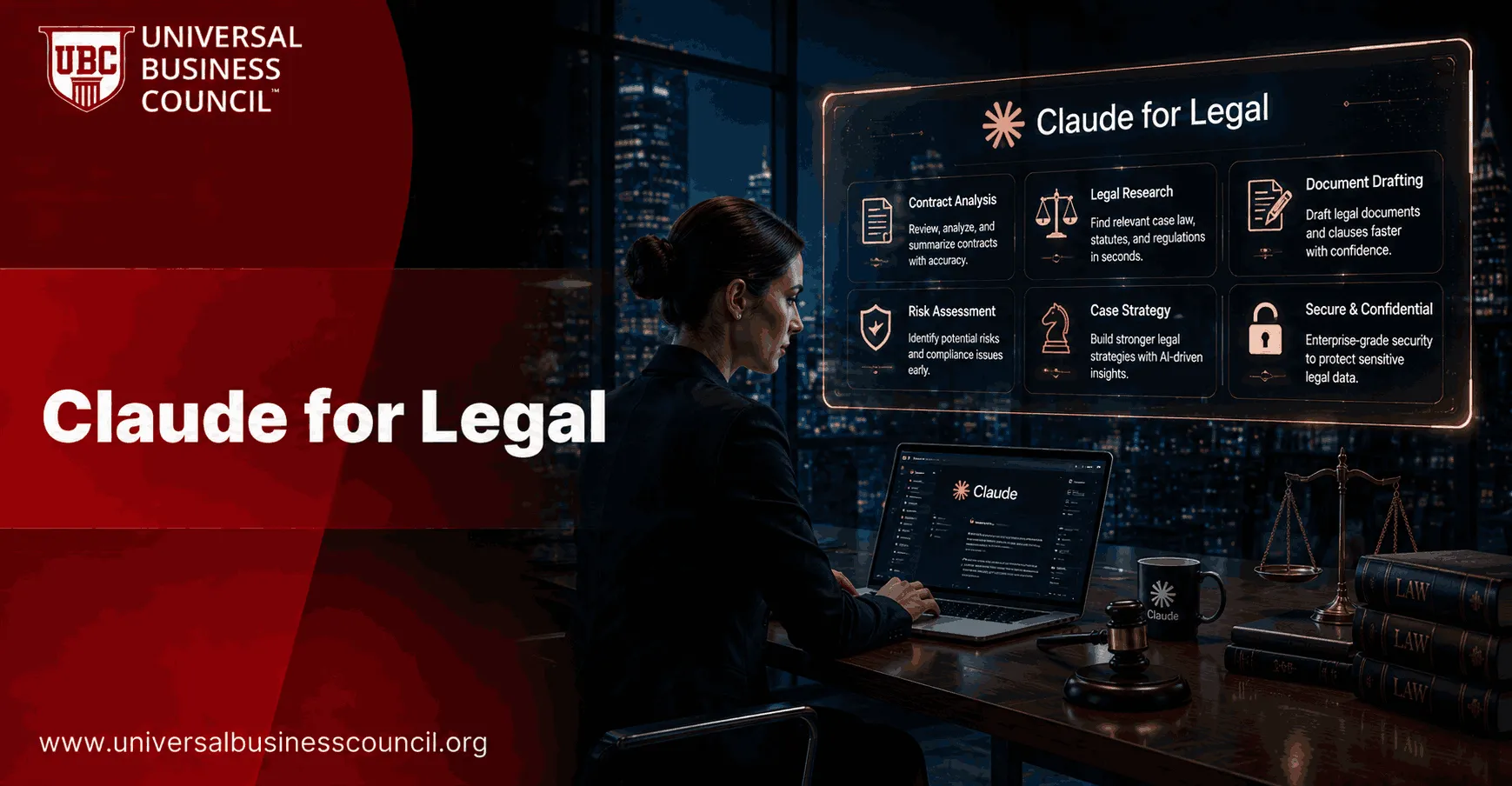
Legal research is one of the most important yet time-consuming tasks in the legal profession. Lawyers must review case law, statutes, regulations, and legal opinions to build arguments and provide accurate advice.Claude AI can summarize legal cases, identify important precedents, and organize information quickly. This significantly reduces research time and improves productivity.For example, a law firm handling international privacy compliance can use Claude AI to compare GDPR regulations with regional privacy laws across multiple jurisdictions.
Contract Review and Analysis
Contract analysis is another major area where Claude AI provides value.Claude AI can:
Detect unusual contract clauses
Identify missing terms
Compare multiple contract versions
Highlight risks and obligations
Summarize lengthy agreements
Corporate legal departments handling mergers and acquisitions often review thousands of contracts during due diligence. Claude AI helps accelerate this process while reducing the risk of human error.
Legal Drafting
Claude AI assists legal professionals with drafting:
Non-disclosure agreements (NDAs)
Employment agreements
Compliance policies
Internal legal memos
Terms and conditions
Client communication
Although lawyers must review all final documents, AI significantly speeds up the first drafting stage.
Compliance Management
Regulatory compliance has become increasingly challenging for organizations operating globally.Claude AI helps businesses monitor regulatory updates and analyze compliance obligations related to:
Data privacy laws
Financial regulations
Cybersecurity policies
Healthcare compliance
Anti-money laundering rules
Legal teams can use Claude AI to generate compliance summaries and internal reports more efficiently.Organizations implementing AI-driven legal systems often encourage employees to pursue aClaude AI certification to improve technical understanding and AI adoption strategies.
E-Discovery and Litigation Support
In litigation cases, legal professionals must analyze large amounts of evidence, including emails, contracts, and communication records.Claude AI supports litigation processes by helping with:
Evidence organization
Timeline generation
Document summarization
Key issue identification
Witness statement analysis
This reduces manual review time and improves case preparation efficiency.
Recent Developments in Claude AI for Legal
Improved Long-Context Capabilities
Recent Claude AI models can process significantly larger amounts of text compared to earlier AI systems. This allows legal professionals to analyze entire contracts or case files within a single interaction.
Enhanced AI Safety Features
Anthropic has focused heavily on AI safety and responsible AI deployment. Claude AI includes guardrails designed to reduce misleading or harmful outputs.For legal professionals, accuracy and reliability are essential because incorrect legal advice can lead to serious consequences.
Integration With Enterprise Tools
Claude AI is increasingly being integrated into legal software platforms, contract management systems, and enterprise compliance tools.This allows organizations to use AI directly within their existing workflows without disrupting operations.
Growing Adoption by Law Firms
Many law firms and legal technology companies are experimenting with generative AI tools for research, drafting, and compliance tasks.Large enterprises are also exploring AI-powered legal assistants to improve operational scalability and reduce administrative burdens.
Benefits of Using Claude AI in Legal Practice
Improved Efficiency
Claude AI automates repetitive tasks and reduces the time spent on document review and legal research.
Reduced Operational Costs
By improving productivity, law firms can reduce administrative expenses and optimize resource allocation.
Better Knowledge Management
Claude AI helps organize legal information and makes it easier to retrieve relevant data quickly.
Faster Client Service
AI-powered legal workflows allow firms to respond to clients more quickly and efficiently.
Scalability
AI enables legal teams to manage larger workloads without proportionally increasing staffing costs.
Challenges and Limitations of Claude AI in Legal
Despite its benefits, Claude AI also presents certain limitations.
Risk of Inaccurate Outputs
AI systems may occasionally generate incorrect or incomplete information. Legal professionals must verify all AI-generated content carefully.
Confidentiality Concerns
Law firms handle sensitive client information. Organizations must implement strong security and privacy measures when using AI tools.
Regulatory and Ethical Issues
AI regulations continue to evolve globally. Legal organizations must ensure compliance with ethical guidelines and data protection standards.
Lack of Human Judgment
AI cannot replace human reasoning, negotiation skills, courtroom advocacy, or ethical decision-making.Claude AI should be viewed as a support tool that enhances legal workflows rather than replacing legal professionals.
Claude AI and Legal Education
As AI becomes more integrated into legal operations, educational institutions and certification providers are expanding AI-focused learning opportunities.Professionals are increasingly enrolling in programs such as:
These certifications help professionals understand AI tools, automation strategies, prompt engineering, and enterprise AI implementation.AI literacy is becoming increasingly important for lawyers, consultants, compliance officers, and business professionals.
AI in Legal Marketing and Client Engagement
AI is also transforming how law firms market their services and engage with clients.AI-powered tools support:
SEO optimization
Content creation
Client communication
Email marketing
Social media management
Professionals interested in these skills often pursue aMarketing certification or anAI powered digital marketing course.By combining AI with marketing strategies, law firms can improve visibility, client outreach, and digital engagement.
Best Practices for Using Claude AI in Legal Environments
Verify AI Outputs
Legal professionals should always review AI-generated content for accuracy and compliance.
Protect Sensitive Data
Organizations should use enterprise-grade security measures and maintain strict confidentiality standards.
Train Legal Teams
Employees should receive AI education and compliance training before implementing AI systems widely.
Develop AI Governance Policies
Companies should establish internal policies covering AI usage, ethics, accountability, and risk management.
Combine AI With Human Expertise
AI should support legal professionals rather than replace human decision-making.
The Future of Claude AI in the Legal Industry
The future of AI in legal services looks highly promising. Over the next several years, Claude AI is expected to become more deeply integrated into legal operations.Future applications may include:
AI-powered litigation prediction
Advanced compliance automation
Real-time legal risk analysis
Intelligent contract negotiation
Multilingual legal support
Automated governance management
As AI technology continues to evolve, legal professionals who understand AI systems will gain a significant competitive advantage.However, human lawyers will remain essential for ethical interpretation, strategic analysis, negotiation, and courtroom representation.The future of legal work will likely involve collaboration between legal professionals and AI systems rather than full automation.
Conclusion
Claude AI is transforming the legal industry by improving efficiency, automating repetitive tasks, and supporting complex legal operations. Its ability to process lengthy documents, assist with legal research, automate drafting, and enhance compliance management makes it one of the most valuable AI tools for legal professionals today.As AI adoption increases, legal professionals are recognizing the importance of developing technical knowledge and AI literacy. Certifications such as theClaude AI expert certification and theAI Expert certification are helping professionals stay competitive in the evolving legal landscape.Claude AI is not replacing lawyers. Instead, it is helping legal teams work more efficiently, manage growing workloads, and focus on higher-value strategic tasks.
FAQs
1. What is Claude AI?
Claude AI is a generative artificial intelligence system developed by Anthropic that helps users analyze documents, generate content, summarize information, and perform reasoning-based tasks.
2. How is Claude AI used in the legal industry?
Claude AI is used for legal research, contract analysis, compliance management, litigation support, and legal drafting.
3. Can Claude AI replace lawyers?
No, Claude AI cannot replace lawyers because legal work requires human judgment, ethics, negotiation, and courtroom representation.
4. Is Claude AI suitable for legal research?
Yes, Claude AI can summarize legal cases, identify precedents, and organize research findings efficiently.
5. How does Claude AI improve contract review?
Claude AI helps identify risks, missing clauses, obligations, and inconsistencies in contracts.
6. What industries benefit from legal AI tools?
Industries such as banking, healthcare, insurance, fintech, cybersecurity, and technology benefit greatly from legal AI solutions.
7. Is Claude AI safe for handling legal data?
Claude AI includes safety-focused features, but organizations must implement proper data security and confidentiality measures.
8. What are the limitations of Claude AI?
Limitations include occasional inaccurate outputs, confidentiality concerns, and the inability to replace human judgment.
9. Can Claude AI assist with compliance management?
Yes, Claude AI can analyze regulations and generate compliance-related summaries and reports.
10. Why is AI becoming important in law firms?
AI improves efficiency, reduces costs, and helps legal teams manage large volumes of data more effectively.
11. What is the role of AI in legal marketing?
AI helps law firms with SEO, content creation, email campaigns, and client communication.
12. What certifications help professionals learn AI?
19. What role does AI play in coding and automation?
AI supports software automation, intelligent coding assistance, and workflow optimization through programs like theAI Powered coding expert Course.
20. What is the future of AI in legal services?
AI is expected to improve legal analytics, compliance automation, contract management, and litigation support while continuing to assist legal professionals rather than replacing them.







Leave a Reply