

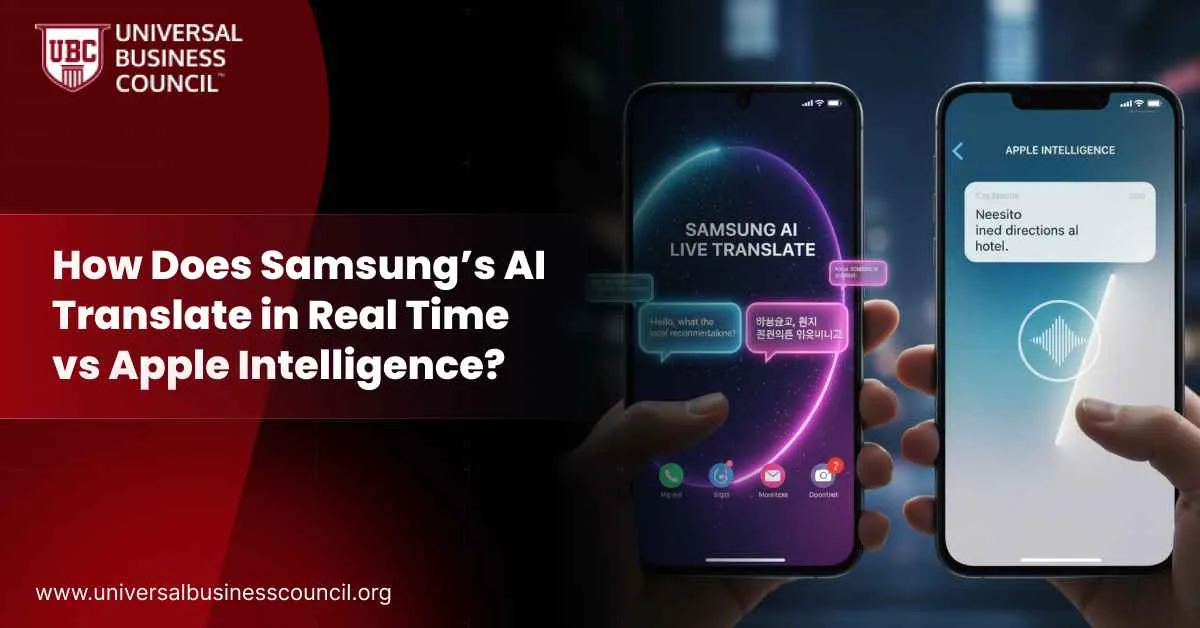
 Real-time translation is one of the most practical AI features available on smartphones in 2025. Both Samsung and Apple have built translation tools into their ecosystems, but they work in slightly different ways. Samsung is focused on flexibility, offering translation during calls, face-to-face conversations, and through its Galaxy Buds. Apple centers its approach on privacy and device-first processing, making sure conversations remain personal. For professionals who want to learn how to use such tools in business growth, the Marketing and Business Certification is a great resource.
Samsung Galaxy AI: Flexible and Fast
Samsung’s Galaxy AI suite includes Live Translate, which lets users translate phone calls in both directions without needing a third-party app. The feature is built directly into the Phone app, so when you call someone speaking another language, you can hear the translation in real time. For in-person conversations, Samsung’s Interpreter mode pairs with Galaxy Buds to play translated audio directly into your ears while showing transcripts on the phone. Samsung says many of these features run on-device, which reduces lag and limits reliance on cloud servers. Still, for some languages or advanced tasks, cloud support may step in. This balance keeps translations fast and practical, while also aiming for a degree of privacy. Samsung has also framed its AI translation as business-ready. In global workplaces, Live Translate and Interpreter can remove language barriers in meetings or customer calls, giving professionals an edge in daily operations.Apple Intelligence: Private and Seamless
Apple took a different route with its Live Translation in iOS 26. The tool works in Messages, FaceTime, and Phone calls. When someone speaks another language, you see captions appear live, and if you are using AirPods, you can hear the translated speech directly in your ears. Apple emphasizes privacy in its design. Most translation tasks happen on the device itself. When the workload is heavier, Apple uses Private Cloud Compute, a system that processes the request and deletes the data immediately. This keeps conversations out of reach from long-term storage or third-party handling. The current list of supported languages includes English, Spanish, French, German, and Brazilian Portuguese, though availability depends on region and device. While it may not cover as many scenarios as Samsung yet, Apple positions its solution as the most secure and personal way to translate.Real-Time AI Translation Comparison in 2025
| Feature | Samsung Galaxy AI | Apple Intelligence |
| Call translation | Built into Phone app, two-way voice translation | Available in Phone app with captions and audio via AirPods |
| In-person conversation | Interpreter mode with Galaxy Buds and transcripts | Face-to-face translation with captions and audio |
| On-device processing | Runs locally for many languages, cloud fallback for others | Strong emphasis on full on-device processing, Private Cloud Compute for heavy tasks |
| Earbud integration | Galaxy Buds support real-time audio translation | AirPods deliver live translated speech |
| Business use | Pitched as ready for global teams and meetings | Focused more on personal privacy than enterprise features |



Leave a Reply