Googlebook Is Google’s New AI-Powered Laptop Platform Built on Android
May 13, 2026 By Smita
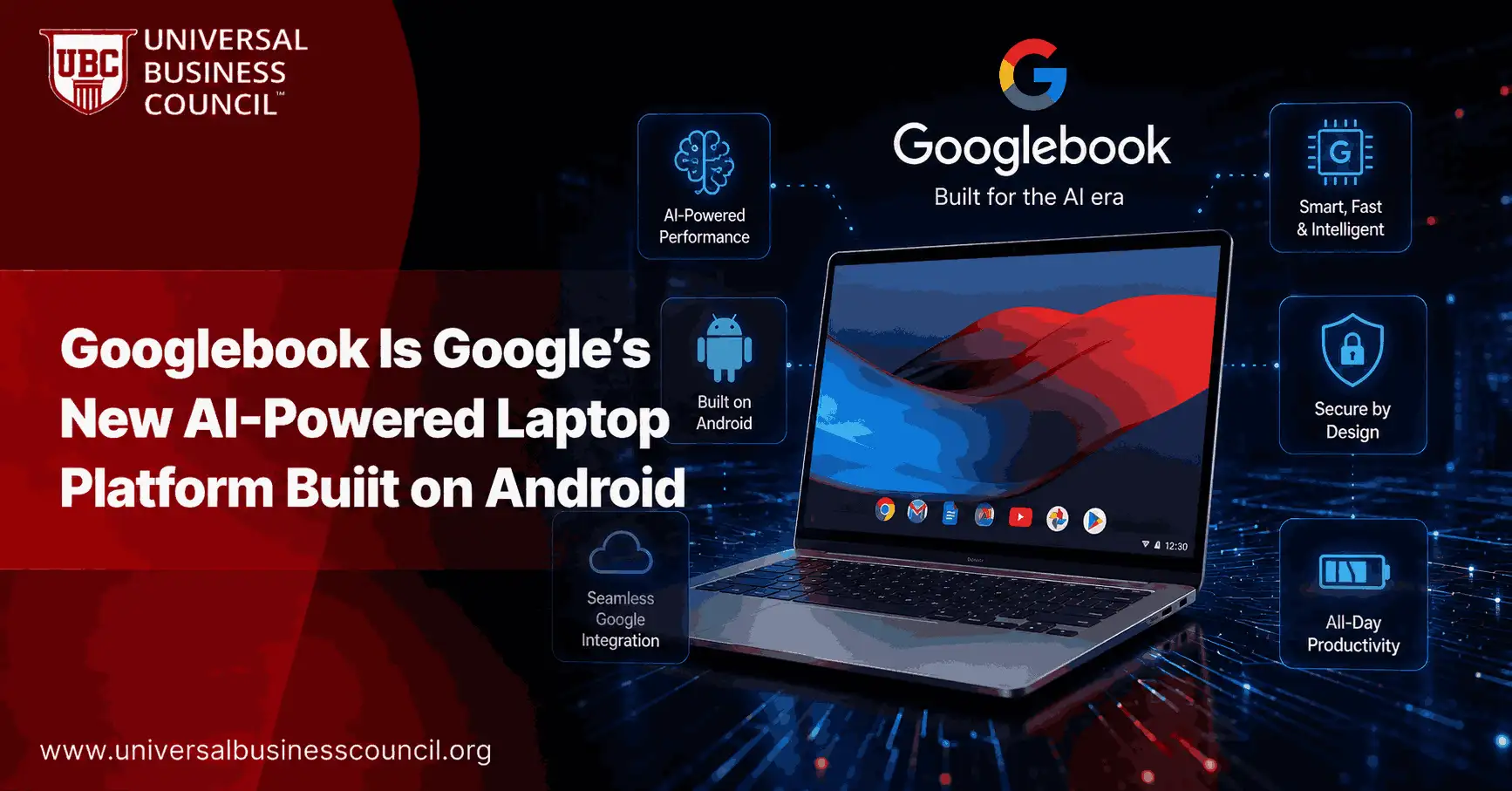
Google is reportedly working toward a new era of AI-powered computing with a rumored platform many tech insiders are calling “Googlebook.” While the company has not officially announced such a product, growing developments around Android, ChromeOS, and Gemini AI strongly suggest Google is building a smarter laptop ecosystem focused on artificial intelligence.The idea behind Googlebook is to create an AI-first laptop experience where users interact naturally with their devices through conversational commands, automation tools, and intelligent assistants. Instead of constantly switching between applications, users could rely on AI to complete tasks faster and more efficiently.Naturally, humanity looked at laptops and decided they should also become personal assistants, research partners, and unpaid office interns. Progress remains deeply committed to making machines do everything except physically carry people to meetings.
What Is a Googlebook?
Googlebook is an unofficial term used to describe Google’s rumored AI-powered laptop platform expected to run on an Android-based system with advanced Gemini AI integration.Industry analysts believe the platform may combine:
Android operating system flexibility
ChromeOS productivity features
Gemini AI assistance
Cloud-based workflows
AI-powered automation tools
Advanced multitasking capabilities
Cross-device synchronization
The goal appears to be creating a unified computing environment where AI becomes central to everyday productivity.
Why Google Is Investing in AI-Powered Laptops
Artificial intelligence is rapidly becoming the core of modern computing. Microsoft has introduced Copilot AI PCs, while Apple continues expanding AI features across its devices. Google is now expected to strengthen its own AI ecosystem with a dedicated AI-first laptop platform.
Gemini AI Expansion
Google’s Gemini AI already powers several products including:
Gmail
Google Docs
Android devices
Workspace applications
Google Search
An AI-focused laptop platform would allow Google to integrate Gemini much more deeply into everyday workflows.Professionals interested in AI-driven marketing and automation are increasingly exploring programs like theAI powered digital marketing course to build expertise in AI-powered campaigns, SEO automation, and intelligent audience targeting.At the same time, businesses and technology professionals are pursuing theAI expert certification to gain practical knowledge about artificial intelligence systems and enterprise implementation strategies.
Android’s Evolution Beyond Smartphones
Android is no longer limited to phones and tablets. Modern Android systems now support:
Desktop-style multitasking
External monitor compatibility
Keyboard and mouse controls
Split-screen productivity
Advanced app ecosystems
These developments make Android a stronger foundation for future laptop experiences.
AI Could Become the Main Interface
One of the most exciting possibilities surrounding Googlebook is the idea that Gemini AI may replace many traditional manual interactions.Instead of opening multiple apps, users may simply give commands such as:
“Summarize my unread emails.”
“Create meeting notes from today’s calls.”
“Generate a project presentation.”
“Find all financial reports from April.”
The system could automatically organize information, generate content, and complete workflows across applications.Specialists focusing on Google’s AI ecosystem are also pursuing thegoogle gemini expert certification to better understand Gemini-powered tools and AI-driven productivity systems.Because apparently clicking through folders manually is now considered an ancient survival ritual from the early internet era.
Googlebook and AI Coding Tools
Software development is another area where Googlebook could become highly valuable. AI-powered coding tools are transforming how developers write and manage software.Potential AI coding features may include:
Automated code generation
AI debugging assistance
Documentation support
Error detection
Code optimization suggestions
Google has already integrated Gemini into Android Studio and other development environments.As AI-assisted programming becomes more common, many developers are upgrading their expertise through programs like theAI Powered coding expert Course, which focuses on intelligent coding workflows and AI-driven software development.Software engineers now spend part of their day reviewing code written by machines trained on code written by other humans who were also confused. A magnificent technological cycle.
The Rise of Agentic AI
Another major trend connected to Googlebook is Agentic AI. Unlike traditional AI assistants, agentic systems can independently complete complex multi-step tasks.For example, a future Googlebook device might:
Read incoming emails
Schedule meetings automatically
Generate summaries
Create reports
Send reminders without user prompts
This level of automation could dramatically improve productivity for businesses and professionals.To stay competitive in this emerging field, professionals are increasingly pursuing theAgentic AI expert certification focused on autonomous AI systems and enterprise automation strategies.
Privacy and Security Concerns
Despite the excitement, AI-powered laptops also raise important concerns regarding:
User privacy
Data collection
Cloud dependency
AI monitoring
Security vulnerabilities
Since AI systems process large amounts of personal and business data, Google will need strong privacy protections to gain user trust.Potential safeguards may include:
On-device AI processing
Encrypted cloud storage
AI permission controls
Enterprise security features
Balancing convenience with privacy will remain one of the biggest challenges for AI-powered computing.
Could Googlebook Compete With Windows and MacBooks?
Googlebook would enter a highly competitive market currently dominated by:
Windows AI PCs
Apple MacBooks
Premium Chromebooks
To succeed, Google will likely need to offer:
Strong app compatibility
Excellent battery life
Seamless AI integration
Enterprise-grade security
Powerful productivity features
If Google successfully combines Android flexibility with advanced AI automation, Googlebook could become a strong alternative to traditional laptops.
Conclusion
Googlebook represents a possible glimpse into the future of AI-native computing. By combining Android, Gemini AI, cloud integration, and intelligent automation, Google appears to be moving toward a laptop experience centered around productivity and conversational AI.Although the platform remains unofficial, industry trends strongly suggest Google is preparing for a future where AI becomes deeply integrated into everyday computing workflows.As AI-powered devices continue evolving, professionals who understand automation, coding assistance, digital marketing, and AI systems will likely gain significant advantages in the modern workplace.Humans once learned how to use computers. Now computers are increasingly learning how to anticipate humans. Slightly efficient. Slightly unsettling. Entirely inevitable.
FAQs
1. What is Googlebook?
Googlebook is an unofficial name for Google’s rumored AI-powered laptop platform that may be built around Android, ChromeOS features, and Gemini AI. Google has not officially confirmed the product, because apparently mystery is now a product strategy.
2. Has Google officially launched Googlebook?
No. Google has not officially launched or announced a product called Googlebook. Current discussion is based on industry speculation, AI developments, Android desktop improvements, and Google’s broader Gemini AI strategy.
3. Why is Googlebook being linked with Android?
Googlebook is linked with Android because Android has grown beyond smartphones. It now supports larger screens, keyboards, multitasking, external displays, and productivity apps, making it more suitable for laptop-style computing.
4. How could Gemini AI work on Googlebook?
Gemini AI could act as a built-in assistant that helps users write documents, summarize emails, generate reports, search files, manage schedules, and automate repetitive tasks across apps.
5. Is a Googlebook different from a Chromebook?
Yes, potentially. Chromebooks are mainly built around ChromeOS and web-based productivity, while Googlebook is expected to focus more on Android, AI automation, Gemini integration, and app flexibility.
6. Could Googlebook replace Chromebooks?
It could eventually influence or reshape the Chromebook ecosystem, but there is no official confirmation that Googlebook will replace Chromebooks. A more likely scenario is gradual platform convergence.
7. What makes Googlebook an AI-powered laptop?
Googlebook would be considered AI-powered if it includes system-level AI tools for writing, coding, searching, organizing files, summarizing meetings, and completing workflows with minimal manual input.
8. Who would benefit from Googlebook?
Students, developers, marketers, business professionals, remote workers, and content creators could benefit from Googlebook if it delivers strong AI productivity features and Android app support.
9. Can Googlebook help with software development?
Yes, if Gemini AI is deeply integrated, Googlebook could help developers generate code, debug errors, explain programming concepts, write documentation, and improve software workflows.
10. What is Agentic AI in Googlebook?
Agentic AI refers to AI systems that can complete multi-step tasks independently. On Googlebook, this might include scheduling meetings, summarizing emails, creating reports, and organizing documents automatically.
11. How could Googlebook help digital marketers?
Googlebook could support marketers with AI-powered content creation, keyword research, SEO suggestions, campaign planning, ad copy generation, audience analysis, and performance reporting.
12. Will Googlebook run Android apps?
That is one of the expected advantages. If Googlebook is truly Android-based, it could support a wide range of Android apps optimized for laptop screens and keyboard input.
13. Will Googlebook work offline?
Some features may work offline, especially basic Android apps and on-device AI tools. However, more advanced Gemini AI features may require internet access and cloud processing.
14. What privacy concerns come with Googlebook?
Privacy concerns may include data collection, cloud storage, AI access to emails and documents, voice interactions, and user behavior tracking. Because naturally, the smarter the device gets, the more awkward the privacy conversation becomes.
15. How can Google make Googlebook secure?
Google could improve security through on-device AI processing, encrypted storage, permission controls, secure boot systems, enterprise management tools, and clear privacy settings.
16. Could Googlebook compete with Windows AI PCs?
Yes. Googlebook could compete with Windows AI PCs if it provides strong AI tools, reliable performance, app compatibility, enterprise support, and smooth integration with Google services.
17. Could Googlebook compete with MacBooks?
Possibly, but it would need excellent hardware, long battery life, premium design, powerful apps, and a polished user experience to compete seriously with MacBooks.
18. Why are AI certifications relevant to Googlebook?
AI certifications are relevant because platforms like Googlebook show how quickly AI is entering daily work. Professionals who understand AI tools, automation, coding assistance, and digital workflows may gain stronger career opportunities.
19. What challenges could Googlebook face?
Googlebook could face challenges such as app compatibility, user trust, competition from Windows and Apple, privacy concerns, and Google’s reputation for discontinuing experimental products.
20. What is the future of Googlebook?
The future of Googlebook depends on whether Google officially launches the platform and how well it combines Android, Gemini AI, laptop hardware, security, and productivity tools into a useful everyday computing experience.


 Google is reportedly working toward a new era of AI-powered computing with a rumored platform many tech insiders are calling “Googlebook.” While the company has not officially announced such a product, growing developments around Android, ChromeOS, and Gemini AI strongly suggest Google is building a smarter laptop ecosystem focused on artificial intelligence.
The idea behind Googlebook is to create an AI-first laptop experience where users interact naturally with their devices through conversational commands, automation tools, and intelligent assistants. Instead of constantly switching between applications, users could rely on AI to complete tasks faster and more efficiently.
Naturally, humanity looked at laptops and decided they should also become personal assistants, research partners, and unpaid office interns. Progress remains deeply committed to making machines do everything except physically carry people to meetings.
Google is reportedly working toward a new era of AI-powered computing with a rumored platform many tech insiders are calling “Googlebook.” While the company has not officially announced such a product, growing developments around Android, ChromeOS, and Gemini AI strongly suggest Google is building a smarter laptop ecosystem focused on artificial intelligence.
The idea behind Googlebook is to create an AI-first laptop experience where users interact naturally with their devices through conversational commands, automation tools, and intelligent assistants. Instead of constantly switching between applications, users could rely on AI to complete tasks faster and more efficiently.
Naturally, humanity looked at laptops and decided they should also become personal assistants, research partners, and unpaid office interns. Progress remains deeply committed to making machines do everything except physically carry people to meetings.



Leave a Reply