

What to Learn in AI?
 Smita
Smita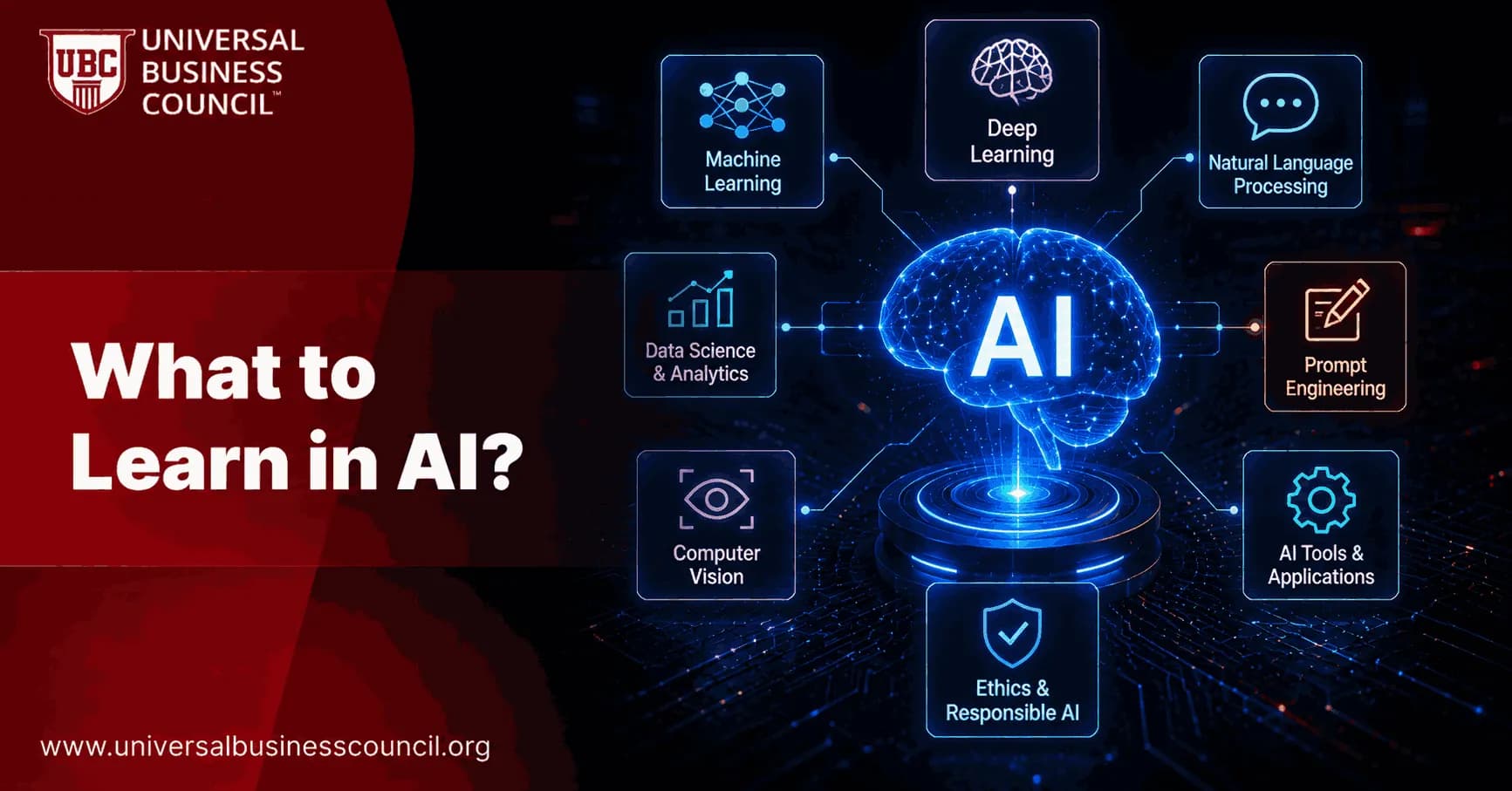
Understanding the Basics of Artificial Intelligence
Before learning advanced AI systems, it is important to understand what artificial intelligence actually means.What Is Artificial Intelligence?
Artificial intelligence refers to computer systems capable of performing tasks that normally require human intelligence. These systems can analyze data, recognize patterns, generate content, solve problems, and make decisions. Examples of AI applications include:- AI chatbots
- Recommendation systems
- Fraud detection tools
- Virtual assistants
- AI-generated content
- Smart automation systems
- Image recognition software
Different Types of AI
AI includes several major categories.Machine Learning
Machine learning allows systems to learn from data and improve performance over time.Deep Learning
Deep learning uses neural networks to process complex information and patterns.Generative AI
Generative AI creates new content such as text, images, audio, and code.Agentic AI
Agentic AI systems can independently complete multi-step tasks and workflows. Learning these categories helps beginners identify which AI specialization aligns with their goals.Learn Programming for AI
Programming is one of the most important technical skills in AI development.Best Programming Languages for AI
The most commonly used AI programming languages include:- Python
- R
- Java
- JavaScript
- C++
Important AI Libraries
AI learners should become familiar with:- TensorFlow
- PyTorch
- Scikit-learn
- Pandas
- NumPy
Learn Machine Learning
Machine learning forms the foundation of many modern AI applications.What Is Machine Learning?
Machine learning enables systems to identify patterns and make predictions using data rather than traditional programming rules. Common applications include:- Recommendation systems
- Predictive analytics
- Fraud detection
- Medical diagnosis
- Customer segmentation
- Financial forecasting
Types of Machine Learning
AI learners should understand three core machine learning approaches.Supervised Learning
The AI model learns using labeled training data.Unsupervised Learning
The model identifies hidden patterns without predefined labels.Reinforcement Learning
The AI system improves performance through rewards and penalties. Machine learning knowledge is valuable across technical and business-focused AI careers.Learn Prompt Engineering
Prompt engineering has become one of the most important AI skills in recent years.What Is Prompt Engineering?
Prompt engineering involves writing structured instructions that guide AI systems effectively. Strong prompts improve:- AI-generated writing
- Coding accuracy
- Automation workflows
- Research outputs
- AI image generation
Why Prompt Engineering Matters
Prompt engineering is useful for:- Marketers
- Developers
- Researchers
- Content creators
- Analysts
- Business professionals
Learn Data Science and Analytics
AI systems rely heavily on data quality.Why Data Skills Matter
AI models require large, clean, and structured datasets for accurate performance. Poor-quality data often creates unreliable outputs. Important data-related skills include:- Data cleaning
- Statistical analysis
- SQL databases
- Data visualization
- Spreadsheet analysis
- Predictive analytics
Learn Generative AI
Generative AI is one of the fastest-growing areas of technology.What Is Generative AI?
Generative AI systems create new digital content such as:- Articles
- Images
- Videos
- Audio
- Code
- Voice simulations
Applications of Generative AI
Generative AI is widely used in:- Marketing
- Design
- Software development
- Education
- Customer support
- Entertainment
Learn AI Security
As AI systems become more powerful, AI security is becoming critically important.Why AI Security Matters
AI systems face risks such as:- Data leaks
- Prompt injection attacks
- Model manipulation
- Unauthorized access
- Deepfake misuse
- Privacy violations
Responsible AI and Ethics
AI learners should also understand:- Ethical AI development
- Bias mitigation
- Privacy protection
- Responsible AI deployment
- Regulatory compliance
Learn Agentic AI
Agentic AI is one of the newest developments in artificial intelligence.What Is Agentic AI?
Agentic AI refers to autonomous systems capable of completing tasks independently with minimal human supervision. These systems can:- Analyze information
- Plan actions
- Execute workflows
- Monitor outcomes
- Adapt strategies
Real-World Uses of Agentic AI
Agentic AI is increasingly used in:- Customer support
- Workflow automation
- AI research systems
- Business analytics
- Cybersecurity operations
Learn AI for Marketing
Marketing is one of the industries most heavily transformed by AI.How AI Is Used in Marketing
AI tools help marketers with:- SEO optimization
- Email campaigns
- Audience targeting
- Social media automation
- Content generation
- Predictive analytics
Important AI Marketing Skills
Marketing professionals should learn:- AI copywriting
- Marketing automation
- Audience analysis
- AI-powered SEO
- Campaign optimization
Learn AI Automation
AI automation is transforming business operations globally.What Is AI Automation?
AI automation combines intelligent systems with automated workflows to reduce repetitive manual tasks. Examples include:- AI chat support
- Automated reporting systems
- Smart scheduling tools
- AI-driven analytics platforms
- Workflow management systems
Learn Cloud AI Platforms
Modern AI professionals should understand cloud-based AI systems.Popular Cloud AI Platforms
Important platforms include:- Google Cloud AI
- Microsoft Azure AI
- AWS AI services
Why Cloud AI Matters
Cloud AI platforms help organizations:- Scale AI operations
- Store large datasets
- Deploy AI models efficiently
- Improve team collaboration
Learn Soft Skills for AI Careers
Technical expertise alone is not enough for long-term success in AI careers.Important Soft Skills
AI professionals should also develop:- Communication
- Problem-solving
- Creativity
- Critical thinking
- Adaptability
- Team collaboration
Build Real AI Projects
Practical projects remain one of the best ways to learn AI.Beginner AI Project Ideas
Examples include:- AI chatbots
- Recommendation systems
- Sentiment analysis tools
- AI writing assistants
- Image recognition systems
Why Projects Matter
Projects help learners:- Apply technical concepts
- Build portfolios
- Gain practical experience
- Prepare for interviews
Future Trends in AI
The AI industry continues evolving rapidly.Emerging AI Areas
Future AI trends may include:- Multimodal AI
- AI robotics
- Autonomous AI agents
- AI governance systems
- Personalized AI assistants
- AI-powered cybersecurity
Importance of AI Certifications
AI certifications help professionals validate skills and improve career opportunities. Certifications provide structured learning in areas such as:- AI fundamentals
- Security
- Coding
- Automation
- Prompt engineering
- Marketing
- Agentic AI systems
Conclusion
Artificial intelligence is becoming one of the most important professional skills in the modern economy. However, learning AI successfully requires focusing on the right combination of technical knowledge, practical experience, and analytical thinking. Beginners should start with AI fundamentals, programming, machine learning, and data analysis before moving into advanced topics such as generative AI, prompt engineering, automation, AI security, and agentic AI systems. Most importantly, AI is no longer limited to researchers or software engineers. It is becoming a core workplace skill across marketing, business operations, cybersecurity, education, and digital content industries. Humanity finally created intelligent machines, and now everyone is racing to figure out how to collaborate with them before next year’s job descriptions become unreadable. The earlier source material and related draft used for this rewritten version can be referenced here:FAQs
1. What should beginners learn first in AI?
Beginners should start with basic AI concepts, programming, and machine learning fundamentals. Python is usually the best language for beginners because it is simple and widely used in AI development. Learning through small projects also improves understanding quickly.2. Is coding necessary for AI?
Coding is very useful for AI because it helps learners build models, automate workflows, and work with machine learning systems. Python is the most commonly used AI programming language. Some AI tools require less coding, but technical skills still provide major advantages.3. What is machine learning?
Machine learning is a branch of AI where systems learn patterns from data instead of following fixed instructions. It powers recommendation engines, analytics systems, and predictive tools. Machine learning is one of the most important areas of AI.4. Why is prompt engineering important?
Prompt engineering helps users communicate effectively with AI systems. Better prompts improve content generation, coding, automation, and research tasks. Clear instructions usually lead to more accurate and useful AI outputs.5. What is generative AI?
Generative AI refers to systems that create content such as text, images, videos, and code. Popular tools include ChatGPT, Claude, and Midjourney. Businesses use generative AI for marketing, design, customer support, and automation.6. What programming language is best for AI?
Python is considered the best programming language for AI because it supports powerful machine learning libraries and has simple syntax. Other useful languages include R, Java, and JavaScript. Most beginners start with Python.7. What are the most important AI skills?
Important AI skills include programming, machine learning, prompt engineering, data analysis, automation, and communication. Problem-solving and adaptability are also valuable. AI professionals often combine technical and business knowledge.8. What is AI security?
AI security focuses on protecting AI systems from risks such as data leaks, prompt attacks, and unauthorized access. It also includes privacy protection and ethical AI deployment. Businesses increasingly prioritize secure AI systems.9. What is agentic AI?
Agentic AI refers to autonomous AI systems capable of completing multi-step tasks independently. These systems can analyze information, make decisions, and automate workflows. Agentic AI is becoming increasingly important in business automation.10. How is AI used in marketing?
AI is used in marketing for SEO optimization, audience targeting, campaign automation, and content generation. Businesses use AI tools to improve customer engagement and personalization. AI-driven marketing continues growing rapidly.11. How long does it take to learn AI?
Learning AI depends on prior experience and learning goals. Basic AI concepts can often be understood within a few months of consistent study. Advanced machine learning and AI development may require longer-term learning.12. Is mathematics important in AI?
Mathematics is important for understanding machine learning and data science concepts. Topics such as statistics and probability are commonly used in AI. Beginners can still start practical AI learning before mastering advanced math.13. What industries use AI the most?
AI is widely used in healthcare, finance, marketing, education, retail, cybersecurity, and software development. Businesses use AI for automation, analytics, and customer engagement. AI adoption continues expanding across industries worldwide.14. What are the best AI tools to learn?
Popular AI tools include ChatGPT, Claude, Gemini, Midjourney, Stable Diffusion, and GitHub Copilot. These tools support writing, coding, image generation, and automation tasks. Learning modern AI platforms improves practical skills.15. Can non-technical professionals learn AI?
Yes, non-technical professionals can learn AI concepts, prompting, automation, and workflow systems. Many AI tools are designed for beginners and business users. Technical knowledge becomes more important for development-focused roles.16. Why are AI certifications useful?
AI certifications help professionals validate skills and improve career opportunities. They provide structured learning in areas such as security, automation, coding, and AI fundamentals. Many employers value certified AI expertise.17. What is AI automation?
AI automation combines artificial intelligence with workflow systems to reduce repetitive manual tasks. Businesses use it for customer support, analytics, reporting, and scheduling. Automation improves efficiency and productivity.18. Should beginners build AI projects?
Yes, practical projects help beginners apply concepts and gain real-world experience. Projects improve technical understanding and strengthen professional portfolios. Hands-on learning is extremely valuable in AI education.19. What is the future of AI careers?
AI careers are expected to grow rapidly across technical and business sectors. Future roles may include AI development, automation, security, governance, and consulting. AI skills are becoming essential in many industries.20. How can someone stay updated in AI?
People can stay updated by following AI news, practicing with tools, taking courses, and building projects regularly. The AI industry changes quickly, so continuous learning is important. Apparently humans now require regular software updates for their own careers too.Related Articles
View All
Artificial Intelligence
Gemini 4 Argon: Features, Pricing, and Availability
Gemini 4 Argon is Google’s new flagship AI model for coding, science, finance, law and security. See its main features, API and subscription pricing, and where you can access it today.

Artificial Intelligence
What Is Meta Muse Wonder? Features and How It Works
Meta Muse Wonder is a new frontier AI model built for agents with Active Memory and Active Focus. Learn what it is, how it works, its features, pricing and how to access it.

Artificial Intelligence
What Is Google Playground? Features and How It Works
What is Google Playground? Learn how Google's new AI platform turns text prompts into playable browser games, which models power it, its features, pricing and access, Unity Spark plans, rival tools, and limits.
Trending Articles
The Role of Blockchain in Ethical AI Development
How blockchain technology is being used to promote transparency and accountability in artificial intelligence systems.
AWS Career Roadmap
A step-by-step guide to building a successful career in Amazon Web Services cloud computing.
Top 5 DeFi Platforms
Explore the leading decentralized finance platforms and what makes each one unique in the evolving DeFi landscape.