

Neuromarketing Insight
 Smita
Smita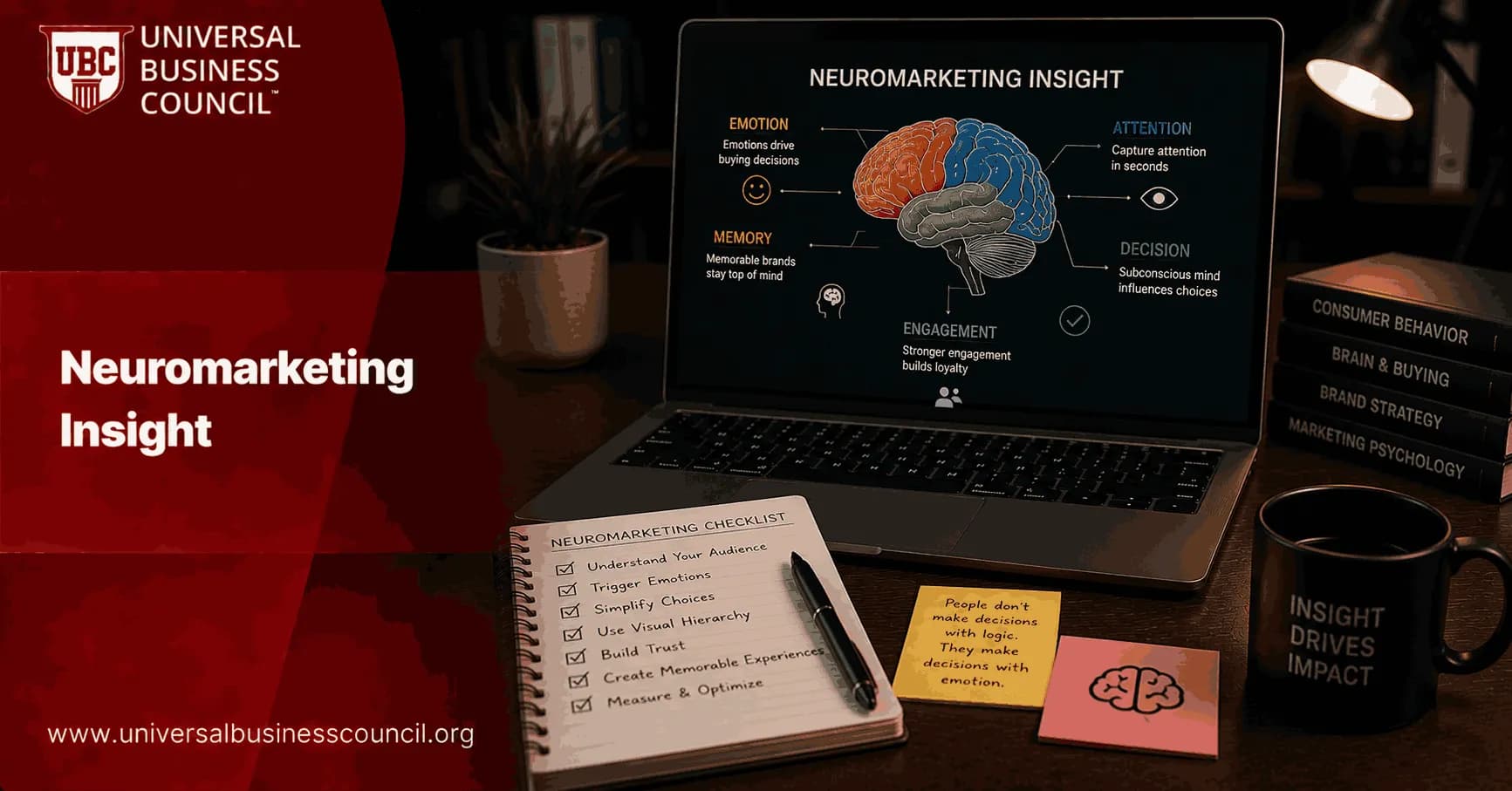
Modern marketing is slowly turning into a science experiment with budgets. Brands no longer rely only on surveys or focus groups to understand customers. Instead, they analyze how the brain reacts to advertisements, packaging, and digital experiences. This approach is known as neuromarketing. Neuromarketing combines neuroscience, psychology, and marketing to study how people subconsciously respond to brands and messages. By measuring brain activity, eye movements, emotional reactions, and attention levels, businesses gain deeper insight into why consumers make certain choices. These insights allow companies to design campaigns, websites, and products that align more closely with human behavior rather than relying purely on assumptions. Use neuromarketing techniques like emotional targeting, color psychology, and decision triggers to improve conversions by gaining expertise through an AI certification, building predictive behavior models using a Node JS Course, and executing high-conversion campaigns using an AI powered marketing course.
What Is Neuromarketing
Neuromarketing is the application of neuroscience techniques to marketing research in order to understand consumer reactions to advertising and brand messages. It examines cognitive, emotional, and sensory responses that influence buying decisions. Traditional marketing often depends on what people say they think. The problem is simple. People are not always aware of what truly drives their choices. Neuromarketing attempts to capture the subconscious reactions behind those decisions. Research consistently suggests that emotions and automatic mental shortcuts influence many purchase decisions more than deliberate reasoning. By studying these reactions, marketers can refine messaging, visuals, and product experiences to connect more effectively with their audiences.

Key Neuromarketing Techniques
Brain Imaging
Technologies such as EEG and fMRI measure brain activity when consumers view advertisements or interact with products. These tools help researchers infer when attention rises, when emotional intensity increases, and which stimuli are more memorable.
Eye Tracking
Eye tracking shows where consumers focus their attention on a screen, advertisement, or product package. Marketers use this data to optimize layouts, call to action placement, and visual hierarchy, especially on landing pages and e-commerce product screens.
Biometric Monitoring
Physiological responses such as heart rate, skin conductivity, and facial expressions can reveal emotional reactions to marketing stimuli. These signals provide clues about excitement, stress, uncertainty, or interest.
Emotional and Attention Analysis
Many modern neuromarketing tools measure attention, memory encoding likelihood, and emotional engagement in real time. This allows companies to evaluate whether content captures interest or quickly loses it, often within seconds.
Why Neuromarketing Matters in Modern Marketing
Consumer behavior has become increasingly complex. Digital platforms expose audiences to thousands of marketing messages every day. Standing out requires understanding how people actually process information, not how they claim they do. Neuromarketing helps marketers design campaigns based on how the brain processes visuals, storytelling, and emotional cues. It supports practical decisions such as what to feature first in a video, where to place pricing, and how to reduce confusion in a checkout journey. Companies use neuromarketing insights to improve advertisement effectiveness, optimize website design and user experience, increase brand recall, and test campaigns before launch. Because of these benefits, neuromarketing has expanded across industries ranging from retail and entertainment to financial services and technology.
Real World Examples of Neuromarketing
Advertising Testing
Large brands often test commercials by measuring attention and emotional response before releasing them publicly. If a key product moment appears when attention drops, editors can tighten the sequence or move the branding earlier.
Packaging Design
Color, typography, and product placement strongly influence consumer perception. Neuromarketing studies often show that small design changes can affect shelf attention, perceived quality, and purchase intent, especially in crowded categories like snacks and skincare.
Website Optimization
Eye tracking studies show where users naturally look on a webpage. Businesses use this insight to place key information or call to action buttons where they are most likely to be noticed, reducing friction and increasing conversions.
Product Experience
Food and beverage companies frequently test sensory responses such as taste perception and emotional reaction to branding. Sometimes the brand story and packaging meaningfully change perceived flavor, which is both fascinating and slightly annoying.
Recent Developments in Neuromarketing
The field has evolved rapidly thanks to advances in technology, analytics, and consumer research methods.
Artificial Intelligence and Neuromarketing
Artificial intelligence now helps analyze neural, biometric, and behavioral data at scale. Machine learning models can identify patterns in attention and emotion signals, helping teams predict which creative choices are more likely to perform well.
Wearable Neurotechnology
Wearable devices are making it easier to collect signals in more natural environments, not just labs. That matters because people behave differently when they are not sitting in a controlled room being observed.
Integration With Traditional Research
Leading teams increasingly combine neuromarketing data with surveys and interviews. This blended approach helps explain both the “what” (measured reactions) and the “why” (stated beliefs and motivations).
Growth of Predictive Marketing
Neuromarketing is also feeding predictive approaches, where early response signals inform rapid creative iterations. Instead of waiting weeks to learn what worked, teams can adjust quickly while campaigns are still active.
Skills Needed to Work With Neuromarketing Insights
Professionals who want to work with neuromarketing insights need a mix of marketing strategy, consumer psychology, data literacy, and comfort with experimentation. Knowing how to interpret what signals mean, and what they do not mean, is just as important as collecting them. Many marketers strengthen their foundation through structured learning such as a Marketing certification, which supports stronger planning, positioning, and performance evaluation. For practitioners focused on channel execution, measurement, and platform strategy, a digital marketing certification can help build the technical and analytical skills needed to interpret performance patterns and optimize campaigns. As AI becomes central to modern analytics and targeting workflows, an AI certification can help professionals understand AI driven tools, automation, and how predictive systems influence marketing decisions. Those aiming to specialize in community building, content strategy, and platform growth may pursue a master in social media to deepen their ability to manage engagement, audience development, and brand presence across fast changing networks.
Ethical Concerns and Challenges
Neuromarketing also raises ethical concerns. Critics point to privacy risks, manipulation, and the potential misuse of subconscious influence. The responsible approach is transparency, consent, and using insights to reduce friction and improve relevance, not to exploit vulnerabilities. There are practical challenges too. Studies can be costly, tools require expertise, and interpretation is easy to mess up if teams treat neurological signals like magical truth instead of one input among many.
The Future of Neuromarketing
Neuromarketing is likely to grow as tools become more accessible and integrated with digital experimentation. Expect more use of virtual environments for testing, richer attention metrics for video and interactive content, and tighter links between neuroscience signals and real business outcomes. In crowded markets, the brands that win will be the ones that understand attention, emotion, and decision triggers, then translate that understanding into experiences that feel effortless. Understand how neuromarketing leverages psychology, cognitive triggers, and consumer behavior to influence decisions by building expertise through an AI certification, analyzing behavioral data using a Python certification, and applying these insights in campaigns through a Digital marketing course.
Conclusion
Neuromarketing sits at the intersection of brain science and practical marketing. By studying how people actually react to advertising and experiences, brands can learn what drives attention, trust, and memory, and then design smarter campaigns. With AI driven analysis and improved measurement tools, neuromarketing is becoming faster and more predictive. Used responsibly, it helps marketers create clearer messages, better experiences, and stronger long term customer relationships.
FAQs
1. What Is Neuromarketing?
Neuromarketing is the application of neuroscience and psychology principles to understand how consumers make decisions and respond to marketing messages, products, and brand experiences.
2. Why Is Neuromarketing Important in Marketing?
Neuromarketing helps businesses understand subconscious consumer behavior, enabling them to create more effective campaigns, products, and customer experiences.
3. How Does Neuromarketing Work?
Neuromarketing studies brain activity, emotional responses, attention patterns, and decision-making processes to identify what influences consumer choices.
4. What Are Neuromarketing Insights?
Neuromarketing insights are findings about how consumers think, feel, and react to marketing stimuli, helping brands optimize messaging and experiences.
5. How Does the Human Brain Influence Purchasing Decisions?
Many purchasing decisions are influenced by emotions, habits, cognitive biases, and subconscious triggers rather than purely rational analysis.
6. What Role Do Emotions Play in Consumer Behavior?
Emotions significantly influence attention, memory, trust, and purchasing decisions, often shaping customer choices more strongly than logic.
7. What Is the Concept of Emotional Marketing?
Emotional marketing uses storytelling, imagery, experiences, and messaging that evoke feelings to build stronger connections with customers.
8. How Does Color Psychology Relate to Neuromarketing?
Colors can influence perception, mood, brand recognition, and consumer behavior by triggering specific emotional and psychological responses.
9. What Is the Importance of Attention in Neuromarketing?
Attention determines whether consumers notice and engage with marketing messages, making it a critical factor in campaign effectiveness.
10. How Does Storytelling Enhance Neuromarketing Strategies?
Storytelling activates emotional and cognitive responses, making information more memorable and helping consumers connect with a brand's message.
11. What Is Social Proof in Neuromarketing?
Social proof is the tendency for people to follow the actions or opinions of others, making reviews, testimonials, and user-generated content powerful marketing tools.
12. How Does Scarcity Influence Consumer Decisions?
Scarcity creates a perception of limited availability, which can increase urgency and motivate faster purchasing decisions.
13. What Is the Role of Trust in Neuromarketing?
Trust reduces perceived risk and increases customer confidence, making consumers more likely to engage with and purchase from a brand.
14. How Does Cognitive Bias Affect Marketing Outcomes?
Cognitive biases influence how people process information, evaluate options, and make decisions, often leading to predictable purchasing behaviors.
15. What Is Anchoring in Neuromarketing?
Anchoring is a psychological effect where consumers rely heavily on the first piece of information they encounter when making decisions, such as an initial price.
16. How Can Neuromarketing Improve Website Conversion Rates?
Businesses can use neuromarketing principles to optimize layouts, calls-to-action, visuals, messaging, and user experiences that encourage desired actions.
17. How Does Neuromarketing Support Brand Building?
Neuromarketing helps create memorable brand experiences by strengthening emotional connections, increasing recognition, and improving customer loyalty.
18. What Ethical Considerations Exist in Neuromarketing?
Businesses should ensure transparency, respect consumer privacy, avoid manipulation, and use insights responsibly to create value rather than exploit vulnerabilities.
19. How Can AI Enhance Neuromarketing Insights?
AI can analyze behavioral patterns, customer interactions, sentiment, and engagement data to uncover deeper insights into consumer preferences and decision-making. Humans spend decades studying the mind, then hand the data to algorithms and ask them to figure out why people bought scented candles at midnight.
20. What Is the Future of Neuromarketing?
The future of neuromarketing includes advanced behavioral analytics, AI-driven consumer insights, real-time personalization, biometric measurement technologies, and deeper understanding of the emotional factors that drive purchasing decisions.
Related Articles
View All
Digital Marketing
WhatsApp Rank on Google: What Search and App Data Really Shows
Learn what WhatsApp rank on Google means across web search, Google Play, and local SEO, plus how businesses should use WhatsApp for conversions.
Digital Marketing
KPIs for Digital Marketing Campaigns in Programmatic Advertising
Learn how to choose KPIs for digital marketing campaigns using programmatic advertising, from reach and CTR to CPA, ROAS, CAC, and revenue impact.
Digital Marketing
How AI and Automation Power Programmatic Advertising in Modern Digital Marketing
AI now drives programmatic advertising through automated bidding, targeting, creative optimization, privacy-safe identity, and cross-channel measurement.
Trending Articles
The Role of Blockchain in Ethical AI Development
How blockchain technology is being used to promote transparency and accountability in artificial intelligence systems.
AWS Career Roadmap
A step-by-step guide to building a successful career in Amazon Web Services cloud computing.
Top 5 DeFi Platforms
Explore the leading decentralized finance platforms and what makes each one unique in the evolving DeFi landscape.