

What is Personalization Using Data Analytics
 Smita
Smita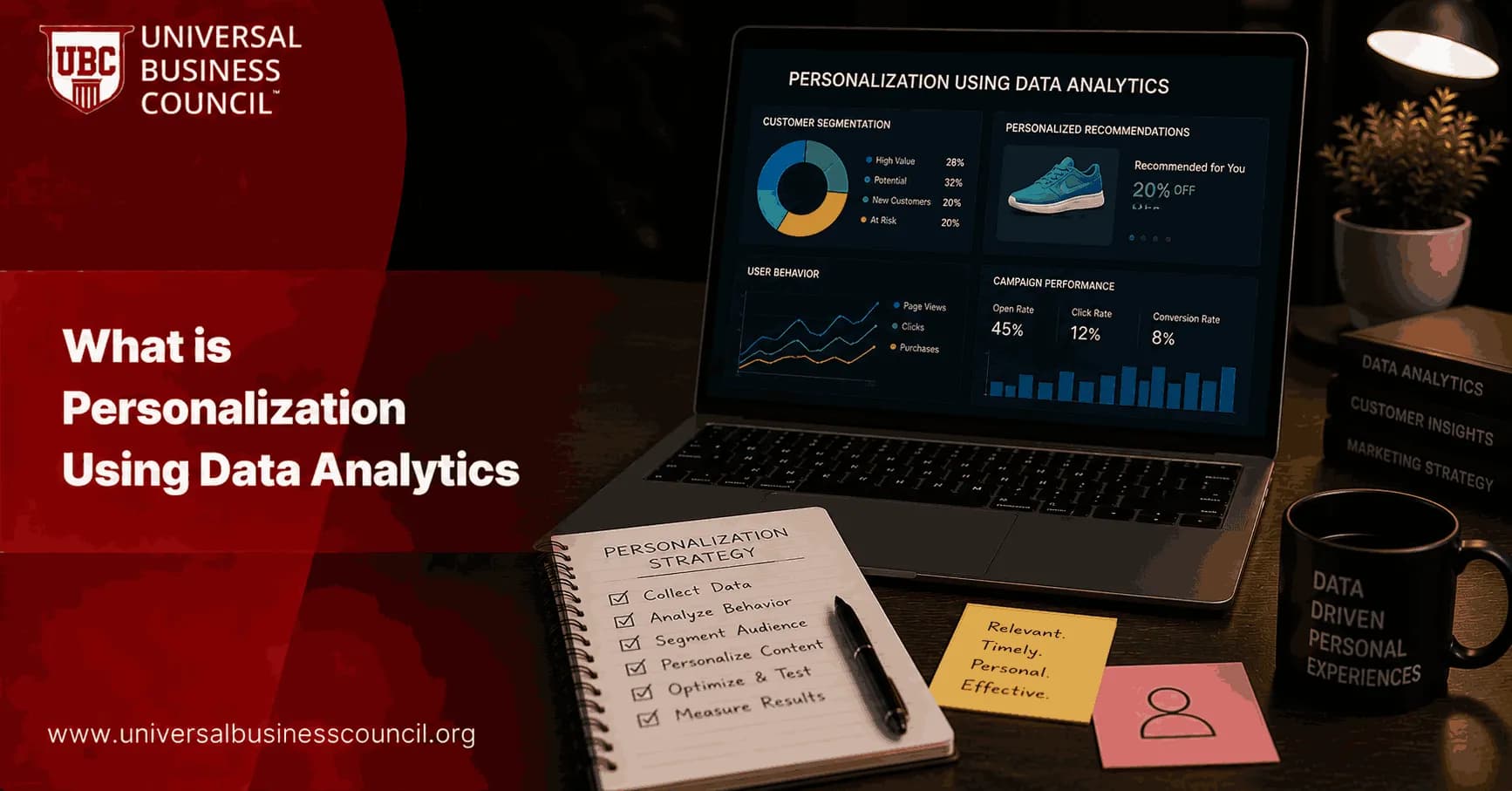
Modern consumers expect brands to understand their needs almost instantly. Generic advertising and mass messaging rarely create meaningful engagement anymore. Businesses now rely on data analytics to deliver personalized experiences that match individual interests, behavior, and preferences. Personalization using data analytics involves collecting and analyzing customer data to tailor marketing messages, offers, and digital experiences. Companies examine browsing history, purchase patterns, demographics, and engagement signals to create highly relevant interactions. As digital platforms continue to generate massive amounts of information, data driven personalization has become one of the most powerful strategies in modern marketing. Deliver personalized user experiences using data analytics, segmentation, and behavioral targeting by building expertise through an AI certification, processing customer data using a Python certification, and implementing personalized marketing strategies with a Digital marketing course.
Understanding Data Driven Personalization
Data driven personalization refers to the practice of using customer information and behavioral insights to customize experiences for individuals rather than broad audiences. This includes adapting website content, product recommendations, advertisements, and communication based on user data. Businesses collect various forms of data such as:

Demographic information
Purchase history
Browsing behavior
Engagement patterns
Device and channel usage
Analyzing these datasets allows companies to build detailed customer profiles. These profiles help marketers understand preferences, predict needs, and deliver relevant content at the right moment. Instead of sending the same message to everyone, organizations can provide tailored experiences that feel more personal and useful.
How Data Analytics Powers Personalization
Data Collection and Integration
The first step involves gathering data from multiple sources such as websites, social media platforms, customer relationship management systems, and purchase records. This creates a comprehensive view of customer behavior.
Customer Segmentation
Analytics tools categorize audiences into meaningful groups based on shared traits or behaviors. For example, businesses may identify frequent buyers, first time visitors, or price sensitive shoppers. This segmentation allows marketers to target campaigns more effectively.
Predictive Analytics
Advanced analytics can forecast future behavior. By analyzing past interactions, companies can predict what customers are likely to buy, when they may leave a service, or which products might interest them next.
Real Time Personalization
Modern systems can adjust content instantly. For example, an online store might recommend products based on items a user recently viewed or searched for. These capabilities allow organizations to deliver personalized experiences across websites, mobile apps, email campaigns, and social media.
Real World Examples of Data Driven Personalization
E Commerce Recommendations
Online retailers frequently use recommendation engines powered by data analytics. When customers browse products, algorithms analyze previous purchases and browsing activity to suggest relevant items. This increases both engagement and sales.
Streaming Platforms
Streaming platforms personalize homepages based on viewing history. The system learns user preferences and suggests content that aligns with individual interests.
Personalized Email Marketing
Many companies customize emails using behavioral data. Customers might receive product suggestions based on previous purchases or reminders about abandoned carts.
Social Media Content
Brands increasingly tailor social media content using analytics insights. Personalized messaging helps capture attention quickly and improve engagement levels.
Benefits of Personalization Through Data Analytics
Organizations adopting personalization strategies gain several advantages.
Improved Customer Experience
Personalized interactions make customers feel understood and valued. When content matches user preferences, engagement naturally increases.
Higher Conversion Rates
Relevant recommendations and targeted messaging increase the likelihood of purchases and actions.
Better Customer Retention
Analytics helps identify potential churn risks. Companies can proactively address issues and retain customers before they leave.
Stronger Brand Loyalty
Consistent personalized experiences build trust and long term relationships between businesses and customers. Because of these benefits, data driven personalization is becoming a core component of marketing strategy across industries.
The Role of Artificial Intelligence in Personalization
Artificial intelligence has significantly advanced personalization capabilities. AI systems analyze large datasets quickly and detect patterns that humans might miss. AI powered personalization can recommend products, automate marketing messages, and optimize customer journeys in real time. By learning from user interactions, these systems continuously improve their recommendations and predictions. For example, companies can automatically send relevant offers based on browsing behavior or adjust website content depending on user interests. This level of intelligent automation makes personalization scalable for large audiences.
Skills Needed to Work With Data Driven Personalization
As organizations increasingly rely on analytics, professionals with the right expertise are in high demand. Many marketers begin by building foundational knowledge through a Marketing certification that helps them understand consumer behavior, campaign strategy, and performance measurement. Those working in digital channels often benefit from a digital marketing certification which focuses on analytics tools, advertising technology, and data driven campaign optimization. Because artificial intelligence is becoming central to marketing technology, gaining an AI certification helps professionals understand machine learning models, automation tools, and predictive analytics used in marketing. Professionals who want to specialize in online communities and platform strategy may also pursue a master in social media to develop advanced skills in audience engagement, content planning, and digital brand management.
Challenges in Implementing Personalization
Despite its advantages, personalization comes with several challenges.
Data Privacy Concerns
Consumers are increasingly concerned about how their data is collected and used. Businesses must follow strict privacy regulations and maintain transparency.
Data Quality Issues
Personalization is only as good as the data behind it. Inaccurate or incomplete information can lead to poor targeting and irrelevant messaging.
Technology Integration
Many organizations struggle with fragmented systems and data silos. Integrating multiple data sources requires strong infrastructure and expertise. Addressing these challenges is essential for building effective personalization strategies.
Future Trends in Personalization
Personalization continues to evolve rapidly as technology improves.
AI Driven Hyper Personalization
Artificial intelligence is enabling highly detailed personalization at scale. Systems can adjust marketing messages in real time based on behavior and context.
Omnichannel Personalization
Customers interact with brands across multiple platforms. Future strategies focus on delivering consistent personalized experiences across websites, apps, social media, and offline interactions.
Predictive Customer Journeys
Advanced analytics allows companies to anticipate customer needs before they arise. Businesses can deliver proactive recommendations and support throughout the customer journey. Build AI-driven personalization systems for content, ads, and customer journeys using predictive analytics by gaining expertise through an AI certification, developing recommendation systems using a Node JS Course, and scaling personalization strategies with an AI powered marketing course.
Conclusion
Personalization using data analytics has transformed the way businesses interact with customers. By analyzing behavioral data, preferences, and engagement patterns, companies can deliver experiences that feel relevant and valuable. Advances in artificial intelligence, predictive analytics, and marketing technology continue to expand what is possible. Organizations that successfully leverage these tools can improve customer satisfaction, increase conversions, and build long lasting relationships. In an environment where attention is limited and competition is intense, personalization driven by data analytics has become a critical advantage for modern businesses.
FAQs
1. What Is Personalization Using Data Analytics?
Personalization using data analytics is the process of collecting, analyzing, and applying customer data to deliver customized experiences, content, products, and communications tailored to individual preferences and behaviors.
2. Why Is Personalization Important in Modern Marketing?
Personalization helps businesses create more relevant customer experiences, increase engagement, improve conversions, and build stronger customer relationships.
3. How Does Data Analytics Support Personalization?
Data analytics uncovers patterns, trends, preferences, and behaviors that help businesses make informed decisions about how to personalize customer interactions.
4. What Types of Data Are Used for Personalization?
Businesses commonly use demographic data, browsing history, purchase behavior, location data, engagement metrics, customer preferences, and transaction history.
5. What Is Customer Segmentation in Personalization?
Customer segmentation involves grouping customers with similar characteristics or behaviors to deliver more targeted and relevant experiences.
6. How Does Behavioral Data Improve Personalization?
Behavioral data reveals how customers interact with websites, apps, emails, and products, helping businesses understand interests and intent.
7. What Is Real-Time Personalization?
Real-time personalization uses current customer actions and interactions to instantly adjust content, recommendations, or offers based on immediate behavior.
8. How Can Businesses Personalize Website Experiences?
Businesses can personalize website content, product recommendations, landing pages, offers, and navigation based on visitor data and behavior.
9. What Role Does Predictive Analytics Play in Personalization?
Predictive analytics uses historical data and machine learning to anticipate future customer actions, preferences, and purchasing decisions.
10. How Does Personalization Improve Customer Engagement?
Relevant content and experiences are more likely to capture attention, encourage interaction, and increase customer satisfaction.
11. How Can Email Marketing Benefit from Data-Driven Personalization?
Businesses can personalize subject lines, content, product recommendations, send times, and offers based on customer behavior and preferences.
12. What Are Personalized Product Recommendations?
Personalized product recommendations use customer data and analytics to suggest products that are most relevant to an individual user's interests and purchase history.
13. How Does AI Enhance Personalization Efforts?
AI can process large amounts of data, identify patterns, automate personalization decisions, and deliver individualized experiences at scale.
14. What Is a Customer Data Platform (CDP)?
A Customer Data Platform is a system that collects and unifies customer data from multiple sources to create a single, comprehensive customer profile.
15. How Can Personalization Increase Conversion Rates?
By presenting relevant content, offers, and recommendations, personalization reduces friction and increases the likelihood of customer action.
16. What Privacy Concerns Are Associated with Personalization?
Privacy concerns include data collection practices, consent management, data security, transparency, and compliance with regulations such as GDPR and CCPA.
17. How Can Businesses Measure the Success of Personalization?
Success can be measured through engagement rates, conversion rates, customer retention, average order value, customer lifetime value, and revenue growth.
18. What Common Mistakes Should Businesses Avoid in Personalization?
Common mistakes include using inaccurate data, over-personalizing, ignoring privacy concerns, failing to update customer profiles, and delivering irrelevant recommendations. Nothing says "we understand you" quite like recommending a product someone bought six months ago and definitely does not need again.
19. Which Industries Benefit Most from Personalization Using Data Analytics?
Industries such as retail, e-commerce, banking, healthcare, travel, media, telecommunications, and education benefit significantly from personalized customer experiences.
20. What Is the Future of Personalization Using Data Analytics?
The future includes AI-driven personalization, predictive customer journeys, real-time decision-making, privacy-focused data strategies, and highly individualized experiences delivered seamlessly across multiple channels.
Related Articles
View All
Digital Marketing
Personalization at Scale: Using AI to Deliver 1:1 Experiences Across Channels
Learn how personalization at scale uses AI, real-time data, and omnichannel orchestration to deliver 1:1 experiences across email, web, SMS, ads, and in-store.

Digital Marketing
WhatsApp Rank on Google: What Search and App Data Really Shows
Learn what WhatsApp rank on Google means across web search, Google Play, and local SEO, plus how businesses should use WhatsApp for conversions.
Digital Marketing
How Programmatic Advertising Improves Targeting, Personalization, and ROI
Learn how programmatic advertising improves targeting, personalization, and ROI through data, AI bidding, DCO, retargeting, and better measurement.
Trending Articles
The Role of Blockchain in Ethical AI Development
How blockchain technology is being used to promote transparency and accountability in artificial intelligence systems.
AWS Career Roadmap
A step-by-step guide to building a successful career in Amazon Web Services cloud computing.
Top 5 DeFi Platforms
Explore the leading decentralized finance platforms and what makes each one unique in the evolving DeFi landscape.