

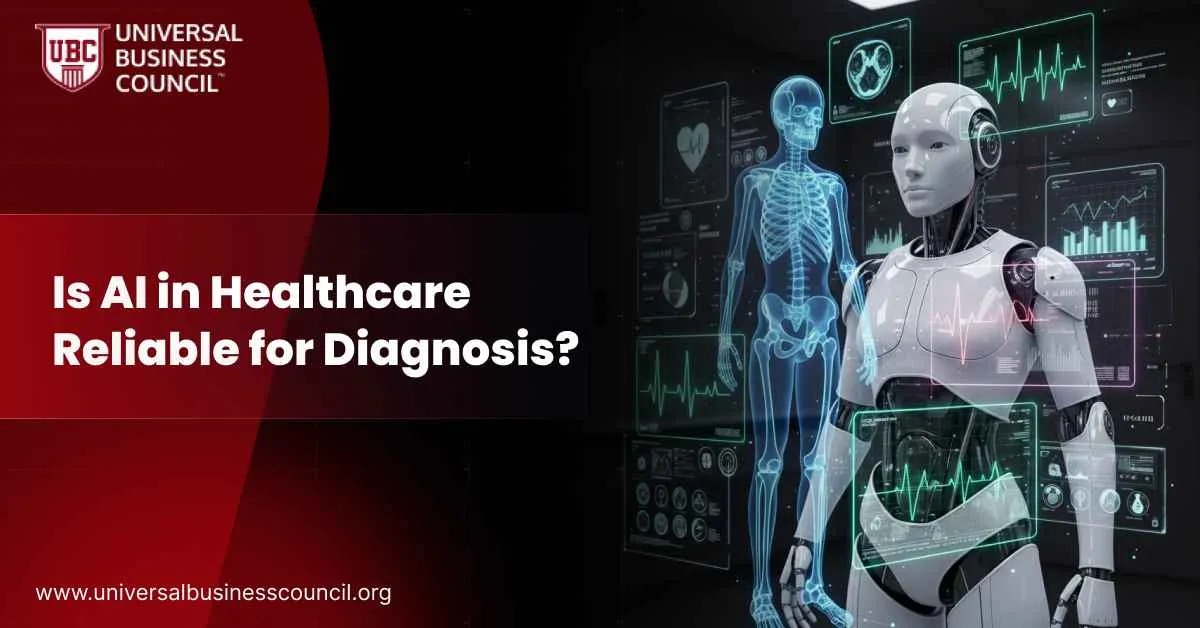
 AI is being used more than ever to support diagnosis in healthcare. The quick answer is that AI is reliable for some diagnostic tasks, especially in routine or well-structured cases, but it still struggles to fully match expert physicians in complex scenarios. Its strength lies in speed, scalability, and helping doctors reduce workload. Reliability, however, depends on accuracy, fairness, and how well the system explains its reasoning. For anyone wanting to connect these breakthroughs with real-world adoption and strategy, a Marketing and Business Certification can help link innovation with growth opportunities in healthcare.
How AI Supports Diagnosis
AI systems in healthcare usually work by collecting patient data, processing it with algorithms, and suggesting possible outcomes. They are often applied in radiology, pathology, and imaging, where they can flag patterns like tumors or fractures. Conversational AI models like AMIE even interact with patients to narrow down possible conditions. While promising, these systems must be validated with large and diverse datasets to ensure consistency. For professionals who want to understand how such models are trained and applied, an AI certification is a direct way to build foundational knowledge.Recent Evidence on Reliability
A recent meta-analysis covering 83 studies showed that AI diagnostic tools had an average accuracy of 52.1 percent. This places them close to non-expert physicians but still behind expert doctors. In specialties like dermatology and urology, AI diverged more sharply from human performance. On the other hand, models like AMIE scored as well as or better than primary care physicians on most evaluation criteria. This contrast shows that AI can be highly reliable in some contexts but not yet across all fields. For those looking to study the range of skills across industries, AI certs provide structured options.Strengths and Challenges of AI in Diagnosis
| Aspect | Insight |
| Accuracy | Matches non-expert doctors, but experts still outperform in many cases |
| Speed | Delivers results quickly, helping reduce diagnostic delays |
| Workload | Frees doctors from routine tasks, letting them focus on complex cases |
| Accessibility | Provides diagnostic support in underserved areas |
| Bias risk | Models can underperform for minority groups if trained on skewed data |
| Explainability | Many systems remain “black boxes,” limiting trust |
| Robustness | Sensitive to small context changes that can alter outcomes |
| Integration | Works best when embedded in electronic health records |
| Liability | Raises questions about responsibility when AI makes errors |
| Potential | Could lower screening costs and expand early detection globally |



Leave a Reply