

Gemma 4

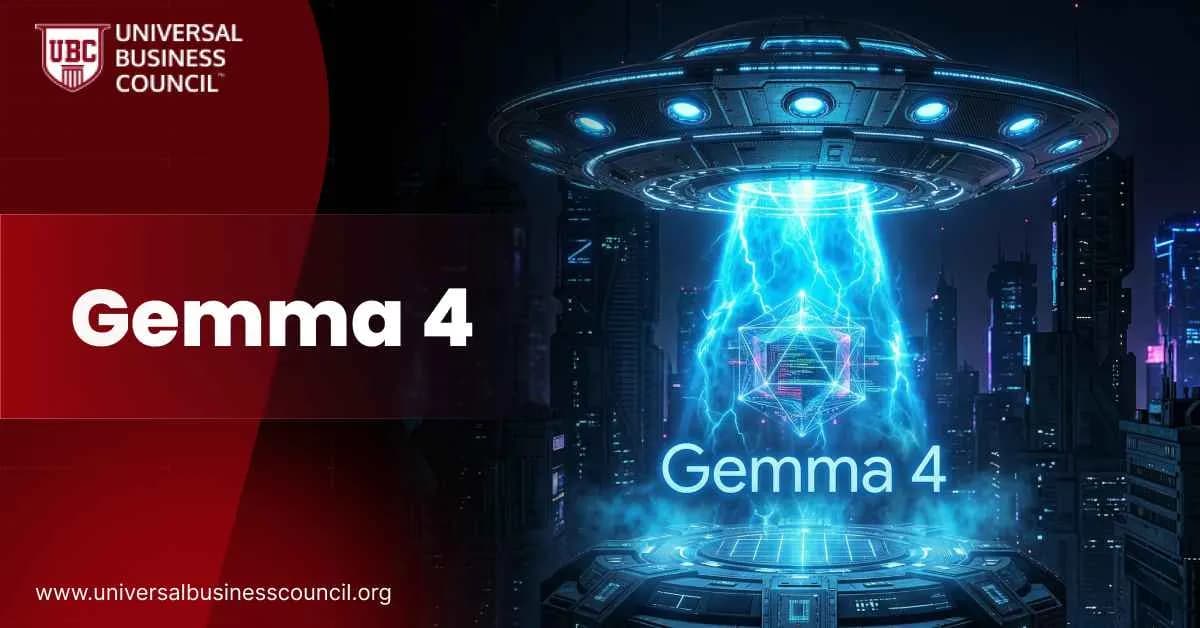
What Is Gemma 4?
Gemma 4 is a family of open-weight, multimodal AI models built for advanced reasoning and autonomous task execution. Purpose-built for advanced reasoning and agentic workflows, it delivers an unprecedented level of intelligence-per-parameter and the entire family moves beyond simple chat to handle complex logic and autonomous workflows. The Apache 2.0 license means no monthly active user limits, no acceptable-use policy enforcement, and full freedom for commercial and sovereign AI deployments a major shift from previous generations of open models.Model Sizes Built for Every Environment
Gemma 4 offers four distinct model sizes, each targeting a specific hardware tier. The family includes Dense and Mixture-of-Experts (MoE) variants optimized for scalable deployment, with smaller models specifically designed for efficient local execution on laptops and mobile devices. The E2B result stands out most: community benchmarks confirm it outperforms the previous generation’s 27B model on several tasks despite being twelve times smaller in effective parameter count. This efficiency makes Gemma 4 exceptional for teams working with limited hardware resources.Key Features That Set Gemma 4 Apart
Configurable Reasoning Modes
All models function as highly capable reasoners with configurable thinking modes — and enhanced coding and agentic capabilities come with notable improvements in coding benchmarks alongside native function-calling support, powering highly capable autonomous agents.True Multimodal Processing
Gemma 4 natively processes vision and audio, supporting variable resolutions and excelling at visual tasks like OCR and chart understanding with the E2B and E4B models featuring native audio input for speech recognition and understanding.Long-Context Understanding
The model jumped from 13.5% to 66.4% on information retrieval tests at 128K tokens compared to its predecessor — and the larger models extend this to 256K tokens, enough to process a complete code repository or a 500-page document in a single prompt.Who Benefits From Gemma 4?
Marketing professionals can automate content pipelines, generate multilingual copy, and build conversational tools. An AI Powered Marketing Expert can leverage Gemma 4’s multimodal reasoning and content generation capabilities to design smarter campaigns, personalize customer journeys at scale, and automate repetitive creative tasks all without relying on expensive third-party platforms. Freelancers can deploy private AI assistants that run entirely offline. Entrepreneurs can integrate Gemma 4 into commercial products without legal ambiguity or per-user fees. Generating thousands of pieces of content through available cloud platforms costs a fraction of traditional subscription-based AI services making this open AI model economically transformative for independent professionals and small teams.Safety Built Into the Foundation
Responsible AI is not an afterthought in Gemma 4. The models significantly outperform their predecessors in all categories of content safety while keeping unjustified refusals low with minimal policy violations recorded across both text-to-text and image-to-text tasks at every model size. Professionals pursuing a Marketing and Business Certification will find Gemma 4 particularly relevant, as AI-driven marketing strategy has become a core competency across modern business curricula. Understanding how to deploy and apply open AI models directly strengthens strategic decision-making and competitive positioning in today’s market.Benchmark Performance at a Glance
The 31B Dense model scores 85.2% on MMLU Pro and 89.2% on AIME 2026, while the 26B MoE ranks sixth globally on Arena AI using only 3.8 billion active parameters. These numbers confirm that Gemma 4 competes directly with models many times its size. Those working toward a Deep Tech Certification will recognize the architectural significance behind these results innovations such as Mixture-of-Experts design, shared KV cache optimization, and alternating attention layers represent exactly the kind of foundational engineering that deep tech professionals are trained to evaluate, implement, and scale in production environments.Starting With Gemma 4
Day-zero support spans Hugging Face Transformers, vLLM, llama.cpp, MLX, WebGPU, and Rust making Gemma 4 available everywhere from cloud servers to browsers to edge devices. Users can begin experimenting immediately through model hosting platforms, local inference tools, or cloud-based AI development environments. For professionals building a broader skill set, pairing hands-on experience with Gemma 4 alongside a Tech Certification creates a powerful combination. Technical credibility, backed by practical exposure to one of 2026’s most capable open AI models, positions professionals to lead AI adoption initiatives, advise on infrastructure decisions, and deliver measurable results across any industry.FAQs
-
What is Gemma 4?
Gemma 4 is a family of open-weight, multimodal AI models designed for reasoning, agentic workflows, and on-device deployment under the Apache 2.0 license. -
When was Gemma 4 released?
It launched in early April 2026. -
Is Gemma 4 free for commercial use?
Yes. The Apache 2.0 license permits unrestricted commercial use with no user caps or royalty fees. -
What are the four model sizes?
E2B, E4B, 26B MoE, and 31B Dense. -
What does “effective parameters” mean in Gemma 4?
It refers to a Per-Layer Embeddings technique that allows smaller models to perform like significantly larger ones. -
Can Gemma 4 run on a laptop?
Yes. The E4B variant runs on devices with approximately 8GB of RAM. -
Does Gemma 4 work offline?
Yes. All model sizes support fully offline, on-device inference. -
What modalities does Gemma 4 support?
It supports text, images, video, and audio across various model sizes. -
What is the maximum context window?
The larger models support up to 256,000 tokens; edge models support 128,000 tokens. -
Can Gemma 4 process audio?
Yes. The E2B and E4B models handle native speech recognition and translation. -
Does Gemma 4 support function calling?
Yes. It includes native function calling and structured JSON output for building autonomous agents. -
What inference frameworks support Gemma 4?
llama.cpp, Ollama, vLLM, MLX, Hugging Face Transformers, and Transformers.js all offer day-one support. -
How does Gemma 4 compare to Gemma 3?
It dramatically outperforms Gemma 3 in reasoning, coding, multimodal processing, safety, and context retention. -
Can freelancers build products using Gemma 4?
Yes. The permissive license allows freelancers to build and sell commercial products without restrictions. -
What coding benchmark scores did Gemma 4 achieve?
The Codeforces ELO reached 2,150, placing it at expert competitive programmer level. -
Is Gemma 4 suitable for content marketing?
Absolutely. It generates marketing copy, email drafts, social posts, scripts, and other content formats at scale. -
How many languages does Gemma 4 support?
Its training data covers over 140 languages. -
Can Gemma 4 power a customer service chatbot?
Yes. Its conversational reasoning and instruction-following capabilities make it well-suited for customer-facing applications. -
Does Gemma 4 support fine-tuning?
Yes. Users can fine-tune it using cloud platforms, consumer GPUs, and open-source training libraries. -
What makes Gemma 4 relevant for entrepreneurs?
Its combination of frontier performance, zero licensing fees, offline capability, and broad framework support makes it one of the most practical open AI models available for building AI-powered products in 2026.
Related Articles
View All
Artificial Intelligence
Gemini 4 Argon: Features, Pricing, and Availability
Gemini 4 Argon is Google’s new flagship AI model for coding, science, finance, law and security. See its main features, API and subscription pricing, and where you can access it today.
Artificial Intelligence
What Is Meta Muse Wonder? Features and How It Works
Meta Muse Wonder is a new frontier AI model built for agents with Active Memory and Active Focus. Learn what it is, how it works, its features, pricing and how to access it.

Artificial Intelligence
What Is Google Playground? Features and How It Works
What is Google Playground? Learn how Google's new AI platform turns text prompts into playable browser games, which models power it, its features, pricing and access, Unity Spark plans, rival tools, and limits.
Trending Articles
The Role of Blockchain in Ethical AI Development
How blockchain technology is being used to promote transparency and accountability in artificial intelligence systems.
AWS Career Roadmap
A step-by-step guide to building a successful career in Amazon Web Services cloud computing.
Top 5 DeFi Platforms
Explore the leading decentralized finance platforms and what makes each one unique in the evolving DeFi landscape.