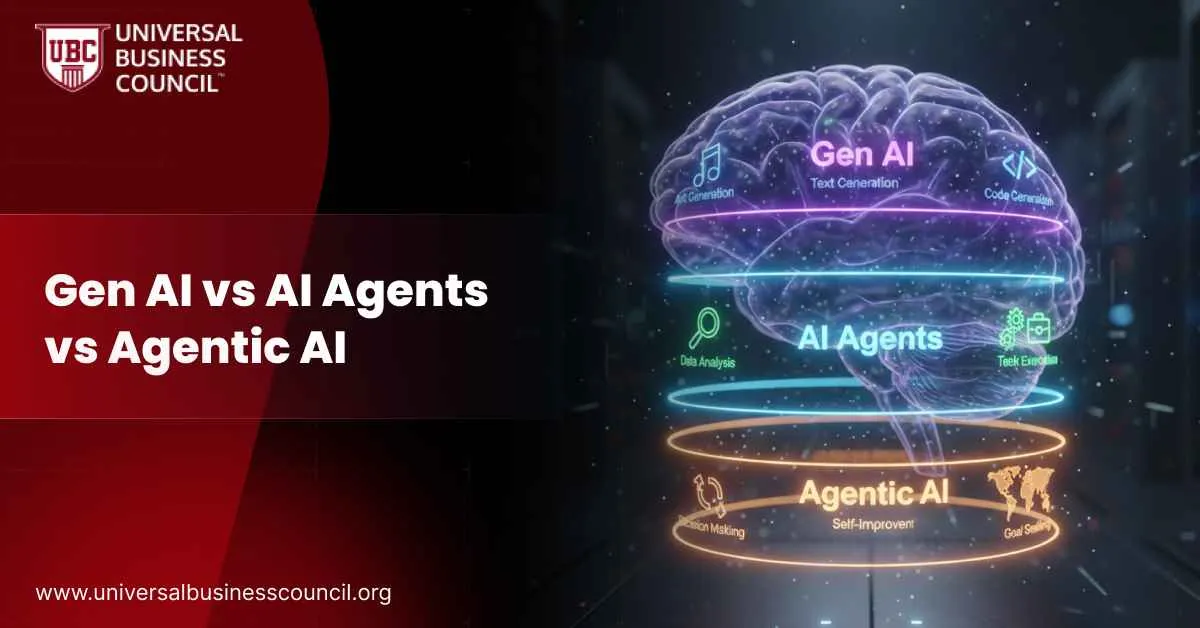
Artificial intelligence is evolving at an extraordinary pace. New capabilities appear frequently, and systems that once needed extensive human involvement are now handled through automated processes. Within this rapid shift, three categories create the most uncertainty: generative AI, AI agents, and agentic AI. They are often grouped together, yet each one delivers a different level of intelligence and operational depth. Organizations working with advanced workflows often pursue structured learning such as aMarketing and business certification to understand how these technologies influence strategy and implementation. Knowing where each category fits is essential to avoid unreliable workflows or tools that fail under real conditions.
Why the Industry Recognizes Three Separate Categories
As businesses experimented with AI, it became clear that a single model could not support every need. Generative systems can produce content but cannot manage multi stage tasks. AI agents bridge that gap by following procedural logic and accessing tools. Agentic systems take another step by operating with long term independence. Failure arises when teams overestimate what a generative model can do. Without mechanisms for memory, planning, or active decision making, generative models cannot function as autonomous operators. This reality led to a distinct separation between the three groups.
What Generative AI Offers Today
Generative AI systems create information based on learned patterns. They write, summarize, generate ideas, craft explanations, and produce visual content. Their speed and adaptability make them useful for tasks that rely on language or creativity. However, these systems do not direct their own actions. They do not track what they previously did unless the user provides that context. They are best used when the task can be fully described in a single instruction. Once tasks require awareness of steps, the limitations begin to show.
How AI Agents Build on Generative Models
AI agents add structure and operational clarity on top of generative systems. They work by following goals through a sequence of actions. They can interact with APIs, retrieve data, use tools, and track intermediate steps until a task is finished. An AI agent can divide a goal into components and reason through which action should come next. It can search for information, make calculations, format results, or perform any process that depends on tool interaction. These behaviors are not inherent to a generative model. They rely on external logic and a defined framework around the model. Agents excel in support automation, planning tasks, research workflows, scheduling, and multi stage reports. They provide reliability where simple prompting might fail.
What Sets Agentic AI Apart
Agentic AI systems introduce independence. They take responsibility for monitoring conditions, updating their approach, and managing ongoing processes without needing a direct request each time. This capability moves beyond step based execution. Agentic systems can maintain accumulated experience, operate through constant feedback, coordinate with other agents, and adjust plans as conditions shift. They retain focus on objectives across extended sessions. This makes them suitable for environments where continuous oversight is needed. Because building such systems requires detailed knowledge of architecture and control, professionals often pursue training such as aDeep Tech certification to handle the complexities involved.
Practical Comparisons Through Real Workflows
Report Creation
A generative system can draft text based on instructions. An agent can gather updated data, evaluate sources, and format the final document. An agentic system can track business conditions over time and produce new reports as trends emerge.
Support Tasks
A generative system can craft helpful replies. An agent can access order information and actions within company systems. An agentic system can identify patterns across many cases and recommend operational updates.
Data Pipelines
A generative system can summarize what a dataset contains. An agent can handle extraction, filtering, and processing. An agentic system can oversee the entire pipeline, detect issues, and trigger notifications.
Strengths and Tradeoffs Across the Three Groups
Each group excels in different scenarios.
Generative AI
Strengths Language fluency, rapid content creation, idea generation, effective for messaging and conversation.Weaknesses No independent planning, no built in tool use, no memory across steps, not suited for ongoing operations.
AI Agents
Strengths Structured execution, tool access, dependable results, suitable for processes with defined paths.Weaknesses Quality depends on tool reliability, requires testing, may struggle without proper safeguards.
Agentic AI
Strengths Autonomy, adaptation, long term reasoning, useful for high scale operations.Weaknesses Complex design, stronger safety requirements, needs oversight similar to managing a real operational system.These considerations influence how organizations choose their AI approach. Leaders evaluating the strategic value of AI often look for structured programs such as aMarketing and business certification to understand broader implications for operations.
How These Categories Work Together in Practice
Modern AI systems rarely rely on a single category. They often combine strengths from all three.
Generative AI in the Workflow
It acts as the language and creativity engine, producing text, transforming ideas, and supporting research.
AI Agents in the Workflow
They interpret goals, choose actions, coordinate tools, and complete staged tasks from input to output.
Agentic AI in the Workflow
They serve as supervisors that monitor results, maintain direction, adjust the approach, and support ongoing operations.
Choosing the Right Approach for a Workflow
The ideal choice depends on the complexity and goals of the task.
When Generative AI Is Sufficient
Writing tasks, brainstorming, answering questions, producing content, or handling conversations.
When AI Agents Provide the Best Fit
Structured multi stage processes, tasks involving external tools, workflows that need predictable rules and consistent outcomes.
When Agentic AI Becomes Necessary
Operations that run constantly, systems that require ongoing monitoring, and objectives that span long periods without frequent human direction.
The Direction AI Is Heading
AI is moving toward interconnected systems where generative reasoning, structured execution, and autonomous decision making work together. This collaborative model allows organizations to build solutions that are accurate, scalable, and resilient. As companies move toward this future, the value of structured training becomes more evident. Many teams pursue aTech certification to develop the skills needed to build and govern advanced AI systems. By understanding how generative AI, agents, and agentic systems differ, organizations can design workflows that remain stable, efficient, and aligned with long term goals.


 Artificial intelligence is evolving at an extraordinary pace. New capabilities appear frequently, and systems that once needed extensive human involvement are now handled through automated processes. Within this rapid shift, three categories create the most uncertainty: generative AI, AI agents, and agentic AI. They are often grouped together, yet each one delivers a different level of intelligence and operational depth.
Organizations working with advanced workflows often pursue structured learning such as a Marketing and business certification to understand how these technologies influence strategy and implementation. Knowing where each category fits is essential to avoid unreliable workflows or tools that fail under real conditions.
Artificial intelligence is evolving at an extraordinary pace. New capabilities appear frequently, and systems that once needed extensive human involvement are now handled through automated processes. Within this rapid shift, three categories create the most uncertainty: generative AI, AI agents, and agentic AI. They are often grouped together, yet each one delivers a different level of intelligence and operational depth.
Organizations working with advanced workflows often pursue structured learning such as a Marketing and business certification to understand how these technologies influence strategy and implementation. Knowing where each category fits is essential to avoid unreliable workflows or tools that fail under real conditions.



Leave a Reply