

A Guide To Advertise On Instagram
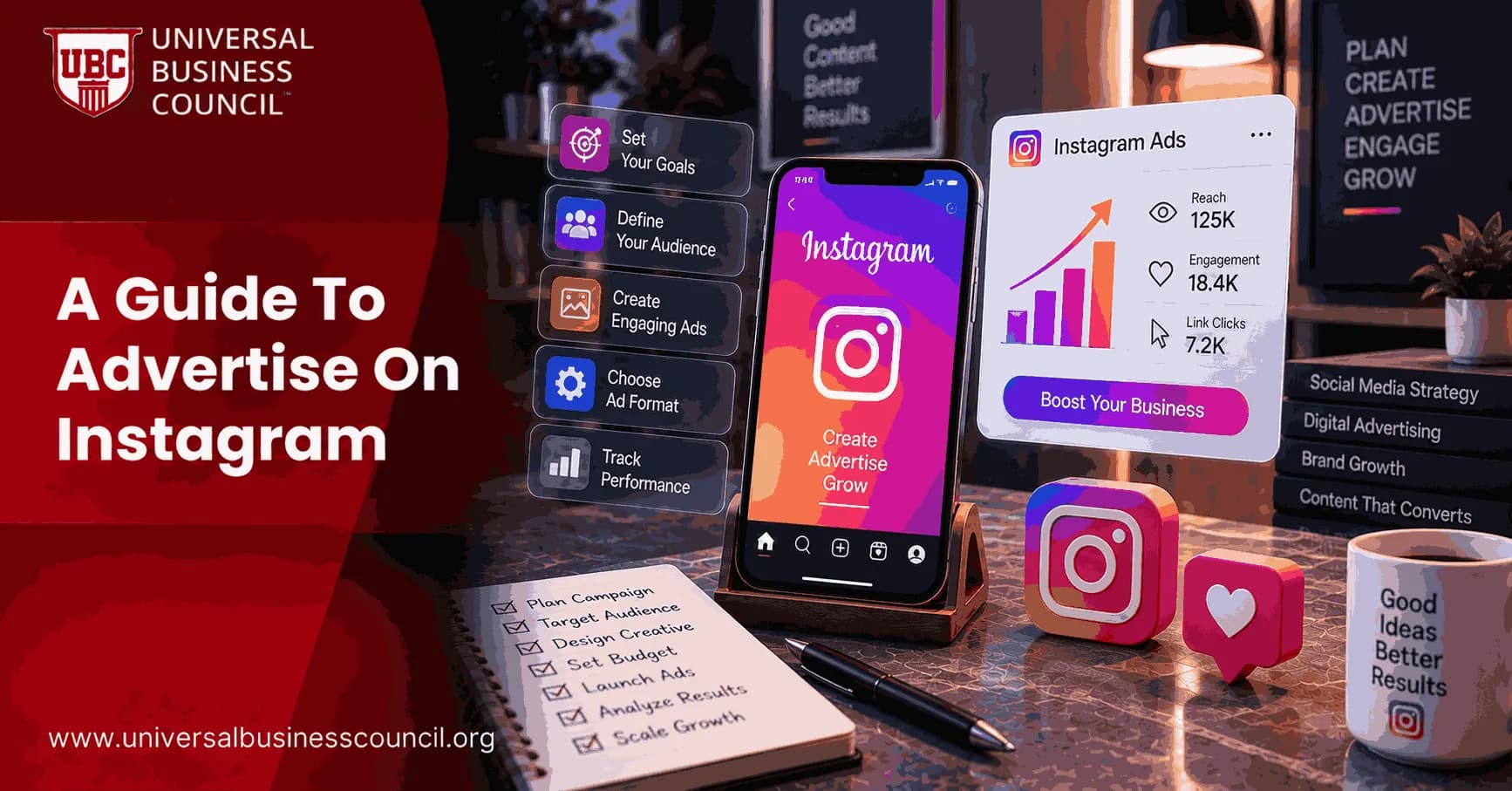
Instagram advertising has matured into one of the most precise and cost-effective ways for businesses to reach highly specific audiences, whether the goal is brand awareness, website traffic, or direct sales. Unlike organic content, which depends heavily on the algorithm's unpredictable reach, ads offer a level of control and targeting that lets businesses put content directly in front of the people most likely to convert. For those looking to run campaigns that actually perform, learning proven strategies matters, and many turn to a Certified Instagram Growth Expert to understand how paid promotion and organic growth work together rather than treating them as separate efforts.
This guide walks through the essentials of Instagram advertising, from choosing the right ad format to targeting the right audience and measuring what actually works.

Instagram's Ad Ecosystem
Instagram ads run through Meta's advertising platform, which means campaigns can be managed alongside Facebook ads and benefit from the same audience data and targeting infrastructure. This integration allows businesses to build detailed audience profiles based on interests, behaviors, and past interactions with a brand.
Running effective campaigns increasingly requires more than basic targeting knowledge. Many marketers now train as an AI Powered Digital Marketing Expert, learning how to use AI-driven bidding strategies and predictive audience modeling to improve campaign performance automatically, rather than manually adjusting targeting settings through trial and error.
Choosing the Right Ad Format
Instagram offers several ad formats, each suited to different goals:
Photo ads work well for simple, visually driven promotions
Video ads tend to perform strongly for storytelling and product demonstrations
Carousel ads allow multiple images or videos in a single ad, useful for showcasing product ranges
Reels ads blend naturally into short-form video content and often see strong engagement
Story ads appear between organic Stories and work well for time-sensitive promotions
Setting Clear Campaign Objectives
Before spending a single rupee or dollar on ads, defining a clear objective shapes every other decision in the campaign.
Awareness Versus Conversion Goals
Campaigns focused on brand awareness prioritize reach and impressions, while conversion-focused campaigns prioritize actions like purchases, sign-ups, or website visits. Choosing the wrong objective for a given goal often leads to wasted spend, since Instagram's algorithm optimizes delivery based on whichever objective is selected.
Setting Realistic Budgets and Timelines
New advertisers often see stronger long-term results by starting with a modest daily budget, testing different creative and targeting combinations, and scaling up only once a campaign shows consistent performance rather than committing a large budget upfront.
Targeting the Right Audience
Precise targeting is what separates efficient ad spend from wasted budget on Instagram.
Using Custom and Lookalike Audiences
Custom audiences built from existing customer lists or website visitors allow businesses to re-engage people already familiar with the brand. Lookalike audiences then help find new users who share similar characteristics with existing customers, expanding reach without sacrificing relevance.
Refining Targeting With Interest and Behavior Data
Layering interest and behavior-based targeting on top of demographic data helps narrow an audience further, ensuring ad spend reaches people genuinely likely to engage with the specific product or service being promoted.
Creating Ad Content That Performs
Even the best targeting can't compensate for weak creative. Ad content needs to capture attention quickly and clearly communicate value.
Designing for the Feed and Stories Simultaneously
Since ads often run across multiple placements, designing creative that works in both square feed formats and vertical Story formats prevents important content from being cropped or misaligned.
Experimenting With New Creative Formats
Trying fresh storytelling approaches can help ads stand out in an increasingly crowded feed. One emerging application is AI microdrama, where generative AI helps bring serialized stories, characters, and fictional worlds to life. Some brands are beginning to test short, episodic ad content inspired by this format, using serialized storytelling to build anticipation across a campaign rather than relying on a single standalone ad.
Measuring and Optimizing Campaign Performance
Launching an ad campaign is only the beginning. Ongoing measurement determines whether that campaign continues to deliver value over time.
Tracking the Metrics That Matter
Click-through rate, cost per result, and return on ad spend typically matter more than vanity metrics like impressions alone. Reviewing these numbers regularly allows advertisers to pause underperforming ads and reallocate budget toward what's actually working.
Applying Advanced Optimization Techniques
As campaigns scale, understanding the underlying technology behind automated bidding and predictive delivery becomes increasingly valuable. Professionals who pursue a Deep Tech Certification are often better equipped to interpret these automated systems and fine-tune campaigns using data-driven logic rather than surface-level metrics alone.
Staying Current With Instagram's Advertising Tools
Instagram's ad platform evolves constantly, introducing new formats, targeting options, and automation features on a regular basis. Broadening expertise through a well-rounded Tech Certification helps advertisers stay current with the wider digital advertising landscape, ensuring strategies keep pace with new tools rather than relying on outdated tactics.
Final Thoughts
Advertising on Instagram effectively requires more than a modest budget and an eye-catching image. It demands a clear objective, precise audience targeting, compelling creative, and consistent performance tracking. Businesses that treat Instagram advertising as an evolving, data-driven strategy, rather than a one-time campaign, are the ones that see sustained returns from their ad spend over time.
FAQs
1. What is Instagram advertising?
Instagram advertising allows businesses and creators to promote products, services, content, or offers to selected audiences. Advertisers can use paid campaigns to reach people beyond their existing followers and work toward objectives such as awareness, traffic, leads, or sales.
2. How can I advertise on Instagram?
You can create Instagram advertising campaigns through Meta's advertising tools, where you can choose a campaign objective, define your audience, set a budget, create an ad, select placements, and monitor performance. The exact setup options can vary depending on the campaign objective and account configuration.
3. Do I need a business account to advertise on Instagram?
For professional advertising campaigns, you generally need an Instagram professional presence connected to the appropriate Meta business and advertising setup. This gives advertisers access to business and advertising tools that are not available in the same way on a personal account.
4. How much does it cost to advertise on Instagram?
There is no single fixed price for Instagram advertising. Costs depend on factors such as audience, competition, campaign objective, creative quality, placement, bidding, and budget, so advertisers should test campaigns and evaluate the results rather than relying on one universal cost benchmark.
5. What is the minimum budget for Instagram ads?
The appropriate starting budget depends on your objective, audience size, market, and testing requirements. A smaller budget can be useful for initial experimentation, while campaigns designed to generate consistent leads or sales may require more spending and sufficient time to collect meaningful performance data.
6. What types of Instagram ads can businesses use?
Businesses can use different creative formats, including image ads, video ads, carousel-style ads, and other formats available through Meta's advertising system. The best format depends on the campaign goal, product, audience, and type of message being communicated.
7. What is the best Instagram ad format for beginners?
There is no universally best format, but simple image or short-form video ads can be relatively easy starting points. Test different creative approaches and compare results to determine which format works best for your specific audience and objective.
8. How does Instagram ad targeting work?
Advertisers can define audiences using factors such as location, demographics, interests, behaviors, and other available targeting signals. Meta also provides options involving Custom Audiences and Lookalike Audiences, which can help advertisers reach existing or potentially similar audiences.
9. What is a Custom Audience on Instagram?
A Custom Audience allows advertisers to create an audience based on existing customer or user information and eligible interactions. It can be useful for reaching people who have already interacted with a business and may be suitable for remarketing campaigns.
10. What is a Lookalike Audience?
A Lookalike Audience is designed to help advertisers find new people who are similar to an existing audience or customer group. This can be useful when a business wants to expand beyond its current audience while maintaining characteristics associated with its existing customers.
11. What should I include in an Instagram ad?
An effective Instagram ad should communicate a clear value proposition quickly and use an appropriate visual, concise copy, and relevant call to action. The creative should make it obvious what the audience is being offered and what action they should take next.
12. How important is the creative for Instagram advertising?
Creative quality is critical because users encounter ads while consuming visual content. Test different images, videos, hooks, messages, calls to action, and creative concepts to identify combinations that produce stronger results. A/B testing can help isolate which creative elements perform better.
13. What is A/B testing in Instagram advertising?
A/B testing involves comparing different versions of an advertising variable to determine which performs better. You might test different creative concepts, messages, audiences, or other campaign elements, while keeping other important variables controlled where possible.
14. What campaign objective should I choose for Instagram ads?
Choose an objective based on the business result you want to achieve rather than simply maximizing impressions. For example, an awareness campaign may focus on reaching potential customers, while a conversion-oriented campaign may focus on actions such as leads, purchases, or other measurable outcomes.
15. How can I write effective Instagram ad copy?
Keep your message concise, audience-focused, and connected to a clear benefit. Start with a compelling hook, explain the value of the offer, address an important problem or desire, and finish with a relevant call to action.
16. How can I target the right audience on Instagram?
Start by defining your ideal customer based on factors such as needs, interests, location, demographics, purchasing behavior, and previous interactions with your business. Test different audience groups rather than assuming that the broadest or narrowest audience will automatically perform best.
17. How can I measure Instagram ad performance?
Monitor metrics that correspond to your campaign objective, such as impressions, reach, clicks, click-through rate, cost per result, conversions, and return on ad spend. Looking at multiple metrics together provides a more useful picture than judging a campaign from likes or impressions alone.
18. How can I improve the performance of Instagram ads?
Review campaign data regularly and identify weak points in the customer journey. Test new creatives, audiences, offers, landing pages, and campaign structures while avoiding frequent unnecessary changes that make it difficult to determine what actually improved performance.
19. What mistakes should businesses avoid when advertising on Instagram?
Common mistakes include targeting an unclear audience, using weak creative, having an unclear offer, sending users to an irrelevant landing page, spending without tracking conversions, and failing to test alternatives. Businesses should also ensure that their ads follow Meta's advertising policies.
20. What is the best strategy for successful Instagram advertising?
Start with a clearly defined business objective and target audience, create several strong creative variations, launch with a controlled budget, and measure results against meaningful business metrics. Continue testing and improving based on performance rather than assuming that one ad, audience, or strategy will work indefinitely.
Related Articles
View All
How to Start Instagram Marketing in 2026: A Beginner’s Guide
Starting Instagram marketing in 2026 requires a clear audience, optimized profile, original content strategy, consistent publishing, and disciplined performance tracking. Reels remain important for discovery, while Instagram increasingly emphasizes original content and provides creators with personalized guidance on creation, engagement, reach, monetization, and platform rules.
The Ultimate Guide For Instagram Insights
Instagram Insights helps professional accounts understand how content and audiences are performing. Businesses and creators can analyze metrics such as views, accounts reached, interactions, follower growth, and content performance across posts, Stories, and Reels. Reviewing these insights regularly helps identify which content resonates, when audiences engage, and where the strategy needs adjustment instead of trusting the notoriously scientific method of vibes.

Content Calendar System for Instagram: Plan 30 Days of Posts, Reels, and Stories
Learn a repeatable content calendar system for Instagram to plan 30 days of posts, Reels, and Stories using pillars, batching, scheduling, and analytics.
Trending Articles
The Role of Blockchain in Ethical AI Development
How blockchain technology is being used to promote transparency and accountability in artificial intelligence systems.
AWS Career Roadmap
A step-by-step guide to building a successful career in Amazon Web Services cloud computing.
Top 5 DeFi Platforms
Explore the leading decentralized finance platforms and what makes each one unique in the evolving DeFi landscape.