

What Digitization Can Do For Your Business?
 Smita
Smita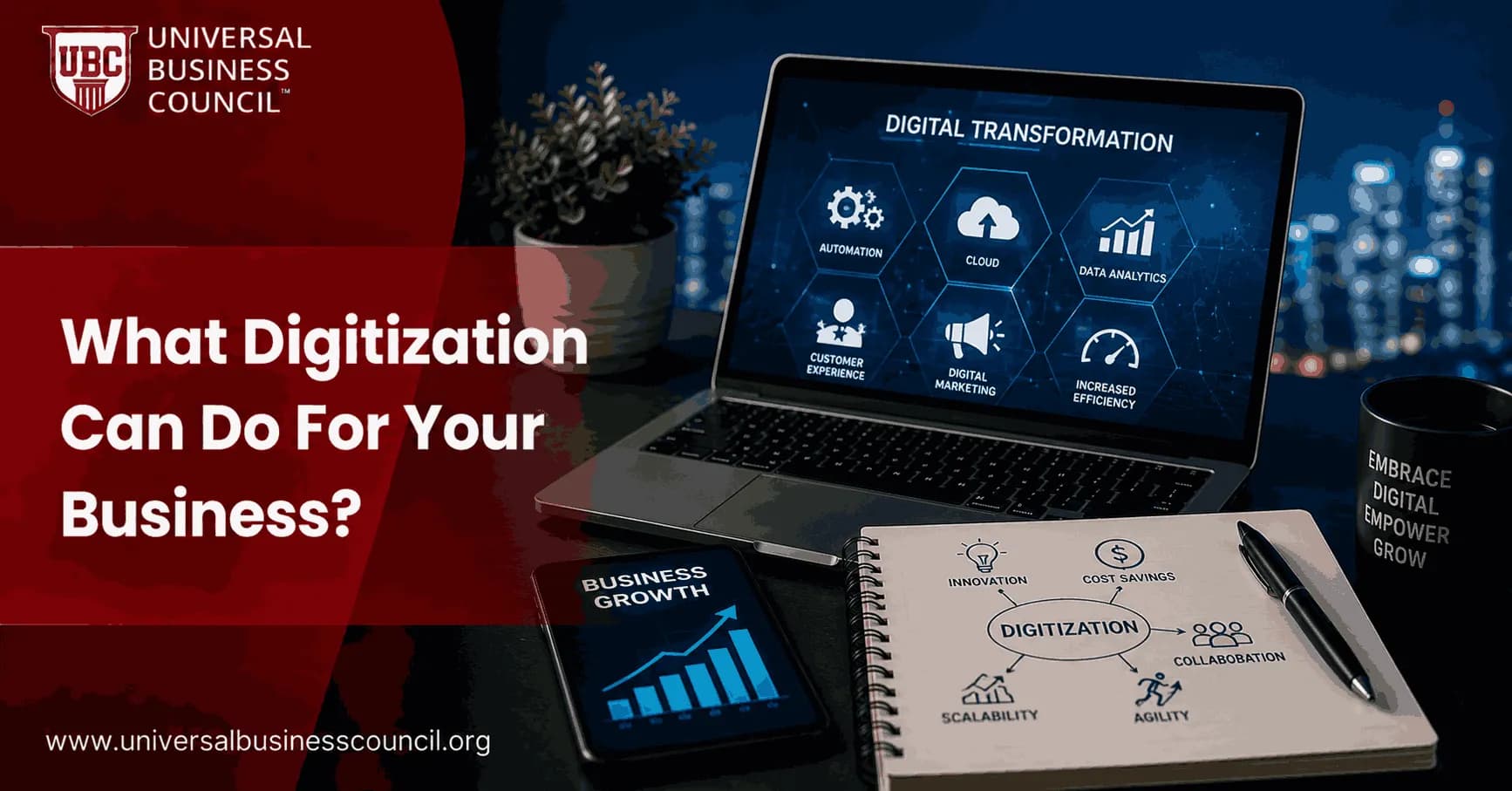
Digitization is no longer an optional upgrade reserved for large enterprises with dedicated IT departments. It has become the baseline expectation customers, partners, and employees hold for any business that wants to stay competitive. Moving paper records, manual processes, and disconnected spreadsheets into digital systems changes how fast a business can respond to problems, how well it understands its customers, and how much time employees spend on repetitive work instead of meaningful decisions. Business leaders building a digital strategy around this shift often start with a strong marketing foundation, and many choose to formalize that through a Certified Digital Marketing Expert credential, since digitization and digital marketing maturity tend to grow together inside most organizations.
This article breaks down what digitization actually does for a business, where it makes the biggest difference, and how to start the process without disrupting daily operations.

Why Digitization Matters Now
The Shift From Manual to Digital Operations
Every business already runs on some combination of manual and digital processes. The question is not whether to digitize, but how much of the manual side is quietly costing time, money, and accuracy without anyone tracking it closely. A single misfiled invoice or a customer request lost in an overflowing inbox rarely feels urgent in isolation, but these small failures add up across a year into real lost revenue and damaged trust.
Customer Expectations Have Changed
Customers today expect to book, order, track, and get support digitally, regardless of the size of the business they are dealing with. A local service business competing against larger digitized competitors is not just competing on price or quality anymore. It is competing on convenience, and convenience increasingly means a smooth digital experience from first contact to after-sales support.
Key Benefits of Digitization for Your Business
Digitization delivers value across nearly every part of a business, not just the departments most people associate with technology.
Improved Efficiency and Automation
Manual, repetitive tasks such as data entry, invoice processing, and appointment scheduling can be automated once they move into digital systems. This frees employees to focus on higher-value work, and it reduces the human error that naturally creeps into repetitive manual tasks over time.
Better Customer Experience
Digitized businesses can respond faster, personalize communication based on customer history, and offer self-service options that reduce wait times. A customer who can track an order status themselves, without calling support, is generally a happier customer than one left waiting on hold.
Data-Driven Decision Making
Digital systems generate data automatically, whether that is sales trends, website traffic, or customer feedback patterns. Business owners who once relied on gut instinct can now check actual numbers before making decisions about inventory, staffing, or marketing spend. As artificial intelligence becomes more embedded in everyday marketing tools, understanding how to apply it well is becoming its own specialty, which is why many marketing teams are investing in an AI Powered Digital Marketing Expert credential to make sense of AI-driven analytics and automation rather than treating these tools as a black box.
Cost Savings Over Time
Digitization often requires upfront investment, but the long-term savings usually outweigh that cost. Reduced paper use, fewer manual errors, lower storage costs, and faster processing times all contribute to a leaner operation once the systems are in place and the team has adjusted to them.
Areas of Business Digitization Transforms
Marketing and Sales
Digital tools allow businesses to reach customers precisely, track campaign performance in real time, and adjust strategy quickly rather than waiting weeks for print or broadcast results. Sales teams benefit from digital customer relationship management systems that track every interaction, so no lead falls through the cracks.
Operations and Supply Chain
Digitized inventory systems, supplier communication platforms, and logistics tracking tools give operations teams real-time visibility into stock levels and delivery timelines. This visibility reduces the guesswork that used to lead to overstocking, stockouts, or missed delivery windows.
Finance and Accounting
Cloud-based accounting software reduces manual bookkeeping errors and speeds up processes like invoicing, payroll, and financial reporting. Some businesses are also beginning to explore how emerging technologies, including blockchain-based ledgers, could improve transparency and auditability in financial record keeping, and professionals curious about this direction often look into a Deep Tech Certification to understand where these tools genuinely add value versus where they remain experimental.
Customer Service
Chatbots, ticketing systems, and knowledge bases allow customer service teams to handle a higher volume of requests without sacrificing response quality. Customers get faster answers to common questions, while human agents can focus on complex issues that actually need their attention.
Technology Skills & Education
Schools and parents are increasingly looking for ways to introduce children to technology in a structured and meaningful way. The Tech Olympiad provides an opportunity for students to explore AI, coding, robotics, cybersecurity, and computational thinking while building confidence and problem-solving skills. The comfort with technology that students build through experiences like this often becomes the same comfort that helps them lead digital transformation projects confidently later in their careers.
How to Start Digitizing Your Business
Digitization does not need to happen all at once, and trying to digitize everything simultaneously is one of the most common reasons transformation projects stall. Start by identifying the single process causing the most friction today, whether that is manual invoicing, disorganized customer records, or a slow inventory system, and digitize that first.
Involve the employees who actually use the current process before choosing new software, since tools that look efficient on paper often fail in practice if they do not match how people actually work day to day. Once the first system is running smoothly, expand digitization gradually into other areas, measuring the impact at each stage rather than assuming success.
As digitization touches more of the business, from marketing platforms to finance software to customer service tools, having a broad technical foundation becomes valuable across departments, not just in the IT team. A general Tech Certification can help managers and team leads build enough technical literacy to evaluate new tools critically and support their teams through the transition rather than depending entirely on outside consultants.
Digitization ultimately gives a business the speed, visibility, and flexibility it needs to compete in a market where customers, employees, and partners all expect digital-first experiences. Businesses that treat it as a gradual, well-planned process tend to see far better long-term results than those that rush the transition without a clear strategy.
FAQs
1. What is digitization in business?
Business digitization is the process of converting information, records, and traditional business activities into digital formats. It can include moving from paper documents to digital files, using online systems, automating workflows, and managing business information through digital platforms.
2. Why is digitization important for businesses?
Digitization helps businesses make processes faster, more organized, and easier to manage. It can reduce manual work, improve access to information, support better decision-making, and help businesses respond more effectively to changing customer and market needs.
3. What are the main benefits of digitization for a business?
The major benefits include improved operational efficiency, reduced manual work, better data management, faster communication, improved customer experiences, and greater scalability. Digital technologies can also help businesses identify new opportunities and develop new ways of delivering products and services.
4. How can digitization improve business efficiency?
Digital tools can streamline repetitive tasks, organize workflows, and reduce the amount of time employees spend handling manual processes. Automation can further improve efficiency by allowing software to complete predefined tasks with minimal human intervention.
5. Can digitization reduce business costs?
Yes, digitization can reduce costs by decreasing paperwork, manual data entry, repetitive administrative work, and inefficient processes. However, businesses should evaluate implementation, software, training, and maintenance costs before selecting digital solutions.
6. How does digitization improve productivity?
Digitization gives employees faster access to information and tools while reducing repetitive administrative activities. This allows employees to spend more time on strategic, creative, and customer-focused work.
7. How can digitization improve customer experience?
Digital systems can make it easier for customers to interact with a business through websites, mobile applications, online portals, digital payments, and automated support. Businesses can also use customer data to provide more personalized experiences and faster responses.
8. How does digitization help businesses manage data?
Digitization makes business information easier to store, search, organize, share, and analyze. Centralized digital data can also help businesses reduce information silos and provide employees with more timely information for decision-making.
9. Can digitization help businesses make better decisions?
Yes. Digital systems can collect and organize information from different business activities, allowing managers to analyze performance and identify trends. Better access to timely data can support faster and more informed business decisions.
10. What business processes can be digitized?
Many business processes can be digitized, including accounting, invoicing, inventory management, document management, customer service, marketing, sales reporting, employee communication, and payment processing. The best processes to digitize are usually repetitive, time-consuming, or highly dependent on manual information handling.
11. How does automation contribute to business digitization?
Automation is an important part of digitization because it allows repetitive tasks and workflows to be completed with less manual intervention. Businesses can automate activities such as notifications, approvals, data transfers, reporting, and routine customer communications.
12. How can cloud technology support business digitization?
Cloud technology allows businesses to access applications, data, and computing resources through internet-connected systems. It can support remote collaboration, easier data access, scalability, and integration between different business applications.
13. Can digitization help small businesses compete with larger companies?
Yes. Digital tools can give small businesses access to online marketing, e-commerce, customer relationship management, analytics, automation, and cloud-based services without requiring the same infrastructure as large organizations. This can help smaller companies reach wider audiences and operate more efficiently.
14. How can digitization help businesses improve communication?
Digital communication tools enable employees, customers, suppliers, and business partners to exchange information quickly. Email, collaboration platforms, video conferencing, messaging systems, and centralized business applications can reduce communication delays and improve coordination.
15. Does digitization help businesses create new revenue opportunities?
Yes. Digital transformation can enable businesses to create new products, services, sales channels, and business models. For example, organizations can introduce digital services, online marketplaces, mobile applications, subscriptions, or other technology-enabled offerings.
16. What is the difference between digitization and digital transformation?
Digitization generally means converting information or processes into digital formats. Digital transformation is broader and involves using digital technologies to change how a business operates, serves customers, makes decisions, and creates value.
17. What challenges can businesses face during digitization?
Businesses may face challenges such as implementation costs, employee resistance, lack of digital skills, cybersecurity risks, data privacy concerns, and difficulties integrating new tools with older systems. A clear strategy, employee training, and phased implementation can help reduce these challenges.
18. How can businesses start their digitization journey?
Businesses should begin by identifying processes that are inefficient, repetitive, or heavily dependent on manual work. They can then prioritize the areas with the greatest potential impact, select appropriate technologies, train employees, measure results, and expand successful solutions gradually.
19. How does digitization improve business competitiveness?
Digitization can help businesses respond faster to customer expectations, improve operational efficiency, analyze information more effectively, and introduce new products or services. These capabilities can make organizations more adaptable in competitive and rapidly changing markets.
20. What can digitization ultimately do for your business?
Digitization can help a business become more efficient, data-driven, flexible, and customer-focused. When implemented strategically, digital technologies can streamline operations, improve customer experiences, support better decisions, reduce unnecessary manual work, and create opportunities for long-term growth.
Related Articles
View All
Digital Marketing
How to Use Google Ads to Grow Your Business Online in 2026
Learn how to use Google Ads to grow your business online with AI-first campaigns, smarter bidding, stronger tracking, and disciplined optimization.

Digital Marketing
Google Ads vs Facebook Ads: Which Platform Is Better for Your Business?
Compare Google Ads vs Facebook Ads by cost, intent, funnel stage, and business type. Learn when to use Google, Meta, or both for better CPA and ROAS.

Digital Marketing
SEO, GEO, and AEO Explained: A Practical Guide for Marketers and Business Leaders
Learn how SEO, AEO, and GEO work together to improve rankings, direct answers, and AI citations, with practical steps for modern marketing teams.
Trending Articles
The Role of Blockchain in Ethical AI Development
How blockchain technology is being used to promote transparency and accountability in artificial intelligence systems.
AWS Career Roadmap
A step-by-step guide to building a successful career in Amazon Web Services cloud computing.
Top 5 DeFi Platforms
Explore the leading decentralized finance platforms and what makes each one unique in the evolving DeFi landscape.