

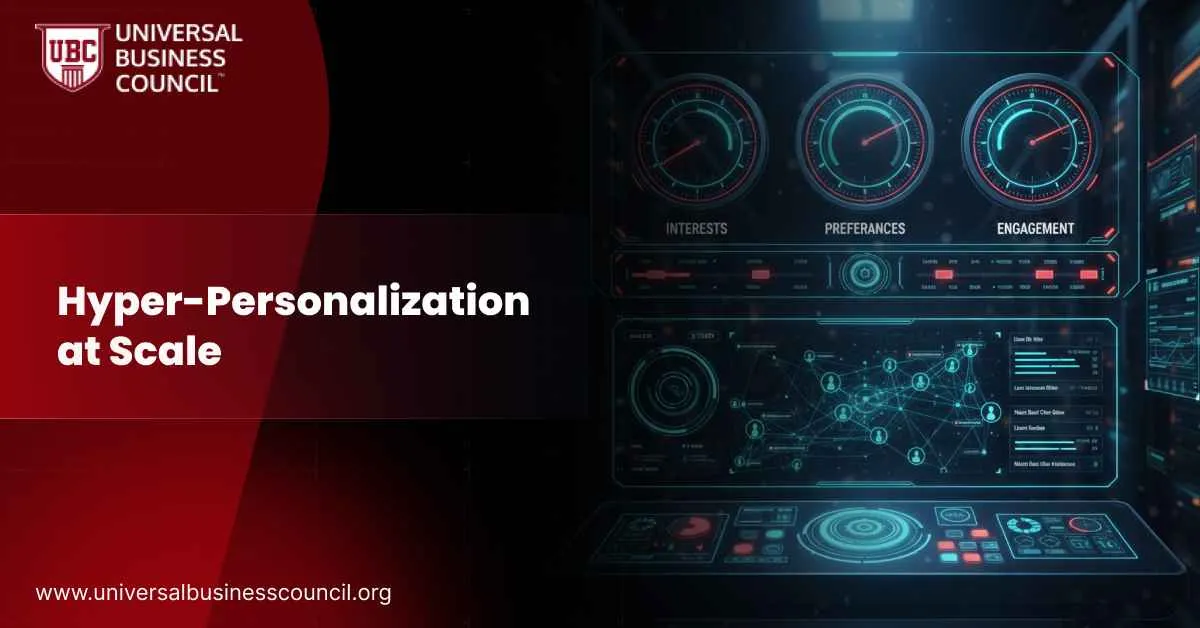
 Hyper-personalization means delivering ads that respond to what people are doing right now, not just who they are on paper. It uses real-time behavioral data—like browsing patterns, purchases, and even context such as time of day or weather—to create highly targeted experiences. This is why businesses are putting it at the center of their ad strategies in 2025. Companies and professionals interested in mastering these strategies often turn to advanced programs such as a Marketing and Business Certification to learn how to apply them effectively.
What Hyper-Personalization Really Is
Unlike traditional personalization, which might use basic demographics or past purchases, hyper-personalization works with live data. It reads signals from online behavior as they happen. For example, if a shopper is looking at running shoes at 8 p.m., the system can instantly show them an ad for the exact style they viewed, paired with a late-night discount. This immediacy is what makes hyper-personalization so powerful.Why Hyper-Personalization Matters Today
Consumers no longer see personalization as a bonus. They expect it. Ads that feel too broad or generic often get ignored. Businesses that use real-time personalization report major gains: conversion rates can rise by as much as 40%. It is not just about sales, either. Personalization improves loyalty, helps reduce churn, and boosts lifetime customer value. Amazon, Spotify, and Netflix are strong examples of companies that rely on this approach to keep customers engaged day after day.How It Works in Practice
Behavioral Data Collection
Data comes from browsing history, click patterns, device type, and even location. Each piece adds to the profile of what a user wants right now.Real-Time Decisioning
AI and machine learning models process this data instantly. They predict intent and decide which ad should appear.Content Generation
Generative AI tools can create personalized ad text or visuals on the spot, making every ad feel like it was written just for that user.Delivery at Scale
Real-time pipelines allow these tailored ads to reach thousands or millions of people at once. That is what makes this different from manual personalization. For those who want to strengthen their skills in data pipelines and predictive models, a Data Science Certification offers training in the techniques that power hyper-personalization.Examples Across Industries
E-Commerce
Retailers display different banners or offers depending on what a user just browsed or added to their cart.Streaming
Spotify suggests playlists based on current mood or time of day. Netflix offers tailored thumbnails and recommendations shaped by recent viewing.Beauty and Fashion
Brands push products that match the weather or personal skin type data, building a feeling of relevance in real time.Travel
Travel sites suggest weekend getaways if a user is browsing on a Friday evening, or promote family trips during school holidays.Benefits of Hyper-Personalization
- Higher Conversions: Ads matched to live behavior are more likely to turn into sales.
- Stronger Engagement: Users interact longer when content feels like it was made for them.
- Customer Loyalty: Relevant ads build trust and long-term brand relationships.
- Cost Efficiency: Precise targeting reduces wasted ad spend.
Challenges and Risks
Privacy Concerns
Users may feel uncomfortable when ads seem to know too much. Regulations like GDPR require clear consent and transparency.Overpersonalization
Ads that are too precise can cross the line and feel intrusive, making people pull away from the brand.Data Quality
Real-time personalization relies on clean, accurate data. Poor data leads to irrelevant ads.Infrastructure Costs
The pipelines and AI models needed are expensive and complex to manage at scale.Cultural Sensitivity
A campaign that works in one culture may backfire in another. Brands must tailor vibes carefully across markets.Tools and Technologies Driving It
- AI and machine learning for predictive modeling.
- Natural language processing to detect intent and mood.
- Generative AI for on-demand ad copy and creative design.
- Multimodal AI that reads signals from text, image, and video.
- Real-time data systems that handle clickstreams and session-level activity.
Key Points on Hyper-Personalization
| Element | Explanation |
| Definition | Ads built in real time using behavioral data |
| Core Signals | Browsing, purchases, location, device, time of day |
| Real-Time Decisioning | AI models predict intent instantly |
| Content | Generative AI adapts text and visuals |
| Industries | E-commerce, streaming, travel, beauty |
| Benefits | Higher conversions, better engagement, loyalty |
| Challenges | Privacy, data quality, cultural sensitivity |
| Metrics | Conversions, dwell time, engagement, churn reduction |
| Tools | AI, NLP, generative content, real-time pipelines |
| Future Trends | Wider use of multimodal AI, deeper integration with customer journeys |




Leave a Reply