

Is AI Hard to Learn? Reality Explained

Why Artificial Intelligence Feels More Difficult Than It Really Is
One major reason AI appears difficult is that it combines multiple skills. A learner may need some mixture of logical thinking, data awareness, experimentation, technical confidence, and problem-solving. For beginners, that can sound like too much at once. The good news is that not every AI learner needs to master every skill from the start. Another reason AI feels intimidating is the speed at which the field evolves. New tools, platforms, models, and use cases appear constantly. Beginners often see advanced demonstrations first and assume that every part of AI requires that same level of expertise. That is not true. Using AI effectively and researching advanced model architecture are very different goals, with very different learning curves. There is also a gap between using AI and understanding AI. Many people can start using chatbots, image tools, and writing assistants in minutes. However, building AI workflows, connecting APIs, evaluating outputs, and understanding reliability require more knowledge. That contrast can create the false impression that AI is somehow easy and impossible at the same time, which is a very human way to package confusion. The truth is simpler. AI has layers. Some layers are beginner-friendly. Some require more technical depth. Once learners understand which layer matches their goal, the whole field becomes more manageable.Your Learning Path Depends on What You Want to Do With AI
The question is not just whether AI is hard to learn. The better question is what kind of AI learning you want.- If your goal is to use AI tools for writing, research, productivity, automation, or marketing, the learning curve is fairly moderate. You can become effective by learning prompt design, critical review, ethical use, and practical workflows.
- If your goal is to build simple AI-powered products, the learning path becomes more technical. You will need to understand basic programming, APIs, data handling, and application logic.
- If your goal is to become a machine learning engineer, deep learning specialist, or AI researcher, the learning curve becomes much steeper. At that level, mathematics, model evaluation, optimization, experimentation, and system design matter much more.
The Biggest Challenges Beginners Usually Face
Programming Anxiety
One of the most common barriers to learning AI is programming. Python is the most widely used language in AI, machine learning, automation, and data science. Many beginners have never written code before, so even simple concepts like variables, functions, loops, and debugging can feel frustrating. Still, this challenge is manageable. You do not need to become an advanced programmer before you begin learning AI. You only need enough coding skill to understand logic, work with data, and build small practical projects. A python certification can help learners build this foundation in a structured and career-relevant way.Fear of Mathematics
Mathematics is another reason AI feels intimidating. Advanced AI work does involve statistics, probability, optimization, linear algebra, and calculus. However, beginners often assume they must master all of that before doing anything useful. That is simply not true. If your goal is to use AI tools, understand core concepts, or build basic workflows, you do not need advanced mathematics on day one. Math becomes more important as your work becomes more technical. Learning math gradually, in context, is far more effective than drowning in formulas too early.Data Awareness
Many beginners focus only on the model side of AI and ignore the role of data. In reality, data quality shapes AI performance. If the data is poor, incomplete, biased, or badly structured, the output will suffer. That means learners need at least a basic understanding of how data is collected, cleaned, labeled, organized, and evaluated. Data literacy makes AI easier to understand because it reveals why systems succeed or fail in real-world use.Fast-Changing Tools
AI tools evolve constantly. New platforms appear, new models launch, and new workflows are promoted as revolutionary every other week. This makes beginners feel like they are always behind. Fortunately, the fundamentals change much more slowly than the tools. If you understand core concepts such as machine learning, prompting, data handling, evaluation, and workflow design, you can adapt when the tools change. The tools are noisy. The foundations are what matter.What Has Made Learning AI Easier in Recent Years
AI is more accessible now than ever before. One big reason is the rise of user-friendly tools. Beginners can work directly with chatbots, coding assistants, AI image tools, transcription systems, and automation platforms without building everything from scratch. This makes early hands-on learning much easier. Another reason is the growth of structured educational pathways. Learners no longer need to piece together random tutorials and disconnected blog posts. They can follow a more organized roadmap through courses, projects, and certifications. An AI expert certification is a useful example because it helps learners build broad understanding across core AI concepts and real-world use cases. AI has also become more application-focused. Many learners do not need to invent new algorithms. They need to know how to use existing models, connect tools, improve workflows, and solve practical problems. That shift makes AI more useful and less intimidating for working professionals.Do You Need Coding Skills to Learn AI?
You can begin learning AI without coding, especially if your first goal is to understand tools and use AI in your daily work. Marketers, consultants, managers, analysts, and business professionals can all benefit from AI literacy without becoming software engineers. Still, coding becomes increasingly valuable over time. It gives you control, flexibility, and a deeper understanding of how AI systems are integrated into real products. Python remains especially important because it is central to machine learning, automation, scripting, and data analysis. That is why many learners pursue a python certification as they move from tool usage into practical implementation. For those who want to build applications that deliver AI features to users, backend development also matters. A node.js certification can help developers understand APIs, real-time systems, and server-side application logic that support AI-powered products.Do You Need Advanced Math to Study AI?
Not always. The need for math depends on your learning goal. If you want to use AI for content generation, productivity, market research, customer support, or business automation, advanced math is not essential at the start. What matters more is reasoning, experimentation, and understanding where AI adds value. If you want to study machine learning more seriously, then statistics, probability, vectors, matrices, and evaluation metrics become much more relevant. If you want to work in deep learning or research, stronger mathematical fluency becomes necessary. For most beginners, the smartest strategy is to begin with concepts and applications, then learn the math as their goals become more technical. Context makes difficult ideas easier to absorb.Which Parts of AI Are the Hardest to Learn?
Not every part of AI is equally challenging. Using AI tools effectively is one of the easiest entry points. Learning how to write better prompts, assess responses, and use AI in daily work is very accessible. Building simple AI workflows or applications with APIs is moderately difficult. It requires some technical skill, but it is highly learnable. Machine learning fundamentals are more challenging because they involve training data, evaluation, feature selection, and model behavior. Deep learning is harder because it introduces neural networks, large training requirements, complex tuning, embeddings, and more technical model behavior. AI research is the most difficult path because it requires strong mathematical ability, deep experimentation, technical reading, and long-term problem-solving. This layered view matters because it shows that AI is not one giant wall. It is a sequence of stages. You do not need to reach the most advanced stage to do meaningful work.How AI Trends Have Changed the Learning Journey
Generative AI has transformed the beginner experience by giving people direct access to powerful systems through simple interfaces. Instead of only reading theory, beginners can interact with AI immediately and see how it behaves in real tasks. Multimodal AI has expanded the field even further. Modern systems can work across text, images, audio, video, and code. This has made AI more relevant across creative, technical, and operational roles. Another major development is the growth of agent-based systems. These systems do more than answer a single prompt. They can plan, retrieve information, use tools, and complete multi-step tasks. As this area grows, an Agentic AI Certification becomes increasingly useful for learners who want to understand advanced intelligent workflows. At the same time, AI is becoming tightly connected to business functions. Marketing teams now use AI for content planning, personalization, customer segmentation, campaign optimization, and analytics. For professionals in this space, an AI Powered marketing certification can be a practical way to connect AI skills to measurable business outcomes.A Practical Roadmap for Learning AI Without Overload
The best way to learn AI is to move in stages rather than trying to understand everything at once. Start with the fundamentals. Learn the difference between artificial intelligence, machine learning, deep learning, generative AI, and agent-based systems. Build conceptual clarity before rushing into advanced topics. Next, gain technical confidence. Learn the basics of Python, understand simple data handling, and become familiar with APIs. This creates a strong base for more practical learning. Then use real AI tools. Work with chatbots, summarization tools, AI search systems, image generators, transcription platforms, and coding assistants. Learn where they perform well and where they need human oversight. After that, focus on data. Understand structured data, unstructured data, data cleaning, labeling, and evaluation. Strong AI work depends heavily on good data awareness. Once you are comfortable, build small projects. Create a chatbot, an AI content workflow, a document summarizer, or an automation system. Projects turn theory into skill and help you discover what type of AI work suits you best. Finally, choose a specialization based on your career goal. Business professionals may focus on implementation and strategy. Developers may focus on integration and application design. Marketers may focus on content systems, personalization, and analytics.Is AI a Good Field for Non-Technical Professionals?
Yes, absolutely. AI is not only for engineers. Marketers use AI for content creation, audience targeting, campaign optimization, and customer analysis. Analysts use AI for summarization, forecasting, and pattern detection. Product managers use AI to improve digital experiences. Operations teams use AI to automate workflows and reduce repetitive tasks. For non-technical professionals, the challenge is rarely advanced math. The real challenge is understanding what AI can do reliably, how to evaluate outputs, and how to use it responsibly in a business setting. This is why role-specific learning matters. A non-technical professional should not be forced into the same learning path as an AI researcher. That would be a ridiculous design choice, which naturally means people do it all the time.Final Thoughts
So, is AI hard to learn? It can be challenging, but it is far from impossible. Like any valuable skill, AI requires patience, structure, and consistent practice. What matters most is not trying to learn everything at once. The smartest approach is to learn in layers, starting with concepts, moving into tools, then building technical ability only as needed. AI has become much more accessible because modern tools let beginners interact with the technology directly. Structured pathways also make it easier to learn in a clear, practical, and career-focused way. An AI expert certification can provide strong foundational understanding. A python certification and a node.js certification can build technical confidence. An Agentic AI Certification can support advanced AI workflow knowledge. An AI Powered marketing certification can help professionals apply AI in commercial and marketing environments. In the end, AI is difficult in the same way every meaningful field is difficult. It asks for focus, curiosity, and repeated practice. That is inconvenient, naturally, but it is also exactly why the skill becomes valuable.Frequently Asked Questions
- Is AI hard to learn for complete beginners? AI can feel difficult at first, but it is learnable for complete beginners when approached step by step. Starting with basic concepts and practical tools makes the process much easier.
- Do I need a computer science degree to learn AI? No. Many people learn AI through self-study, structured courses, certifications, and hands-on projects. A degree can help, but it is not required.
- How long does it take to learn AI? That depends on your goal. Basic AI literacy may take a few weeks or months, while deeper technical mastery may take much longer.
- Do I need coding skills before I start learning AI? No. You can begin with AI tools and practical understanding first. Coding becomes more important if you want to build or integrate AI systems.
- Is Python important for AI careers? Yes. Python is one of the most widely used programming languages for AI, machine learning, automation, and data analysis. A python certification can help validate those skills.
- Why is Node.js useful in AI development? Node.js helps developers build backend systems, real-time applications, and APIs that connect AI services to user-facing products. A node.js certification can support that path.
- Do I need advanced math to use AI in business or marketing? No. Most business-focused AI use cases do not require advanced math at the beginning. What matters more is understanding tools, workflows, and output quality.
- What is Agentic AI? Agentic AI refers to systems that can plan, use tools, retrieve information, and complete multi-step tasks with limited human input. An Agentic AI Certification can help learners understand this growing field.
- Which certification is best for beginners in AI? A broad AI expert certification is often a strong starting point because it covers foundational concepts and practical applications.
- How can marketers benefit from learning AI? Marketers can use AI for content creation, campaign automation, customer segmentation, personalization, and analytics. An AI Powered marketing certification can help connect AI skills to marketing strategy and business growth.
Related Articles
View All
Artificial Intelligence
Kimi K3 Explained
Kimi K3 is a next-generation large language model from Moonshot AI, built for advanced reasoning, coding, multilingual tasks, and AI agent workflows. This guide explains its architecture, capabilities, real-world applications, and how it compares with other leading AI models.

Artificial Intelligence
How Tosheo Helps Create AI Microdramas
Discover how Tosheo helps creators develop AI microdramas, from story ideas and characters to vertical episodes, dialogue, visuals, editing, and final production.
Artificial Intelligence
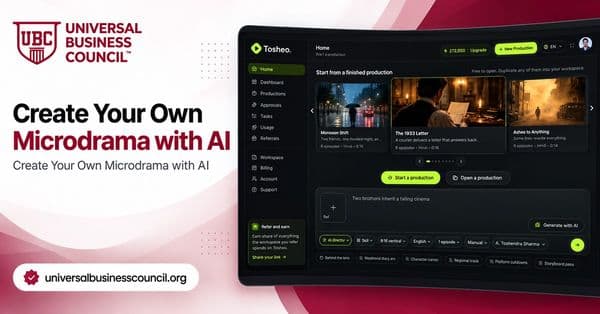
Create Your Own Microdrama with AI: From Story Idea to Finished Video
Learn how to create a microdrama with AI, from developing the story and script to generating visuals, voiceovers, scenes, and a finished short-form video.
Trending Articles
The Role of Blockchain in Ethical AI Development
How blockchain technology is being used to promote transparency and accountability in artificial intelligence systems.
AWS Career Roadmap
A step-by-step guide to building a successful career in Amazon Web Services cloud computing.
Top 5 DeFi Platforms
Explore the leading decentralized finance platforms and what makes each one unique in the evolving DeFi landscape.