

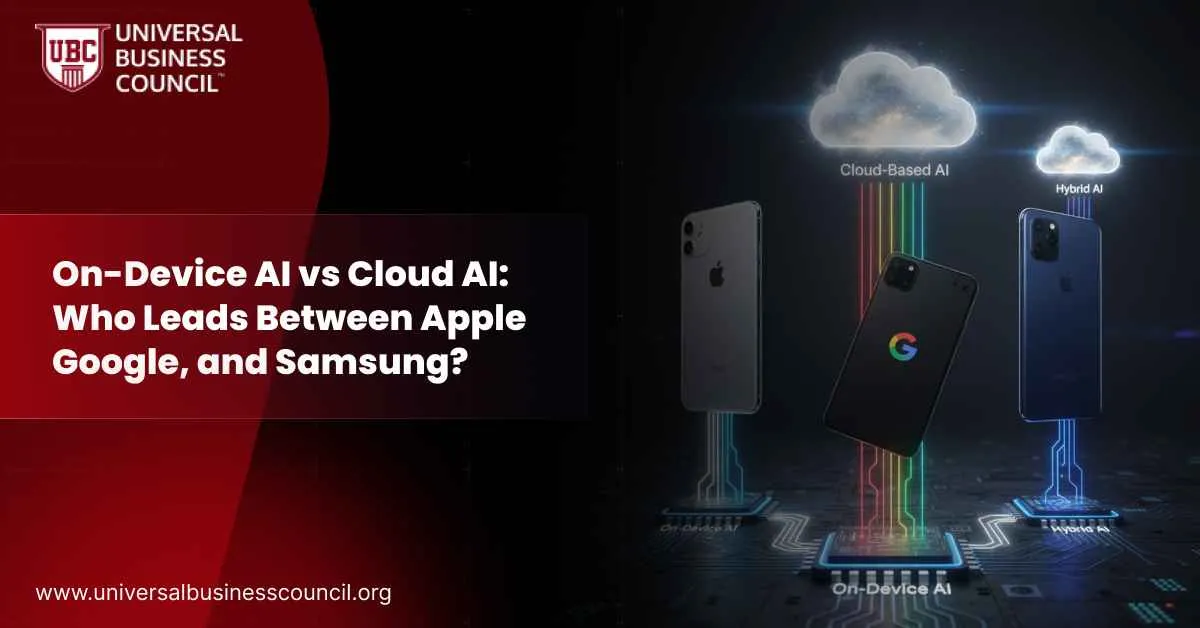
 When you hear people talk about the future of phones, it’s no longer just about displays or cameras. The real conversation is about where AI runs. Is it happening on your device or in the cloud? Apple, Google, and Samsung have taken different paths, and each approach comes with strengths and trade-offs. Understanding these choices helps explain not only the phones you buy today but also the kind of AI you’ll be using tomorrow.
If your interest goes beyond personal use, the Marketing and Business Certification can help you explore how AI-powered strategies influence industries.
When you hear people talk about the future of phones, it’s no longer just about displays or cameras. The real conversation is about where AI runs. Is it happening on your device or in the cloud? Apple, Google, and Samsung have taken different paths, and each approach comes with strengths and trade-offs. Understanding these choices helps explain not only the phones you buy today but also the kind of AI you’ll be using tomorrow.
If your interest goes beyond personal use, the Marketing and Business Certification can help you explore how AI-powered strategies influence industries.
Apple: On-Device First with Private Cloud Safety
Apple’s AI system, Apple Intelligence, is built to run as much as possible directly on iPhones, iPads, and Macs. Simple tasks like rewriting text, adjusting tone, or generating Genmoji work on-device, taking advantage of the Neural Engine inside the newest chips. When the task is too big, Apple routes it to Private Cloud Compute. This setup ensures only the minimum data leaves your device, and even Apple itself cannot see what’s processed. Apple’s privacy-first branding is a big part of its appeal. The limitation, though, is hardware. Only the latest models with advanced processors support the full scope of Apple Intelligence. That means users with older devices miss out, regardless of software updates.Google: Cloud Power with a Local Layer
Google takes a hybrid route. On Pixel devices, Gemini Nano runs directly on the phone, handling scam call detection or Recorder summaries without sending data out. But most of Google’s real power lies in the cloud. Gemini Pro and Gemini Ultra handle multimodal reasoning, long-context analysis, and heavy generative tasks. This allows Google to update models frequently, ensuring users always have access to the latest features. The strength of this model is flexibility and scale. It works across phones, tablets, browsers, and even TVs. But the downside is dependence on connectivity and trust. Even with privacy options like Temporary Chats, many users remain cautious about what data goes to the servers.Samsung: Balancing Both Worlds
Samsung’s Galaxy AI blends local tools with cloud services. Everyday features such as Live Translate, note assist, and basic editing can work on-device. But advanced generative photo edits or multi-step reasoning are powered by Google Cloud, where Gemini Pro and Imagen run behind the scenes. Users have the option to limit Galaxy AI to device-only processing. The trade-off is that some features disappear when cloud use is turned off. Samsung’s advantage is flexibility. It gives users free access to Galaxy AI at least through 2025, which makes the technology easy to try without worrying about extra cost.Ways Apple, Google, and Samsung Use AI
| Brand | On-Device Strength | Cloud Role | Key Advantage | Main Limitation |
| Apple | Writing tools, Genmoji, translation, Siri upgrades | Private Cloud Compute for heavier tasks | Privacy-focused design, tight integration | Works only on latest hardware |
| Gemini Nano for calls and summaries | Gemini Pro and Ultra for multimodal reasoning | Scalable, always updated, wide reach | Requires strong connectivity, privacy concerns | |
| Samsung | Translation, note assist, some edits | Google Cloud for advanced tasks like generative editing | Flexible options, free features until 2025 | Features reduced when offline |





Leave a Reply