

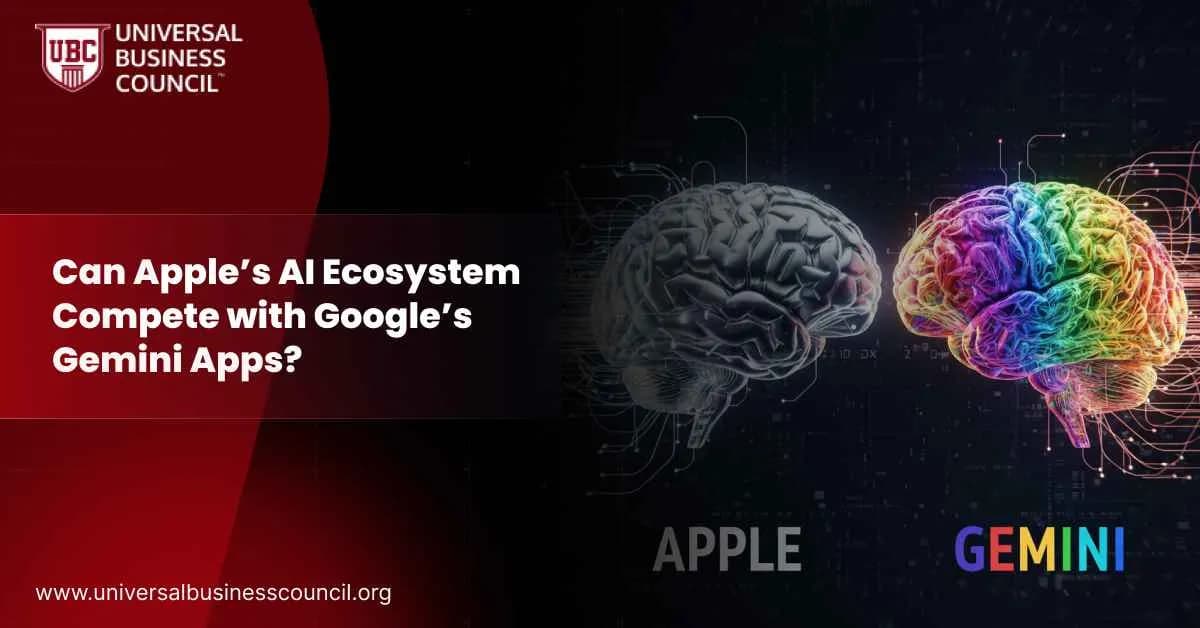
Can Apple’s AI Ecosystem Compete with Google’s Gemini Apps?

Apple Intelligence: Tight Integration with Limits
Apple’s strategy centers on Apple Intelligence, a system designed to blend on-device models with a privacy layer called Private Cloud Compute. It works across iPhone, iPad, Mac, Watch, and Vision Pro, making the AI feel like part of the system rather than an add-on. Apple offers tools like writing support, Live Translation, smarter Siri, and image cleanup. Developers now get access to the underlying models through a new Foundation Models framework, which allows third-party apps to use Apple’s AI — even offline. The strength of Apple’s approach is its polish and tight ecosystem. The downside is exclusivity. Only newer devices with the latest chips can run Apple Intelligence in full. This limits reach, especially compared to Google’s broader rollout. Privacy is also under scrutiny. Independent research has found that more data may be sent to Apple servers than Apple initially claimed, raising questions about how private “private” really is.Google Gemini: Apps That Go Everywhere
Google is pushing hard with Gemini. The Gemini app is replacing Google Assistant on Android devices, handling phone functions like calls and messages. With Gemini Live, users can talk naturally to the model. Gemini 2.5 Flash has boosted reasoning, formatting, and image understanding, making answers clearer. There’s also Gemini Advanced, now packaged as part of Google AI Pro, which adds long-context reasoning and creative tools. The Gemini ecosystem isn’t limited to phones. It’s moving into TVs, smart displays, and the Home app, where “Ask Home” lets you control your house through conversational commands. Gemini also added Agent Mode with Project Mariner, enabling the AI to perform multi-step tasks on its own. This step toward autonomy shows where Google wants to go: an AI that doesn’t just answer but acts. Gemini’s openness and fast updates make it appealing, but its reliance on subscriptions and cloud processing could frustrate users who want more features without paying. Privacy is also a concern, even though Google now offers options like Temporary Chats that don’t train its models.Apple Intelligence vs Google Gemini
Here’s a simple look at where Apple Intelligence and Gemini stand right now:| Area | Apple Intelligence | Google Gemini |
| Core Features | Writing help, Live Translation, improved Siri, photo cleanup | Gemini Live, app extensions, 2.5 Flash upgrades, reasoning improvements |
| Developer Access | Foundation Models framework for third-party apps | Gemini API, multiple model sizes, Agent Mode for autonomous tasks |
| Ecosystem Reach | iPhone, iPad, Mac, Watch, Vision Pro | Phones, TVs, smart displays, Home app, web |
| Privacy Stance | Strong marketing around Private Cloud Compute but under scrutiny | On-device Nano for some tasks, Temporary Chats for privacy, cloud-heavy |
| Availability | Limited to devices with A17 Pro or newer | Broad rollout across many Android devices, plus Google AI Pro tier |
| Pricing | No direct cost but tied to hardware upgrades | Free basics, premium features via AI Pro subscription |
Strengths and Weaknesses
Apple shines in integration and user experience. Its AI feels native, not bolted on, and features like Siri upgrades show clear value. But hardware limits and regulatory hurdles in Europe may slow adoption. Google shines in speed and scope. Gemini is updated constantly, spreads across devices, and offers experimental features like Agent Mode. Yet privacy perceptions and subscription costs remain challenges.The Bigger Picture
Apple wants to keep users inside its carefully designed world, where AI feels invisible but useful. Google wants AI to be everywhere, from your phone to your TV, acting almost like a digital coworker. Both visions are powerful, but they reflect different values: control and polish versus reach and experimentation. For those exploring this field, the deep tech certification can help you dive into advanced tools. If your focus is more on analytics, the Data Science Certification provides a structured path. Apple’s device lock-in and Google’s sprawling services also highlight the importance of understanding technology trends in context. And studying AI itself is essential, since it is shaping not just phones but every digital interaction.Conclusion
Apple’s AI ecosystem and Google’s Gemini apps are not just features. They are strategies that show how each company sees the future of computing. Apple bets on privacy, hardware control, and ecosystem integration. Google bets on rapid innovation, broad access, and agent-like autonomy. The competition will define what AI on personal devices looks like for years to come. For users, the choice isn’t just about which phone to buy. It’s about which vision of AI you want guiding your daily life.Related Articles
View All
Artificial Intelligence
Gemini 4 Argon: Features, Pricing, and Availability
Gemini 4 Argon is Google’s new flagship AI model for coding, science, finance, law and security. See its main features, API and subscription pricing, and where you can access it today.

Artificial Intelligence
Can Google Gemini Improve Itself Through Recursive Self-Improvement?
Explore whether Google Gemini can improve itself through recursive self-improvement, how Gemini-powered systems already support iterative learning and optimization, and what still separates them from true autonomous RSI.
Artificial Intelligence
Can Google’s AI Models Achieve Recursive Self-Improvement?
Explore whether Google’s AI models can achieve recursive self-improvement, how systems like SIMA 2 and AlphaEvolve demonstrate iterative improvement, and what technical limitations still remain.
Trending Articles
The Role of Blockchain in Ethical AI Development
How blockchain technology is being used to promote transparency and accountability in artificial intelligence systems.
AWS Career Roadmap
A step-by-step guide to building a successful career in Amazon Web Services cloud computing.
Top 5 DeFi Platforms
Explore the leading decentralized finance platforms and what makes each one unique in the evolving DeFi landscape.