

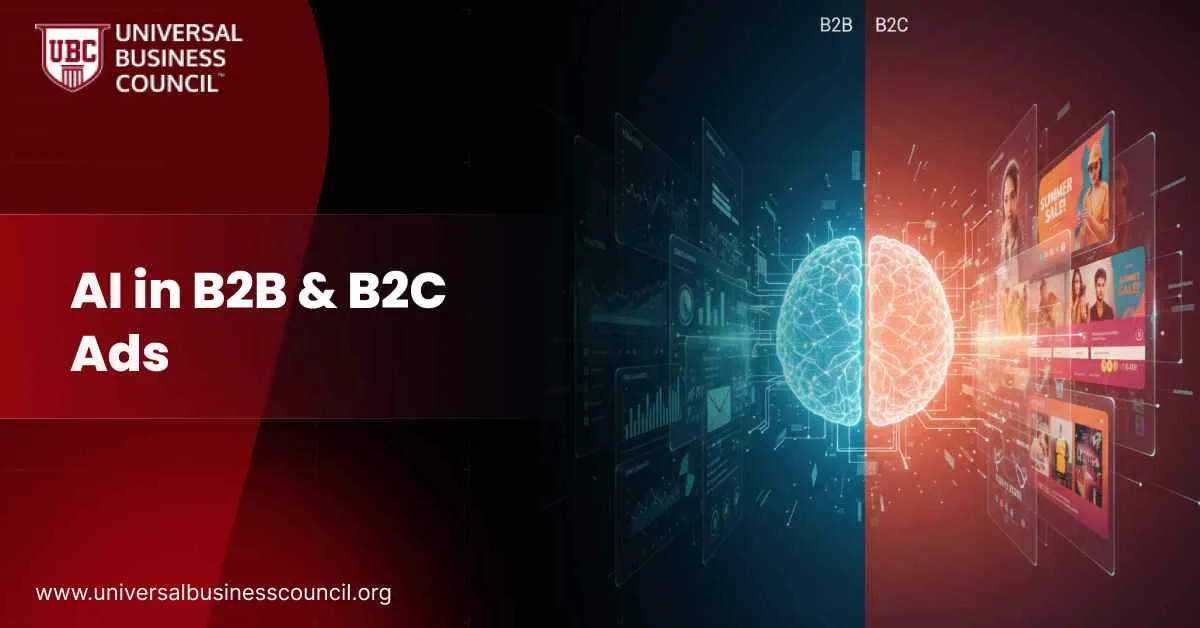
 Advertising is no longer just about reaching the right audience—it’s about speaking directly to each persona in a way that feels relevant and personal. AI is taking this to the next level by using multimodal models that combine text, images, video, and even behavioral signals to generate ads tailored to specific personas in both B2B and B2C settings. This shift is helping brands reduce wasted spend, increase engagement, and boost return on investment. For professionals looking to understand how to align these strategies with business outcomes, a Marketing and Business Certification can be a strong foundation.
What Persona-Specific Ad Generation Means
Traditionally, marketers created broad campaigns targeting groups like “IT buyers” or “young parents.” Persona-specific ad generation refines this by focusing on detailed buyer personas that evolve in real time. AI models take into account demographics, firmographics, technographics, browsing behavior, and contextual signals to build ads that resonate with the exact stage, role, and needs of the buyer. In practice, this means an operations manager in a B2B SaaS deal will see very different ad creative than a consumer shopping for sneakers, even if both interact with the same brand.The Role of Multimodal AI
Multimodal AI integrates multiple inputs—text, image, audio, and video—into one model. This matters because ads today are not only words on a page. They include visuals, voiceovers, interactive video, and contextual cues like device type and time of day. A multimodal model can process these signals and output ad creative that aligns with the persona’s context. For example, a business decision-maker reading a whitepaper might be served an ad with graphs and case study quotes, while a lifestyle consumer scrolling social media sees a short-form video with catchy visuals and upbeat music. Both are generated from the same framework but optimized for their respective personas.Why This Matters for B2B and B2C
In B2B, buying decisions are complex and involve multiple stakeholders. AI can map messaging to the different personas within a buying committee, from technical evaluators to C-suite executives. In B2C, decisions are faster, but emotions and lifestyle signals matter more. Multimodal AI ensures ads capture these nuances at scale. Brands that want to strengthen their ability to analyze these persona-driven signals often pursue a Data Science Certification, which equips professionals to work with the data pipelines and models behind these campaigns.Benefits of Persona-Specific Ads With Multimodal AI
- Precision Targeting: Ads match not only who the buyer is but what they are doing at that moment.
- Stronger Engagement: Persona-driven ads often lead to higher click-through and conversion rates.
- Scalability: AI handles the complexity of producing multiple ad variants for dozens of personas across channels.
- Cost Efficiency: Better return on ad spend since fewer impressions are wasted on irrelevant audiences.
- Content Gap Filling: AI can detect missing assets for specific personas and generate new creative to fill the gap.
Use Cases Across Industries
B2B SaaS
- Adaptive messaging: technical buyers see ads emphasizing integrations, while executives get ROI-focused creative.
- Real-time persona response: if a prospect reads pricing pages, the next ad highlights budget-friendly options.
E-Commerce (B2C)
- Personalized visuals: showing different product colors, styles, or models depending on persona preferences.
- Multimodal creatives: social video ads designed to reflect cultural trends of each persona group.
Retail and Consumer Goods
- Seasonal adaptation: moms browsing before school holidays see ads for back-to-school bundles, while young professionals see travel-focused offers.
Media and Entertainment
- Persona-linked recommendations: video ads highlighting genres or shows tied to recent viewing behavior.
Technologies Driving This Trend
- Persona Generators: Tools like Delve AI combine first-party CRM data with external sources to create live personas.
- Agentic AI: Autonomous systems that decide which ad variant to deliver, when, and to which persona.
- Multimodal Foundation Models: Capable of understanding and generating across text, image, and video simultaneously.
- Retrieval-Augmented Generation (RAG): Pulls in relevant documents or assets to enrich ad content.
- Computer Vision Tools: Analyze video and images for engagement signals, allowing visuals to be optimized for persona response.
Challenges and Risks
- Data Privacy: Persona-based ads use sensitive behavioral data, so compliance with GDPR and CCPA is critical.
- Data Quality: Inaccurate or sparse data can misinform personas and produce poor ad targeting.
- Bias and Hallucination: Generative AI can produce misleading or biased messaging without human oversight.
- Scalability vs Cost: While AI scales production, generating high-quality multimodal assets still requires resources.
- Complex B2B Cycles: Multiple stakeholders may demand different messaging, requiring precise coordination.
Persona-Specific Multimodal AI Ads
| Element | Explanation |
| Definition | Ads tailored for specific personas using multimodal AI inputs |
| Key Inputs | Demographics, behavior, images, text, video, context |
| B2B Use Case | Mapping content to buying committees with role-specific creative |
| B2C Use Case | Lifestyle-driven ad visuals and short-form video personalization |
| Benefits | Higher engagement, reduced ad waste, scalability, precision |
| Technologies | Persona generators, multimodal models, agentic AI, RAG |
| Examples | SaaS pricing page adaptation, sneaker color variations, seasonal bundles |
| Challenges | Privacy compliance, data quality, bias, resource costs |
| Metrics | Click-through rate, ROAS, engagement time, persona-level conversions |
| Future Outlook | Ads becoming fully adaptive in real time, blending human oversight with AI-driven personalization |


Leave a Reply