Google AI Overviews are citing YouTube more often than most other sources, and this is no longer speculation. Multiple large scale citation analyses now show YouTube appearing again and again inside AI generated answers, often more frequently than traditional websites. This shift matters because visibility is no longer limited to ranking links. It now includes being referenced directly inside the answer.From a growth and positioning perspective, this kind of change is exactly what gets discussed inMarketing and Business Certification programs, where discovery channels evolve faster than classic attribution models.
What the citation data is actually showing
Recent datasets that counted citations inside Google AI Overviews point to a consistent outcome.In one widely referenced analysis focused on health related queries in Germany, YouTube appeared as the single most cited domain. Its share was just over four percent of total citations, which may sound small, but it was still higher than any other individual source.That detail is important. AI Overviews do not rely on one or two websites. Citations are spread across hundreds of domains. Being the most cited source does not mean dominating results. It means being selected slightly more often than anyone else.Other industry level datasets across multiple verticals show a similar pattern. YouTube frequently lands near the top of citation lists, even when the exact percentage shifts by topic or region.
Why “most cited” does not mean overwhelming
Many people misunderstand this point.When citations are fragmented across thousands of answers, the top source can hold a small percentage and still rank first. AI Overviews pull from many places at once, so leadership is relative, not absolute.This explains why YouTube can be the most cited domain without appearing everywhere. It wins through consistency across many queries, not saturation in a few.
What SEO platforms keep highlighting
Several SEO and visibility platforms have published repeated findings around YouTube citations.A recurring insight is that AI Overviews often cite specific timestamps inside videos. Instead of referencing an entire video, the system points to the exact moment where the answer appears. That makes video behave more like a quoted paragraph than a general media asset.Other reports show YouTube being cited across a wide range of query types, including tutorials, setup guides, troubleshooting, and comparisons. This goes far beyond classic “video intent” searches.Mainstream marketing publications have also started covering this pattern, which signals that this is no longer just a technical SEO discussion. It is becoming a broader discovery issue for brands.
Topics where YouTube is cited the most
YouTube citations appear strongest when the query benefits from demonstration.Common examples include:
How to guides and walkthroughs
Product setup and comparisons
Fixes and troubleshooting
Visual learning tasks
Queries that imply “show me” intent
Health related searches stand out because some datasets show YouTube cited more often than traditional medical sites. This raises trust and interpretation questions, not just ranking ones.
Why Google AI Overviews lean toward YouTube
There is no single published rule, but the pattern is logical.Video explains processes better than text. Many searches are asking how to do something, not what it is.YouTube covers long tail problems extremely well. Even when written guides are thin or outdated, someone has usually uploaded a video showing the solution.Timestamps make videos easy to reference. AI Overviews can point to the exact answer moment instead of summarizing loosely.Fresh content appears faster on YouTube. New videos often surface sooner than updated articles.Engagement may also act as a signal. While debated, highly engaged content can indicate usefulness when multiple sources offer similar information.Understanding how these systems select and reuse sources requires a solid technical foundation, which is why many teams approach this topic from aTech Certification perspective.
How to increase the chances of being cited
AI Overviews do not cite every video. They favor content that is easy to extract answers from.
What cited videos usually have in common
One clear question per video
A direct opening that states the problem
Fast transition into the solution
Visible steps or actions
Minimal filler or storytelling
Clear audio and pacing
Making timestamps work in your favor
Cited videos usually contain a clean answer segment.
Place the solution early
Use phrasing people actually search
Avoid long intros before the fix
Use chapters when possible
Make the answer moment obvious
Titles and descriptions that help extraction
Plain language performs better than clever branding.
Use clear “how to” titles
State the object and the outcome
Add a short “what you will learn” line
Include a simple step list in the description
Pairing YouTube with pages for stronger visibility
The strongest setups combine video and text.A common structure that works well:
A page summarizing the steps clearly
The video embedded near the matching section
Headings aligned with video chapters
A short FAQ using real query phrasing
This gives the system multiple consistent sources to choose from.
What this means for modern search strategy
If YouTube is being cited heavily, strategy shifts from “rank the page” to “be included as a source.”That usually leads teams to:
This type of thinking often appears in deeper system level discussions found inDeep tech certification programs, where search, data reuse, and extraction are treated as interconnected systems rather than isolated tactics.
How to talk about this without hype
When explaining this trend to stakeholders, clarity matters.Useful ways to frame it:
YouTube is becoming a source layer inside AI answers
Visibility now includes citations, not just rankings
Video performs well for step based intent
Content should be built to be referenced, not only watched
Conclusion
Across multiple studies and platform reports, one pattern is clear. Google AI Overviews cite YouTube unusually often, and in some datasets, YouTube becomes the single most cited domain.This does not mean YouTube dominates every niche or replaces trusted websites. It does mean that for how to and demonstration driven queries, video has become one of the strongest formats for being referenced directly inside AI generated answers.If your goal is to be included in the answer itself, not just listed below it, YouTube now plays a much bigger role than it did before.


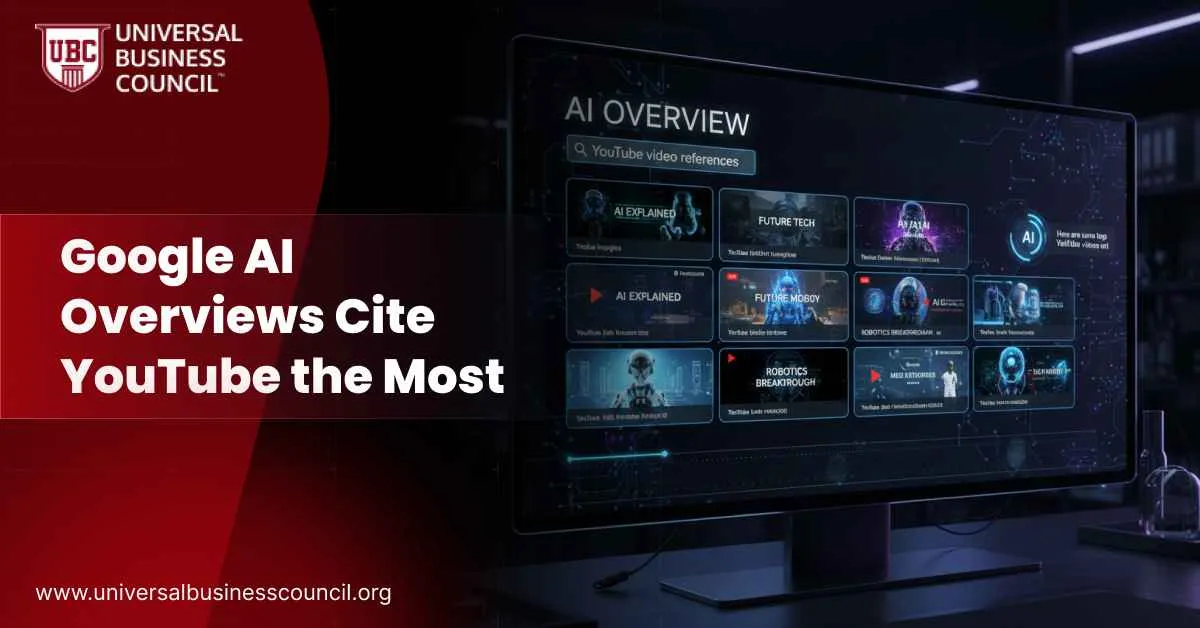 Google AI Overviews are citing YouTube more often than most other sources, and this is no longer speculation. Multiple large scale citation analyses now show YouTube appearing again and again inside AI generated answers, often more frequently than traditional websites. This shift matters because visibility is no longer limited to ranking links. It now includes being referenced directly inside the answer.
From a growth and positioning perspective, this kind of change is exactly what gets discussed in Marketing and Business Certification programs, where discovery channels evolve faster than classic attribution models.
Google AI Overviews are citing YouTube more often than most other sources, and this is no longer speculation. Multiple large scale citation analyses now show YouTube appearing again and again inside AI generated answers, often more frequently than traditional websites. This shift matters because visibility is no longer limited to ranking links. It now includes being referenced directly inside the answer.
From a growth and positioning perspective, this kind of change is exactly what gets discussed in Marketing and Business Certification programs, where discovery channels evolve faster than classic attribution models.



Leave a Reply