

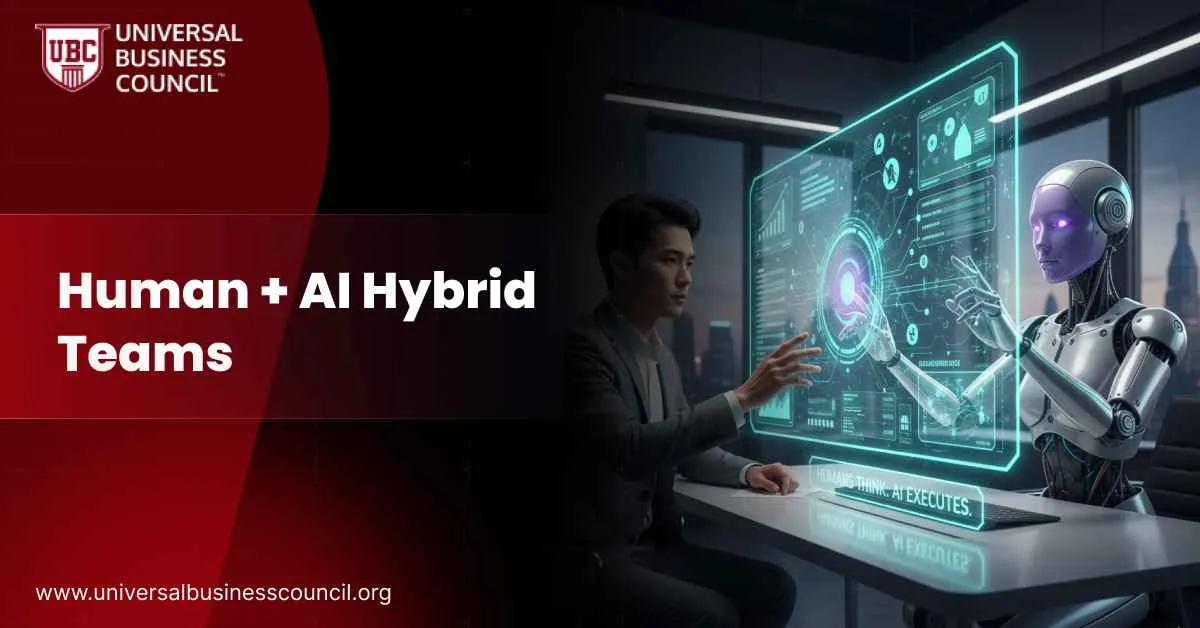
 Human + AI hybrid teams are changing how marketing campaigns are built and delivered. Instead of asking whether AI will replace people, businesses are discovering that the best results come when humans and AI work side by side. The combination makes campaigns faster, smarter, and more relevant. For professionals who want to lead in this new era of collaboration, a Marketing and Business Certification provides practical training on how to apply these tools strategically.
What Hybrid Human-AI Teams Really Mean
A hybrid team is not just a human team using AI tools in the background. It is a structured way of dividing roles where AI handles speed, scale, and repetitive tasks while humans focus on creativity, strategy, and ethics. For example, AI can generate content drafts or segment audiences in seconds, but humans refine tone, check for cultural sensitivity, and align everything with brand values. This balance allows companies to operate at scale without losing authenticity.Why Hybrid Teams Are Gaining Ground
The push toward hybrid teams is not a trend—it’s a response to real business needs. AI can analyze data at a speed humans cannot match. Marketers report that with AI, tasks like A/B testing, reporting, and lead scoring take minutes instead of days. At the same time, audiences are quick to notice when content feels robotic or off-brand. Human oversight ensures campaigns remain personal and engaging. By blending both strengths, companies get the best of efficiency and emotional connection.How Humans and AI Work Together
Clear Division of Roles
AI systems handle heavy data lifting: predicting customer behavior, personalizing ads in real time, generating creative options. Humans then review outputs, fine-tune messaging, and make judgment calls that algorithm cannot.Feedback Loops
Humans provide ongoing feedback to improve AI accuracy. The system learns from corrections, and the team gains better results over time.Creative and Ethical Oversight
Humans step in to ensure messaging is inclusive, free of bias, and aligned with brand identity. AI lacks the cultural awareness needed to make these judgments consistently. For those wanting to explore the technical side of how data and AI support these workflows, a Data Science Certification can provide essential training.Real-World Examples
HubSpot
HubSpot is rolling out AI “agents” that help with workflows and CRM tasks. Human managers set strategy, refine campaigns, and oversee results.Amazon
AI chatbots handle customer service queries at scale, while human agents step in for complex cases. The mix improves speed while maintaining empathy.Spotify
Algorithms analyze listening behavior to suggest music, but human curators design playlists that capture cultural trends.Hidden Valley Ranch (Clorox)
AI was used to create ad visuals quickly. Humans improved prompts and final designs so the campaign matched brand identity. These examples show how different industries adapt hybrid teamwork to their specific needs.Benefits of Hybrid Teams
- Efficiency: AI handles repetitive tasks so humans can focus on strategy.
- Scalability: Campaigns can be expanded to multiple markets or audiences without losing quality.
- Stronger Personalization: AI analyzes real-time data while humans shape messaging that connects emotionally.
- Better Creativity: AI provides options; humans provide originality and nuance.
- Ethical Safety Nets: Human oversight prevents misuse of data or tone-deaf messages.
Success Factors for Human + AI Teams
Defined Roles and Responsibilities
Clarity prevents overlap and ensures AI and human contributions complement each other.High-Quality Data
AI can only deliver if the data it uses is accurate, current, and clean.Integrated Tools
Platforms that allow smooth collaboration between humans and AI are vital. CRM systems, AI-powered design tools, and workflow software all play a role.Training and Change Management
Teams must learn how to prompt effectively, interpret AI outputs, and build trust in the tools.Human Oversight
Humans must always review the final campaign to prevent errors, bias, or ethical missteps.Challenges and Risks
- Over-automation: Too much AI input can make campaigns feel generic.
- Bias and Errors: AI can replicate existing biases in its data.
- Privacy Concerns: Using personal data requires transparency and consent.
- Morale Issues: Employees may fear being replaced, creating resistance to adoption.
- Cultural Missteps: AI lacks the intuition needed to navigate cultural nuance.
Trends and Emerging Practices
- AI Agents in CRMs: Automating repetitive tasks while humans focus on strategy.
- Co-Creativity: AI generates ideas; humans refine and implement them.
- Style Alignment: AI tools learning to adapt to a brand’s tone and personality.
- Real-Time Adjustment: Human teams watching campaign performance live and tweaking AI outputs instantly.
Building Strong Human + AI Hybrid Teams
| Element | Role in Hybrid Teams |
| Definition | Structured collaboration between humans and AI |
| AI Strengths | Speed, data analysis, automation, real-time personalization |
| Human Strengths | Creativity, ethics, cultural sensitivity, strategy |
| Key Examples | HubSpot, Amazon, Spotify, Clorox |
| Benefits | Efficiency, scalability, personalization, creativity |
| Success Factors | Defined roles, good data, integrated tools, training |
| Challenges | Over-automation, bias, privacy, morale issues |
| Trends | AI agents, co-creativity, brand style alignment |
| Metrics of Success | Engagement, conversions, customer satisfaction |
| Future Outlook | Hybrid models becoming standard for marketing teams |


Leave a Reply