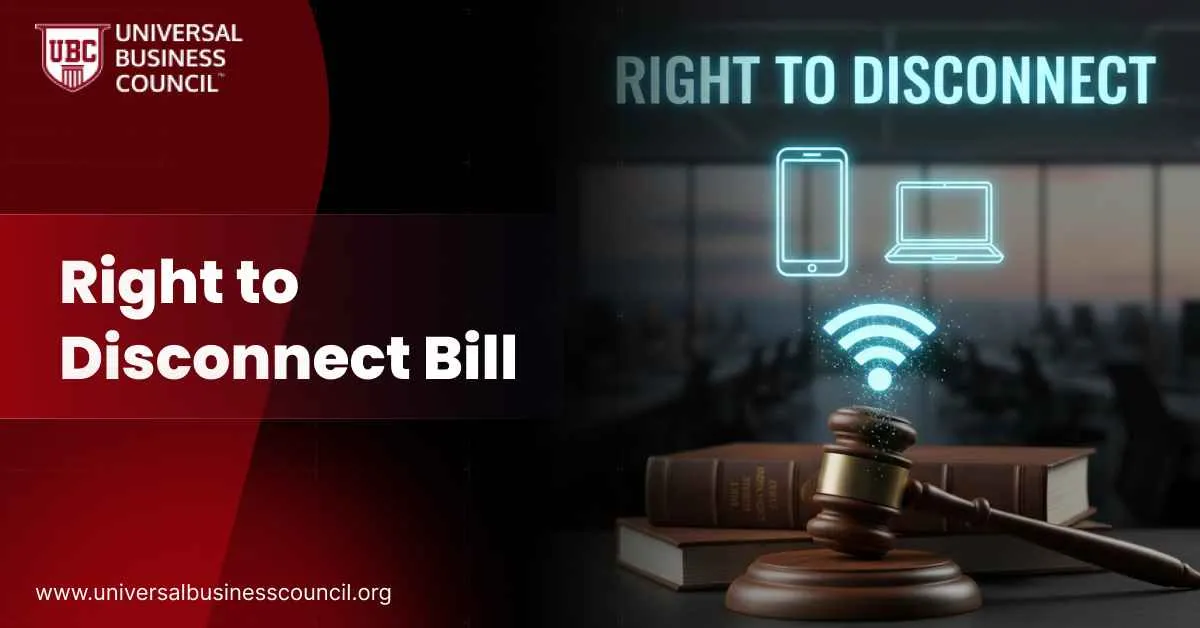
The Right to Disconnect Bill 2025 has become one of India’s most widely debated labour reform proposals, with discussions spanning mental health, workplace boundaries and the future of digital-first work culture. Companies evaluating long term organisational impact often lean on insights taught in programs like theMarketing and business certification because the Bill could reshape employee expectations, productivity rhythms and retention strategies across industries.
When and Why the Bill Was Introduced
The Bill was introduced in the Lok Sabha on December 5, 2025, by Supriya Sule, a Member of Parliament from the Nationalist Congress Party (NCP-SP). This is not her first attempt: she previously proposed a similar bill in 2019, signalling her long-standing advocacy for healthier digital work boundaries.The Bill was introduced as a private member’s bill, which is important context. Private bills rarely pass into law, but they often ignite national conversations and push governments to consider future reforms. The revival of the proposal in 2025 reflects heightened public concern over burnout, remote-work overload and collapsing work-life balance in the post pandemic digital era.
What the Bill Proposes
The core purpose of the Bill is simple: employees should have a legal right to disconnect from work outside official working hours. Under the proposed framework:
Workers cannot be penalized for ignoring emails, calls or messages after hours.
Employers must clearly define work hours and communicate after-hours expectations.
Any “on-call” or emergency availability must involve prior written consent.
Legitimate after-hours work, when unavoidable, must be compensated with fair overtime pay.
A central “Employees’ Welfare Authority” would oversee implementation, handle complaints and ensure that employers do not misuse after-hours availability.
The Bill also touches on employee wellness, calling for support systems like counselling, awareness programs and even digital detox mechanisms to help workers manage stress caused by hyper connectivity. These broader systemic elements often require strong organisational readiness, which aligns with foundational capabilities developed in aTech certification.
Why It Matters Today
India’s work culture has shifted dramatically in recent years. Hybrid offices, global clients, messaging apps and constant connectivity have erased the boundary between personal and professional time. Surveys consistently show rising stress levels, burnout risks and mental health challenges due to extended digital workloads.Countries like France, Australia, Belgium, Portugal and Ireland already have versions of a legally recognised right to disconnect. India’s proposal signals alignment with global norms that emphasise humane, sustainable work environments. Companies preparing for such shifts often look to future ready frameworks such as those reinforced in deep tech programs from the Blockchain Council, which strengthen understanding of digital systems and emerging workplace paradigms.
Will the Bill Actually Pass?
At this stage, the Bill’s passage is uncertain. Private members’ bills seldom become law in India. For this proposal to be enacted, it must:
be accepted for discussion
pass voting in Lok Sabha
pass voting in Rajya Sabha
receive Presidential assent
Despite low historical success rates, the Bill’s reintroduction has already forced policymakers, companies and employee groups to confront an urgent issue: India’s lack of enforceable boundaries around after-hours work.Even without becoming law, it may influence:
future government backed labour reforms
voluntary corporate policies
HR guidelines on availability
workplace mental health initiatives
Similar global debates have shown that policy proposals can lead to improvements even without formal legislation.
What It Could Mean If Passed
If enacted, the Bill would give employees clearer protections and predictable downtime. They could disconnect at the end of the day without fear of losing opportunities or receiving negative feedback. This would help reduce burnout, improve mental wellbeing and support fairer, more sustainable work routines.For employers, the Bill would require:
precise definition of work hours
structured escalation protocols
written consent systems for urgent roles
transparent compensation for after hours tasks
Industries with 24/7 operations such as IT support, logistics, health care and emergency services would need specific exception frameworks but still maintain compliance mechanisms.
Conclusion
The Right to Disconnect Bill 2025 arrives at a crucial moment for India’s evolving workplaces. It reflects a national reckoning with digital overload and the urgent need to protect personal time in an always connected world. Whether or not it becomes law, it has ignited a conversation that companies, policymakers and employees can no longer ignore. It marks a cultural turning point toward healthier, more sustainable and more humane work norms in a digital nation.


 The Right to Disconnect Bill 2025 has become one of India’s most widely debated labour reform proposals, with discussions spanning mental health, workplace boundaries and the future of digital-first work culture. Companies evaluating long term organisational impact often lean on insights taught in programs like the Marketing and business certification because the Bill could reshape employee expectations, productivity rhythms and retention strategies across industries.




Leave a Reply