

Anthropic IPO: What the Confidential S-1 Filing Means for Claude AI, Enterprises, and Developers
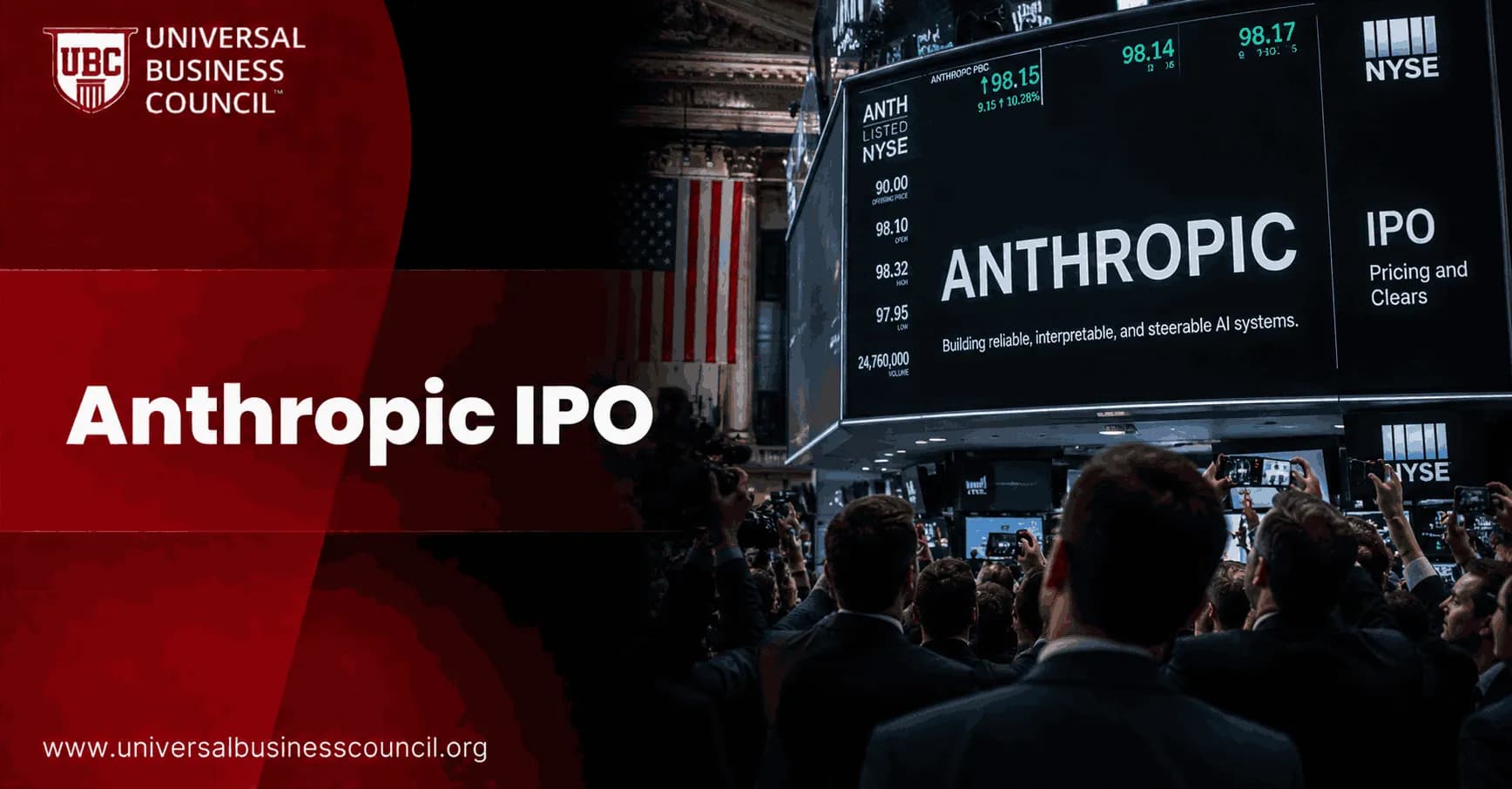
Anthropic IPO is now a real near-term possibility after the company behind Claude AI confirmed it has confidentially filed a draft S-1 with the U.S. Securities and Exchange Commission (SEC). For professionals, enterprises, and developers, this step matters less as a headline and more as a signal: a major foundation-model AI vendor is preparing to test public markets, which can reshape vendor stability, pricing expectations, and the pace of product disclosure.
Because the filing is confidential, the market has not yet seen audited financial statements, risk factors, customer concentration disclosures, or the proposed share count and price range. Those details typically become available only when the S-1 is publicly filed closer to a roadshow and pricing window, after SEC review and company decisions on timing and structure.

What It Means That Anthropic Filed a Confidential S-1
A confidential S-1 filing allows a company to submit a draft registration statement to the SEC and receive comments before publicly revealing the document. In practical terms, it helps issuers:
Reduce execution risk by resolving SEC feedback before public scrutiny
Maintain flexibility on timing if market conditions shift
Delay disclosure of sensitive financial and commercial details until closer to launch
Anthropic has indicated it may proceed after SEC review, and that key IPO terms - including the number of shares and price range - are not yet determined and will depend on market conditions and other factors. This is standard language for a confidential filing, but it also underscores that an IPO is a process, not a single event.
Timing: When Could the Anthropic IPO Happen?
Public reporting and market commentary have suggested a listing could occur as soon as fall 2025, subject to the SEC review cycle and broader IPO market conditions. Confidential filings are designed to preserve optionality, so any specific date should be treated as a scenario rather than a commitment.
Why Timing Remains Uncertain
SEC comment cycles can vary based on complexity and disclosure requirements.
Market windows for high-growth technology IPOs can open and close quickly.
Competitive context matters, since other AI companies may also be weighing public market moves.
Why the Anthropic IPO Is a Milestone for Foundation-Model AI
Anthropic is among the first major foundation-model AI companies to seriously approach public markets. Analysts have framed the move as a test of investor demand for direct exposure to generative AI businesses. It also positions Anthropic ahead of OpenAI in the specific race to file for an IPO, as OpenAI has not announced a comparable public filing.
From a market-structure standpoint, a successful Anthropic IPO could establish public benchmarks for:
Revenue multiples applied to foundation-model vendors
Margin expectations after inference and cloud compute costs
Disclosure norms around model development, safety, and governance
What We Know (and Do Not Know) About Valuation and Funding
Because the S-1 remains confidential, valuation discussions rely on venture funding disclosures, secondary market analytics, and media reporting. Available data indicates Anthropic has raised approximately $15.5 billion since 2021 across multiple venture rounds, including a large late-stage round that implied a valuation in the mid tens of billions of dollars. Other commentary has cited considerably higher figures based on more recent financings.
Key takeaway: until the S-1 is public, professionals should treat extreme valuation claims as indicative rather than definitive. The first authoritative picture of revenue, expenses, cash flow, and risk factors will arrive with the public registration statement.
What Private Secondary Market Signals Suggest
Secondary market analytics describe Anthropic equity as actively traded among eligible private-market participants, with implied pricing rising strongly over prior periods in some reports. Such repricing typically reflects expectations of a liquidity event like an IPO. Secondary markets can be thin and sentiment-driven, however, so they are not a substitute for public-market price discovery.
Business Model: What Investors Will Likely Evaluate
Anthropic operates at the foundation model and generative AI layer, monetizing Claude AI capabilities through usage-based APIs, developer access, and enterprise licensing and integrations. The company is widely perceived to be in a scaling phase rather than a mature profitability phase, which is typical for compute-intensive frontier model developers.
Three Metrics That Could Define the IPO Narrative
Durable revenue growth: adoption trends across enterprise accounts and developer ecosystems, plus renewal and expansion behavior.
Gross margin after compute: how pricing and optimization offset inference costs and cloud expenses.
Path to free cash flow: the balance between R&D intensity, infrastructure spending, and operating leverage.
These drivers matter because foundation-model economics differ from conventional SaaS. Investors focus on whether a company can maintain product leadership while improving unit economics as scale increases.
Enterprise Use Cases That Support the Claude AI Revenue Story
The Anthropic IPO discussion is inseparable from enterprise deployment of Claude AI. In a public filing, investors will expect credible evidence that usage is not purely experimental, but tied to repeatable workflows and durable budgets.
Common High-Value Claude AI Use Cases
Knowledge work and research: summarization, document review, drafting, and analysis in professional services, legal, and internal research teams.
Coding productivity: code generation, refactoring support, test creation, documentation, and assisted code review through APIs and integrated tools.
Enterprise workflow automation: customer support assistance, internal knowledge management, and decision-support workflows integrated with core business systems.
For enterprises, these use cases translate into questions that an S-1 can help answer: contract structure, customer concentration, expansion rates, and how much revenue depends on a small number of large accounts.
Key Risks Likely to Feature in an Eventual Public S-1
While the specific language will only be known once the registration statement is public, market commentary has consistently highlighted several risk categories relevant to a foundation-model AI issuer.
1) Compute Costs and Unit Economics
Training and inference require significant compute investment. Investors will examine whether pricing, efficiency improvements, and model optimization can sustain improving gross margins over time.
2) Competitive Pressure
Anthropic competes in a crowded field that includes major technology firms and well-funded AI labs. Competitive dynamics can influence pricing power, customer retention, and product differentiation.
3) Regulatory and Governance Risk
AI safety, privacy, and competition policy can affect product design and go-to-market strategies. Anthropic is known for emphasizing responsible AI development, and its public benefit corporation structure may shape how governance and fiduciary priorities are discussed in public-market filings.
Implications for Professionals, Enterprises, and Developers
Even before shares are publicly traded, the Anthropic IPO process can change how organizations plan around Claude AI and foundation-model vendors generally.
Vendor Stability and Long-Term Roadmaps
A successful public listing can strengthen perceived vendor durability through improved access to capital and stronger disclosure obligations. That matters for multi-year AI programs, where supplier continuity and support commitments are essential factors in procurement decisions.
More Transparency Over Time
Once public, the company will report financial results and material risks on a regular cadence. That can help procurement, risk, and engineering leaders evaluate:
Total cost of ownership for API usage and enterprise deployments
Roadmap credibility based on R&D spend and product investment
Commercial risk including customer concentration and contractual dependencies
Pricing and Contracting Dynamics
IPO-driven growth expectations can influence packaging and enterprise contract negotiations. Enterprises should model scenarios around usage growth, rate limits, tier changes, and potential shifts in minimum commitments.
Talent and Ecosystem Effects
Liquidity events can affect hiring and retention and may expand the partner ecosystem around Claude AI implementations. For technical teams, that can mean more integrators, tooling, and documented best practices - alongside a faster-moving product environment.
Internal learning opportunity: Teams planning deeper adoption of Claude AI can benefit from structured skills development in AI product strategy, governance, and implementation. Relevant programmes at Universal Business Council include certifications in AI and Machine Learning, Product Management, Cloud Computing, Cybersecurity, and Project Management, all of which support enterprise generative AI deployment readiness.
What to Watch Next for the Anthropic IPO
Until the S-1 becomes public, the highest-signal milestones are procedural and market-based rather than financial.
Public release of the S-1: the first authoritative view into revenue, margins, cash flow, customer metrics, and risk factors.
Roadshow indicators: shifts in market conditions and comparable technology IPO performance.
Governance and safety disclosures: how the company frames responsible AI commitments in a public-market context.
Conclusion
The Anthropic IPO entered a new phase with the confidential S-1 filing, signaling that Claude AI could soon be tied to public-market expectations, quarterly disclosures, and a wider investor base. While timing and valuation remain uncertain until the S-1 is public, the strategic implications are immediate: enterprises should reassess vendor risk, developers should anticipate evolving platform economics, and professionals should prepare for a more transparent and benchmark-driven foundation-model market.
When the S-1 is eventually released, it will become the primary source for evaluating the IPO on fundamentals - including revenue quality, compute-driven margins, and governance commitments. Until then, the most responsible approach is to separate confirmed process facts from speculative valuation narratives, and to plan deployments based on measurable business outcomes and well-governed AI operating models.
Related Articles
View All
Claude Ai
How to Build an AI-Ready Workforce with Claude Fable 5 Training and Certification
Learn how Claude Fable 5 training and certification can help build an AI-ready workforce through literacy, role skills, technical enablement, and governance.

Claude Ai
Claude Fable 5 Skills Every Marketing and Management Professional Should Learn
Learn the five Claude Fable 5 skills marketing and management professionals need for research, content, analytics, creative workflows, and AI governance.

Claude Ai
Claude Fable 5: A Beginner's Guide for Professionals and Entrepreneurs
A practical beginner guide to Claude Fable 5 for professionals, entrepreneurs, developers, and business teams exploring advanced AI workflows.
Trending Articles
The Role of Blockchain in Ethical AI Development
How blockchain technology is being used to promote transparency and accountability in artificial intelligence systems.
AWS Career Roadmap
A step-by-step guide to building a successful career in Amazon Web Services cloud computing.
Top 5 DeFi Platforms
Explore the leading decentralized finance platforms and what makes each one unique in the evolving DeFi landscape.