

AI in Digital Marketing: How Artificial Intelligence Is Transforming Modern Marketing
AI in digital marketing is no longer a side experiment for a few innovative teams. It sits inside daily marketing work now: content planning, segmentation, bid optimization, lead scoring, reporting, customer support, and campaign testing. The shift is practical, not theoretical. If you use Google Ads smart bidding, HubSpot workflows, Salesforce lead scoring, GA4 predictive audiences, or AI-assisted SEO tools, you already work with artificial intelligence in marketing.
So the real question is not whether AI belongs here. It does. The harder question is where it creates measurable value, where it quietly burns budget, and what skills you need to use it responsibly.

What AI in Digital Marketing Means
AI marketing uses data collection, machine learning, natural language processing, and automated decision systems to improve marketing decisions. IBM describes AI marketing as the use of data-driven analysis, NLP, and machine learning to deliver customer insights and automate critical marketing choices.
That definition sounds broad because the application is broad. AI can decide which customer segment should receive a campaign, predict which lead is more likely to buy, suggest a subject line, summarize customer sentiment, and adjust bids while your team is offline.
Some of this is not new. Recommendation engines, email automation, and programmatic advertising have used machine learning for years. What changed is access. Generative AI models such as GPT made text generation, summarization, creative testing, and campaign ideation available to almost every marketing team.
Why AI Adoption Has Become Mainstream
Adoption moved quickly because marketing is full of repeated decisions. Which audience? Which offer? Which channel? Which creative? Which landing page? Human judgment still matters, but people are poor at processing thousands of small signals at speed.
McKinsey data cited by IBM indicates that global business AI adoption reached 72 percent in 2024. HubSpot has reported that 66 percent of marketers worldwide use AI daily, rising to 74 percent in the United States. That is not a pilot phase. That is operating reality.
Executive sentiment points the same way. A Fortune and Deloitte survey found that 79 percent of CEOs believe generative AI will increase efficiency, while 52 percent believe it will increase growth opportunities. IBM research on CEOs also reports that more than 70 percent of top-performing executives believe competitive advantage depends on advanced generative AI.
Be careful, though. Adoption does not equal competence. A marketing team can own five AI tools and still have poor attribution, weak positioning, and unprofitable campaigns. Tools amplify the system you already have. If the data is messy, AI will make messy decisions faster.
Key Ways AI Is Transforming Modern Marketing
1. Personalization at Scale
Personalization used to mean adding a first name to an email. That bar is gone. AI now groups customers by behavior, predicted intent, lifecycle stage, purchase history, and content engagement.
Salesforce highlights AI's ability to centralize scattered customer data, analyze behavior, and support targeted digital marketing. In practice, that can mean:
- Dynamic email blocks based on previous purchases or browsing behavior.
- Website recommendations shaped by category interest and session activity.
- Product offers timed around predicted purchase readiness.
- Suppression rules that stop teams from over-emailing tired audiences.
HubSpot has linked AI-powered personalization to 82 percent higher conversion rates, 30 percent higher email open rates, and 50 percent higher click-through rates from smart segmentation. Treat those numbers as directional, not automatic. You only get the lift when the offer, list quality, and data hygiene are sound.
2. Generative AI for Content Creation
Generative AI in marketing is now common. HubSpot reports that 56 percent of marketers use AI for content creation. Teams use tools such as GPT-based assistants, Surfer SEO, and AI image or video tools to draft copy, summarize research, create outlines, localize content, and produce creative variations.
Use it well, and it speeds up production. Use it badly, and you publish the same bland article as everyone else. The difference is input quality and editorial judgment.
Here is the practical version. Do not ask an AI tool to "write a blog post about email marketing." Feed it search intent, audience pain points, CRM data patterns, objections from sales calls, and a clear point of view. Then edit. Hard. Search engines and buyers both notice generic writing.
The Digital Marketing Institute has described AI as an enabler for keyword research, content optimization, meta tags, headings, and behavior-based content improvements. That is useful. Still, AI should assist the content strategist, not replace the strategist.
3. Predictive Lead Scoring and Sales Prioritization
Predictive analytics helps you estimate which leads are likely to convert, which accounts are warming up, and which campaigns need more budget. This matters most in B2B and high-consideration sales, where sales teams cannot chase every form fill.
Salesforce notes that AI can predict lead conversion likelihood and trigger follow-up actions. IBM also points to AI's role in identifying customer behavior patterns, supporting pricing decisions, and improving lead scoring.
Here is the detail that trips up many teams. A lead score built only on engagement rewards curiosity, not buying intent. Someone who downloads three beginner guides may score higher than a finance director who visits your pricing page once. Good scoring combines fit and intent. Use firmographic data, page depth, product interest, source quality, and sales outcome feedback. Then review your false positives every month.
4. Conversational AI and Virtual Agents
Chatbots and virtual assistants now handle product questions, appointment booking, lead qualification, order updates, and support triage. They also collect useful first-party data, if you design the conversation properly.
The basic chatbot answered FAQs. The newer model is closer to journey automation. HubSpot has discussed the shift toward intelligent agents, such as Breeze Journey Automation, that coordinate multi-step customer journeys rather than single chat interactions.
Do not automate every conversation. High-value prospects, complex complaints, legal questions, and enterprise pricing discussions often need a human. A good virtual agent knows when to hand off.
5. Advertising Optimization and Testing
AI is deeply embedded in paid media. Google Ads, Meta Ads, TikTok Ads, and programmatic platforms all use machine learning to optimize targeting, bids, placements, and creative delivery.
This can improve performance, but it also changes how you manage campaigns. You are no longer only setting bids by hand. You are training the system with conversion events, audience signals, creative inputs, and budget constraints.
To be blunt, the most expensive mistake is feeding the ad platform a shallow conversion event. If your campaign optimizes for page views or low-intent form fills, it will find plenty of cheap actions that never become revenue. Track qualified leads, purchases, pipeline value, CAC, LTV, ROAS, and payback period where you can.
Salesforce also notes that AI can speed up A/B testing across copy, design, calls to action, layout, and responsive design. The benefit is not just speed. It is the ability to detect patterns across many small variations that a human team might miss.
6. SEO and Search Intent Analysis
AI is changing SEO, but not by making keywords irrelevant. Keywords still show demand. What has changed is the depth of intent analysis expected.
AI-assisted SEO tools can cluster topics, compare content gaps, suggest headings, draft schema ideas, and analyze competitor pages. Tools such as Surfer SEO help teams align content with search patterns. GA4 and Search Console data then show whether the content actually earns clicks, engagement, and conversions.
The better approach is simple. Use AI for research speed, then apply human expertise for judgment. Search results are crowded with lookalike AI pages. Your advantage is specificity: original examples, clear trade-offs, real experience, and tighter answers.
7. Social Listening and Sentiment Analysis
AI can scan reviews, social posts, support tickets, and competitor mentions to detect sentiment patterns. That helps you catch reputation issues early, identify product complaints, and understand which messages are gaining traction.
Tools such as Gumloop can support automated workflows for sentiment monitoring and competitor intelligence. Influencer platforms such as Influencity use AI to help identify creators and evaluate campaign impact.
One warning. Sentiment analysis can misread sarcasm, slang, and context. Use it as a signal, not a verdict. If a product launch shows rising negative sentiment, read the actual comments before you rewrite the campaign.
Where AI Can Waste Marketing Budget
AI is powerful, but it is not magic. The common failures are familiar:
- Bad data: duplicate CRM records, missing source fields, broken UTMs, and unclear lifecycle stages.
- Weak measurement: reporting on clicks and impressions while ignoring CAC, LTV, churn, pipeline, and revenue quality.
- Generic content: publishing AI drafts without expert editing or original insight.
- Over-automation: sending too many triggered messages and damaging trust.
- No governance: using customer data without clear privacy, consent, bias, and review policies.
If you want a practical starting point, audit your conversion events first. In many accounts, the AI is not the problem. The tracking plan is.
Skills Marketers Need for an AI-Driven Future
AI literacy is becoming a baseline marketing skill. You do not need to become a machine learning engineer, but you do need to understand how AI tools make decisions and how to judge their output.
Build capability in these areas:
- Prompt design for content, analysis, and workflow automation.
- Data literacy, including segmentation, attribution limits, and dashboard interpretation.
- Marketing measurement using CAC, LTV, ROAS, conversion rate, churn, NPS, and pipeline velocity.
- CRM and automation platforms such as HubSpot, Salesforce, and marketing email systems.
- Ethical AI use, including privacy, bias checks, disclosure, and human review.
For structured development, explore Universal Business Council learning pathways in artificial intelligence, digital marketing, business analytics, and management. These suit professionals who want certification-backed skills rather than tool-only familiarity.
The Future of AI in Digital Marketing
The global AI market is projected to exceed 1.5 trillion USD by 2030, according to widely cited industry research. Marketing will take a large share of that change because it produces the kind of data AI systems feed on: behavior, transactions, content engagement, channel performance, and customer feedback.
Expect three developments.
- AI agents will manage more of the journey. Instead of isolated tools for copy, email, and reporting, agents will coordinate tasks across systems.
- Multimodal AI will reshape creative workflows. Text, image, audio, and video production will become more connected.
- Governance will become non-negotiable. Privacy, transparency, and bias control will matter more as personalization gets sharper.
The winning teams will not be the ones with the longest tool list. They will be the teams that connect strategy, clean data, testing discipline, and human judgment.
Next Step: Treat AI as a Marketing Capability, Not a Shortcut
Start with one measurable use case. Improve lead scoring. Clean up segmentation. Test AI-assisted email personalization. Build a reporting workflow that saves five hours a week. Pick something tied to a real business metric.
If you want to formalize your skills, look at Universal Business Council certifications and courses in artificial intelligence, digital marketing, business analytics, and management. The best marketers will not simply use AI tools. They will know when to trust them, when to challenge them, and how to prove the result.
Related Articles
View All
Artificial Intelligence
Can Artificial Intelligence Train the Next Generation of AI Models?
Explore whether artificial intelligence can train the next generation of AI models through synthetic data, automated evaluation, model optimization, and AI-assisted research.
Artificial Intelligence
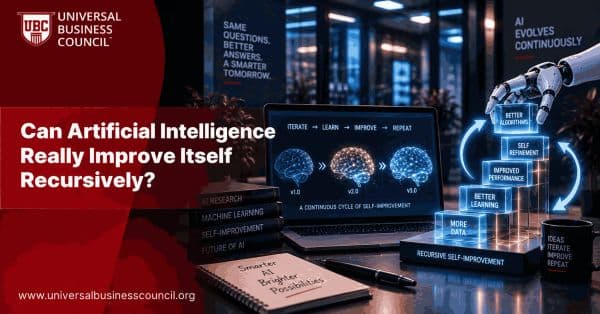
Can Artificial Intelligence Really Improve Itself Recursively?
Explore whether artificial intelligence can truly improve itself recursively, how recursive self-improvement could work, and the technical, practical, and safety limits involved.
Artificial Intelligence
Decision Intelligence vs Generative AI
Compare decision intelligence and generative AI to understand how decision-focused systems optimize actions and outcomes while generative models create text, images, code, and other content.
Trending Articles
The Role of Blockchain in Ethical AI Development
How blockchain technology is being used to promote transparency and accountability in artificial intelligence systems.
AWS Career Roadmap
A step-by-step guide to building a successful career in Amazon Web Services cloud computing.
Top 5 DeFi Platforms
Explore the leading decentralized finance platforms and what makes each one unique in the evolving DeFi landscape.