

Compliance Risk Assessment: The Difference Between Catching a Problem and Reading About It After
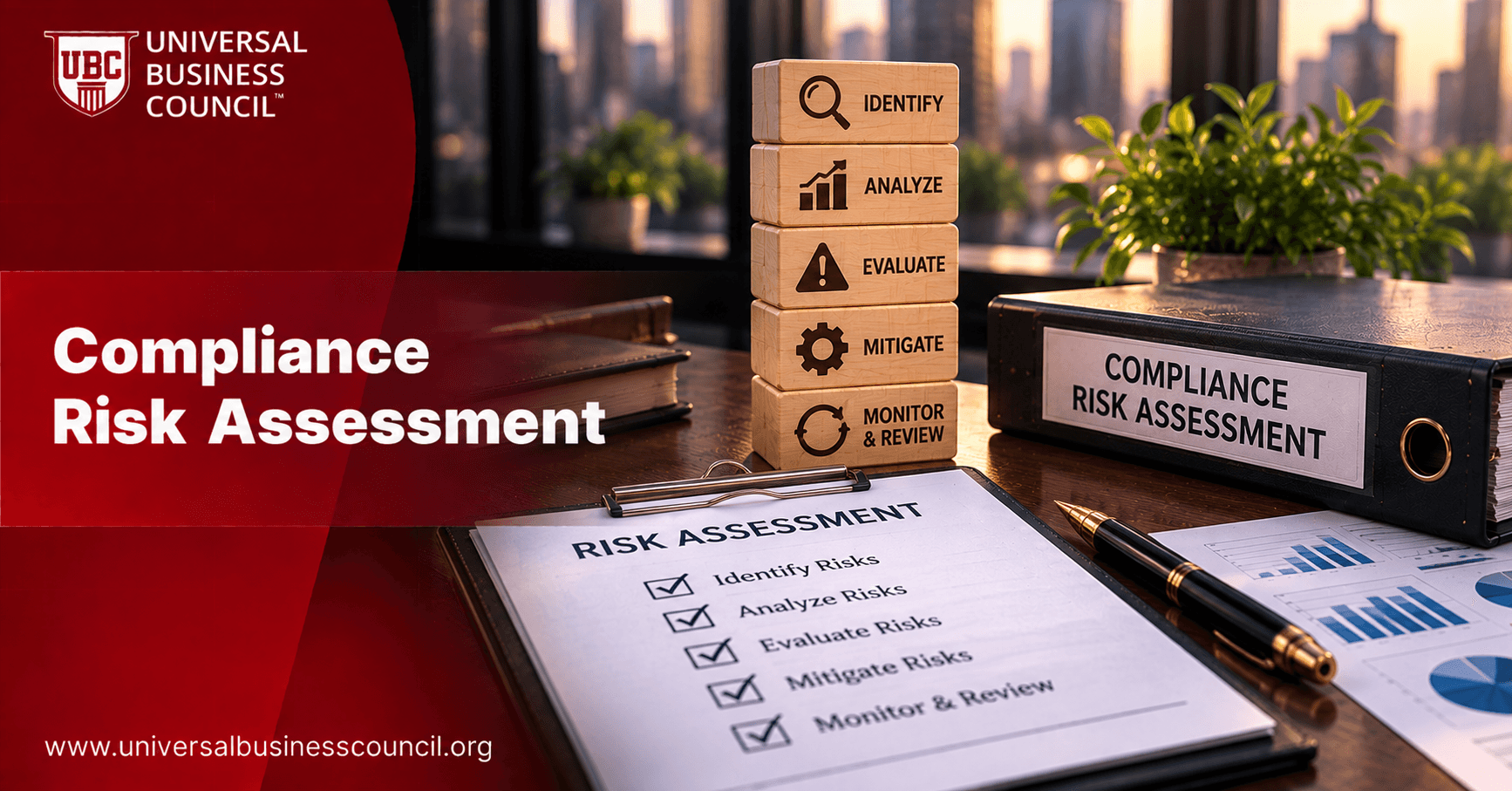
Most compliance risk assessments aren't actually assessments. They're paperwork. Somebody fills out the same spreadsheet every year, scores everything green, and the company calls that "managing risk" even though nothing about the process ever changes.
A real compliance risk assessment does something different. It's not a form to get through; it's a way of finding out where the business is actually exposed before that exposure turns into a fine, a lawsuit, or a headline. This blog gets into what a compliance risk assessment actually covers, why most of them fail to catch anything useful, where the biggest blind spots tend to hide, and how to build one that actually changes what a company does next.

What a compliance risk assessment actually is
People often mix this up with an audit, and the two aren't the same job.
An audit looks backward. It checks whether the rules that already exist were followed.
A compliance risk assessment looks forward. It asks where the next failure is most likely to come from, before there's anything to audit.
An audit can tell a company it handled last quarter's loan files correctly. A compliance risk assessment is what tells the same company that its loan origination process has a gap nobody's caught yet, because the person approving exceptions and the person reviewing them for accuracy are the same manager.
That distinction matters more than it sounds. A company can pass every audit it's ever had and still be sitting on a risk that hasn't surfaced yet. The audit checks the past. The assessment is supposed to check the exposure.
Why most assessments fail to catch anything useful
Walk into most companies and ask to see last year's compliance risk assessment. You'll usually get the same spreadsheet as the year before, with the scores lightly adjusted and nothing structurally different about how the risks were identified.
A few patterns show up again and again:
The same template gets reused every cycle, regardless of whether the business has changed.
Risks get scored by gut feel rather than by any consistent method, so the loudest voice in the room decides what counts as "high risk."
"We've always done it this way" gets treated as evidence that a process is safe, instead of evidence that nobody's looked at it closely.
The people filling out the assessment are the same people responsible for the areas being assessed, which makes an honest low score personally uncomfortable to write down.
None of this is malicious. It's just easier to repeat last year's process than to rebuild it. The problem is that a risk assessment built this way tends to confirm what everyone already believed rather than surface what they missed.
Where the biggest blind spots hide
Some categories of risk show up in almost every business, and they're the ones a lazy assessment is most likely to skip past.
Third-party vendors
A company can run a tight internal ship and still get burned by a vendor cutting corners on data security or labor standards. Vendor risk rarely gets the same scrutiny as internal risk, mostly because it's someone else's employees and someone else's process. That distance is exactly why it needs closer attention, not less.
New markets and new products
A company that's been compliant for a decade in one state or one country can walk straight into a violation the moment it expands, simply because the old assessment never accounted for a new jurisdiction's rules. The same goes for a new product line that touches customer data or financial disclosures in a way the last product never did.
Manual processes nobody's touched in years
Every company has one: a spreadsheet somebody built years ago that half the finance team still relies on, with no real oversight because it's "always worked." These processes rarely get flagged in an assessment, since nobody thinks to question something that's been running quietly in the background for so long.
Incentive structures
This is the one most assessments skip entirely. A risk assessment can look at systems and processes all day and still miss the fact that a bonus structure is quietly pushing employees to cut corners. If hitting a sales target pays more than following a disclosure rule, that's a compliance risk, even though it never shows up on a typical checklist. Anyone who's studied how incentive design shapes behavior in a Digital Marketing Course has seen a version of this same pattern: people respond to what gets rewarded, not to what's written in the policy manual.
How to actually run one that works
Running an assessment that catches real problems takes a different approach than filling out a template once a year.
Teams and professionals looking to strengthen their understanding of compliance management can explore the Certified Compliance Management Professional certification as part of their professional development.
Rank risks by likelihood and impact, not alphabetically
A useful assessment doesn't treat every risk as equally urgent. Score each one on how likely it is to happen and how much damage it would cause if it did, then focus attention where those two numbers are both high. A minor paperwork error that's unlikely to happen matters a lot less than a rare but catastrophic failure waiting in a process nobody's reviewed.
Get the right people in the room
A compliance risk assessment written entirely by the compliance team misses whatever the compliance team doesn't see day to day. Include:
Frontline employees who know where the actual shortcuts happen
Finance, since financial reporting risk often hides in spreadsheets legal never sees
IT and security, since data risk increasingly touches every department
Someone from leadership, since incentive-driven risk usually traces back to a decision made above the compliance team's level
Set a real cadence, not just a yearly checkbox
An annual assessment misses anything that changes mid-year, and most businesses change constantly. A better approach runs a lighter review quarterly, with the full deep-dive happening annually, so new risks from a product launch or a new market don't sit unnoticed for months.
Turn findings into action, not just a report
The most common failure isn't a badly run assessment. It's a well-run one that produces a report nobody acts on. Every identified risk needs an owner and a deadline attached to it, not just a line item in a document that gets filed away until next year.
Modern risk assessment increasingly leans on automated monitoring to catch these gaps faster than a manual review ever could. Building and maintaining those systems takes real technical skill, which is part of why teams working in this space often pursue Tech Certifications to design tools that flag irregularities as they happen rather than months later.
Turning the assessment into a living process, not a yearly event
The shift that separates companies that actually manage risk from companies that just document it comes down to this: treating the assessment as something you check against constantly, not something you complete once and file away.
That looks like:
Reviewing flagged risks in regular operational meetings, not just at assessment time
Updating the risk list the moment something changes, a new regulation, a new vendor, a new market, rather than waiting for the next scheduled cycle
Tracking whether previous findings actually got fixed, not just whether they got written down
As recordkeeping and monitoring shift toward automated and tamper-proof systems, some professionals are building these tracking systems using Deep Tech Certifications, since a risk log that can't be quietly edited after the fact is worth more than one sitting in an easily altered spreadsheet.
Making the assessment count
A perfect scorecard that changes nothing is worse than a messy one that gets acted on. The company in the opening scenario didn't fail because its assessment looked bad. It failed because its assessment looked fine, and nobody questioned why the same categories scored green year after year.
A compliance risk assessment is only as good as what happens after it's finished. Get the right people involved, rank risks honestly instead of comfortably, and build a process that keeps checking itself instead of waiting for next January to roll around.
Frequently asked questions
1. What is a compliance risk assessment?
It's a structured process for identifying where a company is most exposed to regulatory, financial, or operational risk, before that exposure turns into an actual violation.
2. How is a compliance risk assessment different from an audit?
An audit checks whether existing rules were followed in the past. A risk assessment looks forward, identifying where the next failure is likely to come from.
3. How often should a compliance risk assessment happen?
A lighter review on a quarterly basis, with a full assessment annually, catches new risks faster than a once-a-year process alone.
4. Who should be involved in a compliance risk assessment?
Compliance staff, frontline employees, finance, IT and security, and a representative from leadership, since risk shows up differently across each of these groups.
5. What's the biggest reason compliance risk assessments fail?
They get treated as a yearly formality instead of a process that actually changes how the business operates.
6. What are common blind spots in a risk assessment?
Third-party vendors, new markets or products, outdated manual processes, and incentive structures that quietly reward cutting corners.
7. Why do incentive structures matter in a risk assessment?
Because employees respond to what actually gets rewarded, not just what's written in a policy document, and a mismatch between the two creates real risk.
8. Can a small business skip a formal compliance risk assessment?
No. Smaller businesses often have fewer layers of oversight, which can make individual risks more likely to slip through unnoticed.
9. What does it mean to rank risks by likelihood and impact?
It means scoring each identified risk on how probable it is and how damaging it would be, then prioritizing the risks that score high on both.
10. How does vendor risk factor into a compliance risk assessment?
A company's compliance record can be undone by a third-party vendor cutting corners, so vendor practices need the same scrutiny as internal processes.
11. What should happen after a risk assessment identifies a problem?
Every finding needs a named owner and a deadline, not just a mention in a report that gets filed away.
12. Does a new product or market require a fresh risk assessment?
Yes. Expanding into a new region or launching a product with new data or compliance implications introduces risks the previous assessment never accounted for.
13. How does automation help with compliance risk assessment?
Automated monitoring can catch irregularities in near real time, rather than waiting for the next scheduled review to surface a problem.
14. What role does leadership play in a compliance risk assessment?
Leadership sets the incentives that shape employee behavior, so their involvement is necessary to catch risks tied to compensation and targets.
15. Can a compliance risk assessment be outsourced entirely?
External expertise can help, but internal staff need to stay involved, since outsiders won't see the shortcuts and workarounds that frontline employees deal with daily.
16. What's the difference between a compliance risk assessment and a compliance strategy?
The assessment identifies where the risks sit. The strategy is the broader system of decisions for how the company manages those risks over time.
17. How do manual processes create compliance risk?
Long-standing manual workflows often run without oversight simply because they've worked for years, which makes them easy to overlook during a review.
18. What's a sign that a compliance risk assessment isn't working?
The same categories scoring "low risk" year after year with no real change in how the process was conducted.
19. Should risk assessment findings be shared company-wide?
Relevant findings should reach the teams responsible for acting on them, rather than staying locked inside a compliance department report.
20. What's the biggest mistake companies make with risk assessments?
Treating the finished report as the goal, instead of treating it as the starting point for actual changes.
Related Articles
View All
Business
Customer Success vs Account Management: What's the Difference?
Customer success and account management both focus on building strong customer relationships, but they serve different purposes. Learn how their responsibilities, goals, and performance metrics differ, how they work together, and how businesses can use both functions to improve customer satisfaction, retention, and long-term growth.

Business
Customer Success vs Customer Service: What's the Difference?
Customer success and customer service both focus on customer relationships, but they serve different purposes. Customer service resolves problems when customers need help, while customer success proactively helps customers achieve their goals. Explore their key differences, responsibilities, metrics, and how businesses can use both to improve customer experience, loyalty, and long-term growth.
Business
Future Trends in Compliance Management: What’s Next?
Compliance management is shifting from reacting to violations to predicting and preventing risks before they escalate. Discover how AI, automation, predictive analytics, and real-time monitoring are transforming compliance teams and helping businesses stay ahead of regulatory changes.
Trending Articles
The Role of Blockchain in Ethical AI Development
How blockchain technology is being used to promote transparency and accountability in artificial intelligence systems.
AWS Career Roadmap
A step-by-step guide to building a successful career in Amazon Web Services cloud computing.
Top 5 DeFi Platforms
Explore the leading decentralized finance platforms and what makes each one unique in the evolving DeFi landscape.