

EPA regulations 101: a compliance-first guide to staying inspection-ready
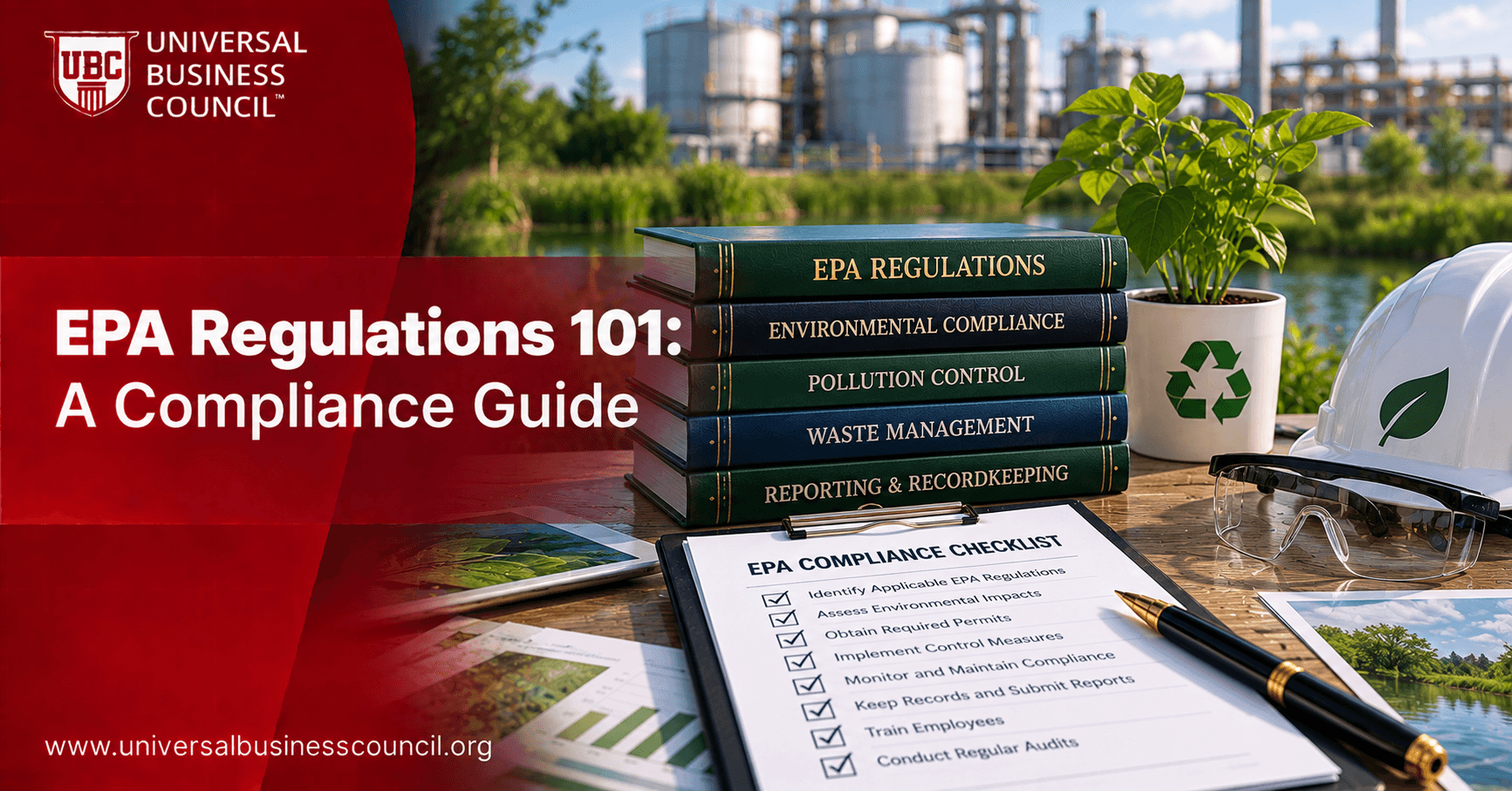
A manufacturing plant discharges wastewater the same way it has for a decade, no one's checked the permit thresholds since the last renewal. A facility manager assumes hazardous waste rules only apply to companies that handle chemicals full-time. A small operation figures it's too small for the EPA to notice at all. None of these are dramatic violations. All three are exactly how EPA regulations catch up with a business.
This guide breaks down what EPA regulations actually require, how enforcement really works, and what it takes to build a compliance program that holds up when someone official starts asking questions.

What actually gets a business on the EPA's radar
Most companies picture an EPA investigation starting with a surprise inspection. In practice, that's rarely how it begins.
A required self-report, filed late or missing a threshold that got crossed without anyone noticing.
A tip or complaint from a neighboring business, a community member, or even a former employee.
A routine permit renewal that surfaces something the facility hasn't kept up with.
A referral from a state environmental agency doing its own oversight.
None of these need a whistleblower or a disaster. Most start with paperwork, not pollution.
The EPA regulations that actually apply to you
Not every business faces every rule. What applies depends heavily on what the facility does, what it stores, and what it releases.
The Clean Air Act governs emissions, and it applies well beyond heavy industry, covering everything from boilers to paint booths to refrigerants. The Clean Water Act regulates discharges into waterways, along with stormwater runoff that a lot of businesses don't realize counts. The Resource Conservation and Recovery Act, RCRA, governs how hazardous waste gets generated, stored, and disposed of, with recordkeeping requirements that scale with how much waste a facility actually produces. EPCRA reporting requires certain facilities to disclose chemical inventories and releases to local and state authorities, so nearby communities and emergency responders know what's actually on-site.
A business rarely deals with just one of these. Most deal with two or three at once, often without realizing the rules overlap.
Why so many violations start as paperwork problems
Here's what surprises a lot of companies: most EPA violations aren't about actual environmental harm. They're about compliance mechanics.
A permit that lapsed because renewal wasn't tracked on a calendar anyone owned.
A report filed late, or filed with numbers that don't match what was actually happening on-site.
A generator status that changed as production grew, without anyone updating the paperwork to match.
A chemical threshold quietly crossed, with no one monitoring it closely enough to notice.
Communicating environmental obligations clearly across a company, not just filing them, matters more than most businesses expect. A Digital Marketing Course helps teams get that internal messaging right, instead of burying a compliance deadline in a memo nobody reads.
What an EPA inspection or records request actually looks like
When the EPA or a state agency does show up, they're rarely there for a surprise gotcha. They're checking whether the paperwork matches reality.
Expect a review of permits against current operations, not just what was filed years ago. Expect a look at waste manifests, discharge monitoring reports, and emissions logs, checked for both completeness and consistency over time. Expect employee interviews, since inspectors want to know whether staff actually understand the procedures written down, not just whether the procedures exist. And expect a walk-through comparing what's physically happening on-site against what the permits describe.
Teams building or maintaining the systems behind that monitoring get real value from Tech Certifications that go beyond a basic dashboard tutorial. Gaps between the paper and the floor are exactly what turn a routine visit into a citation.
Federal EPA rules versus state agencies, and why the difference matters
This is where a lot of companies trip up. The EPA sets the federal floor, but most states run their own environmental agencies with authority to enforce, and often to go further than federal rules require.
A business operating in multiple states can face genuinely different requirements site to site, even under the same federal framework. Assuming one compliance approach covers every location is one of the fastest ways to end up out of step somewhere.
Building a compliance system instead of reacting to one
A program that survives real scrutiny isn't built the week before a permit renewal. It's built as infrastructure that runs continuously.
A permitting calendar that tracks renewal dates before they become emergencies.
Waste manifests that get logged as waste moves, not reconstructed from memory later.
Emissions and discharge monitoring that happens on schedule, with numbers that get reviewed, not just filed.
A spill and release response plan that staff have actually practiced, not just signed off on paper.
Getting this right takes more than good intentions. Compliance teams tracking permits, thresholds, and multi-site obligations benefit from real structured training, and a Certified Compliance Management Professional credential gives staff the framework to run a program like this instead of improvising one as issues come up.
Common mistakes companies keep making
A handful of patterns show up again and again.
Treating a permit as a one-time approval instead of an ongoing obligation with renewal dates and reporting deadlines.
Assuming environmental compliance is one department's job, when operations, facilities, and legal all touch it.
Waiting for a violation to build a tracking system, instead of building one before it's needed.
Assuming a program built for one facility automatically covers every site, when state rules and local conditions often differ.
What non-compliance actually costs, beyond the fine
The financial penalty gets the headline, but it's often not the highest cost.
Non-compliance can trigger cleanup liability that dwarfs the original fine, especially where contamination is involved. It can bring operating restrictions or even a shutdown while issues get resolved. It can complicate insurance renewals and lending, since both increasingly factor in environmental risk. And it can damage relationships with regulators going forward, turning routine renewals into closer, slower reviews.
Where EPA compliance is heading
A few shifts are worth watching. Enforcement is paying closer attention to smaller and mid-sized operations that used to assume they were below the threshold for scrutiny. Reporting requirements are leaning more digital, with agencies expecting real-time or near-real-time data instead of annual paper filings. And for facilities adding sensor-based emissions or discharge monitoring, Deep Tech Certifications cover the infrastructure standard compliance training skips entirely. Climate-related disclosure is also expanding what counts as a reportable obligation, even for businesses that never thought of themselves as environmentally regulated.
Conclusion
EPA regulations come down to a simple pattern that plays out slowly: permits that need renewing, waste that needs tracking, emissions that need monitoring, and reports that need to match what's actually happening on the ground. Most violations don't start with an environmental disaster. They start with a permit nobody tracked, a report filed late, or a threshold that quietly got crossed. The Clean Air Act, Clean Water Act, RCRA, and EPCRA set the framework, but the real strength of a compliance program shows up in the systems behind it, a permitting calendar someone owns, waste manifests logged in real time, and monitoring that actually gets reviewed instead of just filed. Get that right, and EPA compliance becomes routine infrastructure. Get it wrong, and the gap tends to surface exactly when a renewal, a complaint, or an inspection forces the question.
FAQs
What does the EPA actually regulate?
Air emissions, water discharges, hazardous waste, and chemical reporting, among other environmental areas, depending on what a business does.
What usually triggers an EPA investigation?
Most often a self-report, a complaint, a permit renewal, or a referral from a state agency, not a random inspection.
What is the Clean Air Act?
A federal law regulating air emissions, applying to sources ranging from boilers to refrigerants, not just heavy industry.
What does the Clean Water Act cover?
Discharges into waterways and stormwater runoff, which applies to more businesses than many expect.
What is RCRA?
The Resource Conservation and Recovery Act, governing how hazardous waste is generated, stored, and disposed of.
What is EPCRA reporting?
A requirement for certain facilities to disclose chemical inventories and releases to local and state authorities.
Are most EPA violations environmental or procedural?
Procedural. Most start as paperwork problems, lapsed permits, late reports, or outdated generator status.
What happens during an EPA records request or inspection?
Permits get checked against current operations, and documentation gets reviewed for completeness and consistency.
Do state environmental agencies matter as much as the EPA?
Yes, states often enforce their own rules on top of the federal floor, and can go further than federal requirements.
Does one compliance program cover every business location?
Not automatically, since state rules and local conditions frequently differ from site to site.
What's the biggest hidden cost of non-compliance?
Often cleanup liability and operating restrictions, which can outweigh the original fine significantly.
How is EPA enforcement changing?
It's paying closer attention to smaller operations, shifting toward digital reporting, and expanding climate-related disclosure requirements.
What is an EPA permit?
An authorization that allows a business or facility to conduct certain regulated activities while meeting specific environmental requirements.
How often should environmental compliance records be reviewed?
Regularly, especially when operations, permits, equipment, or environmental requirements change.
What is hazardous waste under EPA regulations?
Waste that is specifically listed or meets characteristics such as ignitability, corrosivity, reactivity, or toxicity under applicable regulations.
Can a business be fined for an expired environmental permit?
Yes. Continuing a regulated activity after a permit expires can lead to enforcement action, depending on the applicable requirements.
Who is responsible for EPA compliance within a company?
The company remains responsible, but environmental managers, compliance teams, facility managers, and other designated employees may handle day-to-day requirements.
Does EPA compliance apply to small businesses?
Yes. The requirements depend on the business's activities, emissions, waste, discharges, and other regulated operations rather than simply its size.
What should a business do before an EPA inspection?
Review permits, required records, reporting obligations, waste handling practices, and current operations to identify gaps before an inspection occurs.
What's the biggest EPA compliance mistake businesses make?
Treating environmental compliance as a paperwork task instead of keeping permits, operations, records, and reporting requirements aligned as the business changes.
Related Articles
View All
Business
CFTC Regulations: A Compliance Guide
Learn how CFTC regulations affect futures, swaps, and derivatives markets, including reporting, recordkeeping, market conduct, and compliance responsibilities.

Business
Customer Success Certification for Beginners: Complete Guide
A customer success certification can help beginners understand customer onboarding, product adoption, retention, and relationship management. Learn how to choose the right program, develop practical skills, and prepare for entry-level customer success roles.

Business
What Is Customer Success Management? A Plain Guide to Keeping Customers for Good
Customer success management helps businesses ensure customers achieve their desired outcomes through proactive guidance, ongoing support, and relationship building. Discover the key responsibilities of customer success managers, the metrics used to measure success, and the strategies businesses can use to improve customer satisfaction, retention, and long-term growth.
Trending Articles
The Role of Blockchain in Ethical AI Development
How blockchain technology is being used to promote transparency and accountability in artificial intelligence systems.
AWS Career Roadmap
A step-by-step guide to building a successful career in Amazon Web Services cloud computing.
Top 5 DeFi Platforms
Explore the leading decentralized finance platforms and what makes each one unique in the evolving DeFi landscape.