

Insider Trading 101: a compliance-first guide to trading on your own company's stock the right way
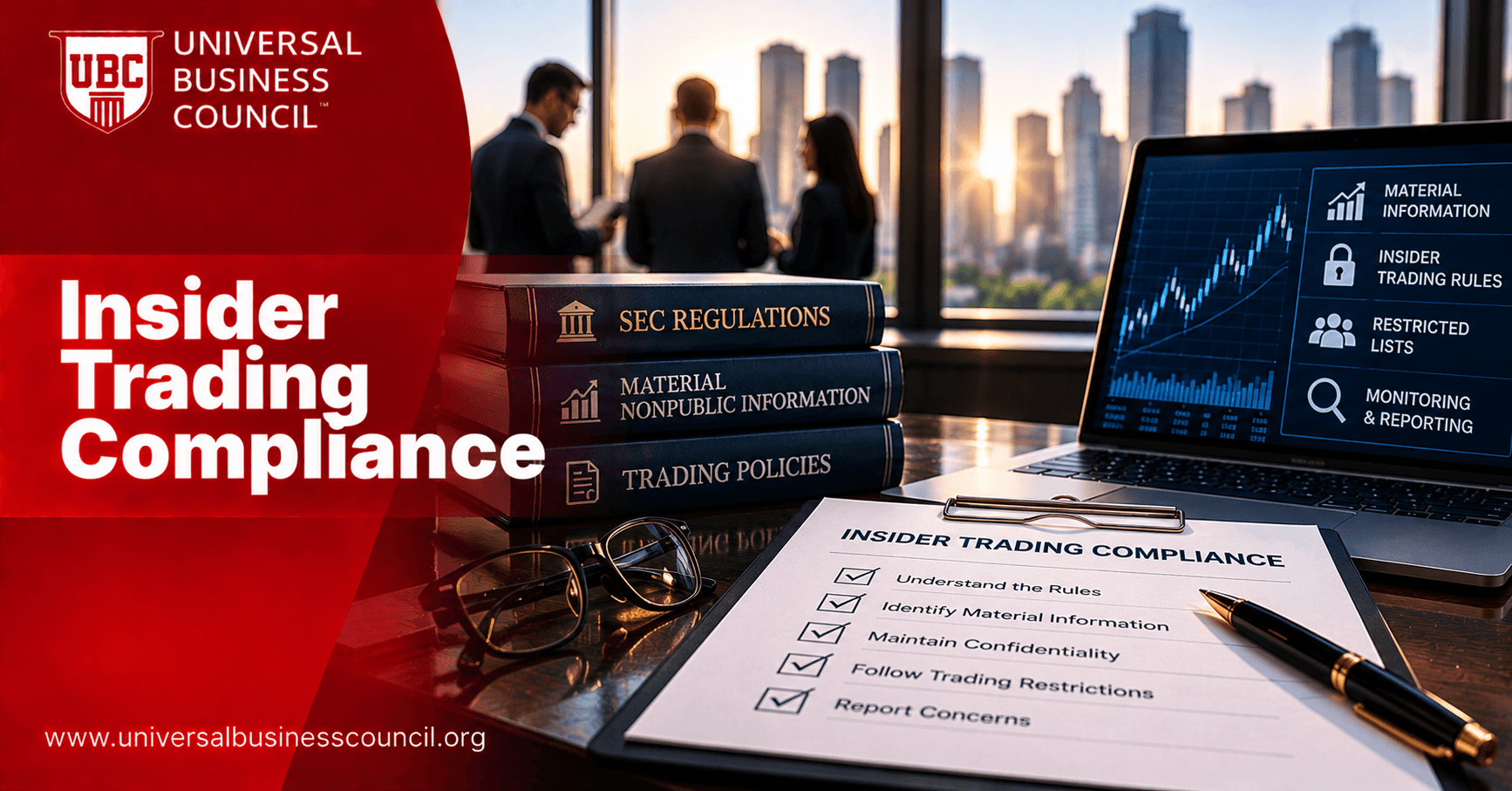
An employee overhears a conversation about an upcoming acquisition before it's announced, and mentions it to a family member over dinner that night, not as advice, just as news. That family member buys a small amount of stock the next morning. Nobody involved thinks of it as a crime. It's exactly the kind of scenario insider trading law was written to catch, and it's a lot easier to stumble into than most employees realize.
Insider trading is one of the more unforgiving areas of compliance, since the line between an innocent conversation and a federal violation can be thinner than people expect. This guide breaks down what insider trading actually means, who it applies to, and what a compliance program that actually protects both the company and its employees looks like.

What insider trading actually is
Insider trading means buying or selling a company's stock based on material, non-public information- information significant enough to affect an investor's decision and information the public doesn't have access to yet. It's illegal specifically because it gives the person trading an unfair advantage over everyone else in the market, who's making decisions without that same information.
It's worth being clear that insider trading doesn't require some elaborate scheme. It can be as simple as buying stock after learning about strong quarterly earnings before they're publicly announced, or avoiding a loss by selling shares after learning about a problem the company hasn't disclosed yet. The trade itself is what creates the violation, not the sophistication of how the information was obtained.
Why this matters more right now
A few trends have raised the real-world risk of insider trading violations happening, often without any deliberate intent.
Remote work has loosened a lot of natural information hygiene that used to exist in a physical office, where sensitive conversations were more easily overheard or accidentally shared informally.
Casual sharing over text, social media, and informal chat has created more opportunities for material information to spread outside its intended audience without anyone treating it as a serious disclosure.
Regulatory scrutiny has intensified, with regulators increasingly examining not just direct trades by insiders, but the broader network of people those insiders might have shared information with.
None of this changed what insider trading actually is. It changed how easily information leaks now, and how closely trading activity gets examined afterward.
Who counts as an insider?
The category of "insider" is broader than most people initially assume, and understanding its full reach matters.
Employees and executives with access to material non-public information through their role are the most obvious category, but the reach extends well beyond the C-suite. Anyone who learns material non-public information through their job, an administrative assistant, a junior analyst, someone in finance preparing earnings reports, can be considered an insider for the purposes of trading restrictions, regardless of seniority.
Beyond direct insiders, there's a category called a "tippee," someone who receives material non-public information from an insider and trades on it, even if they had no direct role at the company at all. The family member who bought stock after a dinner conversation is a tippee. Both the original insider who shared the information and the tippee who traded on it can face liability, which is exactly why casual information sharing carries more risk than people assume.
What counts as material non-public information
Not every piece of internal information rises to the level of "material." Understanding the distinction matters, since overly cautious employees sometimes avoid discussing perfectly ordinary business topics, while genuinely material information sometimes gets shared too casually because it doesn't feel sensitive in the moment.
Information is generally considered material if a reasonable investor would consider it important to a decision about buying or selling the stock. Common examples include unreleased earnings results, an upcoming merger or acquisition, a major product launch or failure, a significant leadership change, or an unresolved legal or regulatory issue that could affect the company's value. The information also has to be non-public, meaning it hasn't yet been disclosed through official channels like a press release or a public filing, not just something that hasn't been widely discussed yet.
Blackout periods and pre-clearance
Most public companies restrict when employees can trade company stock, and understanding why these restrictions exist helps employees actually follow them rather than treating them as arbitrary red tape.
A blackout period is a defined window, often around quarterly earnings announcements, when employees are prohibited from trading company stock, regardless of whether they personally have access to material non-public information at that moment. This exists because it's often impossible to verify who does and doesn't have access to certain information at a given time, so a blanket restriction removes the ambiguity entirely.
Pre-clearance requirements go a step further for certain employees, typically executives and other insiders with regular access to sensitive information, requiring approval before any trade even outside a blackout period. This adds a layer of oversight that catches situations a blanket blackout period alone might miss.
The core pillars of an insider trading compliance program
A real program here goes well beyond a policy document employees sign once during onboarding.
Policy clarity means employees actually understand what counts as material non-public information, with concrete examples relevant to the specific business, not just a legal definition copied from a template. A blackout calendar clearly communicates trading windows in advance, so employees aren't caught off guard or left guessing when restrictions apply. A pre-clearance process for insiders adds a genuine check before a trade happens, rather than relying entirely on individual judgment. Training has to reach employees at every level who might come into contact with sensitive information, not just executives, since a junior employee can trigger a violation just as easily. And monitoring actual trading activity against known blackout periods and disclosed information timelines helps catch problems before they become a regulatory investigation.
Common red flags and compliance gaps
A few patterns tend to expose weak insider trading controls.
No clear, specific definition of material non-public information relevant to the company's actual business, leaving employees to guess.
Blackout periods that exist on paper but aren't clearly communicated in advance, leading to accidental violations rather than deliberate ones.
Casual information sharing treated as harmless, particularly in smaller teams where formal disclosure processes feel unnecessary.
No pre-clearance process for executives and other high-access employees, relying entirely on self-policing.
Trading activity that isn't actively monitored against known sensitive information timelines, meaning a suspicious pattern could go unnoticed until a regulator flags it independently.
None of these individually proves a violation occurred. Together, they're exactly the pattern that shows up once a trade draws regulatory attention and a company has to explain what controls were actually in place.
Building a program that holds up
A program built to actually function starts with a clear, specific definition of material non-public information tailored to the business, not a generic legal definition employees have to interpret themselves. From there, a few things matter most.
Trading windows need to be communicated clearly and well in advance, not announced right before they begin, giving employees genuine time to plan around them. 10b5-1 trading plans, which allow insiders to set up trades in advance according to a fixed schedule or formula, can provide a legitimate way for executives to trade predictably while reducing the appearance or possibility of trading on undisclosed information, though these plans have drawn increasing regulatory scrutiny themselves in recent years. And monitoring needs to actually happen, comparing trading activity against known sensitive periods rather than assuming a signed policy is sufficient protection on its own.
Building a program at this level takes real structure. A Certified Compliance Professional credential is worth looking into for compliance staff who want a genuine framework for running an insider trading program, rather than relying entirely on a policy document and hoping employees interpret it correctly.
Common mistakes companies and employees make
A handful of mistakes keep showing up. Treating casual information sharing, a dinner conversation, a quick text to a friend, as harmless because it doesn't feel like insider trading in the moment. Tipping family members without any awareness that both the tipper and the tippee can face real liability. Ignoring blackout periods because a trade feels unrelated to any specific piece of sensitive information the employee is aware of. And companies failing to actually monitor trading activity, discovering a problem only after a regulator raises it independently.
Technology increasingly supports this kind of program, particularly for monitoring employee trading activity against blackout calendars and flagging suspicious patterns automatically. Tech Certifications is worth a look for compliance staff evaluating or building that kind of monitoring infrastructure, so they understand what a system is actually catching rather than trusting a vendor's dashboard blindly.
The cost of getting it wrong
Insider trading violations carry some of the most serious consequences in corporate compliance. Civil penalties from the SEC can be substantial, often calculated as a multiple of any profit gained or loss avoided, and criminal violations can bring real prison time for individuals involved, not just financial penalties for the company. Beyond the direct legal consequences, an insider trading investigation tends to draw significant public attention, and the reputational damage to both the individual and the company involved often outlasts the legal proceedings themselves by a wide margin.
Where this is heading
Scrutiny of 10b5-1 trading plans continues to tighten, as regulators examine whether these plans are genuinely used to trade predictably or manipulated to time trades around undisclosed information. Tippee liability keeps expanding too, with regulators increasingly willing to pursue people several steps removed from the original insider if a clear chain of information sharing can be established. And AI-assisted trade surveillance is becoming more common, helping companies and regulators alike detect suspicious trading patterns that would be difficult to catch through manual review alone.
For compliance and communications teams rolling out insider trading training across a broad employee base, how the message gets delivered matters almost as much as the policy itself. A Digital Marketing Course can help teams frame insider trading risks in a way that actually resonates with employees who don't work in finance or legal, rather than reading as dense regulatory language nobody fully absorbs. And for organizations building more sophisticated trade surveillance systems, Deep Tech Certifications fills a gap standard compliance training doesn't touch.
Conclusion
Insider trading policy comes down to a fairly direct principle: nobody should trade, or help someone else trade, based on information the rest of the market doesn't have yet. The real difficulty lies in how easily that line gets crossed without anyone intending to break the law: a casual conversation, a family member's small trade, a blackout period nobody clearly communicated in advance. Get the fundamentals right: a clear definition of what counts as material information, well-communicated trading windows, and real pre-clearance and monitoring for high-access employees, and insider trading compliance becomes a manageable, well-understood part of working at a public company. Get it wrong, and the consequences reach far beyond a fine, touching careers, reputations, and in serious cases, someone's freedom.
FAQs
What is insider trading?
Buying or selling a company's stock based on material, non-public information not yet available to the public.
Does insider trading require a deliberate scheme to be illegal?
No, even a simple trade made after learning undisclosed information can constitute a violation.
Who counts as an insider under insider trading law?
Any employee or executive who accesses material non-public information through their role, regardless of seniority.
What is a tippee?
Someone who receives material non-public information from an insider and trades on it, even without a direct company role.
Can both the person who shares information and the person who trades on it face liability?
Yes, both the insider who tips and the tippee who trades can be held liable.
What makes information "material" under insider trading law?
Information a reasonable investor would consider important to a decision about buying or selling the stock.
What are common examples of material non-public information?
Unreleased earnings, upcoming mergers, major product launches, leadership changes, and unresolved legal issues.
What is a blackout period?
A defined window, often around earnings announcements, when employees are prohibited from trading company stock.
Why do blackout periods apply to everyone, not just people with sensitive information?
Because it's often impossible to verify who does and doesn't have access to certain information at a given time.
What is a pre-clearance requirement?
A rule requiring certain insiders to get approval before trading, even outside a blackout period.
What is a 10b5-1 trading plan?
A plan allowing insiders to schedule trades in advance, reducing the appearance of trading on undisclosed information.
Are 10b5-1 plans facing more scrutiny recently?
Yes, regulators are examining whether they're genuinely used for predictable trading or manipulated around sensitive timelines.
Can casual conversations lead to insider trading violations?
Yes, sharing material non-public information informally, even without intent to profit, can create liability for both parties.
What happens if a family member trades based on information an employee shared?
Both the employee who shared it and the family member who traded can potentially face legal consequences.
What are the penalties for insider trading?
Civil penalties often calculated as a multiple of profit gained, plus potential criminal prosecution and prison time.
How does remote work increase insider trading risk?
It loosens natural information hygiene that existed in physical offices, making casual leaks more likely.
What role does technology play in insider trading compliance?
Increasingly for monitoring trading activity against blackout calendars and flagging suspicious patterns automatically.
What is the most common way employees unintentionally risk insider trading violations?
Casual information sharing, like mentioning sensitive news to a friend or family member without recognizing the risk.
Is tippee liability expanding?
Yes, regulators are increasingly willing to pursue people several steps removed from the source of information.
What's the foundation of an insider trading compliance program that works?
A clear definition of material information, well-communicated trading windows, and real pre-clearance and monitoring for high-access employees.
Related Articles
View All
Business
Customer Success Certification for Beginners: Complete Guide
A customer success certification can help beginners understand customer onboarding, product adoption, retention, and relationship management. Learn how to choose the right program, develop practical skills, and prepare for entry-level customer success roles.

Business
What Is Customer Success Management? A Plain Guide to Keeping Customers for Good
Customer success management helps businesses ensure customers achieve their desired outcomes through proactive guidance, ongoing support, and relationship building. Discover the key responsibilities of customer success managers, the metrics used to measure success, and the strategies businesses can use to improve customer satisfaction, retention, and long-term growth.

Business
What is customer success? A complete guide
Customer business focuses on understanding customer needs, building strong relationships, and delivering value that encourages loyalty and long-term growth. Learn about the different types of customer relationships, effective engagement strategies, and how businesses can improve customer satisfaction and retention.
Trending Articles
The Role of Blockchain in Ethical AI Development
How blockchain technology is being used to promote transparency and accountability in artificial intelligence systems.
AWS Career Roadmap
A step-by-step guide to building a successful career in Amazon Web Services cloud computing.
Top 5 DeFi Platforms
Explore the leading decentralized finance platforms and what makes each one unique in the evolving DeFi landscape.