

Minimum Wage and Overtime Rules: A Practical Guide
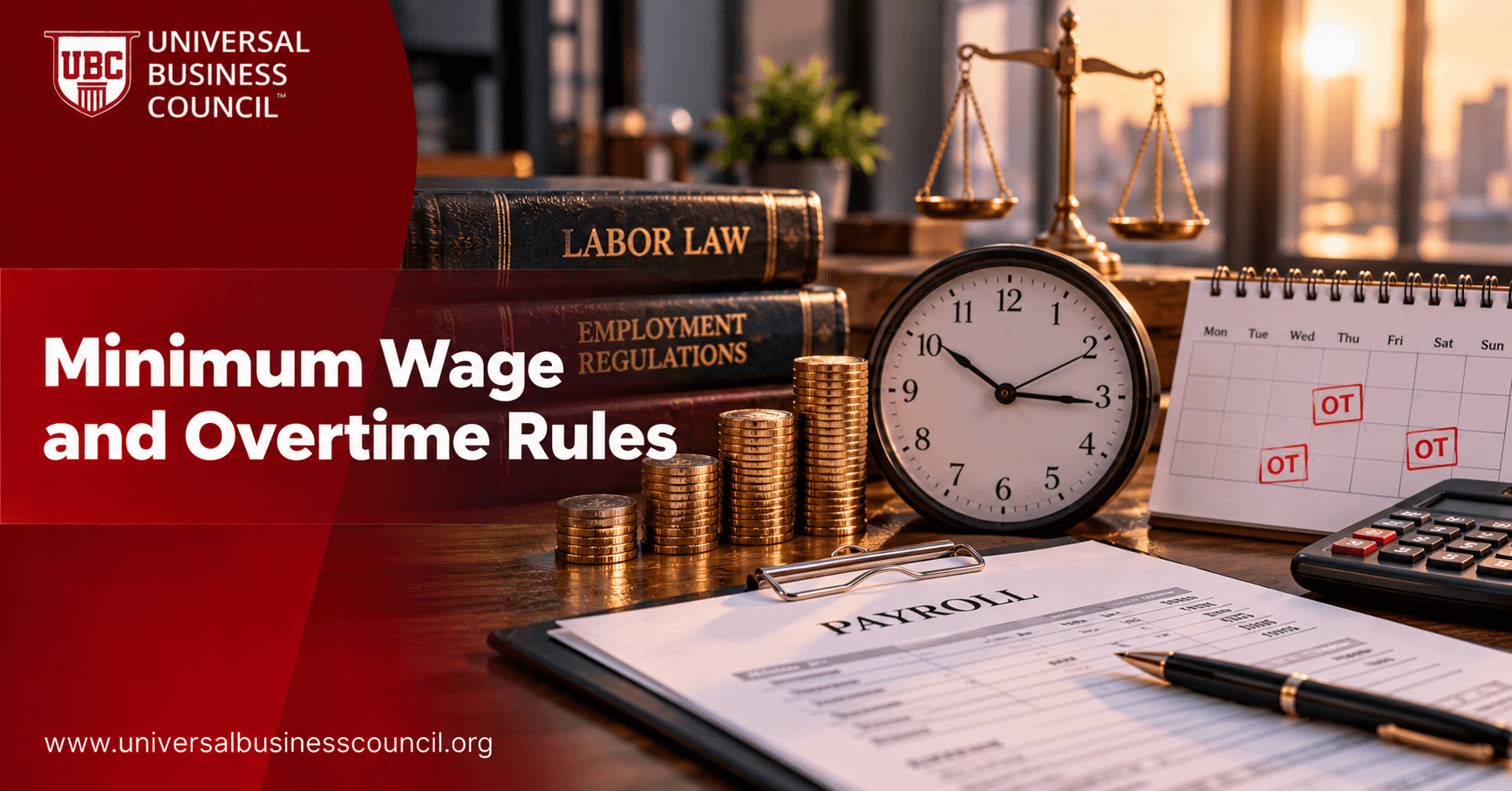
Paying employees correctly is not as simple as multiplying an hourly rate by the number of hours on a timesheet. Minimum wage and overtime requirements can depend on where someone works, how they are classified, which hours count as working time, and whether different pay rates or compensation arrangements affect the calculation.
That makes wage and hour compliance a process that needs to be checked, documented, and updated rather than left entirely to payroll. For compliance professionals looking to strengthen their understanding of employment requirements and wage compliance, the Certified Compliance Professional certification can provide a useful foundation. This guide explains minimum wage and overtime rules in practical terms: what employers need to consider, where common errors occur, how to build reliable checks, and what to do when employees have been underpaid.

What are minimum wage and overtime rules?
Minimum wage rules set the lowest hourly, daily or monthly pay an employer may lawfully offer. Overtime rules set out when and how much extra pay is due when employees work beyond standard hours, usually with a premium on the normal rate. Together they form the core of wage and hour law in most countries.
Typical elements include:
A minimum pay rate, which may be set nationally, regionally, locally or by sector
Standard weekly or daily hour limits, above which overtime applies
A premium rate for overtime hours, and sometimes higher rates for nights, weekends or holidays
Rules on which employees are covered, and which are exempt
Requirements for keeping time and pay records
Rules on pay slips, deductions and timely payment
Rates, thresholds and exemptions differ enormously between countries, states and cities and change often, so this guide is general information and not legal advice. Confirm current rules with local counsel or the labor authority.
Why wage compliance is a business priority
Underpayment is rarely a single mistake. A wrong rule applied to a group of workers means the same error in every payslip, and the total grows quietly. When the problem surfaces, the company may owe back pay for a long period, plus interest, penalties and legal costs. In some places, workers can bring group claims, and officials can inspect and publish names of offenders.
The wider effects hurt as well. Wage disputes damage morale and trust, draw regulator attention to other areas of the business, and harm the employer brand.
Minimum wage: getting the floor right
The rule sounds simple, but applying it correctly takes care.
Which rate applies
Work out which rate covers each worker. Many places have layers: a national minimum, regional or city rates, and sector rates set through collective agreements. Where more than one applies, the higher one usually governs, so employers with staff in several locations need a rate for each.
Local and sector rates
City or state rates can be much higher than the national one, and may rise on fixed dates each year. Sector agreements can set floors for specific trades. A rate change missed at year-end can underpay every affected worker until someone notices.
Special categories
Some laws set different rates for young workers, apprentices, trainees or tipped staff, subject to strict conditions. Tips, service charges and commissions are treated differently across countries, and in some places cannot be used to make up the minimum. Check the rules before relying on any exception.
What counts as pay
Whether bonuses, allowances, benefits in kind, accommodation or meals count toward the minimum varies. So do the rules on deductions for uniforms, equipment, cash shortages or damage. Deductions that take an employee below the minimum wage are restricted or banned in many places, even when the worker agrees.
Overtime: counting the hours right
Overtime problems usually come from two sources: classification and counting.
Who is entitled
Many laws divide employees into those entitled to overtime and those exempt, usually based on pay level and job duties. A job title is not enough. Calling someone a manager does not make them exempt if they mainly do routine work, and a salary above a threshold does not settle the question alone. Misclassified workers can claim years of unpaid overtime.
The same applies to freelancers and contractors. Treating someone as self-employed when the law regards them as an employee removes their minimum wage and overtime rights, and the employer bears the liability.
What counts as working time
Time that must be paid is often wider than employers expect. It can include:
Work done before or after a scheduled shift, such as opening up or handovers
Answering calls, emails or messages outside hours
Required training, meetings and travel between sites
Short rest breaks, and meal breaks where the worker is not free of duty
On-call time, depending on how restricted the worker is
Time spent in security checks or putting on required equipment, in some countries
Off-the-clock work, whether encouraged or just tolerated, is one of the largest sources of wage claims.
Calculating overtime pay
Overtime is normally a multiple of the regular rate, and the regular rate may include more than base pay. Non-discretionary bonuses, shift premiums and commission can count in some systems. Rounding time to the nearest quarter hour is allowed in some places only if it does not consistently favor the employer.
Building a wage compliance process
A reliable process combines clear rules with regular checks. Core elements include:
A register of the wage and hour rules that apply in each location and sector
A documented method for classifying roles as exempt or non-exempt, reviewed when duties change
Timekeeping that captures actual hours, not just scheduled ones
Payroll rules configured and tested against each jurisdiction's requirements
A review calendar for annual rate changes
Training for managers on what counts as work and what they must not ask staff to do off the clock
A channel for employees to raise pay concerns safely
This is program management as much as payroll expertise, spanning HR, finance, operations and legal. Professionals who coordinate such programs often pursue credentials such as the Certified Compliance Management Professional certification.
Marketing, creative and event teams
Marketing departments run into wage and hour issues more often than expected. Launch periods bring long hours. Social media managers reply to comments at night. Event and promotional staff work irregular shifts, and brand ambassadors and models may be classed as freelancers when their working conditions look like employment. Unpaid trial shifts or "work for exposure" arrangements can breach minimum wage rules, and agency staff raise questions about who is the employer.
Marketing leaders who understand how campaigns, events and content calendars are staffed, the kind of grounding a Digital Marketing Course provides, can plan launch workloads realistically, budget for overtime and flag classification questions to HR before a campaign starts.
Timekeeping and payroll technology
Time and attendance systems, scheduling tools and payroll software can automate rate lookups and overtime calculations. They are only as good as their setup. Wrong rules, outdated rates, automatic meal-break deductions that ignore interrupted breaks and rounding settings that always favor the employer can silently underpay hundreds of workers.
Compliance and HR staff who understand how these systems collect, transform and transfer data, helped by technical grounding through programs such as Tech Certifications, can test the configuration, review audit logs and spot mismatches between recorded and paid hours.
AI scheduling, gig platforms and digital pay
Newer tools raise fresh questions. Algorithmic scheduling can create unpredictable shifts, which some jurisdictions regulate through advance-notice and predictive scheduling rules. Gig and platform work blurs the line between employee and contractor, and courts and regulators in several countries have challenged classifications. Paying in cryptocurrency or tokens is restricted in some places, since wages often must be paid in legal tender.
Teams that understand the technology underneath, supported by resources such as Deep Tech Certifications, can question the assumptions built into these tools and work with legal advisers on where the lines lie.
Audits, complaints and fixing errors
Even careful employers find mistakes. What matters is how quickly they are found and corrected.
Internal audits
Test the process regularly. Sample payslips against timesheets and rate tables, compare exempt roles against their real duties, check the lowest-paid roles against current minimum rates, and review complaints and exit interview comments for signs of unpaid work.
If you find underpayment
Stop the practice and correct the setup so it does not continue
Calculate the amount owed for the full relevant period, including any premiums
Take legal advice on interest, penalties and any duty to notify authorities
Pay the money owed and explain clearly to affected staff what happened
Fix the cause, whether a rate error, a classification mistake or a system setting
Keep records of the review and the correction
Conclusion: minimum wage and overtime rules as a payroll discipline
Minimum wage and overtime rules are simple in principle and easy to get wrong in practice. Know which rates and rules apply in every location and sector. Classify roles on real duties, count all working time, and calculate overtime on the right base. Build a process with owners, tested systems and manager training, and watch areas such as marketing launches, events and freelance arrangements. If you find an error, correct it fully and quickly. Do that, and every pay period becomes a check on the last one instead of a repeat of the same mistake.
Frequently asked questions
1. What is minimum wage?
The lowest pay an employer may lawfully offer for work, set nationally, regionally or by sector.
2. Who sets the minimum wage?
Governments, and in some places regions, cities or sector agreements, so several rates may apply.
3. What if two minimum rates apply?
The higher rate usually governs, but check the local rule.
4. What is overtime?
Work beyond standard hours, usually paid at a premium rate.
5. How much is overtime pay?
It depends on the country and the situation, and is often a multiple of the regular rate.
6. What is the difference between exempt and non-exempt employees?
Exempt employees are not entitled to overtime under the law, while non-exempt employees are.
7. Does a salary make someone exempt?
Not on its own, because duties, pay level and local rules all matter.
8. Does a manager title make someone exempt?
No, actual duties decide, not the title.
9. What is misclassification?
Treating employees as contractors or as exempt when the law says otherwise.
10. Can I offer unpaid trial shifts or internships?
Unpaid work is tightly limited, and many unpaid arrangements breach minimum wage law, so take advice before offering them.
11. What counts as working time?
Time worked before or after shifts, required training, some travel and on-call time, and out-of-hours work, depending on the rules.
12. Do employees have to be paid for breaks?
It depends on the country and the break, and interrupted breaks are often paid.
13. What is off-the-clock work?
Work done without being recorded or paid, a common cause of wage claims.
14. Can tips count toward minimum wage?
In some places partly, in others not at all, so check local rules.
15. Can employers make deductions from pay?
Only within legal limits, and deductions that take pay below the minimum are restricted in many places.
16. Is rounding time allowed?
In some places, if it does not consistently favor the employer.
17. What records must employers keep?
Hours, pay rates, payments and deductions, for the period the law requires.
18. How far back can workers claim unpaid wages?
It varies by country, and can be several years, so take legal advice.
19. How do I fix an underpayment?
Stop the practice, calculate the full amount owed, pay it, explain it to staff and fix the cause.
20. How often should wage compliance be reviewed?
At least yearly, and whenever rates change, roles change or you enter a new location.
Related Articles
View All
Business
FCC Rules: A Compliance Guide for Businesses
Learn how FCC rules affect businesses, including telecommunications, marketing communications, consumer privacy, equipment standards, and regulatory compliance responsibilities.

Business
FINRA Rules: A Compliance Guide for Broker-Dealers
Learn how FINRA rules affect broker-dealers, including supervision, communications, trade practices, recordkeeping, and compliance responsibilities.

Business
FDCPA Compliance: A Guide to Debt Collection Rules
Learn how the Fair Debt Collection Practices Act (FDCPA) regulates debt collection, protects consumers from abusive practices, and outlines key requirements for communication, disclosures, and dispute handling.
Trending Articles
The Role of Blockchain in Ethical AI Development
How blockchain technology is being used to promote transparency and accountability in artificial intelligence systems.
AWS Career Roadmap
A step-by-step guide to building a successful career in Amazon Web Services cloud computing.
Top 5 DeFi Platforms
Explore the leading decentralized finance platforms and what makes each one unique in the evolving DeFi landscape.