

TCPA Compliance: A Guide for Marketers and Sales Teams
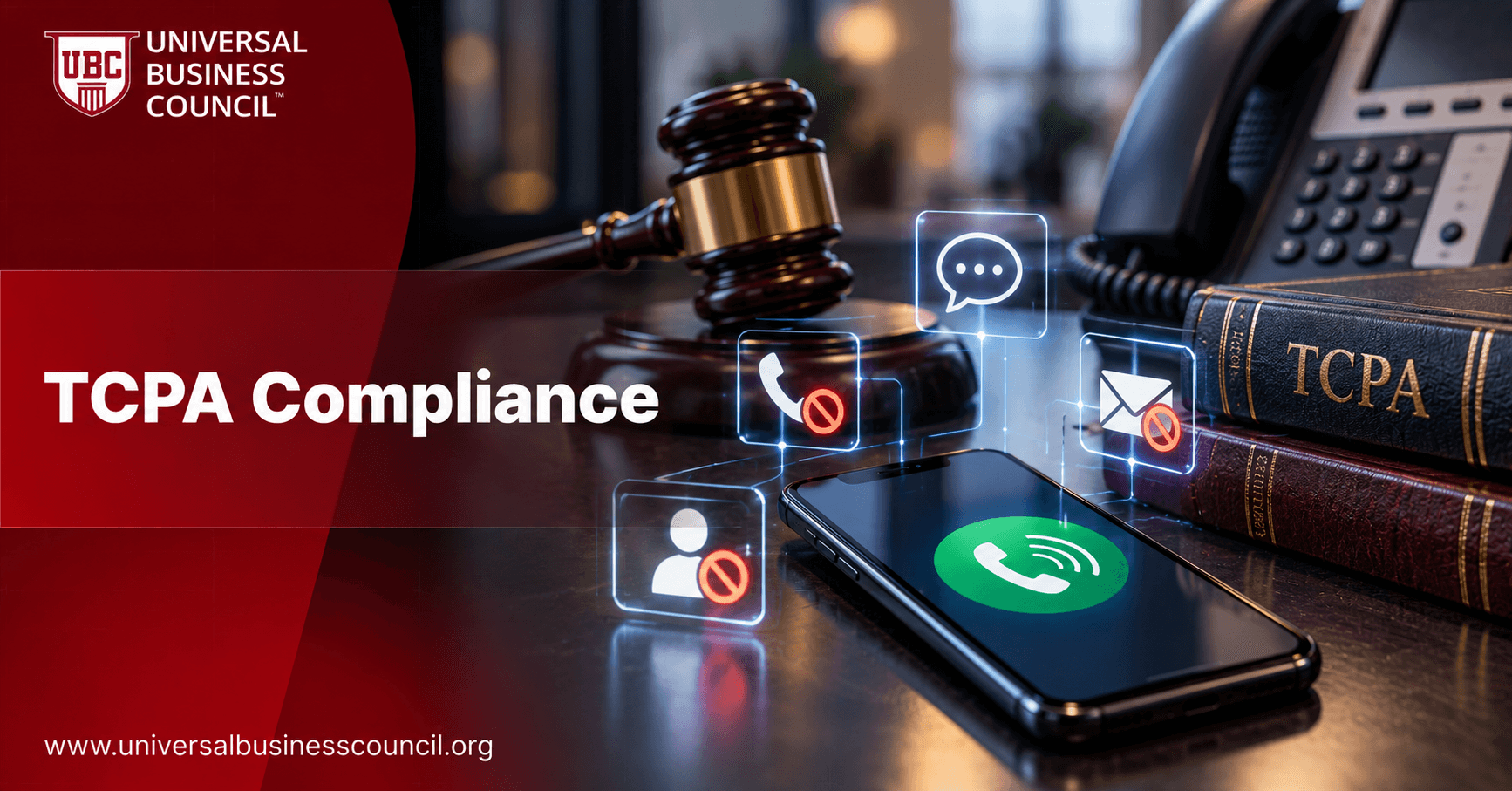
It's 6:40 on a Tuesday morning and your phone lights up. A text from a company you don't remember hearing from is offering a discount. You reply STOP and go make coffee. By lunch, a second message arrives from the same brand, sent from a different number. By evening, a call.
From the consumer's side, that's an annoyance. From the company's side, it can be three separate violations, each one capable of becoming its own claim. The Telephone Consumer Protection Act exists for exactly this gap between how outreach feels to the sender and how it lands on the person receiving it. For compliance professionals looking to strengthen their understanding of consent requirements and marketing regulations, the Certified Compliance Professional certification can provide a useful foundation. This guide covers what the TCPA requires, where organizations get tripped up, and how to build a program that holds up when someone starts asking questions.

What is the Telephone Consumer Protection Act (TCPA)?
The TCPA is a federal law, enacted in 1991 and implemented through rules from the Federal Communications Commission and the Federal Trade Commission, that limits how businesses can contact people by phone. It addresses telemarketing calls, text messages, automated or prerecorded calls, and unsolicited faxes. Its purpose is to protect consumers from unwanted or intrusive contact while still allowing legitimate business communication.
Because the TCPA sits at the crossing of marketing, sales, legal, and operations, ownership often gets fuzzy. Many organizations solve that by naming someone to run it day to day. A credential such as the Certified Compliance Professional certification suits that role, since most of the work is monitoring, documentation, and follow-through.
Who must comply
The law reaches any business, nonprofit, or individual that contacts consumers by phone or text in the covered ways, including companies that use outside vendors to do it. The specific duties depend on the type of message, the technology used, and the purpose of the contact. Because the rules and court interpretations have shifted over time, confirm your obligations with legal counsel and recheck them regularly.
Which communications are covered
The TCPA applies across several channels, and each has its own twist. Live calls, prerecorded or artificial voice calls, automated dialing, and text messages are all within its reach. Text messages are treated as calls for many purposes, which surprises teams that think of texting as closer to email. What counts as an automatic dialing system has been debated heavily in the courts, so a company should not assume its platform falls outside the rules just because it does not look like a classic auto-dialer.
Consent: the heart of the TCPA
If the TCPA has a center of gravity, it is consent. In many situations an organization needs the recipient's permission before contacting them, and the kind of permission depends on what is being sent and why.
Types of consent
Contact that is purely informational, such as a delivery update the customer asked for, generally calls for a lower level of permission than marketing outreach. Marketing calls and texts that use certain technologies generally call for a stronger form, often described as prior express written consent. The distinction matters because consent given for one purpose does not automatically cover another. A customer who shared a number to receive appointment reminders has not necessarily agreed to promotional offers.
What good consent looks like
Strong consent practices share a few traits:
A clear disclosure of what the person is agreeing to receive
A link to the specific brand and purpose, not a vague group of "partners"
A permanent record of when, where, and how consent was captured
Separation from unrelated terms, so consent is not buried in fine print
If a regulator or a plaintiff's lawyer asks for proof of consent months later, the record is the defense. A consent that cannot be shown is, in practice, a consent that does not exist.
Opt-outs and revocation
Consent can be withdrawn, and organizations must honor that. People should be able to opt out in simple, reasonable ways, and the request should be respected promptly across every channel and system. A STOP reply honored by the texting tool but ignored by the call center is still a violation. Rules on how consent can be revoked, and how quickly an opt-out must take effect, have been revisited by regulators and courts over time, so build the process to be fast and forgiving, not minimalist.
Do-not-call lists
Separate from individual consent, the national Do-Not-Call Registry lets consumers register their numbers to avoid telemarketing calls. Organizations must also maintain an internal do-not-call list of people who have told them directly to stop. Certain exemptions exist, such as for some existing business relationships, but they are narrower than many teams assume. Scrub contact lists against both the national registry and your own internal list before every campaign, and keep a record that you did.
Calling hours, identification, and caller information
Telemarketing is limited to reasonable hours based on the recipient's local time, which means a team in one time zone can break the rule simply by dialing at its own convenience. Callers are also expected to identify themselves and the business they represent, provide contact details, and avoid misleading or spoofed caller information. These rules are easy to follow and easy to forget in the middle of a busy campaign, so build them into systems instead of relying on memory.
Reassigned numbers and list hygiene
Phone numbers change hands. A number that belonged to a customer who gave consent last year may now belong to a stranger who never did. Consent from the former holder does not carry over, and the new holder can still complain. Good list hygiene means checking numbers against reassigned-number resources, removing old or unverified entries, and reconfirming consent for older contacts. A list that has not been cleaned in years is a stack of risk wrapped in an asset.
Vendors, lead generators, and shared liability
Many organizations rely on outside platforms, call centers, and lead sources to reach customers. Using a vendor does not move the responsibility elsewhere. Companies can be held liable for messages sent on their behalf, and for leads obtained with weak or missing consent. Ask where leads came from, how consent was captured, and whether you can see the records. Put expectations in the contract, check performance regularly, and be ready to walk away from sources that cannot prove their permissions.
Before partnering with a lead generator or giving an outside sales team access to customer information, businesses can use background screening to help assess the people involved. HireValid's screening solutions can support vendor onboarding and help organizations make more informed decisions about who handles their customer outreach.
Enforcement and litigation risk
The TCPA is enforced by federal agencies and state authorities, and it also gives individuals the right to sue. The law provides for statutory damages per violation, which means one campaign sent to a large list can multiply into serious exposure, and group lawsuits are common. Because each message or call can count separately, small process failures scale quickly. Consult counsel about exposure and about how to respond to any complaint or demand letter.
Common TCPA mistakes
The mistakes are familiar. Lists are purchased or inherited without checking consent. Consent language is vague or bundled with unrelated terms. Opt-outs are honored in one system and ignored in another. Old numbers are never checked for reassignment. Campaigns are sent at times that ignore the recipient's time zone. Vendors operate with little oversight. Records of consent cannot be produced. Staff assume texting is less regulated than calling. Each looks small. Multiplied across a large campaign, they become the story in a complaint.
Clear communication: the marketing side of TCPA compliance
Marketing teams own the moments that create consent, which makes them central to TCPA compliance. How a form is worded, where the checkbox sits, and how a welcome message sets expectations all shape whether consent holds up later.
Teams that borrow habits from a digital marketing course, such as defining the audience, tracking where each contact came from, and testing which messages perform, can build campaigns that are both effective and defensible. Write opt-in language in plain words. Make opting out as easy as opting in. Tell people what to expect and how often. Respect frequency. A list built on genuine permission usually performs better than one built on volume, because the people on it actually want to hear from you.
Building a TCPA compliance program
A reliable program has an owner, written procedures, trained staff, and regular testing. It starts with an honest inventory of every way the organization contacts people, including channels run by vendors or individual teams that nobody in compliance has heard about.
Governance and training
Name a leader with the authority to pause a campaign. Write plain procedures for capturing consent, managing lists, handling opt-outs, scheduling contact, and working with vendors. Train people by role: marketers on consent language and list sources, sales teams on scripts and do-not-call handling, customer service on recording opt-outs, and managers on escalation. Short scenario-based sessions tend to work better than long lectures, since most errors come from quick decisions during busy campaigns.
Systems and records
Technology carries much of the load. Customer databases, dialers, messaging tools, and consent platforms must share information accurately. People who understand how these systems fit together, a skill built through tech certifications, can find gaps such as an opt-out that never syncs between platforms or a consent flag lost in a data migration.
Records matter as much as tools. Ideas from deep tech certifications, like secure storage, access permissions, and tamper-evident logs, support a trustworthy trail showing when consent was captured, what the person saw, and when it was withdrawn.
Testing and review
Regular testing lets an organization find weaknesses before a complainant does. Look at the following:
Consent records for a sample of contacts, traced back to their source
Opt-out requests followed through every system and vendor
Contact lists checked against do-not-call lists and reassigned numbers
Campaign timing and caller identification
Vendor performance and the quality of lead sources
Write down what you find and how you fix it. A habit of documented testing shows good faith and makes any later inquiry easier to answer.
Conclusion
The Telephone Consumer Protection Act asks organizations to earn permission before they reach for someone's phone, and to respect it once it is given or withdrawn. Know which communications and technologies are covered. Capture clear, documented consent tied to the right purpose. Honor opt-outs everywhere, scrub against do-not-call lists, and keep numbers current. Watch calling hours, oversee vendors and lead sources, and keep records that can answer hard questions later.
Strong TCPA compliance comes from clear ownership, trained people, well-configured systems, marketing that builds consent into every campaign, and regular reviews. Set those up once, and the next campaign reaches people who wanted to hear from you.
Frequently asked questions
1. What is the Telephone Consumer Protection Act (TCPA)?
It's a federal law that limits telemarketing calls, text messages, automated and prerecorded calls, and unsolicited faxes.
2. Who enforces the TCPA?
Federal agencies and state authorities, and individuals can also bring claims in many situations.
3. Who must comply with the TCPA?
Businesses, nonprofits, and individuals that contact consumers in the covered ways, including those using outside vendors.
4. Does the TCPA apply to text messages?
Yes. Text messages are treated as calls for many purposes.
5. What is an automatic telephone dialing system?
A category of dialing technology the rules address. Its definition has been heavily debated in court, so confirm how it applies to your tools.
6. When is consent required?
In many situations, depending on the type of contact, the technology used, and the purpose. Review your campaigns with counsel.
7. What is prior express written consent?
A stronger form of permission generally required for certain marketing calls and texts, captured with a clear disclosure and a record.
8. Does consent for one purpose cover another?
Not automatically. Consent given for appointment reminders does not necessarily cover promotional messages.
9. What should a consent record include?
When, where, and how consent was captured, what the person saw and agreed to, and the contact details involved.
10. Can consent be revoked?
Yes. Organizations must honor opt-outs promptly, across all channels and systems.
11. How should opt-outs be handled?
Make them easy, respect reasonable ways of asking, and process them quickly everywhere, including vendor platforms.
12. What is the National Do-Not-Call Registry?
A list where consumers can register to avoid telemarketing calls. Organizations must check against it unless an exemption applies.
13. What is an internal do-not-call list?
A list of people who have told your organization directly not to contact them, which you must maintain and honor.
14. Are there limits on when telemarketing calls can be made?
Yes. Calls are restricted to reasonable hours based on the recipient's local time.
15. What are the caller identification requirements?
Callers should identify themselves and their business, provide contact details, and avoid misleading or spoofed caller information.
16. What is a reassigned number problem?
A number that once belonged to a consenting customer now belongs to someone else, and the earlier consent no longer applies.
17. Are companies responsible for what vendors send?
Often yes. Companies can be held liable for messages sent on their behalf and for leads with weak consent.
18. What are the risks of violating the TCPA?
Regulatory action and private claims with statutory damages per violation, which can multiply in group lawsuits. Consult counsel about exposure.
19. Can an existing business relationship replace consent?
Sometimes it matters, but exemptions are narrower than many teams assume. Check with counsel before relying on one.
20. How can organizations stay TCPA compliant?
Inventory contact channels, capture documented consent, honor opt-outs everywhere, scrub lists, oversee vendors, train by role, and test regularly.
Related Articles
View All
Business
BIPA Compliance: A Guide for Employers and Product Teams
Learn how the Biometric Information Privacy Act (BIPA) affects employers and product teams, including biometric data collection, informed consent, retention policies, data security, and compliance responsibilities.
Business
VPPA Compliance: A Guide for Streaming and Marketing Teams
Learn how the Video Privacy Protection Act (VPPA) affects streaming platforms, media companies, and marketing teams, including video-viewing data, consent, third-party tracking, and privacy compliance.
Business
COPPA: A Compliance Guide for Product and Marketing Teams
Learn how COPPA protects children's online privacy, including parental consent, data collection, notice requirements, and compliance responsibilities for digital products and marketing teams.
Trending Articles
The Role of Blockchain in Ethical AI Development
How blockchain technology is being used to promote transparency and accountability in artificial intelligence systems.
AWS Career Roadmap
A step-by-step guide to building a successful career in Amazon Web Services cloud computing.
Top 5 DeFi Platforms
Explore the leading decentralized finance platforms and what makes each one unique in the evolving DeFi landscape.