

Trade Sanctions and Embargoes: What Businesses Must Check
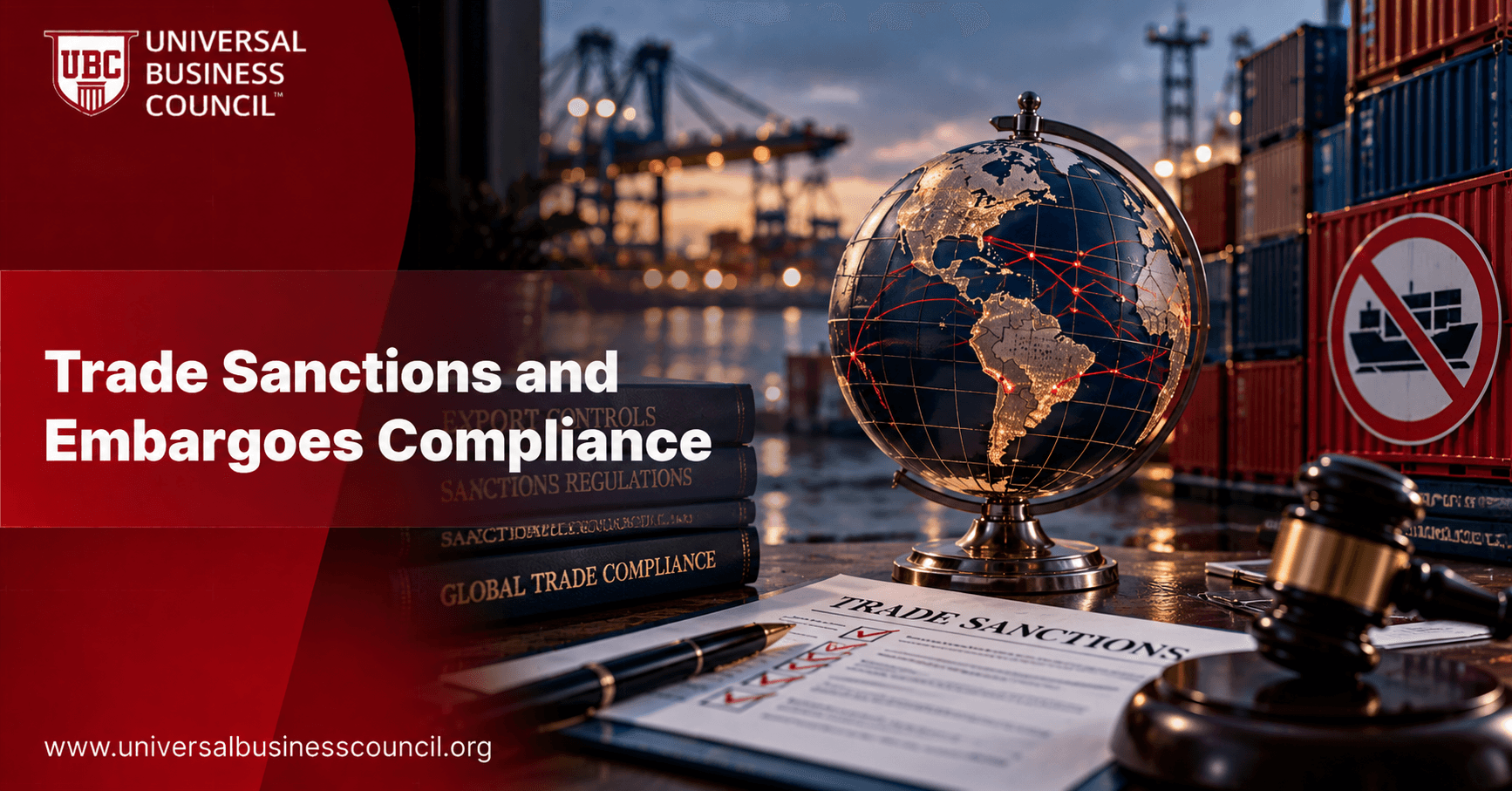
Every business wants the next big order. Some orders come with a catch that has nothing to do with price or delivery dates: the buyer, the destination or the bank behind the payment might be off limits. Anyone who sells, ships, advertises or pays across borders has to understand trade sanctions and embargoes, and the rules shift faster than most campaign calendars.
For compliance professionals looking to strengthen their understanding of sanctions screening and international trade requirements, the Certified Compliance Professional certification can provide a useful foundation. This guide explains what trade sanctions and embargoes are, where they show up in everyday work, and how a simple compliance program keeps a good deal from turning into an expensive mistake.

What are trade sanctions and embargoes?
Trade sanctions and embargoes are legal restrictions that a government or international body places on dealings with a country, a group or a named person. The reasons are usually political or tied to security: pressure a regime, cut off funding for weapons, or respond to serious abuses.
The two terms overlap, but they aren't identical. A sanction is often targeted. It can freeze one company's assets, ban a particular sector, or cut a person off from the banking system. An embargo is wider and shuts down most trade with an entire country or region.
Restrictions usually take one or more of these forms:
Asset freezes on listed people and companies
Bans on exports, imports or services tied to a country or region
Limits on banking, investment and payments
Controls on specific goods, including dual-use items that have both civilian and military uses
Lists change often. A customer who cleared your checks last quarter can be a problem today, which is why compliance teams keep checking.
Who sets the rules, and why they reach so far
Different authorities write different rules. In the United States, the Office of Foreign Assets Control, known as OFAC, sits inside the Treasury Department and administers sanctions. The United Nations, the European Union and the United Kingdom run their own regimes, and the lists don't always match. A sale that clears one can break another.
Reach is what surprises people. U.S. sanctions bind U.S. companies and citizens, and they often catch deals that touch U.S. dollars, banks or goods. Secondary sanctions can go further and target non-U.S. firms that deal with listed parties. Sitting far from the country that wrote the rule doesn't make a business safe.
Sanctions come with exceptions, too. Authorities can issue licenses that allow a specific activity, and some programs carry general licenses open to anyone who meets their terms. Never assume one applies. Read the terms, confirm they fit the deal, and keep the paperwork.
Where sanctions show up in daily business
Picture a mid-sized company that gets a large order from a distributor it has never dealt with. The price is fair and the paperwork arrives on time. Nothing looks wrong, yet a few questions sit underneath that order.
Sales and orders
Who really owns the buyer? Where will the goods end up? A distributor with a clean name can still pass products on to a restricted market, and the seller may carry the responsibility even without meaning to.
Payments and vendors
Banks flag payments tied to listed names and restricted regions, and a blocked transfer can hold up a shipment or a supplier invoice. Freight forwarders, agents and resellers deserve the same screening as customers.
Partners and intermediaries
Agents, resellers and joint venture partners can hide the real end customer. A partner's own screening isn't a substitute for yours, so ask how they check and keep a copy of the answer.
Sanctions and marketing: a smaller risk that still counts
Marketing isn't the first team people think of, yet it spends money, signs vendors and promises delivery. Paying an agency, freelancer or creator that is listed, or owned by someone who is, counts as dealing with a blocked party. A campaign that promotes a product in a place you can't legally serve confuses customers and may draw questions from regulators. Marketers who build their skills through a digital marketing course should put vendor and destination checks on the same planning sheet as targeting and budgets.
The 50 percent rule catches companies that aren't on any list
Checking a name against a list isn't enough. Under OFAC's 50 percent rule, a company owned 50 percent or more, directly or indirectly, by one or more blocked persons is treated as blocked itself, even when it appears on no list. Ownership is added up, so if two blocked persons each hold 25 percent of a company, the company is blocked.
The rule looks at ownership, not control. A firm run by a blocked person who owns less than half isn't automatically blocked, though it can still be a serious risk. Ownership also changes over time, so a clean result from last year can turn into a problem this year.
Red flags that should slow an order
The buyer is vague about the end user or final destination
Payment comes from an unrelated third party or a bank in an unrelated country
The shipping route makes no commercial sense
The buyer resists routine compliance questions
The company is new and its ownership records are thin
The product is dual-use and the stated purpose is unclear
One flag rarely settles anything. Several together mean stop, escalate and write down what you found.
When sanctions meet software and digital assets
Manual checks stop working once a business handles thousands of customers or payments. Name matching moves into software, and someone has to manage fuzzy matches, false hits and audit logs. That's work for developers, and some grounding in programming through tech certifications helps compliance staff and engineers speak the same language.
Digital assets add another wrinkle. Wallet addresses can appear on sanctions lists, and blockchain payments move quickly across borders, so screening has to keep pace. Professionals moving into this area often build depth through deep tech certifications.
Building a compliance program that holds up
A good program is boring on purpose. It asks the same questions every time and writes down the answers.
Start with a risk assessment
List where you sell, who you sell to, what you ship and how money moves. A small online store and a chemical exporter face different risks, so their programs should look different.
Screen, escalate, decide
Screen customers, owners, vendors and payment parties against current lists, then decide who can clear a hit and who has to escalate it.
At onboarding
Check the name, the owners, the address and the final destination.
On an ongoing basis
Rescreen when lists change and before large or unusual orders.
Test the program
Run a few sample orders through the process every so often and see where it stalls. A control nobody tests tends to fail quietly, and an internal review is cheaper than an outside one.
Keep records and train the team
Keep screening and transaction records for as long as the rules require, and store them where an auditor could find them. Train sales, marketing and finance together, since red flags can turn up in any of them.
The stakes justify the effort. In the United States, civil liability under the main sanctions law is strict, so a company can face a penalty without knowing it dealt with a blocked party, while willful violations can lead to criminal charges. Voluntary self-disclosure can reduce a penalty, which is why a fast internal escalation path matters.
Conclusion
Trade sanctions and embargoes are legal limits on who a business can deal with and where it can operate. Sanctions usually target people, companies or sectors, while embargoes close most trade with a country or region. Both can reach companies far from the authority that wrote the rule, and the lists behind them keep changing.
They also reach deeper into a company than many teams expect. Sales takes the orders, finance moves the money and marketing pays vendors and promotes products, so any of them can be the weak link. The 50 percent rule shows why a name check alone can miss the real owner, and the red flags above show when an order deserves a second look. As volume grows, screening moves into software and digital assets bring their own checks, which is why developers and compliance staff need a shared vocabulary.
Good trade sanctions and embargoes compliance is mostly habit: a written risk assessment, screening at onboarding and again later, clear escalation, proper records and regular training. Civil liability is strict, so prevention costs far less than a fix.
Sanctions rules change often, so check current guidance from the relevant authority before acting, and speak with qualified counsel on specific cases. This article is general information, not legal advice.
FAQs
What are trade sanctions and embargoes?
They are legal restrictions on dealing with a country, region, group or person. Sanctions usually target specific parties, while embargoes block most trade with a whole place.
What is the difference between a sanction and an embargo?
A sanction is usually narrow, like freezing one company's assets. An embargo is broad and stops most trade with an entire country or region.
Who imposes trade sanctions?
Governments and bodies such as the U.S. through OFAC, the United Nations, the European Union and the United Kingdom. Each keeps its own lists.
What is OFAC?
It is the Office of Foreign Assets Control, the U.S. Treasury Department unit that administers and enforces U.S. sanctions.
What are secondary sanctions?
They are penalties aimed at non-U.S. parties for dealing with sanctioned targets, even when no U.S. person is involved.
How do I know which countries are under embargo?
Check the current program pages of the relevant authority, such as OFAC, before each deal. Programs change over time.
What is sanctions screening?
It is checking customers, owners, vendors and payment parties against sanctions lists before and during a relationship.
What is the OFAC 50 percent rule?
An entity owned 50 percent or more, directly or indirectly, by blocked persons is treated as blocked, even if it isn't listed.
Can a small business break sanctions by accident?
Yes. In the U.S., civil liability is strict, so intent isn't required for a penalty.
What are the penalties for violating sanctions?
They can include heavy fines, frozen assets and, for willful violations, criminal charges. Amounts vary by law and change over time.
How do sanctions differ from export controls?
Sanctions restrict dealings with certain parties and places, while export controls regulate specific items and technology. Many deals must satisfy both.
What is a dual-use item?
It is a product, software or technology with both civilian and military uses.
Do sanctions apply to digital services and software?
Often, yes. Many programs cover services as well as goods, so check the specific program.
Do sanctions apply to online advertising?
They can. Paying a blocked platform, agency or creator, or promoting into a restricted place, raises risk.
How do sanctions affect cryptocurrency?
Authorities can list wallet addresses, so crypto businesses screen wallets and transactions much as banks screen payments.
How often should sanctions lists be checked?
At onboarding, whenever the lists update, and before large or unusual transactions.
What is a sanctions compliance program?
It is the policies, controls, screening and training a business uses to avoid prohibited dealings.
What are common signs of sanctions evasion?
Shell companies, layered ownership, odd shipping routes, altered documents and payments from unrelated parties.
What are general and specific licenses?
A general license covers a type of activity for anyone who meets its terms. A specific license is granted to a named applicant on request.
Which skills help a career in sanctions compliance?
Sanctions knowledge, screening tools and risk assessment matter most. Formal study in compliance management can add structure.
Related Articles
View All
Business
OFAC Sanctions: A Compliance Guide for Businesses
Learn how OFAC sanctions affect businesses, how to screen customers and transactions against restricted-party lists, and how to manage sanctions compliance and reporting obligations.
Business
FCC Rules: A Compliance Guide for Businesses
Learn how FCC rules affect businesses, including telecommunications, marketing communications, consumer privacy, equipment standards, and regulatory compliance responsibilities.
Business
Transfer Pricing Regulations: What Businesses Need to Know
Learn how transfer pricing regulations affect transactions between related companies, including pricing methods, documentation, reporting, audits, and tax risks.
Trending Articles
The Role of Blockchain in Ethical AI Development
How blockchain technology is being used to promote transparency and accountability in artificial intelligence systems.
AWS Career Roadmap
A step-by-step guide to building a successful career in Amazon Web Services cloud computing.
Top 5 DeFi Platforms
Explore the leading decentralized finance platforms and what makes each one unique in the evolving DeFi landscape.