

Reverse Engineering
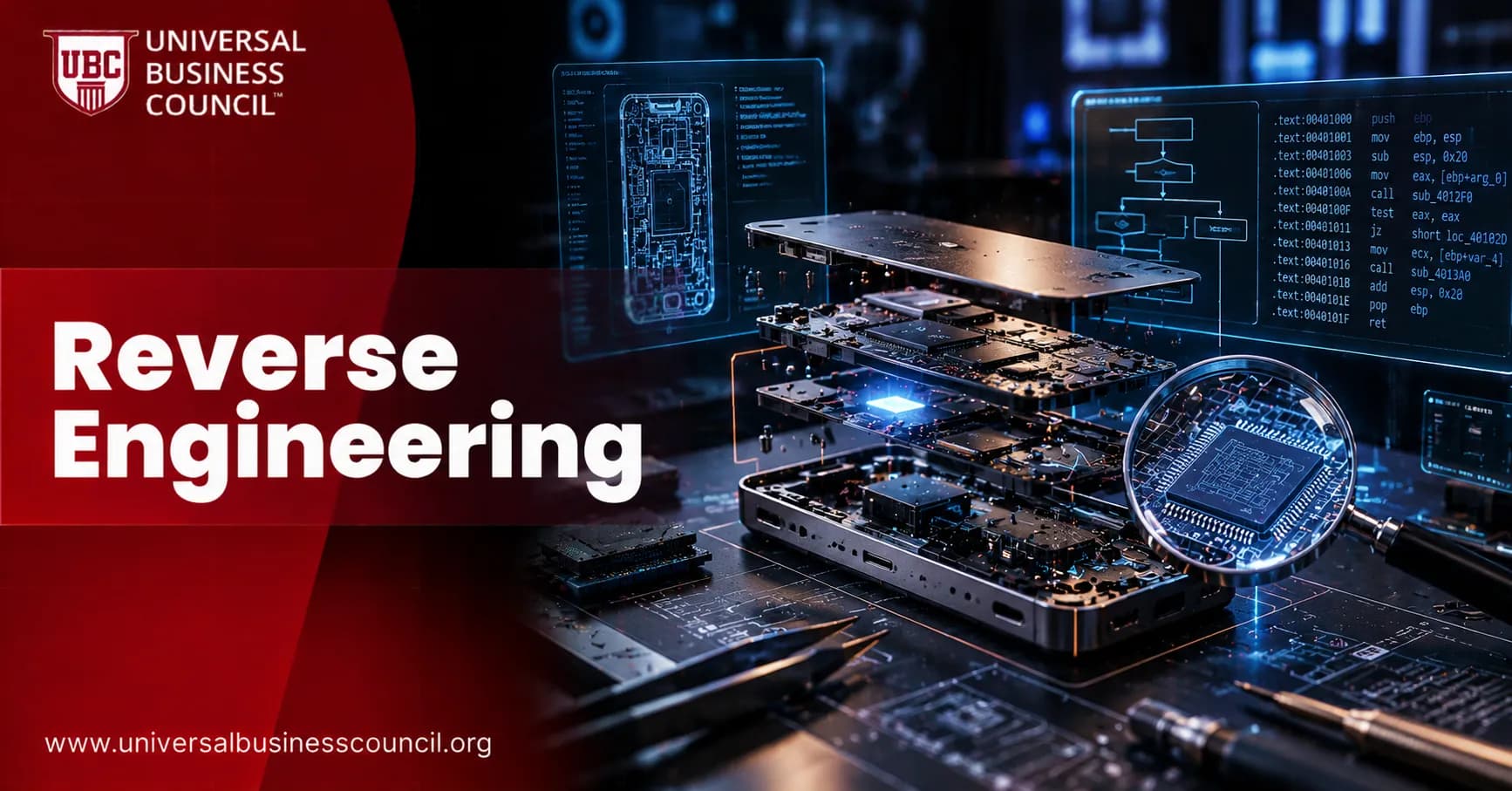
Think about the last time you wondered how something worked: a clever gadget, a smooth app or a competitor’s product that seemed to do everything right. Reverse engineering is the disciplined version of that curiosity. It means studying a finished product, system or piece of software to learn how it was made and why it behaves the way it does, then using that knowledge to repair, improve, secure or recreate it. The same mindset powers engineers, security teams and even marketers, who regularly break down winning campaigns to see what made them succeed. If you want to apply that analytical habit to brand and growth work, a Marketing Certification can help you turn it into a professional skill. This guide explains reverse engineering from the ground up, with real examples, methods, tools, legal limits and career paths.
What Is Reverse Engineering? A Plain-Language Definition
Reverse engineering is the process of analyzing an existing product or system, without its original design documents, to understand its structure, behavior and purpose. Normal engineering moves forward from idea to design to product. Reverse engineering moves backward from the finished product to the design ideas behind it.

A kitchen comparison makes this easy to picture. If you taste a sauce and work out its ingredients, proportions and cooking steps, you have reverse engineered the recipe. Engineers do the same thing with machines, electronics and code. They observe, measure, test and document until they can explain the design.
Four questions drive nearly every project:
What does this thing do?
How is it built?
Why was it designed this way?
Can I repair, improve, secure or recreate it safely and legally?
Why Reverse Engineering Matters for Security
Security is where reverse engineering is most visible today. Programs and devices often reach users in a form that machines can run but people cannot easily read. When something suspicious appears, such as an unknown file or a device that behaves strangely, defenders need a way to look inside.
Reverse engineering lets security teams study how threats behave, check whether products protect data as promised and find weaknesses before criminals do. It also supports investigations after an incident, helping teams reconstruct what happened. Anyone who wants to work in this area can build a strong base through Cyber Security Certifications, which cover topics such as threat analysis, network defense and incident response that go hand in hand with analysis skills.
A Short History of Reverse Engineering
The practice is older than computers. A few famous examples show its range:
1930s, Enigma: Polish mathematicians studied how the German Enigma cipher machine worked and reconstructed its wiring from limited information, laying the groundwork for later code breaking.
1940s, the Tu-4 bomber: The Soviet Union copied detailed designs of American B-29 bombers that had landed in its territory, producing a near duplicate aircraft.
Early 1980s, PC compatibles: Companies such as Compaq built computers compatible with the IBM PC by using a clean room method. One team documented how the original behaved, and a separate team that never saw the original code wrote new software from those descriptions.
1990s and 2000s, court cases: Decisions in cases such as Sega v. Accolade and Sony v. Connectix helped clarify that studying software to achieve compatibility can be lawful in some circumstances.
2019, Ghidra: The US National Security Agency released its software analysis framework Ghidra as free software, giving students and researchers access to professional-grade tools.
The pattern is consistent: whenever a technology becomes important, people want to understand it, and reverse engineering is how they do it.
How Reverse Engineering Works in Different Fields
Every field uses different tools, but the thinking is the same: observe, hypothesize, test and document.
Mechanical and Product Reverse Engineering
For a physical part, engineers often start by measuring it carefully or scanning it in 3D. The scan becomes a digital model that can be edited in design software. They then check materials, tolerances and fit, and produce drawings so the part can be manufactured again. This is common when a supplier has closed down and a machine still needs a replacement part.
Electronics and Hardware
Analysts examine circuit boards, identify components and trace how signals move between them. They may study firmware, which is the low-level software inside a device. The goals include repair, quality checks, detecting counterfeit parts and assessing security.
Software Reverse Engineering
Programs usually reach users as compiled files. Analysts use two broad approaches:
Static analysis: Studying the program without running it, often with tools that translate compiled code into readable forms.
Dynamic analysis: Running the program in a safe, isolated environment and watching what it does, such as which files it uses and which network connections it tries to make.
Data and Protocol Analysis
Here the goal is to understand file formats or the messages that systems exchange. This is how many open converters and compatibility tools came to exist.
Common Reverse Engineering Tools
This table lists tool categories at a high level. Use them only on systems you own or have permission to study.
Category | Purpose | Examples |
|---|---|---|
Disassemblers and decompilers | Make compiled code readable | Ghidra, IDA |
Debuggers | Pause and inspect running programs | GDB, x64dbg |
Network analyzers | Show data moving across networks | Wireshark |
Sandboxes and virtual machines | Safe, isolated testing spaces | VirtualBox, VMware |
3D scanners and CAD software | Capture and model physical parts | Laser scanners, CAD suites |
Hardware instruments | Measure signals and inspect boards | Logic analyzers, multimeters |
Blockchain explorers | Display public transactions and contract code | Public explorer sites |
Benefits of Reverse Engineering
Security improvement: Finding and fixing weaknesses sooner.
Repair and longevity: Keeping equipment and software running after support ends.
Interoperability: Making different products work together.
Learning: Understanding great designs from the inside.
Verification: Checking that products behave as advertised.
Better products: Learning from market leaders’ strengths and weaknesses.
Documentation: Recovering knowledge that was lost.
Real-World Uses Across Industries
Automotive and Aerospace
Manufacturers scan and analyze parts to replace discontinued components, study wear and improve designs. Fleet operators use it to keep older vehicles safe and available.
Healthcare and Medical Devices
Engineers analyze devices to confirm safety, support repair and ensure that software behaves correctly. Researchers have also studied connected medical equipment to expose security gaps so manufacturers could fix them.
Consumer Electronics
Teardown communities and repair experts dismantle phones and laptops to document how they are built, which helps customers fix devices rather than throw them away.
Finance and Enterprise IT
Banks and large organizations depend on older systems with little documentation. Analysts reverse engineer these systems so they can be maintained, secured or migrated to modern platforms.
Cybersecurity
Defenders study malicious software and suspicious files so they can detect and block threats and share what they learn with others.
Business Strategy
Product teams run teardown analyses of competing offerings to understand features, costs and design choices, then use that insight to improve their own work.
Reverse Engineering in Blockchain and Emerging Technology
Emerging technologies make reverse engineering especially interesting. On public blockchains, smart contract code and transaction history are visible to everyone, so researchers can study how a protocol handles funds, how tokens move and where design flaws may hide. Auditors use this transparency to review contracts before launch and investigators use it to trace stolen assets.
The same open-minded analysis is useful in connected devices, advanced computing and other frontier areas. If you want a wider view of how these technologies connect with security, distributed systems and AI, a Deep Tech Certification can give you a helpful map of the field and show where analysis skills fit.
Is Reverse Engineering Legal?
The answer depends on your purpose, your country and any agreements you accepted. This is general information, not legal advice.
Often accepted: Studying products you own for learning, repair, compatibility or good-faith security research, in many places.
Risky: Breaking software license terms, bypassing technical protection measures or copying protected code or designs.
Not acceptable: Stealing trade secrets, pirating software or testing systems you are not authorized to touch.
Some examples of how rules differ: European software law contains specific provisions that allow limited decompilation to achieve interoperability. In the United States, copyright law, anti-circumvention rules and computer misuse laws can all apply, and regulators periodically review exemptions for security research. Contracts and terms of service may add further limits, and patent and trade secret laws can apply to products and processes.
Three habits protect you. Read the license, get written permission when in doubt and speak to a qualified lawyer before starting any sensitive project.
Ethical Guidelines for Reverse Engineers
Get authorization first. Permission separates professional research from wrongdoing.
Use responsible disclosure. Report vulnerabilities privately to the owner and allow reasonable time to fix them.
Protect personal data. Never expose information you happen to find.
Share carefully. Avoid publishing details that give attackers an easy path.
Be accurate. Report findings honestly, including what you are unsure about.
Respect intellectual property. Learn from designs without copying protected work.
Careers That Use Reverse Engineering
Skills in this area lead to roles such as security researcher, malware analyst, vulnerability analyst, firmware engineer, digital forensics investigator, product teardown engineer, CAD and scanning specialist, and smart contract auditor.
Hiring for these roles can be tricky because resumes rarely show hands-on ability. AI tools can support parts of the hiring process, but employers still need transparent, job-relevant methods to evaluate applicants. Combining appropriate technology with human judgement can help maintain a thoughtful recruitment process. HireValid can be explored by organisations reviewing their candidate assessment approach.
For job seekers, a portfolio is powerful. Publish write-ups of legal practice challenges, open-source contributions and careful analyses of systems you are allowed to study.
How to Start Learning Reverse Engineering
You can begin with no special background. A simple path looks like this:
Learn the basics of computing. Understand how operating systems, memory and files work.
Pick up programming. Python is friendly for beginners, and C helps you understand how software runs close to the hardware.
Study networking. Learn how data travels between devices.
Practice in legal environments. Use training platforms and capture the flag competitions designed for learners.
Document your work. Writing explanations deepens understanding and builds your portfolio.
Join communities. Follow responsible disclosure norms and learn from experienced researchers.
Patience matters more than speed. Even experts spend long hours forming and testing ideas before the picture becomes clear.
Reverse Engineering and Artificial Intelligence
AI is changing the field in two directions. Analysts use AI assistants to summarize unfamiliar code, suggest labels for functions and draft documentation. Meanwhile, researchers also study AI models themselves to understand how they behave and where they fail, a practice often called interpretability research. Treat AI suggestions as leads, not answers, because these tools can sound sure of themselves even when they are wrong.
Challenges and Common Mistakes
Underestimating complexity: Large systems can take weeks or months to understand.
Obfuscation and encryption: Some products are intentionally built to resist analysis.
Ignoring legal rules: Skipping permission can lead to serious consequences.
Weak documentation: Notes that nobody can follow waste the effort.
Jumping to conclusions: Untested assumptions create wrong fixes and false alarms.
Neglecting safety: Running unknown files outside an isolated environment can cause real harm.
Final Thoughts
Reverse engineering is one of the most practical ways to understand how the built world works. It helps engineers rescue old systems, helps defenders stay ahead of attackers and helps learners see what great design looks like from the inside. It also comes with responsibility. Always work with permission, follow the law, protect people’s data and share findings carefully. Start with the fundamentals, practice in safe settings and keep a record of what you learn. With time, you will find that almost any complex system becomes easier to understand once you know how to look beneath its surface.
FAQs
1. What Is Reverse Engineering?
Reverse engineering is the process of examining an existing product, software program, or system to understand how it works. It involves analyzing its structure, components, and behavior to discover how it was designed. The findings can help with troubleshooting, security research, maintenance, and product development.
2. How Does Reverse Engineering Work?
Reverse engineering starts with identifying the system and gathering available documentation. Analysts inspect its components, study its behavior, and use specialized tools to develop a model of its operation. They then validate their findings through testing and document the results.
3. What Are the Main Types of Reverse Engineering?
The main types include software reverse engineering, hardware reverse engineering, mechanical reverse engineering, and protocol reverse engineering. Each focuses on a different target, from compiled applications and electronic circuits to physical products and network communications.
4. What Is Software Reverse Engineering?
Software reverse engineering involves examining an existing application to understand its internal logic, architecture, and functionality. Analysts may inspect source code, disassemble executable files, decompile binaries, or observe program execution. It is commonly used for software maintenance, compatibility research, and cybersecurity investigations.
5. What Is the Difference Between Reverse Engineering and Forward Engineering?
Forward engineering moves from requirements and design specifications toward building a product. Reverse engineering begins with an existing product and works backward to understand its design and operation. Both approaches can be useful when documenting legacy systems or developing compatible software.
6. Why Is Reverse Engineering Important?
Reverse engineering helps organizations understand complex systems, especially when documentation is missing or outdated. It can reveal defects, identify security weaknesses, improve compatibility, and support the maintenance of older technology. It also provides insights that may inform future product improvements.
7. What Tools Are Commonly Used for Reverse Engineering?
Popular tools include Ghidra, IDA, Binary Ninja, GDB, WinDbg, and x64dbg. Ghidra and IDA support executable analysis, while debuggers help analysts observe program execution. Wireshark is useful for inspecting network traffic and understanding communication protocols.
8. What Is the Difference Between Disassembly and Decompilation?
Disassembly translates machine instructions into assembly language. Decompilation attempts to reconstruct a higher-level representation of a program, often resembling source code. Neither process is guaranteed to recover the original source code, comments, variable names, or complete design information.
9. What Is Static Analysis in Reverse Engineering?
Static analysis examines software without running it. Analysts inspect executable structures, strings, imported functions, instructions, and control flow to understand possible program behavior. It is frequently used to investigate suspicious files and assess software security.
10. What Is Dynamic Analysis in Reverse Engineering?
Dynamic analysis examines a program while it runs in a controlled environment. Analysts can observe memory activity, file operations, system calls, and network communications. Combining dynamic analysis with static analysis often provides a more complete understanding of a program.
11. How Is Reverse Engineering Used in Cybersecurity?
Security professionals use reverse engineering to analyze malware, investigate vulnerabilities, understand suspicious software, and develop defensive measures. The results can help identify malicious behavior and improve detection systems. Such investigations should be authorized and performed in a secure environment.
12. What Is Malware Reverse Engineering?
Malware reverse engineering is the process of analyzing malicious software to understand its behavior, capabilities, and potential impact. Researchers may examine its code, execution patterns, persistence mechanisms, and network communications. The findings support threat detection, incident response, and security improvements.
13. What Is Hardware Reverse Engineering?
Hardware reverse engineering examines a physical device to understand its circuitry, components, and operating principles. It may involve visual inspection, electrical measurements, circuit tracing, and specialized imaging. Applications include electronics repair, hardware security research, and compatibility analysis.
14. How Is Reverse Engineering Used in Manufacturing?
Manufacturers can analyze an existing physical component to understand its dimensions, geometry, and construction. Tools such as 3D scanners and computer-aided design software can help produce digital models for repair, prototyping, and product improvement. Intellectual property rights and applicable laws must be considered when recreating protected designs.
15. What Are the Main Benefits of Reverse Engineering?
Reverse engineering can improve troubleshooting, strengthen security, support legacy software maintenance, and help products work with other systems. It can also reduce the effort needed to understand poorly documented technology. Its value depends on the quality of the analysis and how the findings are applied.
16. What Challenges Do Reverse Engineers Face?
Common challenges include complex program logic, missing documentation, code obfuscation, anti-debugging techniques, and incomplete access to a target system. Hardware investigations may also require specialized equipment. Analysts need technical expertise and must validate their conclusions carefully.
17. Is Reverse Engineering Legal?
The legality of reverse engineering depends on the jurisdiction, target, purpose, access method, contractual terms, and applicable intellectual property laws. Some forms of security research and interoperability work may be permitted under specific conditions, while unauthorized access or misuse of protected information can create legal risks. Obtain appropriate authorization and seek legal advice when necessary.
18. What Skills Are Needed for Reverse Engineering?
Useful skills include programming, computer architecture, operating systems, debugging, and data structures. Software reverse engineers may also need assembly language, executable file formats, memory management, and cybersecurity knowledge. Hardware specialists benefit from electronics, circuit analysis, and measurement techniques.
19. How Can Beginners Learn Reverse Engineering?
Beginners can start by learning a programming language and basic computer architecture. They can then practice with small programs, debugging exercises, open-source software, and intentionally designed reverse engineering challenges. Tools such as Ghidra provide a practical way to explore compiled programs in a structured learning environment.
20. What Is the Future of Reverse Engineering?
Reverse engineering will remain important as software, embedded devices, connected products, and AI systems become more complex. AI-assisted tools may help summarize code, identify patterns, and automate parts of the analysis process. Human expertise will remain essential for validating results, understanding context, and using findings responsibly.
Related Articles
View All
Trending Articles
The Role of Blockchain in Ethical AI Development
How blockchain technology is being used to promote transparency and accountability in artificial intelligence systems.
AWS Career Roadmap
A step-by-step guide to building a successful career in Amazon Web Services cloud computing.
Top 5 DeFi Platforms
Explore the leading decentralized finance platforms and what makes each one unique in the evolving DeFi landscape.