

Supply Chain Risk Management Strategies for Resilient Operations
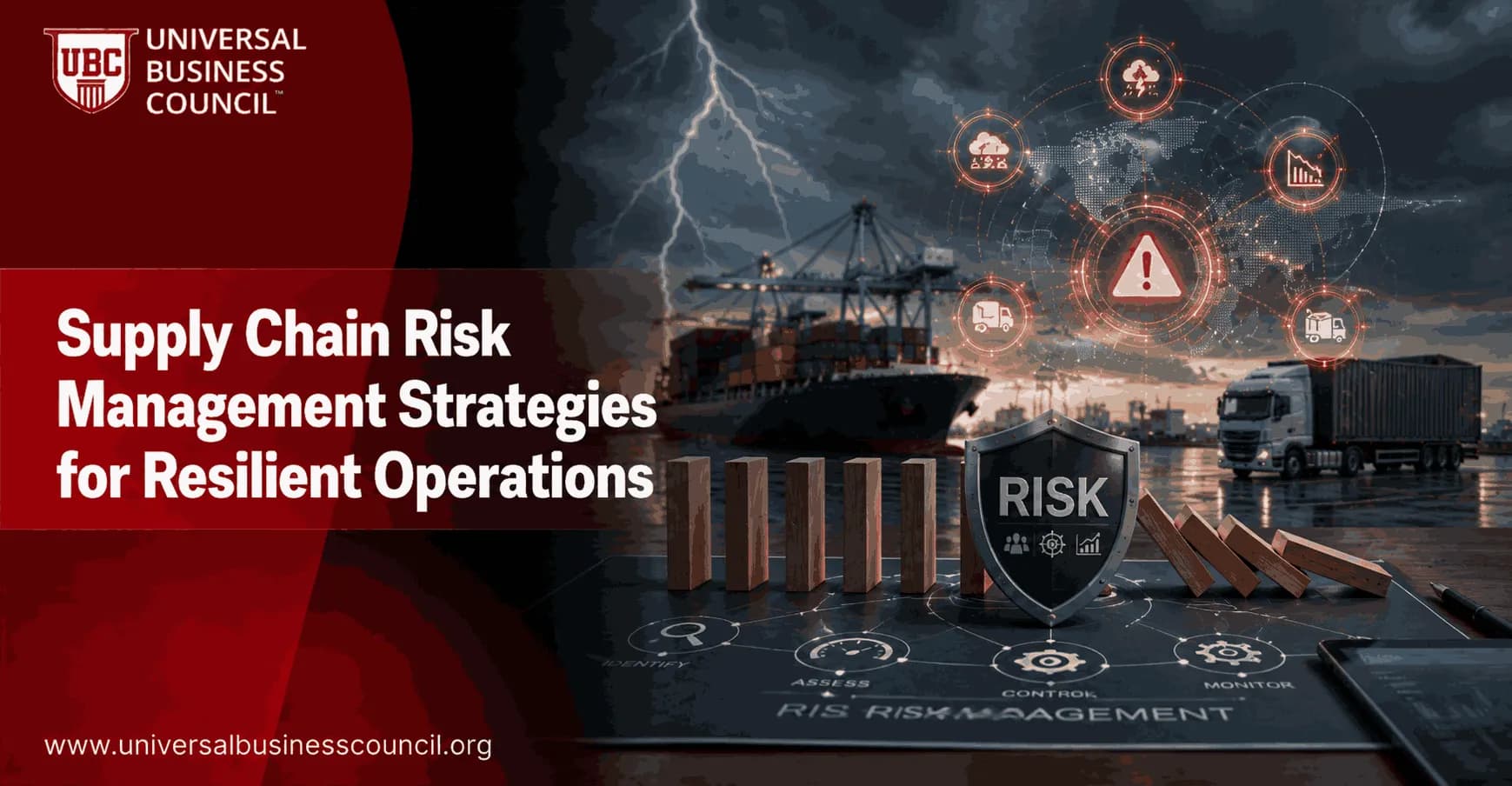
Supply chain risk management strategies work best when they are a daily operating discipline, not a binder pulled out after a port closure, a cyber incident, a supplier bankruptcy, or a storm. The strongest programs combine visibility, supplier diversification, risk scoring, inventory buffers, flexible logistics, and trained teams that know who makes the call when the normal plan fails.
Think of supply chain risk management as a structured cycle: identify the risk, assess it, reduce it, monitor it, then report on it across procurement, logistics, operations, finance, and IT. That cross-functional piece matters more than people admit. A sourcing team can sign a second supplier, but if quality has not approved the part and finance has not modeled the working capital hit, you do not have resilience yet. You have a slide.

As organizations strengthen operational resilience across procurement, logistics, and sourcing, professionals with a Certified Supply Chain Management credential are increasingly helping businesses build structured risk management practices that balance cost, continuity, and long-term supply chain performance.
What Supply Chain Risk Management Means Now
Modern supply chain risk management, often shortened to SCRM, is the continuous work of finding, rating, reducing, and monitoring risk across the full supply network. It covers tier-1 suppliers, sub-tier suppliers, contract manufacturers, logistics routes, warehouses, technology vendors, and the data systems that stitch them together.
As organizations rely more heavily on AI-driven forecasting, supplier risk analytics, and digital twins, maintaining reliable machine learning systems becomes essential. Professionals responsible for deploying, monitoring, and continuously improving these AI capabilities often strengthen their expertise through a Certified MLOps Expert program to support production-ready supply chain intelligence.
The old model was reactive. Chase expeditors, call the supplier, pay air freight, explain the miss to the customer. The current model is proactive and scenario-based. You find weak points before they break. You test alternatives before you need them. You watch leading indicators, not just the late-delivery report that lands after the damage is done.
1. Map the End-to-End Supply Chain
You cannot manage a risk you have not named. Start by mapping the full chain for your critical products and services:
Suppliers and sub-tier suppliers
Manufacturing sites and capacity limits
Transportation routes, ports, carriers, and lanes
Inventory locations and safety stock positions
IT systems, EDI connections, cloud services, and planning tools
Regulatory, geopolitical, climate, and cybersecurity exposure
Do not stop at tier 1. The painful surprises usually sit two tiers down. One resin. One semiconductor package. One specialist coating. One packaging insert everyone assumed was easy to swap. Ask suppliers which inputs are single-source and which components carry long requalification cycles.
Use a practical risk matrix
Rate each risk by likelihood and impact. Keep it simple enough that managers will actually use it. A five-point likelihood score and a five-point impact score work well. Multiply them for a priority score:
Risk score = likelihood x impact
Then add a control rating. A high-impact supplier risk with a qualified alternate is a different animal from a high-impact risk with no alternate, no approved substitute, and a twelve-week quality validation queue.
2. Build Real Visibility, Not Just More Dashboards
Visibility is one of the most repeated supply chain risk management strategies, but the word gets abused. A dashboard showing yesterday's late shipments is reporting. Real visibility gives you enough warning to act.
Use a mix of:
IoT sensors for location, temperature, humidity, shock, and asset status
Supplier performance portals for on-time delivery, fill rate, defects, and corrective actions
Risk intelligence feeds for weather, labor action, port congestion, sanctions, and political disruption
Planning systems that connect demand, inventory, capacity, and logistics data
Data-driven methods like scenario analysis, risk scoring, and ongoing KPI monitoring do the heavy lifting here, backed by AI, IoT, and automated alerts for earlier detection. The test is blunt. If a key supplier misses a shipment today, can your team see the affected customer orders, available substitutes, inventory by site, and transport options in the same working session? If not, you have a reporting tool, not visibility.
3. Diversify Suppliers and Regionalize Where It Counts
Single-source supply can be efficient. It can also be fragile. Multi-sourcing, nearshoring, and regionalization cut your dependence on one supplier, one country, one port, or one carrier network.
That does not mean every part needs three suppliers. That is expensive and sometimes impossible. Segment the supply chain instead:
Critical, high-margin, or regulated products: qualify backup suppliers and hold more inventory.
Commodity items: use framework agreements with approved alternates.
Low-risk items: do not over-engineer the network.
Segment by product criticality, customer need, and risk tolerance. A diversified supplier base, local sourcing, and flexible transportation are the practical mitigation moves that hold up under pressure.
Here is the trade-off. Nearshoring may reduce geopolitical and transit risk, but it can raise unit cost. For a low-value product with stable demand, that premium may never pay back. For a constrained component that can shut down a line, the premium is often cheap insurance.
4. Use Inventory Buffers Intelligently
Lean operations are useful, but lean without buffers can fail under frequent disruption. Safety stock, buffer stock, cycle stock, and strategic stockpiles buy teams time to respond.
Put buffers where the business case is strongest:
Long lead-time materials
Parts with limited suppliers
Items with volatile demand
Products tied to strict service-level agreements
Materials with long quality approval cycles
A common mistake is setting safety stock from average demand and average lead time. Disruptions do not care about averages. Track demand variability, lead-time variability, supplier reliability, and your target service level. Review the buffer after every major demand or lead-time change, not once a year during budget season.
5. Make Logistics and Manufacturing Flexible
Resilient operations need options. If your plan depends on one port, one carrier, one warehouse, and one production line, the operating model has no room to absorb a shock.
Build flexibility into the network:
Pre-approve alternate carriers and freight forwarders
Identify secondary ports, lanes, and border crossings
Use postponement for products that can be finished closer to demand
Cross-train production teams on constrained work centers
Keep tested playbooks for expedited freight and customer allocation
This is where tabletop exercises expose reality. In a lot of simulations, the first failure is not the plan itself. It is the contact list. Someone has the supplier escalation number buried in an email, the logistics backup is on leave, and customer service does not know which accounts get priority. Fix that before the next disruption, not during it.
6. Apply AI, Digital Twins, and Scenario Modeling Carefully
AI and predictive analytics can sharpen demand forecasting, anomaly detection, risk sensing, and inventory planning. Digital twins and scenario modeling let you simulate a port closure, a supplier failure, a demand spike, or a capacity shortage before it lands.
Use these tools for decisions that need speed and data depth:
Which customer orders are at risk if a supplier misses two weeks?
What is the cost gap between air freight, rerouting, and delayed delivery?
How much safety stock protects a 95 percent service target?
Which supplier risk indicators moved this week?
Do not treat AI as a substitute for supplier conversations. Models miss context. A supplier can look stable in delivery data while quietly losing key technicians, failing audits, or stretching payables. Pair predictive tools with quarterly business reviews, site visits, audits, and open escalation channels.
7. Strengthen Supplier Relationships and Governance
Strong supplier relationships are not soft management. They are operating controls. Suppliers warn trusted customers earlier, flag constraints sooner, and work harder on allocation when capacity tightens.
Put structure around the relationship:
Agree on escalation paths and response times
Share rolling forecasts and demand changes
Run joint continuity planning for critical materials
Review quality, delivery, capacity, and financial health
Include cybersecurity and compliance checks in vendor reviews
Automated vendor risk management now covers financial, operational, compliance, and cybersecurity risk, and it belongs inside supply chain resilience. A ransomware incident at a logistics provider or a software supplier can stop orders as fast as a factory fire.
8. Track the Metrics Leadership Actually Uses
Supply chain risk programs need metrics that tie back to service, cost, and continuity. Track a short list, consistently:
OTIF: on-time, in-full delivery
Supplier delivery performance: late lines, short shipments, and recovery time
Lead-time variability: not just the average
Inventory coverage: days of supply for critical materials
Forecast accuracy: especially for constrained items
Time to recover: how long operations need to return to target service
Audit findings: quality, compliance, and cybersecurity gaps
Do not bury executives in twenty charts. Show the top risks, the financial exposure, the customer impact, and the decision you need from them. That is the language leadership actually tracks.
Build the Capability, Not Just the Plan
The best supply chain risk management strategies are not isolated projects. They become part of planning, sourcing, supplier reviews, inventory policy, logistics design, technology investment, and how you train your managers.
If you lead procurement, operations, logistics, finance, or enterprise risk, start with one critical product family. Map the chain, score the risks, find the single points of failure, run one disruption scenario, and assign owners for the top five mitigations. Then repeat with the next family.
For professionals building formal management capability, the management and operations certifications from Universal Business Council are a solid path for deeper study in risk management, business continuity, supplier governance, and performance measurement. Pair that study with a real risk register from your own operation. Theory sticks when it has a supplier name, a lead time, and a customer order attached to it.
As artificial intelligence continues to transform supply chain resilience through predictive analytics, automation, and intelligent decision support, professionals can further strengthen their expertise through a Certified Artificial Intelligence (AI) Expert program, combining AI knowledge with practical supply chain management skills to lead future-ready operations.
FAQs
1. What is supply chain risk management?
Supply chain risk management (SCRM) is the process of identifying, assessing, mitigating, and monitoring risks that can disrupt the flow of goods, services, information, and finances across a supply chain. The goal is to improve resilience, reduce disruptions, and ensure business continuity.
2. Why is supply chain risk management important?
Effective risk management helps organizations prepare for unexpected events such as supplier failures, natural disasters, cyberattacks, geopolitical conflicts, transportation delays, and demand fluctuations. It minimizes financial losses while improving operational stability and customer satisfaction.
3. What are the biggest supply chain risks businesses face?
Common risks include supplier disruptions, raw material shortages, transportation delays, cybersecurity threats, geopolitical instability, regulatory changes, natural disasters, labor shortages, inflation, quality issues, and unexpected demand shifts.
4. How can businesses identify supply chain risks?
Organizations can identify risks by conducting supplier assessments, mapping supply chain networks, analyzing historical disruptions, monitoring market trends, evaluating geopolitical developments, reviewing financial health, and using predictive analytics to detect emerging threats.
5. What are the key strategies for managing supply chain risks?
Key strategies include supplier diversification, inventory optimization, demand forecasting, business continuity planning, digital supply chain visibility, cybersecurity improvements, risk monitoring, scenario planning, and strong supplier relationships.
6. How does supplier diversification reduce supply chain risk?
Relying on a single supplier increases vulnerability to disruptions. Diversifying suppliers across different regions and markets helps reduce dependency, improve flexibility, and maintain production when one supplier experiences operational challenges.
7. How does AI improve supply chain risk management?
AI analyzes large volumes of real-time data to detect potential disruptions, predict demand fluctuations, monitor supplier performance, identify transportation risks, and recommend proactive mitigation strategies before problems escalate.
8. What role does supply chain visibility play in risk management?
End-to-end visibility enables organizations to track inventory, shipments, supplier performance, and operational status across the supply chain. Greater visibility helps businesses identify risks earlier and respond more effectively to disruptions.
9. How can predictive analytics improve supply chain resilience?
Predictive analytics uses historical and real-time data to forecast potential disruptions, estimate demand changes, identify supplier risks, and optimize inventory levels. This allows businesses to prepare for challenges before they impact operations.
10. What is a business continuity plan for supply chains?
A business continuity plan outlines procedures for maintaining operations during disruptions. It includes contingency suppliers, emergency logistics plans, inventory strategies, communication protocols, disaster recovery procedures, and recovery timelines.
11. How does cybersecurity affect supply chain risk management?
Modern supply chains rely heavily on digital systems and connected technologies. Strong cybersecurity measures protect sensitive business data, prevent ransomware attacks, secure supplier communications, and reduce operational disruptions caused by cyber threats.
12. How can inventory management reduce supply chain risks?
Maintaining appropriate inventory levels, using safety stock strategically, optimizing warehouse operations, and improving demand forecasting help businesses respond to unexpected supply disruptions while minimizing excess inventory costs.
13. What technologies support supply chain risk management?
Technologies such as AI, machine learning, IoT, blockchain, Edge AI, cloud computing, digital twins, predictive analytics, GPS tracking, ERP systems, and supply chain visibility platforms help organizations detect, analyze, and respond to risks more effectively.
14. Which industries benefit most from supply chain risk management?
Manufacturing, healthcare, pharmaceuticals, retail, automotive, aerospace, food and beverage, logistics, construction, energy, and technology companies all benefit from proactive risk management strategies that improve resilience and operational continuity.
15. What challenges do organizations face when implementing supply chain risk management?
Challenges include limited supplier visibility, poor data quality, complex global supply networks, technology integration issues, regulatory compliance, rising costs, cybersecurity threats, and adapting quickly to changing market conditions.
16. How can businesses build more resilient supply chains?
Organizations can improve resilience by diversifying suppliers, strengthening supplier relationships, investing in digital technologies, improving inventory planning, conducting regular risk assessments, implementing business continuity plans, and monitoring operations continuously.
17. What are the best practices for supply chain risk management?
Best practices include performing regular risk assessments, developing contingency plans, using real-time monitoring tools, improving supply chain transparency, investing in AI-powered analytics, conducting supplier audits, strengthening cybersecurity, and regularly testing business continuity plans.
18. How does sustainability contribute to supply chain resilience?
Sustainable supply chains often emphasize responsible sourcing, local supplier development, resource efficiency, and long-term supplier partnerships. These practices can reduce environmental risks, improve regulatory compliance, and strengthen operational stability over time.
19. What future trends are shaping supply chain risk management?
Emerging trends include AI-driven risk prediction, digital twins, autonomous supply chain planning, generative AI for scenario analysis, blockchain for transparency, Edge AI for real-time monitoring, ESG-focused risk management, and increased investment in resilient regional supply networks.
20. Why is supply chain risk management essential for resilient operations?
Supply chain disruptions are becoming more frequent due to global economic uncertainty, climate events, cyber threats, and geopolitical changes. Organizations that proactively manage risks through technology, diversification, visibility, and strategic planning are better equipped to maintain business continuity, protect customer relationships, reduce financial losses, and adapt quickly to changing market conditions. A strong supply chain risk management strategy is no longer optional it is a critical component of long-term business resilience and competitive advantage.
Related Articles
View All
Management
Sustainable Supply Chain Management: How Businesses Can Reduce Environmental Impact
Sustainable supply chain management helps firms cut Scope 3 emissions, waste, and freight impact through better data, supplier engagement, circular design, and traceability.

Management
AI in Supply Chain Management: Use Cases, Benefits, and Future Trends
AI in supply chain management is changing planning, logistics, inventory, sourcing, and risk. Learn key use cases, measurable benefits, and future trends.

Management
Procurement vs. Supply Chain Management: Differences, Skills, and Career Opportunities
Compare procurement vs. supply chain management, including scope, metrics, career paths, skills, technology trends, and certification options.
Trending Articles
The Role of Blockchain in Ethical AI Development
How blockchain technology is being used to promote transparency and accountability in artificial intelligence systems.
AWS Career Roadmap
A step-by-step guide to building a successful career in Amazon Web Services cloud computing.
Top 5 DeFi Platforms
Explore the leading decentralized finance platforms and what makes each one unique in the evolving DeFi landscape.