

AI in Supply Chain Management: Use Cases, Benefits, and Future Trends
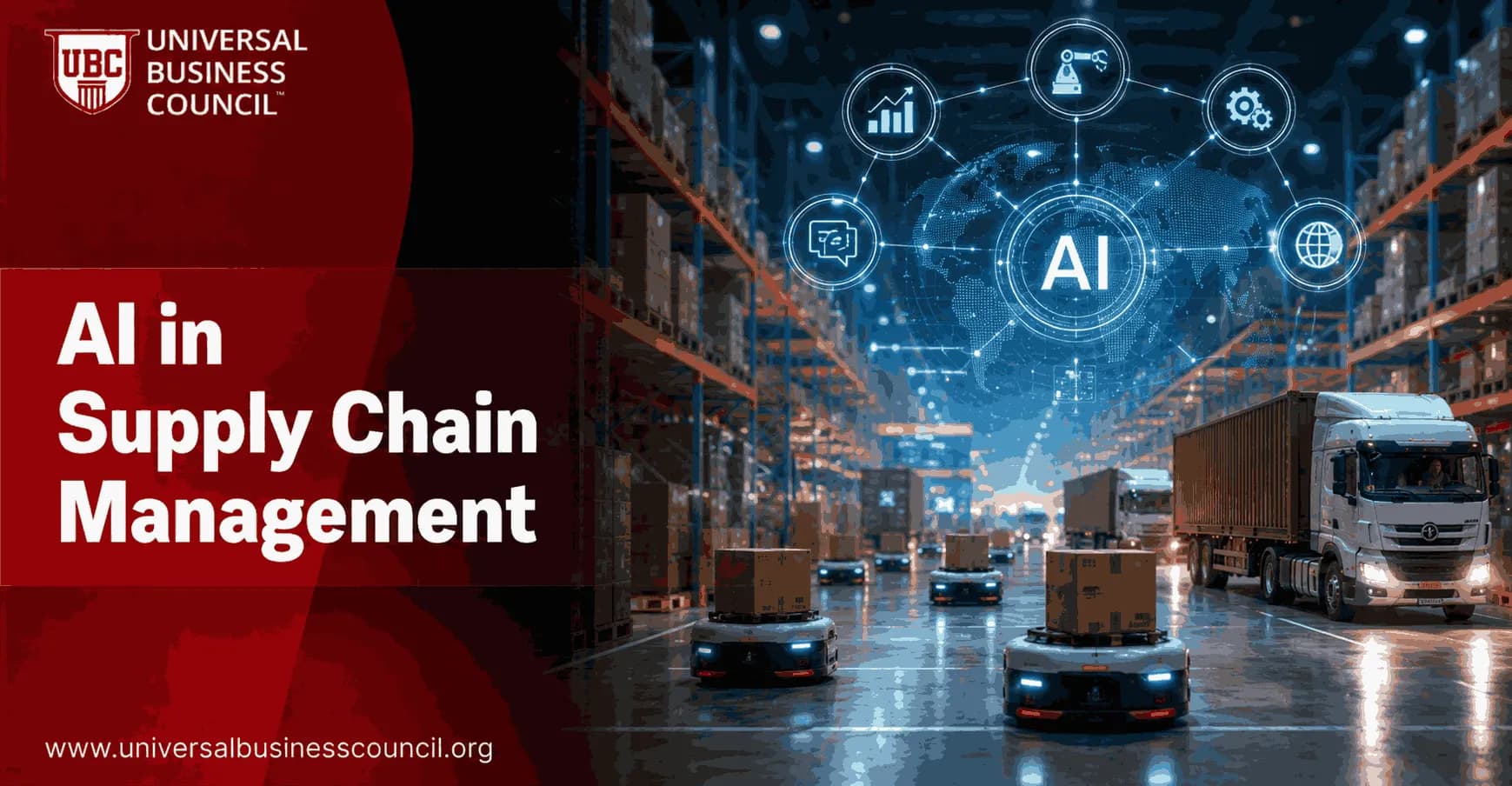
AI in supply chain management is no longer a lab project. It is now part of the operating system for planning, sourcing, manufacturing, warehousing, logistics, and risk. The teams getting value are not chasing every new tool. They are fixing specific problems: late shipments, poor forecasts, excess stock, supplier risk, and slow decisions during disruption.
The numbers explain why leaders are paying attention. McKinsey research reported by the Georgetown Journal of International Affairs found that supply chain management is the business area where respondents saw the highest cost savings from AI. McKinsey has also reported that early adopters reduced logistics costs by 15 percent, improved inventory levels by 35 percent, and raised service levels by 65 percent compared with slower peers. Kinaxis, citing Capgemini research from 2025, reports average fulfillment cost reductions of 23 percent, forecast accuracy improvements up to 85 percent, and excess inventory and carrying cost reductions up to 15 percent.

As AI becomes a core capability across procurement, logistics, warehousing, and planning, professionals with a Certified Supply Chain Management credential are increasingly helping organizations combine operational expertise with data-driven decision-making to improve performance across the entire value chain.
What AI in Supply Chain Management Actually Means
AI in supply chain management refers to the use of machine learning, optimization models, generative AI, robotics, and intelligent assistants to improve supply chain decisions and execution. That sounds broad because it is. A modern supply chain is a chain of linked decisions, and AI can improve many of them.
Oracle notes that companies already use AI to optimize shipping, manage warehouse capacity, track inventory, forecast demand for parts and components, improve worker safety, and protect transaction records. Amazon Business describes modern AI supply chains as systems that analyze internal data alongside external signals such as market trends, weather, supplier performance, and transport delays.
Here is the practical test. If your planners still spend Friday afternoon reconciling spreadsheets from sales, procurement, and logistics, you are not short of AI ideas. You are short of clean decision workflows.
Core AI Technologies Used in Supply Chains
Machine learning and predictive analytics
Machine learning models analyze historical demand, seasonality, promotions, pricing, point-of-sale trends, lead times, and external shocks. They handle demand sensing, exception detection, risk prediction, and lead time forecasting.
Optimization and prescriptive analytics
Optimization models recommend what to buy, where to place inventory, which route to use, and how to allocate constrained supply. Good models respect constraints: capacity, service targets, transport cost, shelf life, supplier minimums, and risk exposure.
Generative AI
Generative AI can summarize data, classify documents, draft communications, support scenario planning, and answer planner questions in plain language. EY has described real supply chain use cases where GenAI supports strategy adjustment, supplier network mapping, alternative supplier planning, and product tracing for regulatory and ESG needs.
Agentic AI and intelligent assistants
Agentic AI goes further. Kinaxis describes it as a move from prediction to systems that sense disruptions, predict outcomes, prescribe actions, and execute approved workflows. This is where governance matters. You may want an assistant to draft a supplier escalation email. You probably do not want it switching carriers on a high-value lane without approval.
As these AI systems move from pilots into production, organizations also need reliable processes for model deployment, monitoring, version control, and continuous improvement. Professionals responsible for maintaining these production AI environments often strengthen their expertise through a Certified MLOps Expert program to ensure scalable and dependable machine learning operations.
Key Use Cases of AI in Supply Chain Management
1. Demand forecasting and demand sensing
Forecasting is the classic AI use case because bad forecasts create waste everywhere else. Machine learning can combine sales history, promotions, seasonality, channel data, weather, and market signals to produce more accurate demand forecasts than static spreadsheet models.
Lenovo offers a useful example. SmartDev reports that Lenovo implemented an AI-based demand sensing platform using real-time sales, channel data, and market signals. The result was a 20 percent reduction in surplus inventory and a 25 percent improvement in forecast accuracy.
One detail that trips teams up: forecast accuracy by product family can look fine while item-location accuracy is terrible. Your CFO may see total demand as stable. Your warehouse feels the pain at SKU level.
2. Inventory optimization
AI helps companies move from fixed safety stock rules to dynamic inventory control. Systems can weigh demand volatility, supplier reliability, seasonality, margin, and service targets to recommend when and where to replenish stock.
This is where AI in supply chain management often pays for itself. Less working capital sits in slow-moving inventory, and service levels can improve at the same time. The trade-off is real. Reducing inventory too aggressively can make a supply chain brittle. Use AI to segment stock by criticality, not to cut every buffer by the same percentage.
3. Production planning and scheduling
AI supports production schedules that match capacity, labor, machine availability, materials, and demand. MasterOfCode reports that 47 percent of surveyed organizations identified production planning and scheduling as a near-term generative AI application.
For manufacturers, the value is not only a better plan. It is faster re-planning when a supplier misses a shipment, a line goes down, or a customer pulls forward a large order.
4. Logistics and route optimization
Transportation networks change by the hour. AI models can adjust routing based on traffic, weather, fuel costs, carrier performance, delivery windows, and dock capacity. Penske and Oracle both identify route optimization as a major AI application in logistics.
Autonomous transport is developing too, though it is not a near-term answer for every fleet. UPS has piloted autonomous freight trucks with TuSimple on selected long-haul routes in the United States. Amazon Prime Air is developing drone delivery for small packages, with AI used for flight planning, hazard avoidance, and autonomous operation.
5. Warehouse automation and fulfillment
AI-driven robots support picking, packing, sorting, slotting, and replenishment in warehouses. Oracle also points to AI for warehouse capacity management, real-time inventory tracking, and worker safety monitoring.
Do not start with robots if your inventory records are unreliable. I have watched automation projects lose momentum because the physical count and system count did not match. The robot was not the problem. The master data was.
6. Supplier management and sourcing risk
AI can assess supplier performance, financial risk, geopolitical exposure, capacity, pricing, contract terms, and ESG data. Amazon Business describes generative AI use in supplier evaluation and negotiation support, including scenario simulation based on market pricing and historical contracts.
EY notes that Fortune 500 companies and government organizations are building GenAI tools to map complex supplier networks, identify alternatives during disruption, and support product tracing for regulatory and ESG requirements.
7. Quality control, compliance, and safety
AI vision systems can inspect products, classify defects, and flag process problems. Oracle notes that AI can monitor workspaces for poor quality control practices and health and safety violations. In regulated industries, this can cut compliance risk as much as operational waste.
8. Predictive maintenance
Predictive maintenance uses sensor data to catch early warning signs of asset failure. For fleets, conveyors, production lines, and cold chain equipment, the goal is simple: fix the issue before downtime hits service levels.
9. Freight auditing and fraud detection
AI can review freight invoices, accessorial charges, rate tables, fuel surcharges, and delivery records to detect anomalies. Penske identifies freight bill auditing as a supply chain AI use case, and MasterOfCode points to fraud detection in logistics transactions as a generative AI application.
10. Customer service and order management
MasterOfCode reports customer service as the highest-potential GenAI function in supply chains, at 78 percent. AI assistants can answer order status questions, summarize delays, retrieve shipment documents, and help customer service teams respond faster.
Benefits of AI in Supply Chain Management
Lower costs: McKinsey reports 15 percent logistics cost reductions among early adopters, while Capgemini data cited by Kinaxis shows average fulfillment cost reductions of 23 percent.
Better forecasts: AI can sharpen forecast accuracy by pulling in real-time and external signals, with Kinaxis reporting improvements up to 85 percent in AI-enabled planning environments.
Less excess inventory: McKinsey and Kinaxis report major inventory gains, including up to 35 percent improvement in inventory levels and up to 15 percent reductions in excess inventory and carrying costs.
Higher service levels: McKinsey reports service level improvements of 65 percent for AI-enabled supply chains compared with peers.
Faster disruption response: AI can spot exceptions, simulate alternatives, and recommend actions before a delay becomes a customer escalation.
Stronger governance: With proper controls, AI improves traceability, compliance monitoring, ESG reporting, and transaction integrity.
Implementation Challenges You Should Not Ignore
AI is not magic dust for broken operations. Oracle cautions that AI integration can be difficult and expensive, especially when organizations train custom models on proprietary data. That warning is fair.
Watch these failure points:
Poor master data: Duplicate suppliers, inconsistent units of measure, and unreliable lead times will weaken every model output.
Unclear decision rights: If no one knows who can approve an AI recommendation, decisions slow down.
Over-automation: Some decisions need human review, especially supplier changes, substitutions, and customer allocation during shortages.
Weak change management: Planners will ignore a model they do not trust or understand.
Metric mismatch: Optimizing transport cost can hurt on-time delivery. Optimizing inventory turns can raise stockouts. Define the trade-off up front.
Future Trends: Generative and Agentic Supply Chains
The next stage of AI in supply chain management is the shift from predictive dashboards to AI assistants and agentic workflows. Kinaxis describes the path clearly: predictive analytics first, then real-time decision-making, then intelligent agents capable of autonomous action within guardrails.
Expect growth in four areas:
AI copilots for planners: Planners will ask questions such as, which customers are affected if this supplier misses Monday pickup? The assistant will summarize exposure and recommend actions.
Scenario planning at speed: GenAI will help teams model shortages, demand spikes, port delays, and supplier failures faster than manual spreadsheet work.
Supplier network transparency: AI will map tier 1, tier 2, and deeper supplier relationships for risk, ESG, and compliance.
Controlled autonomy: Systems will run low-risk workflows automatically, such as document classification or exception routing, while humans approve high-impact decisions.
To be blunt, fully autonomous supply chains are overhyped for most organizations. The near-term win is human-AI collaboration: faster analysis, better recommendations, cleaner execution, and stronger controls.
Skills Professionals Need Next
If you work in operations, procurement, logistics, or management, you do not need to become a data scientist. You do need to understand data quality, process design, risk controls, forecasting metrics, and AI governance. Learn how to challenge a model output. Ask what data it used, which constraint it ignored, and what happens if the recommendation is wrong.
For internal learning paths, Universal Business Council readers can connect this topic with related management, business analytics, operations, and digital transformation courses. Those are natural next steps if you are preparing to lead AI projects rather than simply use the software.
Your Next Step
Pick one supply chain pain point this week: forecast error, late shipments, excess inventory, invoice disputes, or supplier risk. Define the current baseline, such as stockout rate, forecast accuracy, on-time in-full, carrying cost, or freight audit recovery. Then test where AI can improve the decision. Start narrow. Measure hard. Scale only when the process, people, and governance are ready.
As artificial intelligence continues to transform forecasting, supplier management, logistics, and operational planning, professionals looking to lead enterprise AI initiatives can further strengthen their capabilities through a Certified Artificial Intelligence (AI) Expert program, combining AI knowledge with practical supply chain management skills for long-term business success.
FAQs
1. What is AI in supply chain management?
AI in supply chain management refers to the use of artificial intelligence technologies such as machine learning, predictive analytics, computer vision, and generative AI to automate processes, improve decision-making, optimize logistics, forecast demand, and increase operational efficiency throughout the supply chain.
2. Why is AI important in supply chain management?
AI helps businesses respond faster to changing market conditions, reduce operational costs, improve forecasting accuracy, optimize inventory, strengthen supplier relationships, and build more resilient supply chains. It enables organizations to make data-driven decisions using real-time information.
3. What are the main use cases of AI in supply chain management?
Common AI use cases include demand forecasting, inventory optimization, procurement automation, warehouse management, route optimization, predictive maintenance, supplier risk analysis, quality inspection, fraud detection, and customer service automation.
4. How does AI improve demand forecasting?
AI analyzes historical sales data, seasonal trends, promotions, weather patterns, market conditions, and customer behavior to generate more accurate demand forecasts. Better forecasting helps businesses reduce stock shortages, minimize excess inventory, and improve customer satisfaction.
5. How can AI optimize inventory management?
AI continuously monitors inventory levels, predicts replenishment needs, identifies slow-moving products, and recommends optimal stock levels. This reduces carrying costs, prevents stockouts, and improves overall inventory efficiency.
6. How does AI improve warehouse operations?
AI supports warehouse automation through intelligent inventory tracking, robotic picking systems, computer vision, autonomous mobile robots (AMRs), workforce optimization, and predictive maintenance for warehouse equipment, increasing speed and accuracy.
7. How is AI used in logistics and transportation?
AI optimizes delivery routes, predicts traffic delays, improves fleet management, estimates delivery times, reduces fuel consumption, and helps logistics providers respond quickly to unexpected disruptions such as weather events or road closures.
8. Can AI improve procurement processes?
Yes. AI helps procurement teams evaluate suppliers, automate purchase orders, analyze contracts, identify cost-saving opportunities, monitor supplier performance, and assess supply chain risks, leading to more informed purchasing decisions.
9. How does AI support predictive maintenance in supply chains?
AI analyzes equipment data from sensors to detect early signs of wear or failure. Maintenance teams can schedule repairs before breakdowns occur, reducing downtime, extending equipment life, and improving operational reliability.
10. What are the biggest benefits of AI in supply chain management?
Key benefits include improved forecasting accuracy, lower operating costs, faster decision-making, enhanced inventory control, increased productivity, better supplier visibility, improved customer satisfaction, stronger risk management, and greater supply chain resilience.
11. Which industries use AI in supply chain management?
Industries such as manufacturing, retail, healthcare, pharmaceuticals, automotive, food and beverage, logistics, aerospace, consumer goods, technology, and e-commerce are actively adopting AI to improve supply chain efficiency.
12. How does AI improve supply chain visibility?
AI combines data from ERP systems, IoT devices, GPS tracking, warehouse management systems, and supplier networks to provide real-time visibility into inventory, shipments, production status, and potential disruptions across the supply chain.
13. What role does generative AI play in supply chain management?
Generative AI can assist with creating procurement reports, summarizing supplier communications, drafting contracts, answering operational questions, generating inventory insights, supporting planning scenarios, and helping supply chain teams analyze large volumes of operational data more efficiently.
14. How does AI reduce supply chain risks?
AI identifies potential disruptions by monitoring supplier performance, geopolitical developments, weather conditions, transportation networks, market trends, and operational data. Early detection enables organizations to implement mitigation strategies before issues escalate.
15. What challenges do businesses face when implementing AI in supply chains?
Common challenges include data quality issues, integration with legacy systems, implementation costs, cybersecurity concerns, workforce training, change management, regulatory compliance, and ensuring employees understand and trust AI-generated insights.
16. How does AI support sustainable supply chain management?
AI improves transportation efficiency, reduces energy consumption, minimizes waste, optimizes inventory, supports responsible sourcing, lowers carbon emissions, and helps organizations measure and improve environmental performance across supply chain operations.
17. What technologies work alongside AI in modern supply chains?
AI is often combined with IoT, Edge AI, blockchain, robotics, cloud computing, digital twins, autonomous vehicles, RFID, GPS tracking, predictive analytics, and warehouse automation systems to create intelligent, connected supply chains.
18. What are the best practices for implementing AI in supply chain management?
Organizations should begin with clearly defined business objectives, prioritize high-value use cases, ensure high-quality data, conduct pilot projects, integrate AI with existing systems, train employees, monitor KPIs, and continuously improve AI models and workflows.
19. What are the future trends of AI in supply chain management?
Future trends include AI agents for autonomous planning, generative AI for decision support, digital twins, hyperautomation, predictive risk management, autonomous warehouses, Edge AI, sustainable logistics optimization, real-time supply chain orchestration, and greater collaboration between humans and AI systems.
20. Why is AI the future of supply chain management?
AI enables supply chains to become more intelligent, responsive, and resilient by automating repetitive tasks, improving decision-making, and providing real-time insights. As global supply chains grow more complex, organizations that successfully combine AI with human expertise will be better positioned to improve efficiency, reduce costs, manage disruptions, meet sustainability goals, and deliver superior customer experiences in an increasingly competitive marketplace.
Related Articles
View All
Management
The Future of Supply Chain Careers: Emerging Roles, Technologies, and Skills
Supply chain careers are shifting toward AI, analytics, automation, and sustainability. Learn the roles and skills shaping the next decade.

Management
Sustainable Supply Chain Management: How Businesses Can Reduce Environmental Impact
Sustainable supply chain management helps firms cut Scope 3 emissions, waste, and freight impact through better data, supplier engagement, circular design, and traceability.

Management
Supply Chain Risk Management Strategies for Resilient Operations
Learn practical supply chain risk management strategies for resilient operations, including visibility, multi-sourcing, safety stock, AI, logistics flexibility, and governance.
Trending Articles
The Role of Blockchain in Ethical AI Development
How blockchain technology is being used to promote transparency and accountability in artificial intelligence systems.
AWS Career Roadmap
A step-by-step guide to building a successful career in Amazon Web Services cloud computing.
Top 5 DeFi Platforms
Explore the leading decentralized finance platforms and what makes each one unique in the evolving DeFi landscape.