Gemini 4 Argon: Features, Pricing, and Availability
Gemini 4 Argon is Google’s new flagship AI model for coding, science, finance, law and security. See its main features, API and subscription pricing, and where you can access it today.

Browse the latest artificial intelligence articles, tutorials, and research from Universal Business Council.(390 articles)
Gemini 4 Argon is Google’s new flagship AI model for coding, science, finance, law and security. See its main features, API and subscription pricing, and where you can access it today.

Meta Muse Wonder is a new frontier AI model built for agents with Active Memory and Active Focus. Learn what it is, how it works, its features, pricing and how to access it.
What is Google Playground? Learn how Google's new AI platform turns text prompts into playable browser games, which models power it, its features, pricing and access, Unity Spark plans, rival tools, and limits.
Compare OpenAI Dots, Grok Bot, and Meta Muse to see how these always-on AI agents differ in cloud computer access, connected apps, persistent tasks, automation, memory, and multi-step workflows.
Learn what OpenAI Dots are, how these always-on AI agents work, and how GPT-6 Astra, cloud computers, connected apps, and persistent context enable ongoing task automation.
OpenAI launches GPT-6.1 Sol, a powerful reasoning model offering near-Astra performance at lower cost for coding, computer use, multi-agent workflows, and professional tasks.
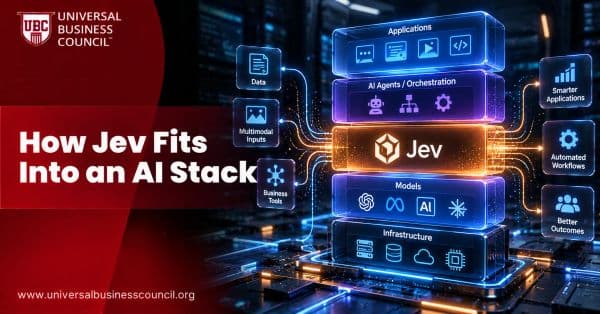
Learn how Jev fits into an AI stack as a machine-native decision layer that connects structured intelligence with agents, application logic, APIs, and automated workflows.
Learn how Jev’s decision-making pipeline transforms program state and structured questions into typed, probabilistic decisions that software can use for automation.
Learn how Jev achieves low-latency AI decisions through parallel sampling, structured outputs, and a System One architecture designed for real-time software automation.
Explore Jev’s inference architecture, including parallel sampling, structured inputs, typed outputs, calibrated probabilities, and fast machine-native decision processing.
Learn how the Jev decision pipeline transforms program state and structured questions into typed, probabilistic decisions that software can use for automation and workflow control.
Learn how Jev processes multiple structured questions in parallel, producing typed decisions, probabilities, and confidence scores efficiently within a single software workflow.