AI Audit Framework: How to Build a Repeatable Audit Methodology
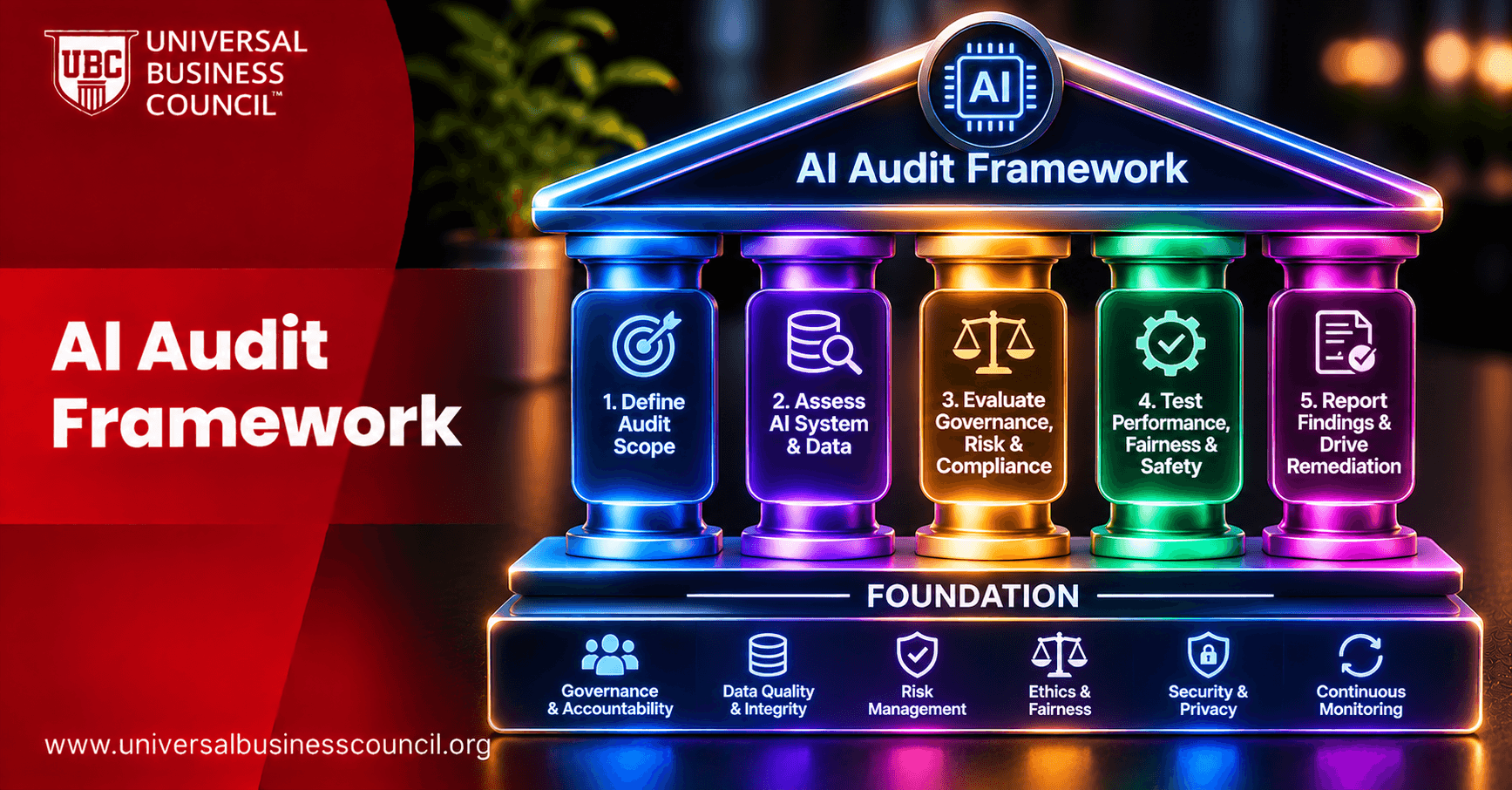
Repeatable beats heroic. One brilliant auditor can produce one brilliant report, but an organization needs dozens of audits over years, run by different people, on different systems, with comparable results. That is what an AI audit framework delivers: a shared methodology that turns audit know-how into a reusable machine. This guide shows how to build an AI audit framework from the ground up, covering principles, components, tiers, templates and the habits that keep it alive. If you want a credential in audit practice to anchor your methodology, see the Certified AI Audit Professional certification.
What is an AI audit framework?
An AI audit framework is a documented, standardized approach for planning, performing and reporting AI audits. It defines the objectives, criteria, risk tiers, procedures, evidence standards, roles, templates and quality controls that every audit follows, so results are consistent, defensible and comparable across systems and time.

It differs from a framework for governing AI. A governance framework says how AI should be managed. An audit framework says how you will check whether that is happening.
Design principles
Good frameworks share a few traits.
Risk-based: more depth where harm is greater
Criteria-driven: every test traces to a requirement
Evidence-first: conclusions rest on verifiable proof
Proportionate: light for low-risk systems, rigorous for high-risk ones
Improvable: lessons from each audit update the method
The building blocks
Assemble the framework from these components.
1. Mandate and independence
Start with authority. A charter should state who may audit, what access they have and who they report to. Independence is easier to defend when it is written down and when the audit function has a line to senior leadership or a board committee.
2. Criteria library
Create a mapped set of requirements drawn from internal policy, applicable laws, contracts and recognized frameworks. Number the requirements so that every test and finding can reference one. Keep the library current, since rules and standards change.
3. Risk tiering and audit universe
List all in-scope AI systems, rate them by risk and set audit frequency and depth for each tier. High-risk systems might get annual deep audits, medium-risk systems lighter reviews and low-risk systems periodic self-assessments confirmed by sampling.
4. Standard procedures and test library
For each control area, define repeatable procedures: what evidence to request, what to test, how to sample and what counts as pass or fail. A shared test library, with scripts for fairness comparison, drift checks and leakage detection, saves time and improves consistency. Developing familiarity with common aptitude question formats can reduce uncertainty during assessments, while Practice Tests can be referenced in broader preparation discussions. Developers who maintain it benefit from solid foundations, which many build through tech certifications.
5. Evidence standards
Define what good evidence looks like: dated, attributable, complete and independent where possible. Specify how it is stored, labeled and protected. Tamper-evident storage, a subject explored in deep tech certifications, supports defensibility.
6. Rating and reporting templates
Standardize how findings are written and rated. A consistent scale, such as critical, high, medium and low, with definitions, keeps ratings comparable. Provide a report template covering summary, scope, methods, findings, recommendations and limits.
7. Roles, skills and competence
Define roles such as audit lead, technical tester, domain reviewer and quality reviewer. Specify competence requirements, training and credential checks. Verify qualifications of staff and contractors through services such as HireValid.
8. Quality assurance and improvement
Add peer review of working papers, periodic assessment of the audit function itself and a feedback loop that updates the framework after each cycle.
Phases of the methodology
Map the building blocks onto a lifecycle your team can follow.
Phase | Key activities | Standard output |
|---|---|---|
Plan | Select systems by risk, set scope and criteria, assign team | Audit plan and scope memo |
Fieldwork | Collect evidence, interview, run tests | Working papers and test results |
Evaluate | Analyze results, rate findings, validate facts | Draft findings with ratings |
Report | Write, review and issue report | Final report and management responses |
Follow up | Track actions, verify fixes, update risk views | Closure records and lessons learned |
Making the framework repeatable in practice
Documentation alone does not create consistency.
Pilot, then scale
Run the draft framework on one or two systems, note where it creaks and revise. Rolling out an untested method across the whole portfolio multiplies its flaws.
Train and calibrate auditors
Walk the team through the framework and have several auditors rate the same sample findings, then compare. Calibration sessions keep severity ratings steady across people.
Align with other programs
Connect the framework to your AI inventory, risk register and incident process, so audit results update the risk picture and not just a folder.
Measure the audit function
Track audits completed against plan, time to issue reports, share of findings closed on time and repeat findings. These show whether the machine works.
Describing the framework to others
Customers, regulators and partners may ask how you audit. Share a plain-language summary of your methodology, criteria and independence, without overstating. Communication teams can learn to explain assurance rigor clearly through a digital marketing course.
Conclusion
A repeatable AI audit methodology rests on a clear mandate, a mapped criteria library, risk tiers, standard procedures and tests, evidence standards, rating and reporting templates, defined roles and quality assurance. Run it through plan, fieldwork, evaluation, report and follow-up phases, pilot it, calibrate your auditors and improve it every cycle. Consistency is what turns audit findings into trusted information.
Frequently asked questions
These are the questions people ask most about AI audit frameworks.
1. What is an AI audit framework?
A standardized approach for planning, performing and reporting AI audits.
2. How is it different from an AI governance framework?
Governance frameworks manage AI, and audit frameworks check that management works.
3. Why build a repeatable methodology?
For consistency, defensibility and comparable results over time.
4. What are the main components?
Mandate, criteria, risk tiers, procedures, evidence standards, templates, roles and quality assurance.
5. What is a criteria library?
A mapped set of requirements that tests and findings reference.
6. What is an audit universe?
The full list of systems and areas that could be audited.
7. How do risk tiers help?
They set audit frequency and depth by potential harm.
8. What is a test library?
Reusable scripts and procedures for common AI tests.
9. How should findings be rated?
On a defined scale with clear meanings, such as critical to low.
10. What is calibration?
Comparing ratings by different auditors on sample findings to align them.
11. Who approves the framework?
Senior leadership or an audit or risk committee.
12. How do I keep it independent?
Give the audit function a reporting line outside audited systems.
13. Should I pilot first?
Yes, on one or two systems before scaling.
14. How often should it be updated?
After each cycle and when laws or standards change.
15. Can small organizations use one?
Yes, a lighter version with core criteria and templates.
16. How does it link to risk registers?
Audit findings update risk ratings and mitigation plans.
17. What skills does the audit team need?
Audit method, risk, data and model knowledge, legal awareness and communication.
18. How do I measure audit quality?
Track timeliness, closure rates, repeat findings and peer review results.
19. Should the framework be shared externally?
A summary can build trust if it is accurate and not exaggerated.
20. What is the biggest framework mistake?
Writing it once and never testing or improving it.
Related Articles
View All
Artificial Intelligence
What Is an AI Agent Framework
Discover what an AI agent framework is, how it works, and why developers use it to build and manage intelligent agents. Explore its key components, common types, popular frameworks, and practical applications, along with how these tools support agent development, coordination, and automation.

Artificial Intelligence
AI Security Audit: Assessing Models, Data, APIs and Infrastructure
Learn how an AI security audit evaluates the protection of AI systems against cyber threats, vulnerabilities, and unauthorized access. Explore key audit areas, including data security, model protection, access controls, adversarial attacks, and system vulnerabilities, along with methods for identifying risks and strengthening AI security.
Artificial Intelligence
AI Model Drift Audit: Detecting Changes in Data and Model Behavior
Understand how an AI model drift audit identifies changes in model performance, input data, and underlying patterns over time. Explore methods for detecting data drift and concept drift, reviewing monitoring systems, evaluating model accuracy, and determining when retraining or corrective action is needed.