

AI Audit Scope and Objectives: How to Define What to Review
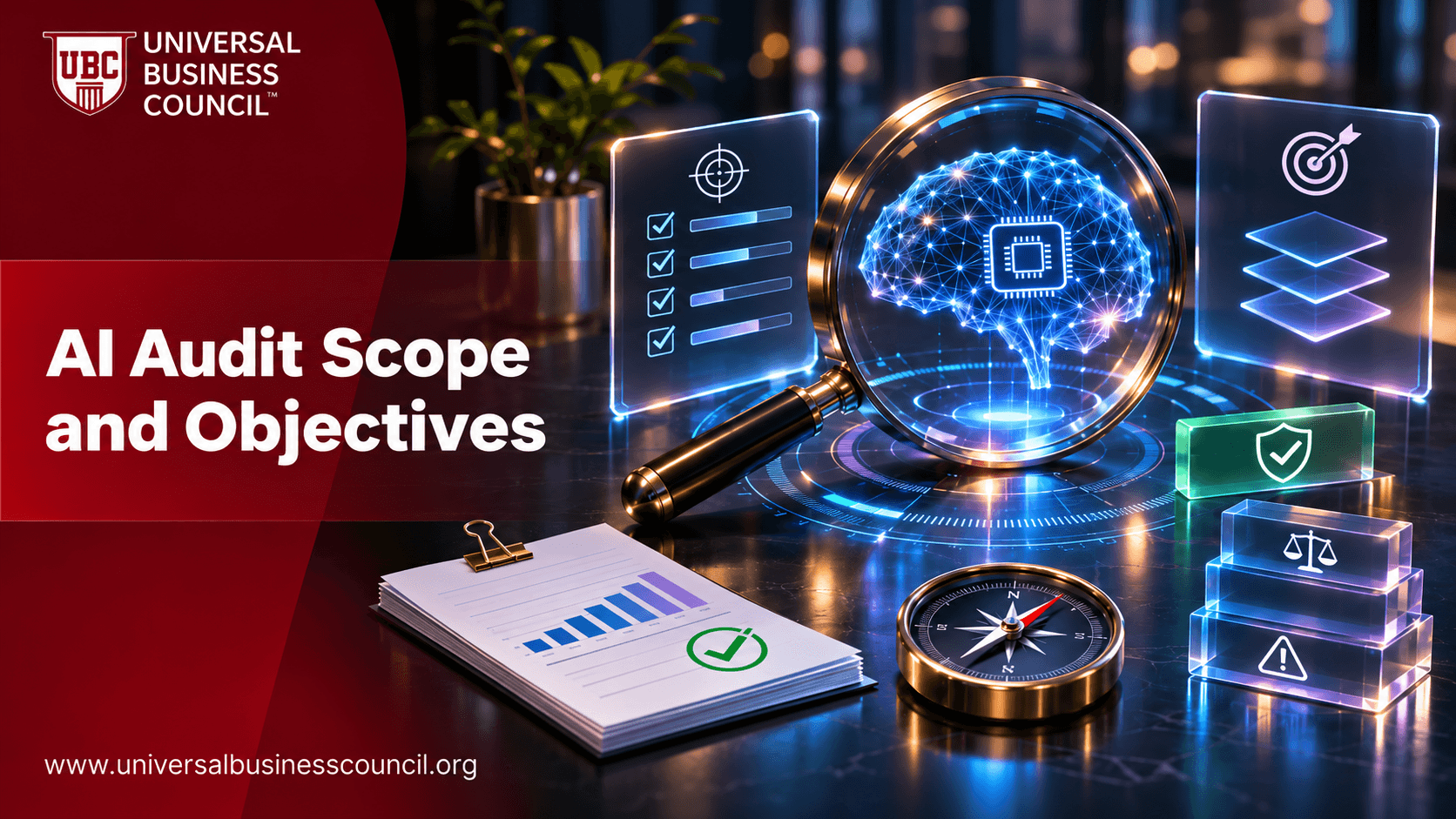
An audit without a scope is a fishing trip. You might catch something, you might not, and either way nobody can say afterward what was covered. Scope and objectives are the two decisions that shape everything else in an AI audit: how long it takes, what it costs, which evidence you need and whether the report will mean anything to the people who read it. This guide shows how to define AI audit scope and objectives, with a practical method, examples of good and bad statements and the traps that stretch audits past their useful life. If you want formal training in planning audits, see the Certified AI Audit Professional certification.
What are AI audit scope and objectives?
AI audit objectives state what the audit is trying to determine, such as whether a model meets fairness requirements. AI audit scope sets the boundaries: which systems, versions, data, processes, locations, time periods and control areas are included, and which are explicitly excluded. Objectives are the "why." Scope is the "what, where and when."

Why scope matters so much
A badly scoped audit fails in predictable ways.
Too broad: it runs long, costs too much and produces shallow findings
Too narrow: it misses the risk that actually matters
Vague: owners argue about what was covered, and readers over-trust the result
Unstated exclusions: readers assume coverage that never existed
A tight scope lets auditors go deep, and lets readers know exactly what the conclusion applies to.
How to set objectives
Start with the reason the audit exists.
Trigger and audience
Ask what prompted the audit and who will rely on it. A regulator inquiry, a customer demand, a planned launch, an incident or a routine cycle each calls for different emphasis. Knowing the audience tells you how formal the evidence and report must be.
Write objectives as answerable questions
Good objectives can be answered yes or no with evidence. Compare these pairs.
Weak: "Review the hiring AI." Strong: "Determine whether the resume screening model produces pass rates that differ across applicant groups beyond our agreed threshold, and whether human review is documented for rejected candidates."
Weak: "Check the chatbot is safe." Strong: "Determine whether the support chatbot discloses its AI nature, avoids giving regulated advice and protects customer data under our policy."
Limit the number
Three to five objectives is plenty for most audits. More than that usually signals two audits wearing one coat.
How to define scope
Work through these dimensions.
Systems and versions
Name the exact systems and model versions. Include dependencies such as upstream data feeds, third-party models and connected tools if they affect the objectives. Anchor to your AI inventory so there is no doubt which system is meant.
Lifecycle stages
Decide which stages are covered: design, data preparation, training, validation, deployment, monitoring or retirement. An audit of a live system might skip design history but must still verify what the approvals said at launch.
Control areas
Pick the areas that serve the objectives: governance, data, performance, fairness, security, privacy, transparency, oversight and incident handling. Not every audit needs all of them.
Time period and population
State the period under review, such as the last twelve months, and the sampling approach, such as decisions from three business units. Samples must be large and varied enough to support conclusions.
Criteria
List what you will measure against: policies, laws, contracts or standards. Without criteria, scope is a topic list, not an audit plan.
Exclusions
Write down what is out of scope and why. This single paragraph prevents more misunderstandings than any other. Technical teams that scope tests benefit from strong foundations, which many develop through tech certifications.
A simple scope statement template
Use a short structure that fits on one page.
Audit title, owner, sponsor and audit lead
Background and trigger
Objectives (three to five answerable questions)
Systems, versions and lifecycle stages in scope
Control areas, criteria and time period
Sampling approach and data access needs
Exclusions and known limitations
Timeline, team and independence arrangements
Get sign-off
Have the sponsor and the system owner agree to the scope in writing. Changes after sign-off should go through a documented change process, which protects both the auditors and the audited team.
Common scoping mistakes
Several traps catch even experienced teams.
Scope creep
Mid-audit discoveries tempt teams to chase every thread. Log new issues for a future audit unless they bear directly on a high risk, and update the scope formally if they do.
Scoping around comfort
Owners sometimes steer scope away from known weak spots. Auditors should resist, and sponsors should back them up.
Forgetting the people and process
Scoping only the model misses the human oversight, training and complaint handling that decide real outcomes. Where specialists are brought in, confirm their credentials, for instance with HireValid.
Not preserving the scope record
Keep the signed scope and change history with the audit file. Tamper-evident approaches, covered in deep tech certifications, help show what was agreed and when.
Reporting within your scope
Quote the scope in the report's opening lines and never claim more than it covers. If you share results outside the organization, repeat the boundaries. A digital marketing course can help communications teams describe assurance work without stretching it.
Conclusion
Defining AI audit scope and objectives means choosing answerable questions and drawing clear boundaries around systems, versions, lifecycle stages, control areas, period, sampling, criteria and exclusions. Keep objectives few and specific, get written sign-off, control changes and report only within the scope. A sharp scope makes the audit cheaper, deeper and far more believable.
Frequently asked questions
These are the questions people ask most about audit scope and objectives.
1. What is AI audit scope?
The boundaries of what an audit covers, including systems, stages, controls and period.
2. What are AI audit objectives?
The questions the audit aims to answer.
3. How many objectives should an audit have?
Usually three to five.
4. What makes a good objective?
It is specific and can be answered with evidence.
5. What should the scope include?
Systems, versions, lifecycle stages, control areas, time period, sampling and criteria.
6. Why list exclusions?
To prevent false assumptions about what was reviewed.
7. Who approves the scope?
The audit sponsor and the system owner, in writing.
8. What is scope creep?
Uncontrolled expansion of the audit after it begins.
9. How do I handle new issues found mid-audit?
Log them, and change scope formally only if they bear on a high risk.
10. Should vendors be in scope?
Include third-party elements that affect the objectives.
11. What is sampling?
Selecting a representative subset of decisions or records for testing.
12. Which time period should I review?
One that covers enough activity to support conclusions, often twelve months.
13. Do I need criteria in the scope?
Yes. Criteria turn topics into testable requirements.
14. Can scope change after approval?
Yes, through a documented change process.
15. How do I scope a generative AI audit?
Define the application, model versions, prompts, data sources, tools and safety requirements.
16. Should scope cover human processes?
Yes, since oversight and training affect real outcomes.
17. How do I avoid scoping around weak spots?
Let risk, not comfort, drive scope, with sponsor backing.
18. What is a scope memo?
A short document recording objectives, boundaries, criteria and arrangements.
19. How should I quote scope in the report?
In the opening section, with limitations stated plainly.
20. What is the biggest scoping mistake?
Setting a vague scope that lets readers assume coverage that did not exist.
Related Articles
View All
Artificial Intelligence
AI Compliance Audit: How to Review Regulatory Requirements
Learn how an AI compliance audit helps organizations review regulatory requirements and assess whether their AI systems meet applicable legal and industry standards. Explore key audit steps, compliance checks, documentation, and ways to identify and address regulatory gaps.

Artificial Intelligence
AI Audit Checklist: Key Areas Every Organization Should Review
Use this AI audit checklist to review the key areas that affect AI system performance, fairness, security, and compliance. Learn what organizations should examine across data quality, algorithmic bias, transparency, privacy, accountability, and risk management to support responsible AI practices.

Artificial Intelligence
AI Security Audit: Assessing Models, Data, APIs and Infrastructure
Learn how an AI security audit evaluates the protection of AI systems against cyber threats, vulnerabilities, and unauthorized access. Explore key audit areas, including data security, model protection, access controls, adversarial attacks, and system vulnerabilities, along with methods for identifying risks and strengthening AI security.
Trending Articles
The Role of Blockchain in Ethical AI Development
How blockchain technology is being used to promote transparency and accountability in artificial intelligence systems.
AWS Career Roadmap
A step-by-step guide to building a successful career in Amazon Web Services cloud computing.
Top 5 DeFi Platforms
Explore the leading decentralized finance platforms and what makes each one unique in the evolving DeFi landscape.