

AI Audit Trail and Logging: Requirements for Traceability
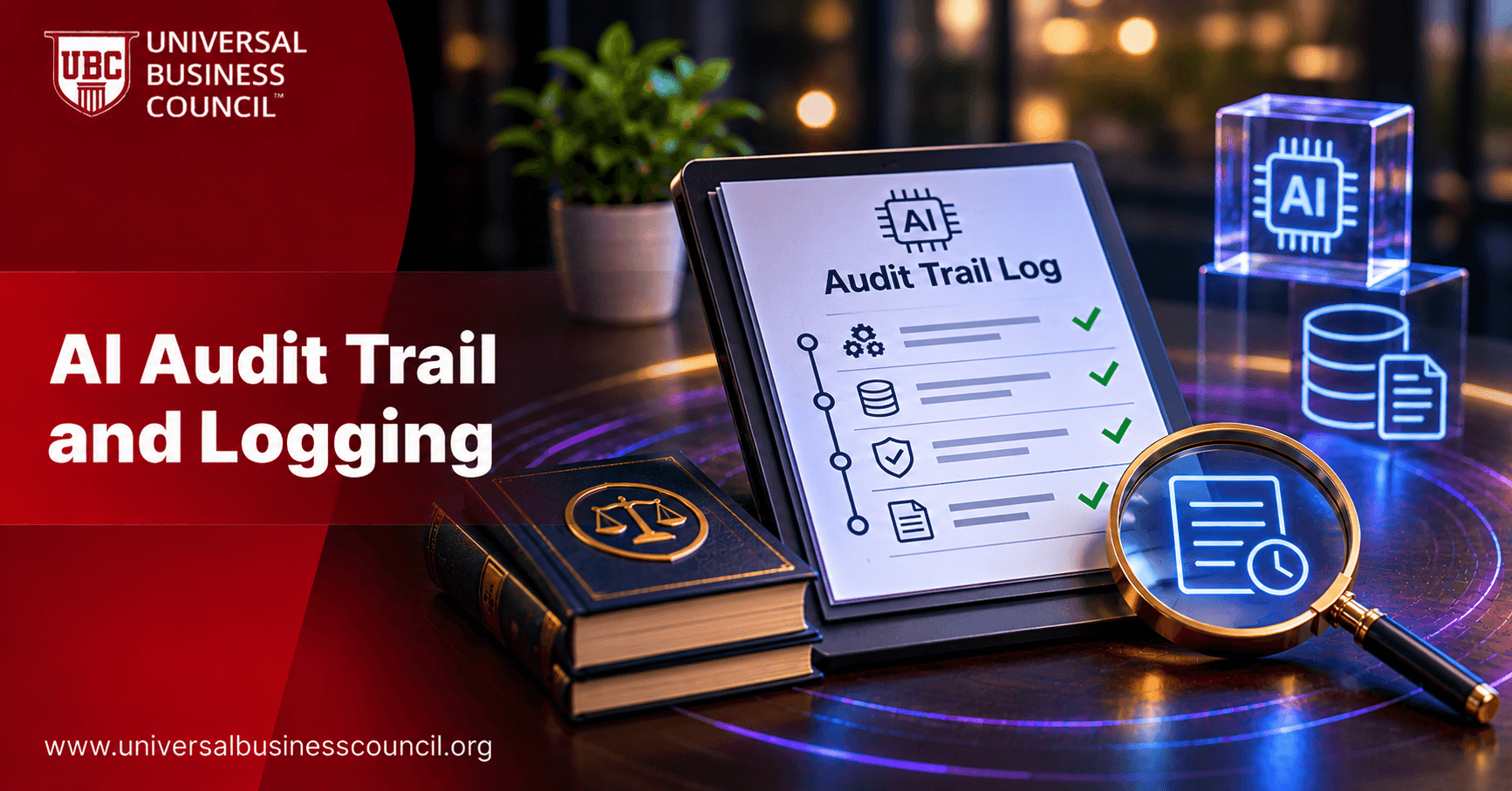
Logs are the memory of an AI system. Without them, nobody can say which model version produced a decision, what data it saw, whether a human intervened or what changed between last month's behavior and this month's. Auditors, regulators and incident responders all ask the same thing in different words: show me what happened. This guide sets out the requirements for AI audit trails and logging, covering what to record, how to design logs that are useful and lawful, how to keep them trustworthy and how auditors test them. If you want to build audit skills around evidence like this, see the Certified AI Audit Professional certification.
What is an AI audit trail?
An AI audit trail is a chronological, tamper-resistant record of events and decisions that lets someone reconstruct how an AI system was built, changed, operated and overseen. Logging is the technical practice of capturing those events. Traceability is the outcome: the ability to follow a given output back through the model, data, configuration and people involved.

Why logging requirements matter
Several forces drive them.
Laws and standards increasingly expect record keeping for higher-risk AI
People may have rights to explanation, review or correction of automated decisions
Incident investigations stall without reliable records
Audits need evidence that controls operated, not just existed
Insurers and customers ask for proof of accountability
What to log
Organize logging requirements by lifecycle layer.
Development and release events
Record dataset versions and sources, code and configuration versions, training runs and parameters, test results, approvals, release dates and the people who made and authorized changes. Link each model version to the evidence that justified its release.
Operational events
For each decision or interaction, record a unique identifier, timestamp, model and version, input reference, output or score, confidence where relevant, any rules or guardrails triggered, and the identity of the system or user involved. For decisions affecting individuals, ensure that you can retrieve and explain a specific case.
Human oversight events
Record when a person reviewed, approved, edited or overrode an output, who they were and the stated reason. This is the evidence that oversight is real. A near-zero override rate with no reasons recorded invites scrutiny.
Agent and tool activity
For AI agents, log goals, plans, each tool called, data accessed, approvals requested and outcomes, so a chain of actions can be reconstructed end to end.
Security and access events
Log authentication, permission changes, access to sensitive data, administrative actions, failed attempts and security alerts, including prompt injection detections.
Monitoring and incident events
Record monitoring alerts, threshold breaches, incident reports, response actions, notifications sent and post-incident reviews.
Design requirements for useful logs
More logging is not automatically better. Good design makes logs usable and safe.
Consistency and linkage
Use common identifiers for systems, model versions, users and decisions, so records can be joined across tools. Standardize formats and timestamps, with synchronized clocks. Engineers who build these pipelines benefit from sound technical foundations, which many develop through tech certifications.
Privacy by design
Logs of prompts, inputs and outputs can contain personal or confidential information. Minimize what you store, mask or tokenize sensitive fields, restrict access by role and set retention periods tied to purpose and law. Privacy rules apply to logs just as they do to the original data.
Retention and availability
Define how long each log type is kept, based on legal, contractual and operational needs. Ensure logs remain retrievable within a reasonable time, and plan deletion at the end of retention.
Performance and cost
Log what answers real questions. Excessive detail adds cost and noise. Use tiers: detailed logs for high-risk systems, lighter logs for low-risk ones.
Integrity requirements
A log that can be quietly edited is not evidence.
Protect against tampering
Use append-only or write-once storage, restricted write permissions, separation between those who generate logs and those who administer them, and cryptographic techniques such as hashing and signing. Ledger-style approaches can provide tamper-evident timestamps, and related concepts appear in deep tech certifications.
Attribute actions to individuals
Avoid shared accounts. Tie actions to authenticated users or system identities, so accountability is traceable.
Monitor the logging itself
Alert on gaps, failures and unexpected changes in logging. A silent logging outage can erase the very evidence you will need later.
How auditors test logging
Expect auditors to check both design and operation.
Trace a decision
They will pick a past decision and try to follow it from the outcome back to the data, model version, approval and human actions. Gaps in the chain become findings.
Test completeness and integrity
They may compare logs against other sources, test whether entries can be altered or deleted and review access to log systems.
Check retention and privacy
They will compare actual retention with policy and law, and review who can read sensitive logs. Confirm that administrators and auditors with log access have the qualifications they claim, using services such as HireValid.
Describe capabilities honestly
Avoid claiming "complete traceability" or "full transparency" if records are partial. A digital marketing course can help communications teams explain safeguards precisely.
Conclusion
AI audit trails and logging requirements cover development and release events, operational decisions, human oversight, agent activity, security events and monitoring and incident records. Design logs for consistency, privacy, sensible retention and cost, and protect their integrity with append-only storage, signing and individual attribution. Expect auditors to trace real decisions end to end, so test that ability before they do.
Frequently asked questions
These are the questions people ask most about AI logging and audit trails.
1. What is an AI audit trail?
A tamper-resistant record that lets you reconstruct how an AI system was built, changed and operated.
2. What should be logged for AI decisions?
Identifier, timestamp, model version, input reference, output, guardrail triggers and reviewer actions.
3. Why log human overrides?
They show that human oversight is real.
4. What extra logging do AI agents need?
Goals, plans, tool calls, data accessed and approvals.
5. Are prompts and outputs personal data?
They can contain it, so apply privacy controls.
6. How do I protect logs from tampering?
Use append-only storage, restricted permissions, hashing and signing.
7. Is blockchain required for logging?
No, but ledger techniques can add tamper evidence.
8. How long should logs be kept?
As long as legal, contractual and operational needs require, then deleted.
9. Why synchronize clocks?
So event sequences are credible and comparable.
10. What is traceability?
The ability to follow an output back to the model, data and decisions behind it.
11. Should I log everything?
No. Log what answers real questions, scaled to risk.
12. How do auditors test logging?
By tracing decisions, checking completeness and integrity and reviewing access.
13. What if logs have gaps?
Auditors record it as a finding and limit conclusions accordingly.
14. Who should access logs?
Only authorized roles, with access reviewed regularly.
15. Do vendors provide logs?
Ask what logs and version data they offer, and put it in contracts.
16. How are logs used in incident response?
To reconstruct events and find root causes.
17. Can logs support individual rights requests?
Yes, by retrieving the data and factors behind a decision.
18. What are shared accounts a problem?
They break individual accountability.
19. Should logging failures trigger alerts?
Yes, because outages can erase needed evidence.
20. How often should logging be reviewed?
Regularly and when systems, laws or risks change.
Related Articles
View All
Artificial Intelligence
AI Compliance Audit: How to Review Regulatory Requirements
Learn how an AI compliance audit helps organizations review regulatory requirements and assess whether their AI systems meet applicable legal and industry standards. Explore key audit steps, compliance checks, documentation, and ways to identify and address regulatory gaps.

Artificial Intelligence
AI Traceability and Audit Trails: Building Evidence for Accountability
Explore how AI traceability and audit trails help organizations document AI activities and establish accountability. Learn what information to record, how to track data sources, model changes, decisions, and system activity, and how reliable audit records support transparency, compliance, and responsible AI governance.

Artificial Intelligence
AI Security Audit: Assessing Models, Data, APIs and Infrastructure
Learn how an AI security audit evaluates the protection of AI systems against cyber threats, vulnerabilities, and unauthorized access. Explore key audit areas, including data security, model protection, access controls, adversarial attacks, and system vulnerabilities, along with methods for identifying risks and strengthening AI security.
Trending Articles
The Role of Blockchain in Ethical AI Development
How blockchain technology is being used to promote transparency and accountability in artificial intelligence systems.
AWS Career Roadmap
A step-by-step guide to building a successful career in Amazon Web Services cloud computing.
Top 5 DeFi Platforms
Explore the leading decentralized finance platforms and what makes each one unique in the evolving DeFi landscape.