

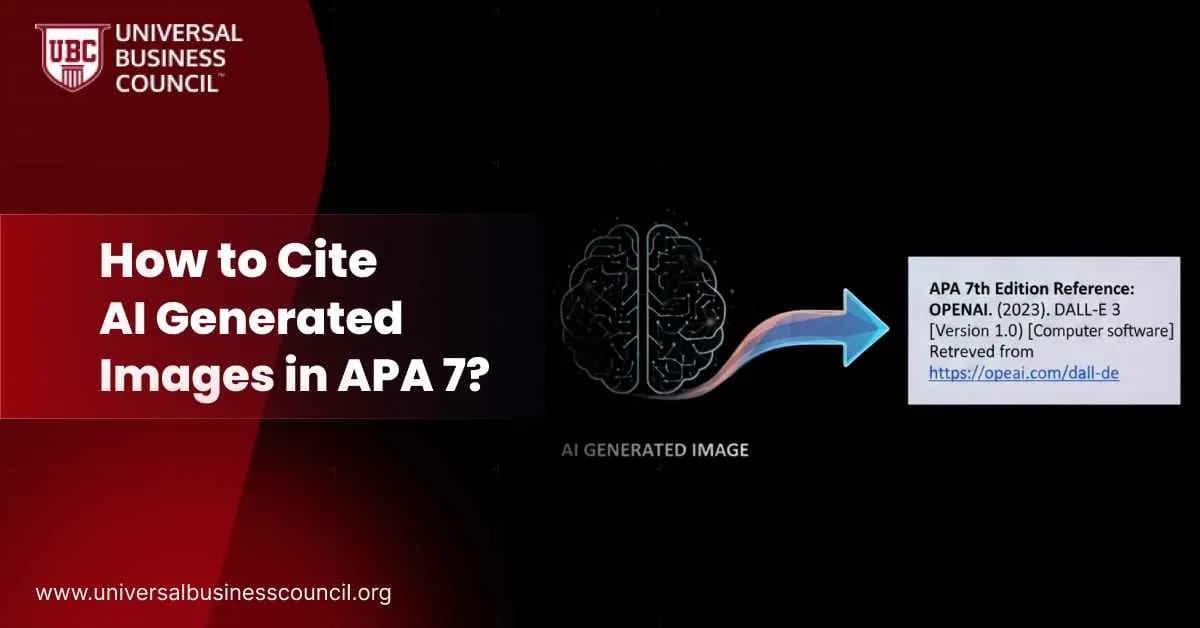
How to Cite AI-Generated Images in APA 7?

How APA 7 approaches images
APA 7 does not treat images as special or separate sources by default. It treats them as figures. Every figure in APA 7 follows the same core structure:- A figure number in bold
- A figure title in italics written in Title Case
- The image itself
- A figure note, when explanation or attribution is needed
The principle that clears most confusion
APA 7 does not yet have a dedicated page that says “This is exactly how to cite AI-generated images.” Instead, institutions rely on an underlying rule that already exists. If a reader cannot independently retrieve the exact same image, you usually do not place it in the reference list. You explain it in the figure note. That single idea explains why some AI images need references and others do not.What you should record when generating an AI image
Before thinking about formatting, you should capture a few details at the moment the image is created. These details matter for academic honesty and future clarification. You should always record:- The name of the AI tool
- The organization or company behind the tool
- The date the image was generated
- The exact prompt used
- Any share link, image ID, or output reference if one exists
The most common APA 7 method used in coursework
For most assignments, the expected approach is figure-note disclosure only. This method applies when:- You generated the image yourself
- The image is not publicly accessible
- There is no stable URL others can open
When the AI tool itself must be referenced
Some departments, especially in technical or research-oriented programs, ask students to cite the AI tool as software. In this case, you do two things:- Keep the full figure note with prompt disclosure
- Add a reference list entry for the AI tool
Publicly accessible AI-generated images
The rules change slightly when an AI-generated image can be accessed by others. This applies if:- The image appears on a public website or report
- There is a stable share link
- The reader can view the same image you used
- The figure note still discloses that the image was AI-generated and includes the prompt
- The reference list includes a citation pointing to the page where the image is hosted
Why prompts matter more than people expect
In traditional image citation, the creative process is rarely visible. With AI images, the prompt is the creative input. Including the prompt:- Shows academic honesty
- Clarifies intent
- Explains stylistic or conceptual choices
- Reduces suspicion about misuse
Common mistakes that cause problems
Most issues around AI image citation do not come from using AI. They come from poor disclosure. The most frequent mistakes include:- Not naming the AI tool
- Leaving out the prompt
- Treating the image like a stock photo
- Forgetting that figure notes must begin with “Note.”
- Trying to hide AI use instead of explaining it
Using APA-style figures in slides and presentations
When APA style is applied to slides:- Place a short figure note directly below the image
- Put the full prompt and details in speaker notes or an appendix slide
- Keep formatting consistent across the deck
Final takeaway
Citing AI-generated images in APA 7 does not require new rules or guesswork. AI images are treated as figures. Disclosure usually belongs in the figure note. References are only required when retrieval is possible. Prompts matter for transparency and integrity. When you are unsure, disclose more rather than less. That habit aligns with APA 7 principles and protects you in almost every academic situation involving AI-generated images.Related Articles
View All
Artificial Intelligence
Gemini 4 Argon: Features, Pricing, and Availability
Gemini 4 Argon is Google’s new flagship AI model for coding, science, finance, law and security. See its main features, API and subscription pricing, and where you can access it today.
Artificial Intelligence
What Is Meta Muse Wonder? Features and How It Works
Meta Muse Wonder is a new frontier AI model built for agents with Active Memory and Active Focus. Learn what it is, how it works, its features, pricing and how to access it.
Artificial Intelligence
What Is Google Playground? Features and How It Works
What is Google Playground? Learn how Google's new AI platform turns text prompts into playable browser games, which models power it, its features, pricing and access, Unity Spark plans, rival tools, and limits.
Trending Articles
The Role of Blockchain in Ethical AI Development
How blockchain technology is being used to promote transparency and accountability in artificial intelligence systems.
AWS Career Roadmap
A step-by-step guide to building a successful career in Amazon Web Services cloud computing.
Top 5 DeFi Platforms
Explore the leading decentralized finance platforms and what makes each one unique in the evolving DeFi landscape.