

Google ADK

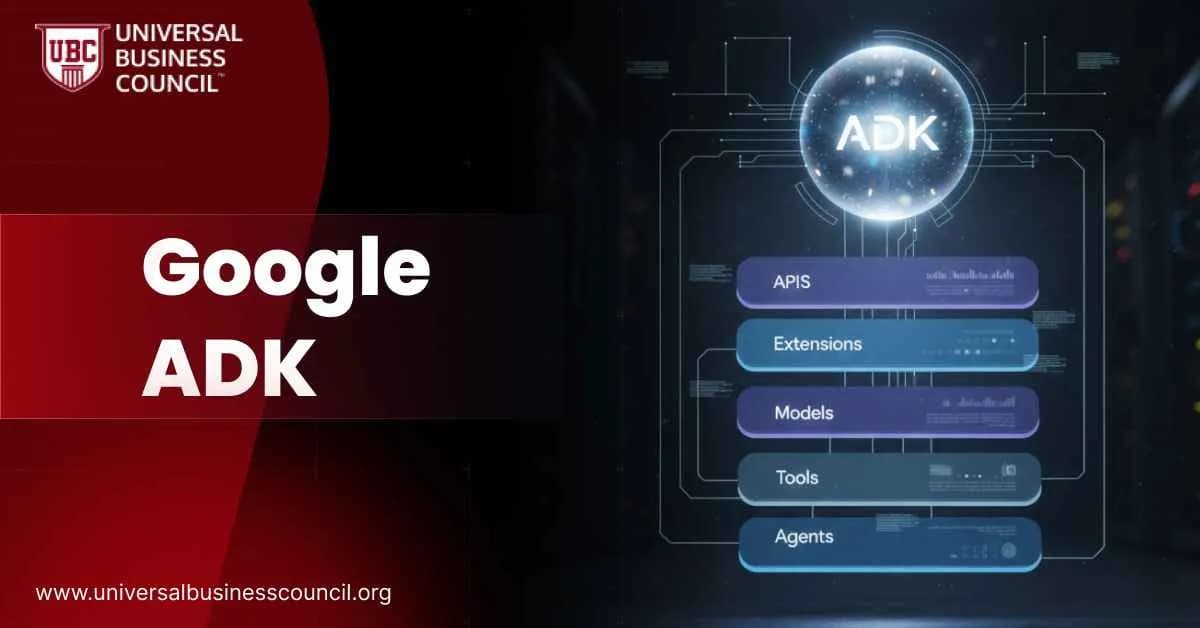
What Google ADK Actually Is and Why Google Needs It
Google ADK appears to be a modern reimagining of the concept behind Google’s earlier hardware kits. In the past, Google offered an Android ADK toolkit that allowed developers to attach sensors, physical controls and accessories while integrating them with Android devices. The new ADK concept is not a continuation of that old project. The purpose now is entirely shaped by AI. From early insights and public signals, Google ADK refers to an AI Device Kit that gives developers a way to build small intelligent gadgets powered by Google’s on device AI. The goal is to create a new category of simple consumer or commercial devices where AI is not just an app but a built in system level brain. Why does Google need this? Three major trends explain it.1. The world is shifting to on device AI
Users want devices that can run speech recognition, translation, image understanding and summarisation without sending all data to the cloud. This improves privacy, speed and cost.2. Agentic behaviour is becoming mainstream
People expect AI systems to perform tasks without constant prompts. Google wants to support developers who need hardware that can act on its own in small contexts.3. Hardware is the next strategic battlefield
Apple is expected to bring more AI capabilities into the iPhone. Meta is pushing deeper into smart glasses. OpenAI is collaborating on AI enabled hardware accessories. Google cannot sit still. By offering ADK, Google creates a platform where developers can build prototypes that eventually scale into consumer ready AI enabled products.Capabilities Expected From Google ADK
Google’s recent developer conferences and AI model announcements hint at several capabilities that an AI device kit would support.1. On device multimodal reasoning
The kit is expected to run scaled down versions of Gemini Nano and Gemini Flash. These models can:- understand images
- process speech
- summarise conversations
- classify objects
- generate text
- support contextual reasoning
2. Audio input processing
Google’s latest work with the AudioJet architecture shows extremely fast microphone to inference processing. Devices powered by ADK could:- detect commands
- capture environmental context
- extract structured information from sound
3. Local Vision
With Google’s vision encoders becoming more efficient, ADK devices may be able to:- detect objects
- recognise gestures
- understand printed text
- localise themselves indoors
4. Low power neural processing
Google has been working on low power AI models for wearable and embedded devices. ADK is expected to use the same optimised frameworks so developers can build battery friendly prototypes.5. Integration with Android, ChromeOS and WearOS
Google is gradually turning these operating systems into AI native environments. ADK would provide a bridge so that developers can create devices that talk to phones, TVs, laptops and watches.What Developers Can Build With Google ADK
Google ADK opens many creative possibilities. These examples represent realistic first wave applications developers may attempt.Smart desk assistants
A device that listens only to work related commands, schedules tasks, reads snippets of documents and interacts with work apps without needing a phone.Educational mini gadgets
Portable learning assistants that help children with spelling, language practice or science questions.Safety and monitoring tools
Low cost devices that monitor noise levels, detect distress signals or recognise unusual activity in small environments.Retail automation devices
Shelf monitoring tools that track stock levels, customer movements or product interactions.Personal AI companions
Small always available accessories that offer reminders, summaries and suggestions without requiring screens.Healthcare support devices
Medication reminders, voice recognition based check in tools and small AI powered monitoring devices. The purpose of ADK is to create a world where AI is not only on phones and laptops but embedded in simple physical objects that perform one job well.Why This Time Is Different From Past Google Hardware Efforts
Google has a history of launching experimental hardware frameworks that did not achieve wide adoption. However, the ecosystem has now changed.AI is an essential feature, not an experiment
Past gadget kits required developers to manually code complex logic. With modern AI, developers can rely on pretrained models and focus on using device capabilities.On device models are now powerful
Earlier hardware kits lacked strong local computing. Gemini Nano and similar models unlock new possibilities.The AI device market is forming
Companies are building AI pins, AI wearables and AI glasses. Google has market timing in its favour.Google’s AI strategy is unified
Gemini is becoming the core of everything Google builds. ADK fits neatly into that strategy. Organisations that understand this transformation often evaluate technical feasibility and integration using knowledge gained from the Tech certification. This helps teams plan whether ADK aligned applications can be deployed at scale or built as supplementary AI solutions.How ADK Fits Into Google’s Agentic Vision
Google is transitioning from a search first company to an agent first ecosystem. Gemini 3, Gemini Flash, Gemini Nano, Ask Photos and the Compute Packs strategy indicate that Google wants AI to perform tasks proactively rather than respond to isolated prompts. ADK supports this shift by letting developers build devices that can:- observe
- understand
- reason
- act
The Technical Structure Behind Google ADK
While Google has not released official documentation yet, the expected structure of ADK includes:A baseboard
Containing a microphone, small camera, low power processor and neural compute unit.On device model loader
A software layer that loads Nano sized versions of Gemini models.Modular ports
To allow custom sensors like:- proximity
- thermal
- vibration
- environmental gas sensors
A programming interface
Google may use a variation of:- Android Things
- Fuchsia microframework
- A lightweight Gemini agent SDK
Cloud optional features
Developers would be able to connect devices to Google Cloud if more processing is needed, but the core functions would work offline.Market Impact and Industry Opportunities
If Google ADK launches officially, several industries could benefit.Consumer electronics
Startups could build low cost AI gadgets that supplement smartphones.Smart homes
Home automation brands could build specialised AI devices that understand home context more accurately.Healthcare
Local AI devices can help with elderly support, medication schedules and patient monitoring.Retail and logistics
Real time sensors with on device reasoning allow better inventory management and customer flow analysis.Education
Portable teaching tools powered by ADK could help students practice lessons without needing high cost devices.Challenges Google Must Solve
For ADK to succeed, Google must address:- developer adoption
- consistent documentation
- hardware cost
- manufacturing partnerships
- privacy and security requirements
- long term support
Conclusion
Google ADK signals a new era for AI powered physical devices. It represents Google’s intention to encourage developers to build new categories of tools where intelligence lives inside compact hardware that performs a specific task with efficiency and autonomy. This aligns with the global shift toward agentic systems, increased privacy expectations and local computation. The marketing lens helps organisations understand where AI devices create real value through programs like the Marketing and business certification. Companies assessing the technical foundations to support such AI hardware innovations often rely on solid fundamentals such as those taught in the Tech certification. Professionals looking to push deeper into intelligent device design and reasoning workflows use advanced learning paths such as the deep tech certification. If Google continues to refine ADK and supports it with strong developer tools, it has the potential to open a new frontier in the way we use, build and interact with AI in the physical world.Related Articles
View All
Artificial Intelligence
What Is Google Playground? Features and How It Works
What is Google Playground? Learn how Google's new AI platform turns text prompts into playable browser games, which models power it, its features, pricing and access, Unity Spark plans, rival tools, and limits.

Artificial Intelligence
Can Google Gemini Improve Itself Through Recursive Self-Improvement?
Explore whether Google Gemini can improve itself through recursive self-improvement, how Gemini-powered systems already support iterative learning and optimization, and what still separates them from true autonomous RSI.
Artificial Intelligence
Gemini 4 Argon: Features, Pricing, and Availability
Gemini 4 Argon is Google’s new flagship AI model for coding, science, finance, law and security. See its main features, API and subscription pricing, and where you can access it today.
Trending Articles
The Role of Blockchain in Ethical AI Development
How blockchain technology is being used to promote transparency and accountability in artificial intelligence systems.
AWS Career Roadmap
A step-by-step guide to building a successful career in Amazon Web Services cloud computing.
Top 5 DeFi Platforms
Explore the leading decentralized finance platforms and what makes each one unique in the evolving DeFi landscape.