

How to Become a Customer Success Manager

There is no single degree that leads to customer success. That is both the challenge and the good news. People arrive at this career from support desks, sales teams, teaching jobs, marketing roles, and even hospitality. If you are wondering how to become a customer success manager, the path is wider than you might expect, and you probably own more of the skills than you think. This guide lays out the steps, the skills, and the habits that get people hired, with a marketing lens throughout. And if you want a structured way to prove your skills, the Certified Customer Success Professional certification is a strong place to start.
What Is a Customer Success Manager?
A customer success manager, or CSM, is the person responsible for how customers do after they buy. They guide onboarding, track account health, plan renewals, and make sure customers get real, lasting value from the product or service.

The key word is proactive. A CSM does not wait for a complaint. They reach out first, spot trouble early, and look for ways to help customers get more from what they bought.
Day to day, a CSM might:
Run training and onboarding sessions
Review product usage and flag slow adoption
Check customer health scores
Prepare for renewals and upgrade conversations
Carry customer feedback back to product and marketing
Think of it as marketing that carries on after the sale.
Why This Career Is Worth Considering
Companies have learned that keeping customers costs less than winning new ones. That has made customer success a steady, growing field across software, fintech, e-commerce, education, and subscription businesses.
There is a marketing reason too. A CSM turns happy customers into reviews, referrals, and case studies, which make campaigns cheaper and more believable. They also hear the exact words customers use, which sharpens messaging. If you enjoy people, problem-solving, and seeing real results, the role offers all three.
It also pairs well with marketing knowledge. Understanding retention, and not only reach, gives you an edge, which is why a digital marketing expert certification fits well alongside a customer success path.
Skills You Need
People skills
Listening: hearing what the customer really means, not just what they say
Empathy: staying calm and kind when someone is frustrated
Clear communication: explaining complex things in simple words
Persuasion: guiding customers toward better habits without pushing
Business skills
Planning: managing many accounts without letting any slip
Problem-solving: finding the root cause, not just patching symptoms
Commercial sense: understanding renewals, upgrades, and why they matter
For businesses hiring customer success managers, HireValid can support the recruitment process through background verification, helping employers make more informed hiring decisions.
Data and tech skills
Comfort with numbers matters more each year. CSMs read usage reports, track churn, and build simple health scores. Many also support technical products, so picking up tech certifications helps them understand what they are guiding customers through and speak the same language as technical users.
How to Become a Customer Success Manager, Step by Step
Step 1: Understand the role properly
Read job descriptions from several companies. Notice the repeated phrases: onboarding, adoption, retention, renewal, health score. Learn how the role differs from support, account management, and sales, so you can talk about it clearly in interviews.
Step 2: Learn the core concepts
Get comfortable with the vocabulary and metrics:
Churn rate
Net Promoter Score (NPS)
CSAT
Customer health score
Net revenue retention
Customer lifecycle stages
Customer health score
This combines usage, support tickets, survey results, and engagement into one signal. A falling score gives the CSM time to step in before the customer leaves.
Net revenue retention
When this passes 100%, existing customers are spending more than you lose to churn. Being able to explain it simply will impress interviewers.
Step 3: Build relevant experience
You can start before you have the title. Look for roles or projects that involve customers directly:
Customer support or customer service
Sales or business development
Teaching, training, or coaching
Account coordination or operations
Marketing roles that involve customer feedback
Each of these builds skills a CSM uses daily. Frame them that way on your resume.
Step 4: Get hands-on with tools
Learn the basics of a CRM, a survey tool, and a spreadsheet. Many offer free versions or trials. Being able to say you have tracked a simple health score or built a renewal tracker puts you ahead of most applicants.
Step 5: Earn a certification
A certification shows commitment and gives you a framework to speak from. It will not replace experience, but it helps you stand out, especially when you are switching careers.
Step 6: Build a small portfolio
You do not need a long list of past CSM jobs. Show your thinking instead:
A sample onboarding plan for a made-up product
A one-page customer health score outline
A short renewal conversation script
A case study about how you helped a customer, colleague, or client reach a goal
Keep each to a page. Clear and simple beats long and fancy.
Step 7: Write a resume that shows outcomes
Replace task lists with results. Instead of "answered customer emails," write what changed: faster resolution, higher satisfaction, fewer repeat issues, or accounts kept. Numbers help, but only use real ones.
Step 8: Prepare for interviews
Expect questions like:
How would you onboard a new customer?
How do you handle an angry customer?
How would you spot an account at risk?
How do you balance many accounts at once?
Prepare short stories with a clear problem, action, and result. Practice out loud.
Step 9: Apply smartly and keep growing
Look at entry-level CSM, associate CSM, customer success associate, or onboarding specialist roles. Once you are in, keep learning. Ask for feedback, shadow senior CSMs, and take on bigger accounts over time.
Backgrounds That Lead Into Customer Success
You do not need to follow one road. Common starting points include:
Customer support, which gives deep product and customer knowledge
Sales, which builds comfort with relationships and renewals
Teaching or training, which builds patience and clear explanation
Marketing, which brings customer insight and messaging skill
Operations or project coordination, which builds planning habits
If your background is different, look for the overlap. Most jobs involve helping someone reach a goal.
Brand Examples: What Good Work Looks Like
Here are a few everyday pictures of CSM work, kept general on purpose. Use them to shape your portfolio and interview answers.
A software company: the CSM runs a setup call in week one and a usage review in month three, so customers adopt more features.
A subscription box brand: the CSM notices a customer skipping deliveries and offers a lighter plan before they cancel.
A fitness app: the CSM sends a small, goal-based nudge to a member who has gone quiet.
An online course platform: the CSM checks in with learners who stopped halfway and suggests a shorter path.
In each case, marketing and customer success work together. The promise made in the campaign is kept in the experience.
Common Mistakes to Avoid
Thinking it is only support. The role is proactive and strategic.
Skipping the metrics. Interviewers expect you to talk about churn, NPS, and health scores.
Listing duties instead of results. Show what changed because of your work.
Waiting for the perfect background. Many CSMs started somewhere else.
Ignoring tools. Basic CRM and spreadsheet skills go a long way.
Forgetting to network. Talk to current CSMs. Many hires come through conversations.
Where the Career Is Heading
AI is already changing the work. Tools can predict churn, draft check-in messages, and answer routine questions. That frees CSMs for the conversations that need empathy and judgment.
Products are also getting more advanced, built on AI, blockchain, and other fast-moving tech. CSMs who understand what they support earn more trust. Exploring deep tech certifications is one way to keep pace. Technology can spot a problem. A person still has to care enough to fix it.
Conclusion
So, how to become a customer success manager? Start by understanding the role properly: a proactive job that guides customers through onboarding, adoption, renewal, and growth. Learn the core concepts and metrics, including churn rate, NPS, CSAT, customer health score, and net revenue retention. Build experience from wherever you are now, whether that is support, sales, teaching, marketing, or operations, and frame it around customer outcomes.
Get hands-on with a CRM and a spreadsheet, earn a certification to show commitment, and build a small portfolio with a sample onboarding plan, a health score outline, and a short case study. Write a resume that shows results, not duties, and prepare real stories for interviews.
Marketing knowledge strengthens the path. CSMs turn happy customers into reviews, referrals, and case studies, and they carry customer language back into campaigns. Avoid the common traps: treating the role as support, skipping metrics, and waiting for a perfect background. As AI takes over routine tasks, the human side of the job becomes more valuable, not less. Nobody arrives at customer success on a straight road. The ones who stay are the ones who genuinely want the customer to win.
FAQs
1. How do I become a customer success manager?
Learn the role and metrics, build relevant experience, get hands-on with tools, earn a certification, and apply for entry-level CSM roles.
2. Do I need a degree to become a CSM?
Not always. Many employers value relevant experience, communication skills, and certifications.
3. What background is best for customer success?
Support, sales, teaching, marketing, and operations all lead naturally into the role.
4. Can I become a CSM with no experience?
Yes, through entry-level roles, related experience, a certification, and a small portfolio.
5. What skills does a CSM need?
Listening, empathy, communication, planning, problem-solving, and comfort with data.
6. What does a customer success manager do?
They guide onboarding, track account health, plan renewals, and help customers reach their goals.
7. Which certifications help?
Customer success certifications show commitment and give you a framework to talk from in interviews.
8. What tools should I learn?
A CRM, a survey tool, a spreadsheet, and basic analytics dashboards.
9. What entry-level titles should I look for?
Customer success associate, associate CSM, onboarding specialist, or customer success coordinator.
10. How long does it take to become a CSM?
It varies, but many people make the move within several months of focused learning and applying.
11. How should I write my resume for CSM roles?
Focus on outcomes like satisfaction, retention, and issues solved, not just daily tasks.
12. What should be in a customer success portfolio?
A sample onboarding plan, a health score outline, a renewal script, and a short case study.
13. What interview questions should I expect?
How you onboard customers, handle angry ones, spot at-risk accounts, and manage many accounts.
14. Is customer success the same as customer support?
No. Support fixes problems when asked, while customer success works ahead of problems.
15. Is customer success a good career?
Yes. Demand is steady across industries, and the role offers room to move into leadership.
16. Can I switch from marketing to customer success?
Yes. Marketers bring customer insight and messaging skills that CSM teams value.
17. Do CSMs need technical skills?
Basic comfort with software and data helps, especially for technical products.
18. Can I work remotely as a CSM?
Yes. Many CSM roles are remote or hybrid, since much of the work happens through calls and tools.
19. What is the career path after CSM?
Senior CSM, team lead, head of customer success, or related leadership roles.
20. How is AI changing the CSM role?
AI predicts churn and handles routine tasks, so CSMs can focus on deeper customer relationships.
Related Articles
View All
Business
Do you need a certification to become a customer success manager? An honest answer
Do you need a certification to become a customer success manager? This guide explains what employers look for, how certifications can support your career, which practical skills matter most, and when earning a credential is worth considering.
Business
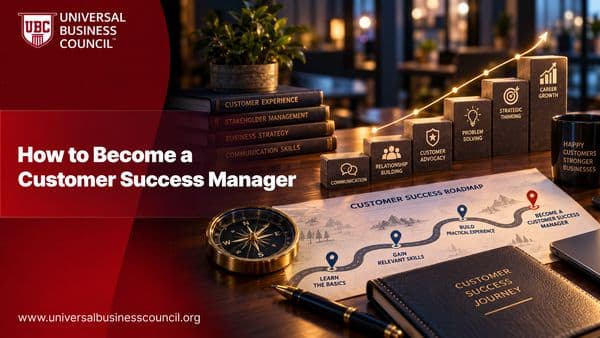
How to Become a Customer Success Manager Without Experience
Want to become a customer success manager without experience? Discover the essential skills to develop, transferable experience to highlight, certifications to consider, and practical steps to land your first customer success role.

Business
Customer Success Manager vs Account Manager: Career Comparison
Explore the differences between customer success managers and account managers, from daily responsibilities and essential skills to salary potential, career progression, and long-term growth opportunities.
Trending Articles
The Role of Blockchain in Ethical AI Development
How blockchain technology is being used to promote transparency and accountability in artificial intelligence systems.
AWS Career Roadmap
A step-by-step guide to building a successful career in Amazon Web Services cloud computing.
Top 5 DeFi Platforms
Explore the leading decentralized finance platforms and what makes each one unique in the evolving DeFi landscape.