

Do you need a certification to become a customer success manager? An honest answer
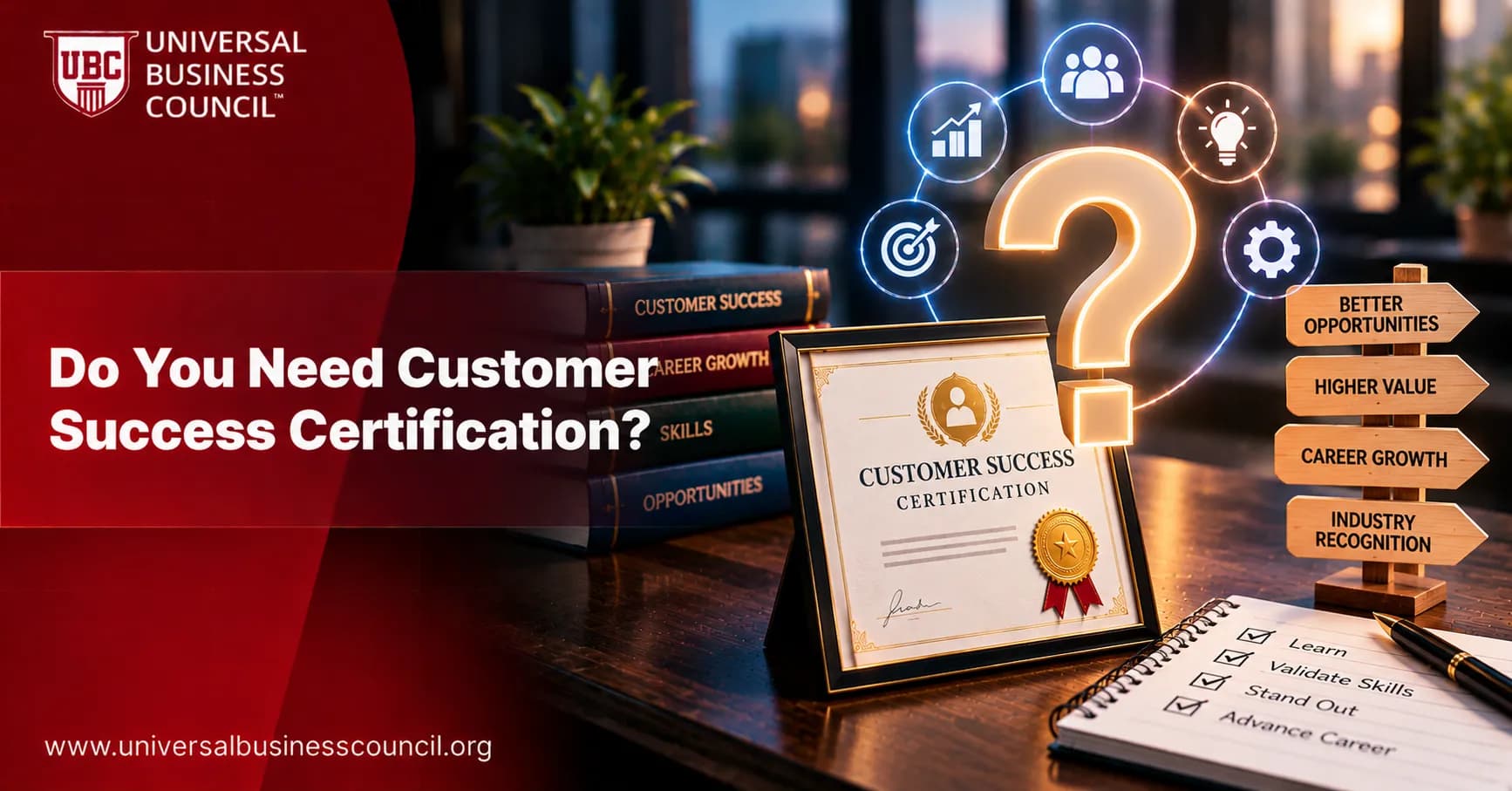
Customer success has become a career that people move into from support, sales, marketing and operations, and many of them reach the same decision before they apply: spend time and money on a credential first, or go straight to the job search? Job posts, forums and career guides give different answers, which makes the choice harder than it should be.
This guide looks at what a customer success manager does, how employers hire for the role, where a certification fits and how to build a path into your first position. If a structured program is on your shortlist, the Certified Customer Success Professional program from Universal Business Council is one place to build the foundations.

What is a customer success manager?
A customer success manager, or CSM, is responsible for making sure customers achieve the outcomes they bought a product or service for. The title also appears as client success manager, and the daily work mixes onboarding new accounts, checking how customers are using the product, running business reviews and preparing renewals.
It's usually not an entry-level role. Most people don't start as a CSM, and a common first step is a customer success associate role handling smaller accounts under a senior CSM's guidance. Others arrive from support, sales or account coordination, and knowing that route matters because it shapes what employers expect you to show.
Do you need a certification? The honest answer
Most companies don't require formal certification for a CSM role. What they do ask for varies by employer, so the requirements section of a job post tells you more than any general rule. Education is mixed as well. Some sources say many companies want at least a bachelor's degree for these roles, while others say you don't necessarily need one, and that relevant experience can give you an edge.
Experience carries the most weight. Many CSM postings ask for two to three years of relevant experience, which is why a certification alone rarely opens the door. It works better as support for experience than as a replacement for it.
When a certification helps
A certification is most useful in a few situations:
You're switching careers and have no direct customer success experience
You work in support or sales and need to show you understand retention and adoption
Your target employer uses a specific platform and values that vendor's credential
You want a structured way to learn the lifecycle and metrics instead of picking them up piece by piece
In each case it does a job: it fills a gap, or it gives a hiring manager a reason to take a closer look. Vendor credentials are common too, and platform providers such as Gainsight offer several levels of certification.
When it won't help much
A certification won't make up for weak communication skills, won't guarantee interviews and won't impress anyone if you can't explain what you learned. Employers notice the difference between holding a credential and having used the skills. If you've never worked with customers, a certificate is a start, but you still need examples of working with people.
What employers look for instead
Hiring managers look for evidence that you can do the work. Clear writing and calm conversation come first, because the job is built on them. Next comes comfort with data. One career guide notes that mid-level CSM roles increasingly ask for demonstrated experience with health scoring models, renewal forecasting and cross-functional project management. Experience with a CRM or a customer success platform helps too.
Your background can come from many places. Support agents already know customers' problems well, and salespeople know the commercial side. Marketers understand messaging and advocacy, and anyone coming from that route can sharpen campaign and referral skills in a Digital Marketing Course. The common thread is a story you can tell about a customer you helped and what changed as a result.
A practical path to your first CSM role
You don't need to wait for a perfect credential. A mix of experience, learning and proof of work moves you forward faster.
Get close to customers in any role, such as support, sales, onboarding or account coordination
Learn the basics of the lifecycle, health scores and retention measures
Build a small portfolio with a sample onboarding plan, a mock health score and a renewal checklist
Get comfortable with data and tools, since CRM and analytics skills show up in most job posts
Add a certification where you have gaps, and apply to associate or junior roles first
For the data side, the Tech Certifications from Global Tech Council cover programming and data skills that help you work with usage and account information.
Customer success roles exist at companies of every kind, including fintech and blockchain firms where teaching customers is part of the job. The Deep Tech Certifications from Blockchain Council can help you speak that language if you're aiming at those sectors.
How to judge whether a certification is worth it
If you decide to certify, treat it like any other purchase. Look at what you get, what it costs in time and money, and who recognizes it. Programs come from software vendors, training providers and professional bodies, so quality and focus differ.
A syllabus that covers lifecycle, communication, data, commercial and tool skills
Practice work such as case studies, role-plays or account plans
An assessment that tests application, not only memory
Clear eligibility, cost, format and renewal terms
Recognition among the employers you want to work for
Vendor credentials make sense if you'll work on that vendor's platform, while broader programs suit people who are still deciding. Either way, finish with something to show: a plan, a score model or a case you can talk through in an interview.
Conclusion
So, do you need a certification to become a customer success manager? No. Experience, communication and comfort with data matter most, and most companies don't ask for a formal credential. A certification works best as support for those strengths, especially if you're switching careers, moving over from support or sales, or want a structured way to learn the lifecycle. Use it to fill a gap, pair it with proof of work and apply to roles that fit where you are now.
Frequently asked questions
Do you need a certification to become a customer success manager?
No. Most companies don't require a formal certification, though it can help in some situations.
Do you need a degree to become a CSM?
It's mixed. Some employers want a bachelor's degree, while others accept relevant experience.
Is customer success manager an entry-level role?
Usually not. Most people come from related roles or start as a customer success associate.
What experience do employers want?
Many postings ask for two to three years of relevant experience.
What entry-level roles lead to CSM?
Customer success associate, account coordinator and support roles are common starting points.
Can I become a CSM from customer support?
Yes. Support gives you real customer experience, and you can add retention and renewal skills.
Can I switch to CSM from sales?
Yes. Your commercial skills carry over, and you can add onboarding and adoption knowledge.
Can I switch to CSM from marketing?
Yes. Messaging and advocacy skills help, and you can add lifecycle and data skills.
Does a certification improve my chances?
It can fill gaps and show initiative, but experience still carries more weight.
Which certification is best for a CSM?
It depends on your goals. Vendor credentials suit platform users, and broader programs suit career switchers.
Are vendor certifications worth it?
They make sense if you'll work on that vendor's platform, and less so if you're still deciding.
How long does a certification take?
It varies by program, so check the total duration and weekly effort before enrolling.
What skills do employers want in a CSM?
Clear communication, comfort with data, lifecycle knowledge and experience with common tools.
Do I need to know a CRM?
It's not always required, but CRM experience shows up in many job posts and makes you faster.
Do I need coding skills?
Usually not, but comfort with data and basic queries helps.
What should I put in a CSM portfolio?
A sample onboarding plan, a mock health score and a renewal checklist work well.
How do I get experience without the job title?
Take on customer-facing projects, help with onboarding or volunteer for renewal and feedback work.
What does a CSM do day to day?
They onboard accounts, track usage, run business reviews and prepare renewals.
What is a customer success associate?
It's a junior role that handles smaller accounts under a senior CSM's guidance.
Where can I start learning customer success?
A structured program such as the Certified Customer Success Professional covers the lifecycle and core metrics.
Related Articles
View All
Business
How to Become a Customer Success Manager Without Experience
Want to become a customer success manager without experience? Discover the essential skills to develop, transferable experience to highlight, certifications to consider, and practical steps to land your first customer success role.
Business
Customer Success Manager Skills You Need to Succeed
Discover the essential skills customer success managers need to succeed, including empathy, communication, problem-solving, data analysis, and relationship management, along with practical ways to develop them.

Business
How to Become a Customer Success Manager
Discover how to become a customer success manager, what skills and qualifications you need, which certifications can help, and how to gain experience and build a successful career in customer success.
Trending Articles
The Role of Blockchain in Ethical AI Development
How blockchain technology is being used to promote transparency and accountability in artificial intelligence systems.
AWS Career Roadmap
A step-by-step guide to building a successful career in Amazon Web Services cloud computing.
Top 5 DeFi Platforms
Explore the leading decentralized finance platforms and what makes each one unique in the evolving DeFi landscape.