

Workers' Compensation Insurance: A Practical Guide
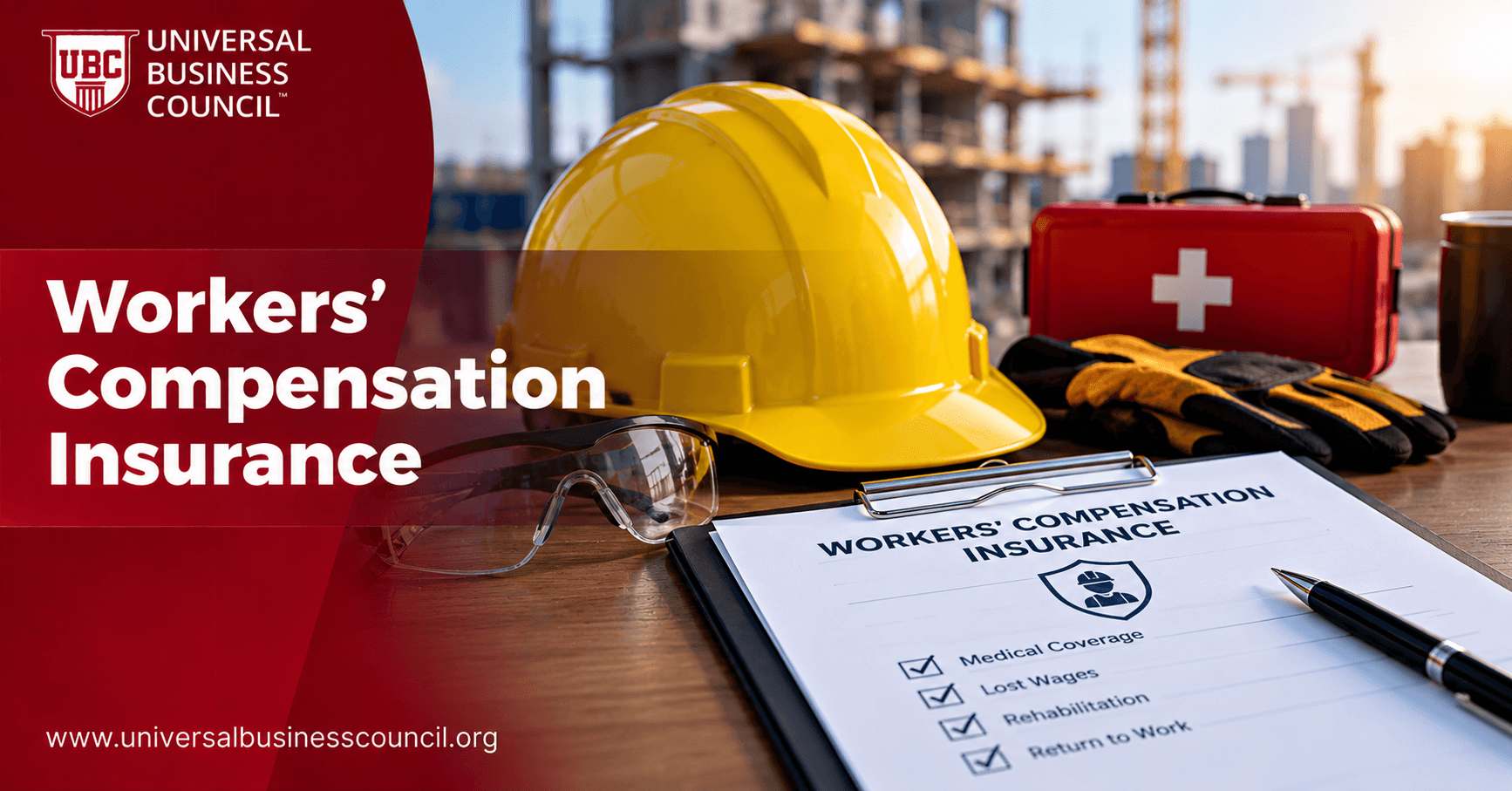
A stagehand hired for a product launch slips from a lighting truss and breaks his wrist. The event agency says he was a freelancer. The brand says the agency handled staffing. The agency's policy, it turns out, covers only its own salaried employees. Medical bills climb, the stagehand's income stops, and a labor inspector asks the brand's compliance team who was responsible for his cover.
Nobody planned for that gap, and that is why it opened. For compliance professionals looking to strengthen their understanding of workplace injury coverage, employment responsibilities, and insurance compliance, the Certified Compliance Professional certification can provide a useful foundation. This guide explains workers' compensation insurance in practical terms: what it is, who it covers, how premiums work, how to run a compliant program, what to do when an injury happens, and where marketing, events and remote work create hidden exposure.

What is workers' compensation insurance?
Workers' compensation insurance is cover that pays for the medical costs and lost income of employees who are injured or fall ill because of their work. In many countries and states, employers must carry it or belong to a government or state-run scheme. In exchange, workers receive benefits without having to prove the employer was at fault.
Typical benefits include:
Medical treatment and rehabilitation costs
Partial replacement of income while the worker cannot work
Compensation for permanent or long-term disability
Death benefits for dependants
Support for returning to work
Systems differ widely. Some countries use state-run insurance, some allow private insurers, and some combine the two. The rules on who is covered, what is covered, the benefit levels and the reporting duties vary by jurisdiction and change over time, so this guide is general information and not legal or insurance advice. Confirm the requirements that apply to you with a qualified adviser.
Why it is a compliance priority
The first reason is fairness to people who are hurt while doing their jobs. The second is that failing to hold required cover is a serious breach in most places. Penalties can include fines, stop-work orders, back-payment of premiums and, in some systems, personal liability for owners and directors.
There is also a practical reason. In many systems, employers who carry proper cover gain protection from being sued directly by injured employees, while those without cover lose that protection and can face uncapped claims. A single serious injury can cost more than years of premiums, so treating cover as a minimum box to tick is a false economy.
How the system works
Three questions decide most workers' compensation issues: who is covered, what is covered and how the price is set.
Who is covered
Coverage usually attaches to employees, but the boundary is not always where employers assume.
Employees, contractors and agency staff
Labels do not settle the question. A worker called a freelancer may still count as an employee for insurance purposes if the business controls how, when and where they work. Agency and temporary staff raise a further question about whether the agency or the client is responsible, and contracts should state it clearly. Misclassification can leave a business uninsured for the very workers it thought were someone else's problem.
Remote and traveling workers
Injuries at a home office, during business travel or while attending an off-site event may qualify as work-related. Rules differ, so employers with remote or mobile staff need to understand how their jurisdiction treats them and whether their policy responds.
What is covered
Most systems cover injuries that arise out of or in the course of work, along with occupational illnesses caused by workplace conditions, such as repetitive strain or exposure to harmful substances. Some also cover certain mental health conditions linked to work, though the conditions and evidence required vary widely.
How premiums are set
Premiums generally depend on payroll, the risk category of each role and the employer's claims history. In some systems, a good safety record lowers the price and a poor one raises it. Roles must be placed in the right category, since a mismatch can cause overpayment or an unpleasant surprise at audit. Underreporting payroll or misclassifying staff to cut premiums is a common trigger for penalties.
Building a workers' compensation compliance process
A sound program combines the right cover with day-to-day discipline. Core elements include:
Confirming the legal requirement in every location where you employ people
Buying cover that matches the actual workforce, including seasonal, temporary and remote staff
Classifying roles and reporting payroll accurately
Written procedures for reporting injuries, with deadlines
A safety program that finds and fixes hazards before they hurt anyone
A return-to-work approach that brings injured staff back safely
Retaining records of incidents, claims and safety inspections
Investigating incidents, spotting weaknesses in controls and reporting accurately are practical skills that reward training. Professionals building them often pursue credentials such as the Certified Compliance Professional certification.
When an injury happens
What happens in the first hours and days shapes both the worker's recovery and the compliance outcome.
The first 24 hours
Make sure the injured person gets medical care first
Secure the scene and preserve evidence where it is safe to do so
Record what happened, who saw it and any equipment or conditions involved
Notify the person responsible for claims, and the insurer, within the deadlines that apply
Report to the authority where the law requires it, especially for serious injuries
Avoid pressuring anyone to downplay the incident or to skip the claim
Claims management and return to work
Assign one person to manage each claim and keep in regular contact with the injured worker, the insurer and the treating provider. Where medically appropriate, offer modified duties or a phased return, since early and supported return usually helps recovery and cuts costs. Treat the worker fairly and never retaliate against someone for claiming, which is illegal in most places.
Marketing, events and creative teams
Marketing work creates unusual exposure. Live events involve staging, rigging, heavy lifting and long hours. Photo and video shoots use equipment, locations and temporary crews. Promotional staff, brand ambassadors and models often work irregular shifts, sometimes as freelancers. Pop-up stores, road shows and trade fairs carry travel risk. Agencies and production companies may or may not hold the right cover.
Before a campaign starts, check who employs each person on site, what cover applies and whether contracts with agencies and vendors require proof of insurance. Marketing leaders who understand how campaigns, events and productions are staffed, the kind of grounding a Digital Marketing Course provides, can raise these questions at the planning stage instead of after an accident.
Technology, data and privacy
Digital tools can improve reporting and claims handling. Incident reporting apps make it easier to log injuries quickly, HR and payroll systems hold the classification data that drives premiums, and claims platforms track deadlines and payments. The systems must be set up correctly, since a wrong role code or missing hours quietly distorts premiums and reports.
Injury and medical information is sensitive and often protected by privacy law, so access needs to be limited and records stored securely. Compliance and HR staff who understand how these systems store and share data, helped by technical grounding through programs such as Tech Certifications, can test the setup and protect employee data.
Insurtech, AI and new work models
Insurers and employers are experimenting with analytics that predict where injuries are likely, AI tools that sort claims, and connected sensors and wearables that flag unsafe conditions. Some insurance products use blockchain-based records or automated payouts. New work models bring fresh questions as well: gig platforms that treat workers as contractors, remote teams spread across several jurisdictions and cross-border assignments.
These tools and arrangements have limits. Predictions can be biased, sensor data raises privacy concerns, and automated decisions about claims need human oversight. Teams that understand the technology underneath, supported by resources such as Deep Tech Certifications, can challenge vendor claims and check that the use of new tools does not undermine workers' rights.
Audits, fraud and disputes
Insurers and regulators check that businesses are doing what they say.
Insurer audits
Insurers commonly audit payroll and role classifications to make sure premiums match reality. Keep payroll records, contractor agreements and certificates of insurance ready, and be able to explain how each worker was classified. Fix discrepancies you find before the auditor does.
Fraud and disputes
Fraud can run in both directions: employers underreporting payroll to cut premiums, and, less often, workers or providers exaggerating claims. Firm, fair procedures help, including consistent investigation of suspicious claims without accusing anyone prematurely. Disputes over whether an injury is work-related, or over benefit levels, often go through formal appeal routes, so take legal advice early and keep clear records.
Conclusion: workers' compensation insurance as a safety net and a safeguard
Workers' compensation insurance protects people who are hurt at work and protects employers from ruinous claims, but only when it is set up properly. Confirm the legal requirements in each location. Classify workers honestly, report payroll accurately and make sure agency and freelance arrangements do not leave gaps. Run a real safety program, act fast when an injury happens and support a safe return to work. Handle data with care, use technology critically, and prepare for audits. Do that and the policy becomes a safety net that actually holds.
Frequently asked questions
1. What is workers' compensation insurance?
Cover that pays medical costs and lost income for employees injured or made ill by their work.
2. Is workers' compensation insurance mandatory?
In many countries and states, yes, though rules vary by jurisdiction and employer size, so check local requirements.
3. Who pays for workers' compensation?
Usually the employer, through premiums or contributions to an insurer or state scheme.
4. What does it typically cover?
Medical treatment, partial wage replacement, disability benefits, death benefits and rehabilitation.
5. Does the employee need to prove the employer was at fault?
Generally no, because most systems are no-fault.
6. Can employees sue their employer?
In many systems, insured employers are protected from most lawsuits, but uninsured employers may lose that protection.
7. Are independent contractors covered?
Often not, but misclassified workers may be treated as employees, so the label alone does not decide it.
8. Are agency and temporary workers covered?
It depends on who counts as the employer, so contracts should say which party provides cover.
9. Are remote workers covered?
Injuries during work at home or business travel may qualify, and the rules differ by jurisdiction.
10. Are occupational illnesses covered?
Most systems cover illnesses caused by workplace conditions, with evidence requirements that vary.
11. Are mental health conditions covered?
Some systems cover work-related mental health conditions under specific conditions, so check local rules.
12. How are premiums calculated?
Usually from payroll, role risk categories and, in some systems, the employer's claims history.
13. What happens if I misclassify workers?
You may face back premiums, penalties and uninsured claims.
14. What should I do after a workplace injury?
Get medical care, secure the scene, record what happened and notify the insurer and authorities within the deadlines.
15. How quickly must injuries be reported?
Deadlines vary by jurisdiction, and can be very short, so set up procedures ahead of time.
16. What is return-to-work?
A plan that brings an injured employee back safely, sometimes with modified duties or phased hours.
17. Can employers retaliate against workers who claim?
No, retaliation for claiming is illegal in most places.
18. What is an insurer audit?
A review of payroll and classifications to check that premiums match the actual workforce.
19. What penalties apply for not carrying required cover?
They can include fines, stop-work orders, back premiums and in some systems personal liability.
20. How often should the program be reviewed?
At least yearly, and whenever headcount, roles, locations or work arrangements change.
Related Articles
View All
Business
Government Contracting Compliance: A Practical Guide
Learn how government contractors can meet compliance requirements, manage contract obligations, maintain accurate records, and avoid common issues involving labor laws and federal regulations.

Business
E-Verify Compliance: A Practical Guide for Employers
Learn how E-Verify works, which employers must use it, key compliance requirements, common errors, and how to manage cases correctly.
Business
COBRA Continuation Coverage: A Practical Compliance Guide
Learn how COBRA continuation coverage works, which employers must comply, required notices, qualifying events, timelines, and common compliance mistakes.
Trending Articles
The Role of Blockchain in Ethical AI Development
How blockchain technology is being used to promote transparency and accountability in artificial intelligence systems.
AWS Career Roadmap
A step-by-step guide to building a successful career in Amazon Web Services cloud computing.
Top 5 DeFi Platforms
Explore the leading decentralized finance platforms and what makes each one unique in the evolving DeFi landscape.