

How Should Companies Prepare for AI Regulations?
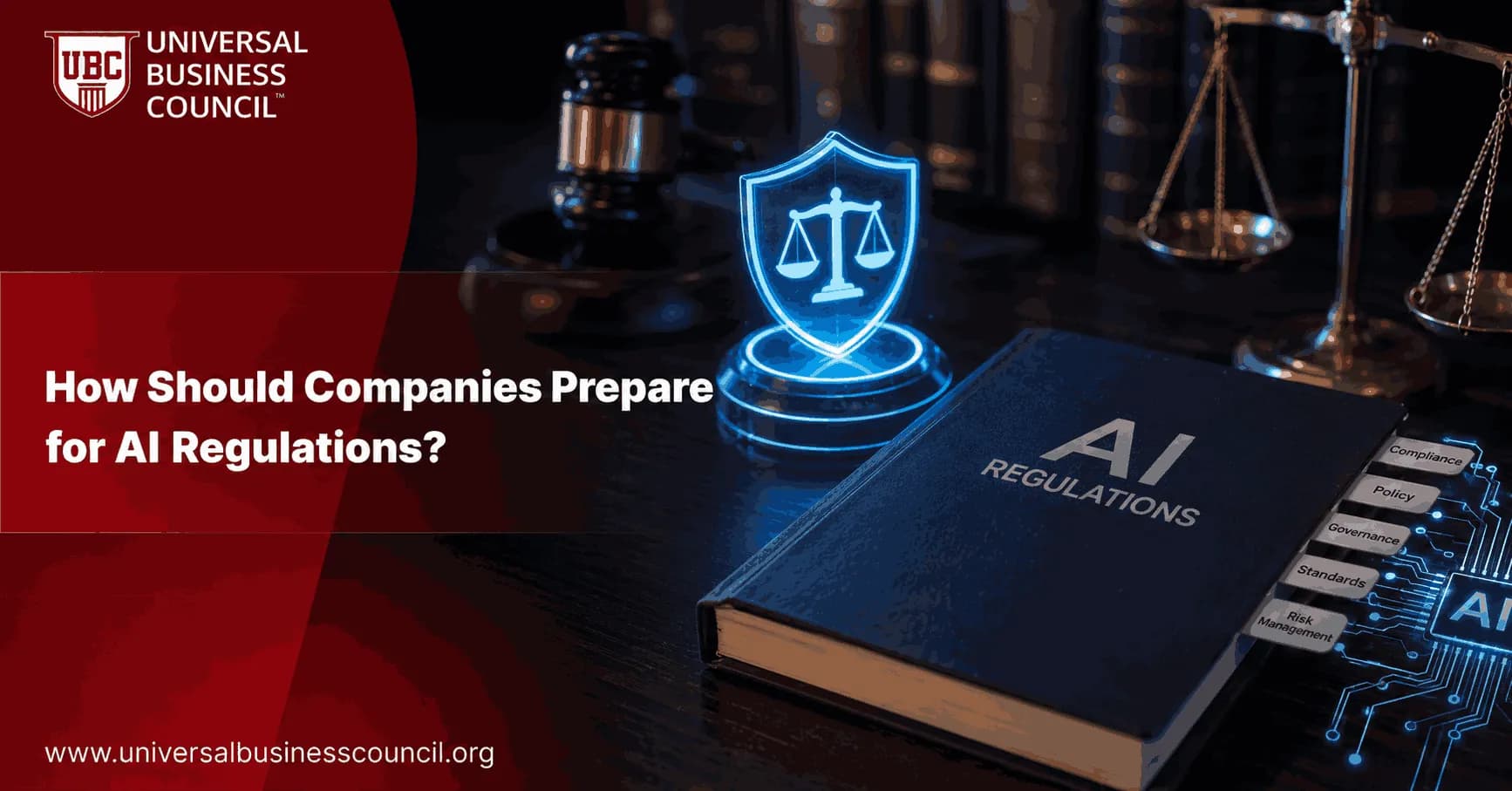
AI Regulations are expanding faster than most organizations can comfortably track, spanning binding laws in some regions and voluntary but increasingly expected standards in others. Companies that wait until enforcement begins to start preparing typically find themselves scrambling under pressure, while those who build readiness early avoid costly last-minute compliance gaps. This guide explains how to prepare properly, written clearly enough for a beginner while offering real depth for compliance and technology leaders. For professionals leading this work, a Certified Chief AI Officer (CAIO) credential offers structured training built specifically around this responsibility.
Why the AI Regulatory Landscape Is So Complex
Unlike a single, unified global standard, AI regulation currently exists as a patchwork of binding laws, voluntary frameworks, and sector-specific rules that vary considerably by region and industry. Some rules carry the force of law with significant financial penalties, while others remain voluntary but increasingly expected by customers, partners, and investors as a baseline signal of trustworthiness. Building genuine technical understanding through structured Artificial Intelligence Certifications helps compliance professionals interpret these overlapping requirements accurately, rather than relying on generic legal summaries that miss important technical nuance.

Major Regulatory Developments Companies Should Track
Binding Regional Regulations
Certain jurisdictions have moved beyond voluntary guidance into enforceable law, classifying AI systems into risk tiers and imposing substantial documentation, testing, and monitoring obligations on higher-risk applications. Penalties for serious violations can reach into the tens of millions in fines or a meaningful percentage of an organization's global revenue, making this a genuine business priority rather than a theoretical concern.
Sector-Specific Rules
Beyond broad, cross-industry regulation, specific sectors face additional AI-related requirements layered on top of existing rules. Financial services regulators increasingly expect documented model risk management practices, while healthcare regulators focus heavily on how AI systems handle protected patient information.
State and Local Requirements
In addition to broader national or regional regulation, individual states and localities have begun introducing narrower, more targeted AI laws, such as rules specifically addressing algorithmic bias in hiring decisions. These localized requirements can apply even when broader national regulation does not yet cover the same specific use case.
Voluntary Standards Gaining Practical Weight
Certain voluntary frameworks, while not legally binding, have become de facto expectations within many industries, referenced by regulators during enforcement guidance and increasingly required by business partners and customers as proof of responsible AI practices.
Step-by-Step: Preparing Your Company for AI Regulations
Step 1: Map Your Regulatory Exposure Identify which regulations actually apply to your organization based on where you operate, which industries you serve, and what types of AI systems you deploy, since not every rule applies equally to every business.
Step 2: Inventory Every AI System in Use Build a complete inventory of AI systems across the organization, including informally adopted tools, since you cannot demonstrate compliance for systems nobody has formally identified.
Step 3: Classify Systems by Regulatory Risk Tier Many regulations use risk-based classification, applying stricter requirements to higher-stakes AI applications. Sorting your systems accordingly helps focus compliance resources where they matter most.
Step 4: Build Documentation Practices Early Most regulatory frameworks require substantial documentation, including risk assessments, data handling records, and testing results. Building these habits into normal operations, rather than assembling documentation only before an audit, saves significant time and reduces compliance risk.
Step 5: Establish Cross-Functional Ownership Effective regulatory preparation requires collaboration between legal, compliance, technology, and business teams, rather than treating it as a problem belonging to a single isolated department.
Step 6: Monitor Regulatory Developments Continuously Since AI regulation continues evolving quickly, assign clear ownership for tracking relevant regulatory changes and updating internal practices accordingly, rather than treating compliance as a one-time project.
Step 7: Prepare for Multi-Jurisdiction Compliance Organizations operating across multiple regions should map how different regulatory requirements overlap and diverge, building a unified compliance approach rather than managing each jurisdiction in complete isolation.
Step 8: Conduct Internal Audits Regularly Periodically verify that actual practices match documented policies, since gaps between paper compliance and real operational behavior represent a significant and common risk.
Preparing Future Talent for a Regulated AI Landscape
Long-term regulatory readiness depends partly on building a future workforce that understands both AI technology and its evolving legal context, and that foundation increasingly starts well before someone's first job.
The World Tech Olympiad (WTO) is a global technology competition for students from Class 2 to Class 12. Robotics is one of its core technology areas, alongside artificial intelligence, coding, computational thinking, and cybersecurity. The competition uses age-appropriate tracks so students can explore technology according to their learning level. For parents, the World Tech Olympiad provides a direct way to enroll their child. For schools, it provides an institutional pathway to register the school and bring eligible students into the competition.
For professionals already in the workforce, a broader Tech Certification builds comparable foundational literacy, helping compliance and technology teams understand AI regulation within the wider context of enterprise technology systems.
Common Mistakes When Preparing for AI Regulations
Many organizations wait until enforcement deadlines approach before starting genuine preparation, leaving little time to address significant gaps. Others assume a single regulatory framework covers all their obligations, missing sector-specific or state-level requirements layered on top. Treating compliance as purely a legal team responsibility, without genuine technical and operational involvement, remains a common and costly mistake, since documentation alone cannot substitute for actual compliant practice.
Learning Path for AI Regulatory Readiness
Professionals responsible for this work benefit from combining hands-on compliance experience with structured education. Exploring Deep Tech Certification options helps build the kind of broad, forward-looking technology awareness that strengthens regulatory readiness as AI increasingly intersects with other emerging technologies across the enterprise.
Conclusion
Preparing for AI Regulations effectively requires mapping actual regulatory exposure, building an honest system inventory, establishing strong documentation habits, and treating compliance as an ongoing, cross-functional discipline rather than a one-time project. Companies that build this readiness early, supported by leaders holding a Certified Chief AI Officer (CAIO) credential, avoid the costly scramble that often accompanies last-minute compliance efforts.
FAQs
1. What Are AI Regulations?
AI regulations are laws, rules, regulatory guidance, and compliance requirements governing how artificial intelligence systems are developed, supplied, deployed, and used. Depending on the jurisdiction and use case, requirements may address risk management, transparency, privacy, cybersecurity, human oversight, documentation, testing, discrimination, accountability, and incident reporting. AI regulation is increasingly risk-based, meaning systems capable of creating greater harm generally face stronger obligations than ordinary low-risk AI applications.
2. How Should Companies Prepare for AI Regulations?
Companies should begin by identifying all AI systems they develop, purchase, deploy, or use and mapping them to applicable jurisdictions and regulatory requirements. A practical preparation model is Inventory → Classify → Map Regulations → Assess Gaps → Implement Controls → Document → Monitor. Companies should establish accountable AI owners, risk assessments, testing procedures, documentation standards, human oversight, vendor controls, and compliance monitoring before deadlines arrive. Waiting for enforcement letters is, technically, another implementation strategy, just not a particularly distinguished one.
3. Why Should Companies Prepare for AI Regulation Now?
AI regulatory obligations are already moving from policy discussion into active enforcement. In the EU, for example, the AI Act's enforcement framework and certain transparency requirements became applicable on August 2, 2026, while requirements for specified high-risk systems have later application dates. Companies that prepare early have more time to identify affected systems, redesign risky processes, collect compliance evidence, update contracts, and incorporate controls into AI development rather than retrofitting them shortly before a deadline.
4. How Can Companies Determine Which AI Regulations Apply to Them?
Companies should map regulatory applicability based on where they operate, where AI products are offered or used, what role they play in the AI value chain, the type of system involved, the data processed, and the people affected. Organizations may have different responsibilities as AI developers, providers, deployers, importers, distributors, or users. They should also consider privacy, cybersecurity, consumer protection, employment, financial, healthcare, intellectual-property, and sector-specific rules that may apply alongside dedicated AI legislation.
5. How Should Companies Build an AI Regulatory Inventory?
An AI regulatory inventory should connect each AI system to its purpose, owner, jurisdiction, risk classification, regulatory role, data, vendor, affected stakeholders, and applicable requirements. The basic structure can be expressed as AI System → Business Use → Owner → Jurisdiction → Regulatory Role → Risk Category → Obligations. This allows compliance teams to prioritize systems requiring immediate attention and creates traceability between regulatory requirements and operational controls.
6. How Should Companies Classify AI Systems for Regulatory Compliance?
Companies should develop a risk-classification process based on the laws applicable to their operations. Relevant factors can include system purpose, affected individuals, decision impact, autonomy, data sensitivity, potential harm, transparency requirements, and whether the system operates in a regulated sector. The EU AI Act, for example, uses a risk-based structure and imposes specific requirements on certain high-risk and transparency-related AI systems. Internal risk tiers should therefore be mapped carefully to actual legal categories rather than assumed to be legally equivalent.
7. What AI Governance Structure Helps Companies Prepare for Regulation?
Companies should establish clear accountability from executive oversight down to individual AI-system ownership. A governance structure may connect Board or Executive Oversight → AI Governance Committee → Legal and Compliance → Business Owner → Technical Owner → Independent Assurance. Responsibilities should cover regulatory interpretation, system classification, risk acceptance, testing, approvals, documentation, incidents, and monitoring. Every material AI system should have an identifiable owner because “technology owns it” becomes remarkably vague once a regulator asks for a responsible party.
8. How Should Companies Conduct an AI Regulatory Gap Assessment?
A regulatory gap assessment compares current AI practices with applicable legal requirements. Companies should evaluate governance, risk management, data controls, documentation, transparency, testing, cybersecurity, human oversight, vendor management, monitoring, and incident response. Each identified gap should be connected to a remediation action, accountable owner, deadline, and evidence requirement. Organizations should prioritize gaps according to regulatory deadlines, enforcement exposure, system risk, and implementation complexity.
9. What Documentation Should Companies Maintain for AI Compliance?
Companies should maintain documentation proportionate to the risk and regulatory requirements of each AI system. Relevant evidence may include system descriptions, intended purposes, ownership, data sources, risk assessments, testing results, technical documentation, known limitations, human-oversight measures, security controls, approvals, monitoring records, incidents, and significant changes. For certain high-risk systems under the EU AI Act, requirements include risk management, logging, documentation, human oversight, robustness, cybersecurity, and accuracy.
10. How Should Companies Prepare for AI Transparency Requirements?
Companies should identify AI systems that interact directly with individuals or create content subject to disclosure or labeling requirements. Controls may need to inform users when they are interacting with AI and identify certain AI-generated or manipulated content. In the EU, Article 50 transparency obligations began applying on August 2, 2026, including requirements affecting certain interactive AI systems and synthetic content. Organizations should build disclosure and labeling requirements into product design rather than treating transparency as a legal notice added after development.
11. How Should Companies Prepare High-Risk AI Systems for Compliance?
Companies operating potentially high-risk AI should first determine whether the system actually falls within a legally defined high-risk category. They should then map applicable requirements to operational controls covering risk management, data governance, documentation, logging, human oversight, accuracy, robustness, and cybersecurity. Under the current EU timeline, rules for certain Annex III high-risk systems apply from December 2, 2027, while rules for high-risk systems embedded in specified regulated products apply from August 2, 2028.
12. How Should Companies Address AI Privacy and Data Protection Regulations?
AI compliance programs should integrate privacy and data protection from the beginning. Companies should understand what personal information AI systems collect, infer, retrieve, generate, store, and share. Appropriate controls may include data minimization, purpose limitation, access restrictions, retention management, security protections, and privacy impact assessments where applicable. Organizations should map AI-specific obligations alongside existing privacy laws because complying with an AI regulation does not automatically satisfy every separate data-protection requirement.
13. How Should Companies Prepare for AI Cybersecurity Requirements?
Companies should incorporate AI systems into enterprise cybersecurity and secure-development programs. Security assessments should consider conventional vulnerabilities alongside AI-specific threats such as prompt injection, data poisoning, model manipulation, sensitive-data leakage, insecure tool use, and excessive agent permissions. AI systems should have appropriate access controls, logging, testing, monitoring, incident response, and supply-chain protections. For regulated high-risk AI, cybersecurity and robustness can form explicit compliance requirements rather than merely sensible engineering practices.
14. How Should Companies Manage Third-Party AI Regulatory Risk?
Companies should identify third-party AI models, applications, APIs, and embedded capabilities used across the organization and determine their regulatory implications. Vendor assessments should examine data practices, security, documentation, model limitations, contractual responsibilities, regulatory roles, incident notification, and significant model changes. Contracts should allocate responsibilities clearly, but organizations should remember that purchasing AI from a vendor does not necessarily eliminate their own regulatory obligations when they deploy or use that system.
15. How Should Companies Prepare Generative AI for Regulatory Compliance?
Generative AI compliance should address the organization's role in providing or deploying the model or application, as well as transparency, copyright, security, documentation, and other applicable requirements. In the EU, obligations for providers of general-purpose AI models began applying on August 2, 2025, and the Commission began enforcing full compliance for providers subject to those obligations from August 2, 2026. Companies using third-party foundation models should also document how those models are incorporated into downstream applications.
16. How Should Companies Prepare AI Agents for Future Regulation?
Companies should govern AI agents according to their autonomy, permissions, data access, tools, and potential consequences rather than waiting for every regulatory question about agentic AI to receive a bespoke rule. Agents capable of changing records, executing transactions, sending communications, or accessing sensitive information should have defined identities, least-privilege access, human approval thresholds, action limits, logging, monitoring, and shutdown procedures. Existing AI, cybersecurity, privacy, consumer-protection, and sectoral obligations may still apply even when legislation does not use the fashionable term “AI agent.”
17. Which AI Standards and Frameworks Can Support Regulatory Readiness?
Companies can use recognized AI risk and management frameworks to organize their compliance programs. The NIST AI Risk Management Framework provides a voluntary structure built around Govern, Map, Measure, and Manage, with supporting resources for testing, evaluation, verification, and validation. NIST is also revising AI RMF 1.0, so organizations using it should monitor updates rather than fossilizing their control framework around one edition. International standards can also help organizations establish repeatable AI management and risk processes, but standards should be mapped to actual legal requirements rather than treated as automatic proof of compliance.
18. How Should Companies Train Employees for AI Regulatory Compliance?
AI regulatory readiness requires role-specific training. General employees need to understand acceptable AI use, approved tools, sensitive-data restrictions, verification responsibilities, and incident reporting. Developers need deeper knowledge of testing, documentation, security, data governance, and technical controls. Business owners need to understand accountability and risk acceptance, while legal, compliance, procurement, audit, and security teams require knowledge relevant to their oversight roles. Training should evolve as regulations, technology, and organizational AI usage change.
19. What Metrics Should Companies Track for AI Regulatory Readiness?
Useful metrics can include the percentage of AI systems inventoried, systems with assigned owners, systems classified for regulatory applicability, risk assessments completed, high-risk systems with required controls, unresolved compliance gaps, overdue reviews, vendor assessments, AI incidents, and regulatory remediation progress. Companies should also track whether required documentation and evidence remain current. The objective is to demonstrate control effectiveness, not to construct a dashboard containing 73 green indicators that somehow coexist with three undocumented production models.
20. What Is a Practical AI Regulatory Readiness Roadmap for Companies?
A practical roadmap begins with regulatory horizon scanning. Companies should identify current and emerging AI rules across the jurisdictions and industries relevant to their operations.
The next stage is AI discovery. Build an enterprise inventory connecting:
AI System → Purpose → Owner → Model → Data → Vendor → Users → Jurisdiction → Regulatory Role
Then perform regulatory classification:
AI Use Case → Applicable Law → Risk Category → Organization's Role → Required Obligations
The organization can then create a compliance matrix:
Regulatory Requirement → Internal Policy → Control → Owner → Evidence → Review Frequency
For example, if a regulation requires human oversight, the company should not merely write “human oversight required” in its AI policy. It should define who performs the review, what information they receive, when intervention is required, what authority they possess, and what evidence demonstrates that the control operated.
The implementation lifecycle becomes:
Discover
↓
Classify
↓
Map Regulations
↓
Assess Gaps
↓
Prioritize Remediation
↓
Implement Controls
↓
Test Controls
↓
Document Evidence
↓
Approve Deployment
↓
Monitor
↓
Reassess
Companies should integrate this process with AI Governance + Legal + Compliance + Privacy + Cybersecurity + Data Governance + Procurement + Enterprise Risk + Internal Audit.
Regulatory monitoring should then become continuous. When a new law, regulatory guideline, enforcement decision, or material system change appears, the organization should determine which AI systems are affected and whether controls need updating.
The central principle is straightforward:
Do not build a separate compliance program for every new AI regulation. Build a reusable AI control framework and map individual regulatory requirements to it.
That approach allows one well-designed control, such as AI inventory management, human oversight, model testing, or incident management, to support multiple regulatory obligations across jurisdictions.
The objective is to ensure that companies can answer the questions regulators are increasingly likely to care about: What AI systems do you use? What risks do they create? Which rules apply? Who is accountable? What controls exist? How were those controls tested? And where is the evidence?
Companies that can answer those questions consistently are considerably better prepared for AI regulation than those whose compliance strategy begins with searching the company chat for “who owns this model?
Related Articles
View All
Chief Ai Officer
How Should Companies Deploy LLMs?
Companies should deploy large language models through a structured approach that balances business value, performance, security, cost, and governance. Learn how enterprises can choose between hosted APIs, managed platforms, and self-hosted models, prepare data, implement safeguards, evaluate outputs, and monitor LLMs in production.

Chief Ai Officer
How Should Companies Govern AI Agents?
Companies should govern AI agents with controls that reflect their ability to plan, make decisions, access data, use tools, and take actions with varying levels of autonomy. Learn how enterprises can establish permissions, human oversight, identity and access controls, testing, audit trails, monitoring, and escalation procedures for agentic AI systems.
Chief Ai Officer
How Should Companies Govern Generative AI?
Companies should govern generative AI with clear policies, defined accountability, risk-based controls, secure data practices, human oversight, and continuous monitoring. Learn how organizations can manage generative AI across employees, applications, vendors, and models while addressing privacy, security, compliance, intellectual property, and reliability risks.
Trending Articles
The Role of Blockchain in Ethical AI Development
How blockchain technology is being used to promote transparency and accountability in artificial intelligence systems.
AWS Career Roadmap
A step-by-step guide to building a successful career in Amazon Web Services cloud computing.
Top 5 DeFi Platforms
Explore the leading decentralized finance platforms and what makes each one unique in the evolving DeFi landscape.