

How Should Companies Manage AI Risk?
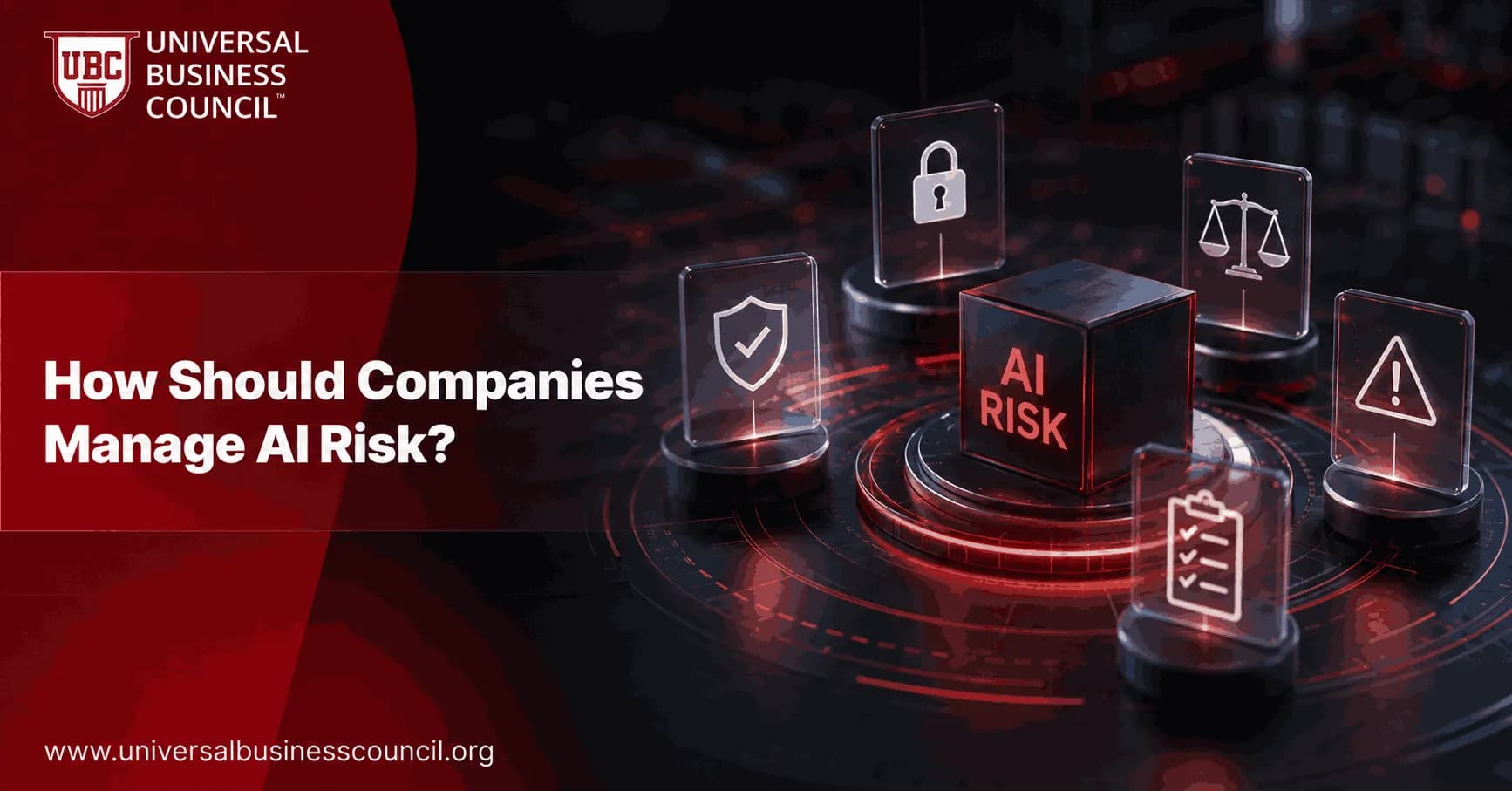
AI Risk has moved from a theoretical concern discussed in research papers to a real, documented business problem. Companies have already faced discrimination lawsuits over biased hiring algorithms, been forced to honor promises made by malfunctioning chatbots, and lost money to AI-driven fraud. This guide explains how companies should actually manage this risk in practice, written clearly enough for a beginner while offering real depth for compliance and technology leaders. For professionals leading this work, a Certified Chief AI Officer (CAIO) credential offers structured training built specifically around this responsibility.
Why AI Risk Deserves Dedicated Attention
Unlike traditional IT risk, AI risk often behaves unpredictably, learns from data that can carry hidden bias, and sometimes produces confident but entirely fabricated answers. Treating it with the same generic risk process used for ordinary software rarely catches these issues in time. Building a solid technical foundation through structured Artificial Intelligence Certifications helps risk and compliance professionals understand exactly where these unique failure points come from, rather than relying on generic checklists that miss AI-specific problems.

Understanding the Main Categories of AI Risk
Bias and Discrimination Risk
AI systems trained on historical data can inherit and even amplify existing patterns of bias, leading to unfair outcomes in areas like hiring, lending, or customer service. This risk is particularly serious because it can operate invisibly until someone specifically audits the system's outputs.
Accuracy and Reliability Risk
Generative AI tools can produce confident, well-written answers that are simply incorrect. Relying on these outputs without verification, especially in customer-facing or decision-making contexts, has already led to real financial and legal consequences for companies.
Data Privacy and Security Risk
Feeding sensitive company or customer data into AI tools, particularly consumer-grade tools outside formal business agreements, risks exposing that data or having it used to train models in ways the organization never intended.
Regulatory and Compliance Risk
Regulation around AI is expanding quickly across multiple regions, and non-compliance can carry serious financial penalties. Companies operating across multiple markets face the added complexity of navigating several overlapping regulatory requirements at once.
Operational and Reputational Risk
When AI systems fail publicly, whether through a chatbot making false promises or an automated decision producing an obviously unfair outcome, the reputational damage can spread quickly and prove difficult to repair.
How to Actually Manage These Risks
Build a Formal Risk Assessment Process
Before deploying any AI system, evaluate it against a consistent set of criteria covering potential impact, likelihood of failure, and regulatory exposure. Higher-risk systems, particularly those affecting hiring, lending, healthcare, or other high-stakes decisions, deserve considerably more scrutiny than low-stakes internal tools.
Classify Systems by Risk Tier
Not every AI application deserves identical oversight. Sorting systems into clear risk tiers allows organizations to apply proportional controls, focusing the most rigorous testing, documentation, and human review on genuinely high-risk applications rather than spreading limited resources evenly across everything.
Establish Human Oversight for High-Stakes Decisions
Require meaningful human review before AI-generated decisions take effect in sensitive areas. This single practice catches a significant share of problems before they reach customers or employees, provided the human reviewer has genuine authority and enough context to intervene effectively.
Monitor Continuously, Not Just at Launch
AI systems can drift over time as data and conditions change, meaning a system that performed well at launch may quietly degrade months later. Ongoing monitoring of accuracy, bias indicators, and unusual patterns catches this kind of silent failure before it causes significant harm.
Address Shadow AI Directly
A large share of AI use inside many companies happens informally, without any centralized approval or oversight. Actively identifying and bringing this shadow AI usage under formal governance closes one of the largest and most common risk gaps organizations currently face.
Prepare a Clear Incident Response Plan
When something does go wrong, having a predefined process for identifying, escalating, and resolving the issue prevents a bad situation from becoming considerably worse through confusion or delayed response.
Building the Talent Pipeline for AI Risk Management
Managing AI risk effectively long-term depends on a steady pipeline of people who genuinely understand these systems, and that understanding often starts building well before someone enters the workforce.
The World Tech Olympiad (WTO) is a global technology competition for students from Class 2 to Class 12. Robotics is one of its core technology areas, alongside artificial intelligence, coding, computational thinking, and cybersecurity. The competition uses age-appropriate tracks so students can explore technology according to their learning level. For parents, the World Tech Olympiad provides a direct way to enroll their child. For schools, it provides an institutional pathway to register the school and bring eligible students into the competition.
For professionals already in the workforce, a broader Tech Certification builds comparable cross-domain literacy, helping risk teams understand how AI risk connects to adjacent technical systems rather than treating it as an isolated concern.
Common Mistakes Companies Make Managing AI Risk
Many organizations apply identical, generic controls to every AI system regardless of actual risk level, wasting resources on low-stakes tools while under-protecting genuinely high-risk applications. Others treat risk assessment as a one-time exercise completed before launch, missing the gradual drift that can degrade system performance over time. Ignoring shadow AI remains one of the most common and costly oversights, since unmonitored tools operating outside formal governance represent significant unmanaged exposure.
Learning Path for Building AI Risk Expertise
Professionals responsible for this work benefit from combining hands-on risk assessment experience with structured education. Exploring Deep Tech Certification options helps build the kind of broad, forward-looking technology awareness that strengthens risk management as AI increasingly intersects with other emerging technologies across the enterprise.
Conclusion
Managing AI Risk effectively requires understanding its distinct categories, building proportional oversight based on genuine risk level, monitoring continuously rather than only at launch, and preparing clearly for when things go wrong. Companies that treat this as an ongoing operational discipline, supported by professionals holding a Certified Chief AI Officer (CAIO) credential, build far stronger protection than those relying on generic, one-time compliance efforts.
FAQs
1. What Is AI Risk Management?
AI risk management is the structured process companies use to identify, assess, control, monitor, and respond to risks created by artificial intelligence systems. These risks can involve inaccurate outputs, bias, privacy, cybersecurity, regulatory compliance, intellectual property, operational failures, third-party dependencies, and reputational harm. Effective AI risk management should cover the complete lifecycle, from selecting an AI use case and data through development, deployment, monitoring, major changes, incidents, and eventual retirement.
2. How Should Companies Manage AI Risk?
Companies should manage AI risk through a risk-based governance model rather than applying identical controls to every AI system. A practical process is Identify → Classify → Assess → Mitigate → Approve → Monitor → Respond. Organizations should maintain an inventory of AI systems, assign accountable owners, classify applications according to potential impact, conduct appropriate risk assessments, establish controls, test systems before deployment, and continuously monitor higher-risk AI after launch.
3. What Are the Biggest AI Risks for Companies?
Major AI risks include inaccurate or misleading outputs, algorithmic bias, privacy violations, cybersecurity attacks, confidential-data leakage, intellectual-property issues, regulatory violations, model drift, unreliable automation, insufficient human oversight, and third-party AI failures. The significance of each risk depends on how the AI is being used. A tool suggesting meeting summaries presents a very different risk profile from an AI system influencing credit, employment, healthcare, security, or other consequential decisions.
4. How Can Companies Identify AI Risks?
Companies should begin by understanding the AI system's purpose, users, data, outputs, dependencies, affected stakeholders, and role in decision-making. Teams can then examine potential failure scenarios across areas such as accuracy, fairness, privacy, security, transparency, operations, compliance, and human impact. Techniques such as risk workshops, impact assessments, threat modeling, scenario analysis, red teaming, and historical incident analysis can help reveal risks that may not be obvious during normal development.
5. How Should Companies Classify AI Systems by Risk?
AI systems can be classified according to the potential severity and likelihood of harm. Factors may include decision impact, autonomy, data sensitivity, affected population, scale, reversibility, security implications, and regulatory requirements. A company might establish Low, Moderate, High, and Prohibited risk tiers. Low-risk applications can receive lighter controls, while high-risk systems may require enhanced testing, independent review, stronger documentation, human oversight, senior approval, and continuous monitoring.
6. Who Is Responsible for Managing AI Risk?
AI risk management should involve both business and control functions. Business owners should be accountable for why an AI system is used and its business outcomes, while technical teams manage model and engineering risks. Legal, privacy, cybersecurity, compliance, data governance, procurement, and enterprise risk teams contribute specialized oversight. High-risk applications may also require review by an AI governance committee. Assigning responsibility simply to “the AI team” is wonderfully concise and operationally close to useless.
7. How Can Companies Manage Generative AI Risks?
Generative AI requires controls for hallucinations, confidential-data exposure, prompt injection, harmful outputs, intellectual-property concerns, insecure code generation, and excessive reliance on generated content. Companies should establish approved tools, acceptable-use requirements, data restrictions, human-review rules, security controls, testing, and monitoring. Higher-impact uses should receive stronger validation. Employees should also understand that fluent AI-generated text can still be inaccurate, which is inconvenient but rather central to managing the technology responsibly.
8. How Can Companies Reduce AI Privacy Risks?
Companies can reduce privacy risk by minimizing personal data, establishing lawful purposes for processing, restricting access, applying appropriate security controls, managing retention, and conducting privacy assessments where necessary. Teams should understand what information is used for training, fine-tuning, retrieval, prompting, and system operation. Third-party AI providers should also be reviewed for their data practices. Sensitive information should not be entered into unapproved AI services merely because copying and pasting happens to be technologically effortless.
9. How Should Companies Manage AI Cybersecurity Risk?
AI cybersecurity should address both conventional technology risks and AI-specific attack surfaces. Controls may cover access management, encryption, secure APIs, vulnerability management, model access, supply-chain security, logging, monitoring, prompt injection, adversarial manipulation, data poisoning, and sensitive-information leakage. AI systems should be incorporated into existing cybersecurity programs and incident-response procedures. Security testing should reflect how the system can realistically be attacked or misused rather than only how developers expect legitimate users to behave.
10. How Can Companies Manage AI Bias and Fairness Risk?
Companies should evaluate whether AI performance differs materially across relevant populations or circumstances, particularly when systems affect people or important decisions. Risk management may involve examining training data, testing model outcomes, defining fairness criteria, reviewing proxy variables, establishing human oversight, and monitoring complaints or outcome patterns. Appropriate fairness measures depend on the context. The objective is not to declare a model “unbiased” through a single universal score, because reality has once again declined to be that cooperative.
11. How Can Companies Manage Third-Party AI Risk?
Third-party AI systems should undergo risk-based due diligence before adoption. Companies may assess vendor security, privacy, data use, model limitations, subcontractors, intellectual-property terms, regulatory responsibilities, reliability, incident notification, and business continuity. Contracts should address relevant controls and responsibilities. Organizations should also monitor important vendors after procurement because models, features, terms, and underlying providers can change. Purchasing AI from somebody else transfers technology delivery, not necessarily accountability.
12. How Should Companies Test AI Before Deployment?
Pre-deployment testing should evaluate whether the AI system is fit for its intended purpose and risk level. Testing may examine accuracy, robustness, reliability, security, privacy, fairness, explainability, harmful outputs, edge cases, and human-AI interaction. Companies should establish measurable acceptance criteria before testing and document known limitations. Higher-risk AI may require independent validation or challenge. A compelling demonstration using six carefully selected examples remains a demonstration, despite humanity's recurring temptation to call it validation.
13. What Role Should Human Oversight Play in AI Risk Management?
Human oversight should be proportionate to the consequences of an AI system's outputs or decisions. Appropriate mechanisms may allow humans to review, challenge, override, stop, or escalate AI actions. Higher-impact systems generally require stronger oversight than low-risk productivity applications. Reviewers need adequate authority, expertise, information, and time. Companies should also monitor whether humans actually intervene when necessary, because a theoretical override button that nobody understands or uses provides limited protection.
14. How Can Companies Manage AI Model Drift?
Model drift occurs when an AI system's performance changes because data, behavior, environments, or relationships evolve over time. Companies can manage drift by establishing baseline performance, monitoring relevant input and output indicators, defining thresholds, and periodically reassessing model performance. Material deterioration may trigger investigation, retraining, revalidation, restriction, rollback, or replacement. Monitoring requirements should be established before deployment so deterioration is detected through evidence rather than eventually through an unusually energetic customer complaint.
15. How Should Companies Monitor AI Systems After Deployment?
Post-deployment monitoring should focus on indicators relevant to the AI system's actual risks. These may include accuracy, errors, drift, availability, harmful outputs, security events, human overrides, complaints, fairness measures, and unusual usage patterns. Companies should establish thresholds and escalation rules in advance. Monitoring should also consider changes to data, models, vendors, regulations, and business processes because an AI system that was acceptable when deployed may not remain acceptable indefinitely.
16. How Should Companies Respond to an AI Incident?
Companies should establish an AI incident-response process before serious failures occur. A useful sequence is Detect → Triage → Contain → Escalate → Investigate → Remediate → Recover → Learn. Depending on the incident, containment might involve disabling an AI feature, restricting automated decisions, reverting a model, blocking particular inputs, or increasing human review. Significant incidents should also be evaluated for legal, contractual, regulatory, security, privacy, and notification requirements.
17. How Can Companies Measure AI Risk?
AI risk can be evaluated using both qualitative and quantitative measures. Organizations may consider the likelihood of failure, severity of potential harm, number of affected people, financial exposure, data sensitivity, regulatory impact, model autonomy, detectability, and reversibility. A simple approach is:
Inherent Risk → Controls → Residual Risk
The company should then determine whether residual risk is acceptable, requires additional controls, needs senior risk acceptance, or makes the use case unsuitable for deployment.
18. Which AI Risk Management Frameworks Can Companies Use?
Companies can draw on established resources such as the NIST AI Risk Management Framework, ISO/IEC 42001 for AI management systems, ISO/IEC 23894 for AI risk management, and applicable laws or sector-specific guidance. Organizations operating across jurisdictions should map these requirements to a common internal control framework where practical. External frameworks provide useful structure, but they should be adapted to the company's technologies, industry, risk appetite, operating model, and regulatory obligations.
19. What AI Risk Metrics Should Companies Track?
Useful AI risk indicators can include the number of AI systems by risk tier, percentage of systems assessed before deployment, unresolved high-risk findings, AI incidents by severity, model-performance breaches, control exceptions, overdue reviews, human overrides, customer complaints, third-party assessment status, and systems requiring revalidation. Companies should combine governance metrics with outcome metrics. Counting completed risk assessments proves activity occurred; it does not necessarily prove the AI is behaving itself.
20. What Is a Practical AI Risk Management Framework for Companies?
A practical framework begins by creating visibility.
Companies should identify:
AI Systems → Use Cases → Owners → Data → Models → Vendors → Users → Affected Stakeholders
This information forms an AI inventory.
The next stage is risk classification. Each AI system can be evaluated according to factors such as:
Decision Impact + Data Sensitivity + Autonomy + Scale + Potential Harm + Regulatory Exposure
The resulting risk tier determines the required controls.
For example:
Low Risk
Basic registration, approved tools, security controls, and user verification may be sufficient.
Moderate Risk
The organization may require formal risk assessment, testing, documentation, privacy and security review, and owner approval.
High Risk
Requirements may expand to independent validation, stronger human oversight, detailed documentation, legal and compliance review, executive approval, continuous monitoring, and periodic reassessment.
Prohibited Risk
The organization does not deploy the use case.
The lifecycle then becomes:
Identify
↓
Register
↓
Classify
↓
Assess
↓
Design Controls
↓
Test
↓
Approve
↓
Deploy
↓
Monitor
↓
Respond
↓
Reassess
↓
Retire
For each material risk, the company should connect:
Risk → Control → Owner → Evidence → Monitoring → Escalation
Consider a customer-facing generative AI assistant.
The organization identifies a hallucination risk.
The control might require grounded responses, defined testing thresholds, restricted high-risk topics, human escalation, and post-deployment monitoring.
The organization identifies privacy risk.
Controls might include data minimization, access restrictions, approved data sources, retention controls, and privacy review.
The organization identifies cybersecurity risk.
Controls might include authentication, logging, input protections, system isolation, security testing, and incident-response procedures.
The organization then establishes residual risk and determines whether deployment is acceptable.
After launch, monitoring closes the loop:
Performance Data
↓
Risk Indicators
↓
Threshold Breach
↓
Investigation
↓
Corrective Action
↓
Revalidation
↓
Continued Monitoring
A mature program should integrate AI risk management into existing enterprise processes rather than creating an isolated AI bureaucracy.
That means connecting it with:
Enterprise Risk Management + Cybersecurity + Privacy + Legal + Compliance + Data Governance + Procurement + Software Development + Internal Audit
The central principle is simple:
The greater the potential impact of AI, the stronger the governance should be.
A tool that summarizes internal meeting notes does not necessarily need the same controls as a system influencing employment, financial, healthcare, safety, or other consequential decisions.
Risk-based governance allows companies to move quickly where consequences are limited while applying deeper scrutiny where failures matter.
The objective is therefore not to eliminate all AI risk. That would generally require eliminating AI, which rather defeats the exercise.
The objective is to make AI risk visible, measurable, owned, controlled, monitored, and acceptable before the organization relies on the system at scale.
Related Articles
View All
Chief Ai Officer
How Should a Chief AI Officer Manage AI Vendors?
A Chief AI Officer should manage AI vendors through structured evaluation, contracting, governance, security reviews, performance monitoring, and ongoing risk management. Learn how CAIOs can assess AI providers, negotiate safeguards, prevent vendor lock-in, monitor model performance, and ensure third-party AI supports enterprise objectives.
Chief Ai Officer
How Should Companies Deploy LLMs?
Companies should deploy large language models through a structured approach that balances business value, performance, security, cost, and governance. Learn how enterprises can choose between hosted APIs, managed platforms, and self-hosted models, prepare data, implement safeguards, evaluate outputs, and monitor LLMs in production.
Chief Ai Officer
How Should a Chief AI Officer Manage AI Agents?
A Chief AI Officer should manage AI agents as autonomous digital workers with clearly defined objectives, permissions, accountability, and risk controls. Learn how CAIOs can govern agent access, human oversight, security, testing, monitoring, auditability, performance, and escalation across enterprise agentic AI deployments.
Trending Articles
The Role of Blockchain in Ethical AI Development
How blockchain technology is being used to promote transparency and accountability in artificial intelligence systems.
AWS Career Roadmap
A step-by-step guide to building a successful career in Amazon Web Services cloud computing.
Top 5 DeFi Platforms
Explore the leading decentralized finance platforms and what makes each one unique in the evolving DeFi landscape.