

AI for Video Marketing: From Scriptwriting to Editing, Captions, and Distribution
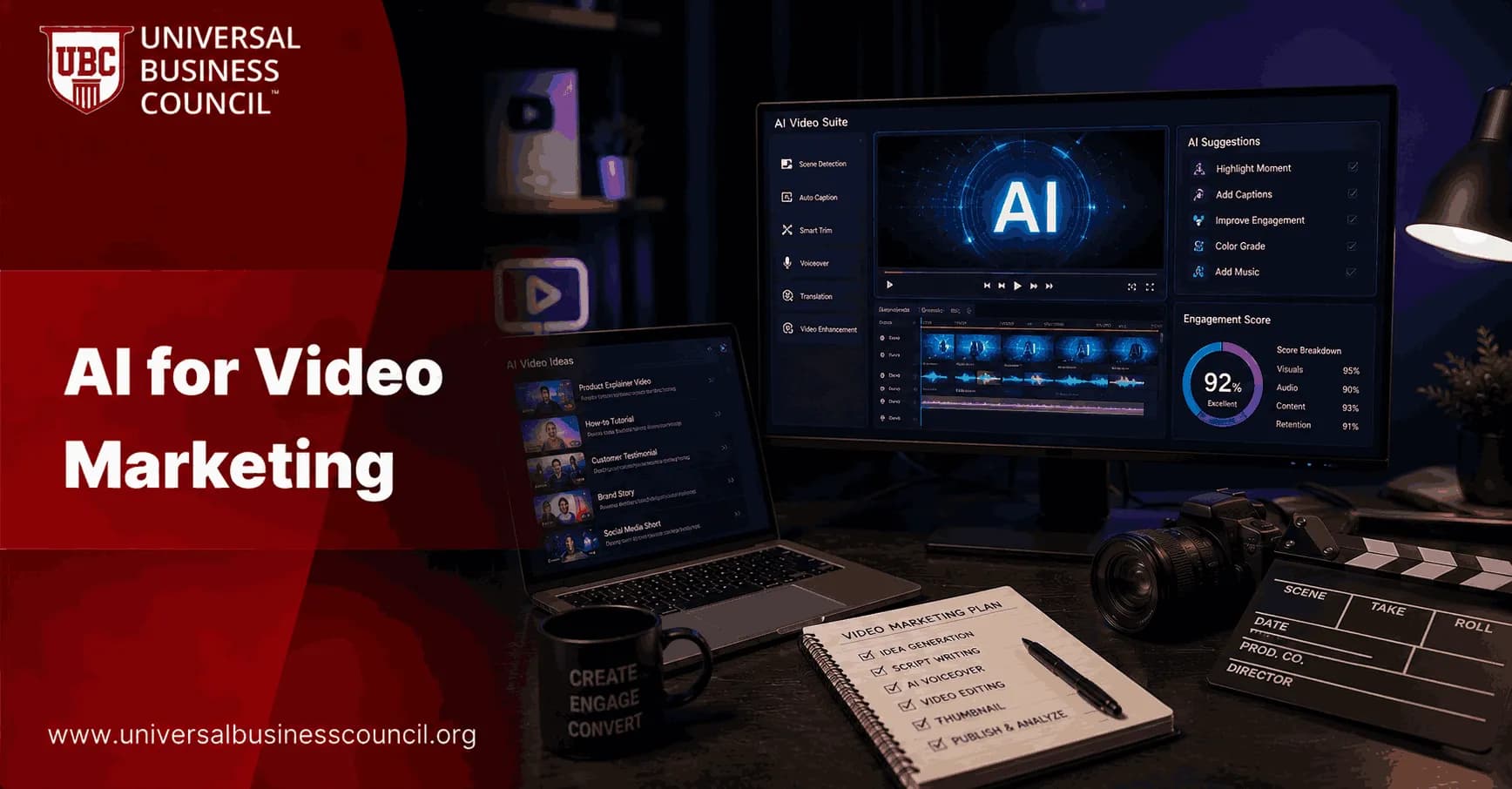
AI for video marketing has evolved from a set of experimental tools into an end-to-end workflow layer that spans research, scripting, production, editing, captions, personalization, and distribution. For many teams, the practical shift is that video is no longer a slow, campaign-centric craft. It is becoming an always-on, data-driven capability where creative and performance loops run continuously.
This change is happening alongside rising digital video ad spend and stronger expectations for personalization and outcome-based measurement. The IAB reports that US digital video ad spend is projected to grow 11% year over year in 2026 and, for the first time, digital video will exceed 60% of total TV and video spend. In the same report, two-thirds of digital video buyers are already live, testing, or planning to use agentic AI in 2026 for media planning, inventory discovery, creative testing, and performance analysis.

What AI for video marketing looks like across the full lifecycle
AI now touches every stage of the video marketing pipeline. For professionals and enterprises, the main opportunity is not just speed. It is consistency, scale, and the ability to learn from performance data and iterate quickly.
1) Audience insights and concepting
Video performance often rises or falls on whether you picked the right topic, angle, and hook before production begins. AI is increasingly used to analyze search trends, CRM signals, and social engagement patterns to identify content gaps and audience pain points.
Many organizations are also testing agentic AI for upstream tasks that influence video strategy, including brief analysis, competitive review, and early-stage media planning. This reduces the time between insight and execution, particularly for teams running weekly or daily publishing cadences.
2) Scriptwriting and narrative design
Generative language models are widely used to draft:
Opening hooks and alternative first 3 seconds for short-form platforms
Explainer scripts for B2B products and internal enablement
Calls to action tailored to funnel stage or audience segment
Multiple versions of the same message for different channels
Some tools provide end-to-end ideation and planning in one environment, including structured storyboards and scene planning. Many platforms also embed templates informed by performance patterns, such as typical pacing for vertical short-form content versus longer B2B explainers.
For teams building capability in this area, consider internal training that connects brand voice, messaging frameworks, and measurable outcomes. Universal Business Council's Digital Marketing Certification and AI Marketing Certification offer structured pathways for standardizing how scripts are created, reviewed, and validated.
3) On-screen talent, voice, and visuals
AI-generated presenters and improved text-to-speech have expanded what is feasible without studios, crews, or recurring talent costs. Common enterprise use cases include:
Explainer videos for product education and onboarding
Internal training modules with fast updates as policies change
Multilingual versions with consistent voice and terminology across regions
Image and video generation can also supplement B-roll, product visualizations, and stylized assets that would otherwise require shoots or stock licensing. The operational benefit is speed, but governance requirements are equally important: rights management, brand consistency, and accuracy checks need to be designed into the workflow from the start.
4) Editing and post-production at scale
AI video editors increasingly automate repetitive post-production steps, including:
Cutting silence and dead time
Auto-reframing for vertical, square, and horizontal formats
Noise removal and basic color correction
Branded overlays and lower thirds
A significant productivity driver is content repurposing. AI can transform long-form content such as webinars, podcasts, and product demos into short clips using transcription, scene detection, and highlight extraction. This compresses timelines from weeks to hours in many scenarios, enabling more frequent iteration based on real performance data.
5) Captions, subtitles, and accessibility
Automated speech recognition has made captions and subtitles faster and more accurate, while auto-translation supports localization across markets. This matters for two reasons:
Accessibility requirements and inclusive design expectations are rising across platforms and regulatory frameworks.
Sound-off viewing remains common on social feeds, where captions can improve comprehension and completion rates.
From a process perspective, captions should be treated as a brand asset. Establish formatting standards covering line length, punctuation, and terminology, along with QA rules for proper nouns, product names, and regulated claims.
6) Personalization and dynamic creative
AI systems can generate hundreds of variants from a single core video by changing elements such as the offer, product SKU, location, audience segment, or on-screen text. This is particularly relevant in ecommerce and performance marketing, where variant testing is directly tied to conversion outcomes.
Platforms can also optimize thumbnails, captions, and sequencing based on audience clusters. The key is to avoid uncontrolled proliferation. Personalization works best when it is anchored to a clear testing strategy, a defined measurement plan, and documented brand guardrails.
7) Distribution, targeting, and optimization
Digital video is now a primary environment for AI-driven targeting and measurement. According to the IAB, two-thirds of digital video buyers are already live, testing, or planning to use agentic AI in 2026 for planning and buying recommendations, inventory discovery, creative testing, and performance analysis.
In practical terms, this means creative teams and media teams increasingly share a single performance loop. AI-assisted analytics can surface:
Watch time and completion rates by segment
Drop-off points tied to specific scenes or phrases
Creative fatigue signals and frequency effects
Variant performance across placements and devices
As social video and connected TV continue to converge in media plans, AI can help coordinate sequencing and messaging across channels while enforcing consistency in brand narrative.
Why adoption is accelerating: speed, scale, and measurable efficiency
Adoption is being driven by concrete workflow and economic advantages. TechRadar has reported a 66% increase in demand for AI video creation services in the second half of 2025, alongside a 136% rise in AI automation services. Wyzowl data from 2025 indicates that 95% of video marketers consider video crucial to their strategy and 89% of businesses use video as a core tool, creating pressure to produce more content with the same or fewer resources.
In many organizations, AI turns video into a repeatable production system:
Faster cycle times so teams can ship, learn, and iterate
Lower marginal cost for new versions, languages, and formats
More consistent execution through templates and brand systems
Better performance learning when data and creative are linked
Practical use cases you can implement now
Webinar-to-multichannel campaign for B2B
Start with a recorded webinar and use AI to transcribe and summarize it. Then generate three to five short narratives such as problem-solution, customer story, and feature spotlight. Draft scripts tailored to LinkedIn versus YouTube Shorts versus TikTok, and publish variants with clear measurement goals attached to each.
Onboarding and enablement with AI presenters
Convert internal documentation into short training modules. Use AI voice or avatar tools for consistent delivery across teams and regions. Update modules quickly when policies change, rather than re-shooting videos from scratch.
Podcast-to-social clipping for performance tests
Identify key moments automatically, generate multiple clips, and add branded captions. Test different hooks, lengths, and calls to action. Use the winning structure to inform future recordings and scripts.
Localized campaigns with captions and voiceover
Generate subtitles and voiceovers in multiple languages from the same core asset. Apply a localization QA checklist to protect brand voice, ensure correct terminology, and avoid cultural missteps.
Dynamic product ads for ecommerce
Use product feeds to generate templated video ads that include price, offer, and SKU-level details. Create variants by audience segment and funnel stage, then optimize using creative-level performance feedback.
Governance and skills: how to operationalize AI for video marketing
As AI becomes part of the infrastructure for content production, the primary risk is not tool selection. It is inconsistent governance, unclear responsibilities, and weak measurement.
Use this implementation checklist to operationalize AI safely and effectively:
Map your workflow: identify where AI removes friction across scripting, clipping, captions, versioning, and reporting.
Centralize brand assets: messaging hierarchy, tone rules, approved claims, visual guidelines, and disclaimers.
Define review gates: require human approval for regulated statements, pricing, legal claims, and likeness usage.
Link creative to outcomes: ensure analytics and attribution are integrated so iteration is evidence-based.
Set synthetic media policies: document disclosure rules, consent standards, and data privacy constraints.
As AI-powered video workflows become more sophisticated, professionals are increasingly investing in a Tech Certification to strengthen their understanding of digital technologies, automation platforms, and data-driven marketing processes. An AI Certification can further help marketers develop practical expertise in AI-assisted content creation, workflow automation, synthetic media governance, prompt design, and performance optimization, enabling teams to deploy AI responsibly and effectively at scale.
Professionals increasingly need to function as AI directors who guide narrative, visual identity, and performance learning while delegating mechanical tasks to automation. For structured upskilling, Universal Business Council's Digital Marketing Certification, Performance Marketing Certification, and AI Marketing Certification provide relevant pathways, particularly for teams aligning creative production with measurement and governance.
Conclusion: AI makes video always-on, but quality still wins
AI for video marketing is compressing the distance between an idea and a published, measurable asset. It enables faster scripting, automated editing, accurate captions, scalable localization, and variant-based personalization, while connecting distribution and optimization into a continuous loop. Industry data reinforces the direction of travel: digital video spend is growing faster than the broader ad market, and a majority of buyers are actively moving toward agentic AI for planning and optimization.
As production becomes easier, differentiation shifts to strategy, storytelling, brand integrity, and governance. Organizations that treat AI as a workflow layer, centralize brand knowledge, and build reliable measurement will be best positioned to scale video without sacrificing trust or quality.
FAQs
1. What Is AI for Video Marketing?
AI for video marketing refers to the use of artificial intelligence technologies to create, edit, optimize, distribute, and analyze video content for marketing purposes.
2. How Does AI Improve Video Marketing?
AI helps marketers automate video production, generate content ideas, personalize viewer experiences, optimize performance, and analyze audience engagement more efficiently.
3. Why Is AI Becoming Important in Video Marketing?
AI reduces production time, lowers costs, improves content quality, and enables marketers to create more videos at scale without significantly increasing resources.
4. What Types of Video Marketing Tasks Can AI Automate?
AI can automate script writing, video editing, caption generation, voiceovers, scene selection, thumbnail creation, performance analysis, and content distribution.
5. How Can AI Help Generate Video Content Ideas?
AI can analyze trends, audience interests, search behavior, and competitor content to suggest relevant and engaging video topics.
6. Can AI Create Video Scripts?
Yes, AI can generate video scripts for product demonstrations, educational content, social media videos, advertisements, tutorials, and promotional campaigns.
7. How Does AI Assist with Video Editing?
AI can automatically trim footage, remove silence, enhance audio quality, generate transitions, identify key highlights, and create polished video edits.
8. What Is AI-Powered Video Personalization?
AI-powered personalization customizes video content based on viewer behavior, preferences, demographics, or customer data to increase relevance and engagement.
9. How Can AI Improve Video SEO?
AI can optimize titles, descriptions, keywords, tags, transcripts, and metadata to improve discoverability on search engines and video platforms.
10. What Role Does AI Play in Video Captioning and Transcription?
AI can automatically generate accurate captions and transcripts, improving accessibility, engagement, and search visibility.
11. How Can AI Help Create Social Media Videos?
AI can generate short-form video clips, adapt content for different platforms, suggest captions, and optimize formats for channels such as Instagram, TikTok, LinkedIn, and YouTube.
12. Can AI Generate Voiceovers for Marketing Videos?
Yes, AI can create natural-sounding voiceovers in multiple languages and accents, reducing the need for traditional recording sessions.
13. How Does AI Support Video Advertising Campaigns?
AI helps optimize audience targeting, personalize ad creatives, predict performance, automate testing, and improve return on advertising spend.
14. What Are AI Video Analytics?
AI video analytics use machine learning to evaluate viewer behavior, engagement patterns, watch time, drop-off points, and content performance.
15. How Can AI Improve Audience Engagement with Videos?
AI helps create more relevant content, personalize viewing experiences, recommend videos, and identify the formats that resonate most with audiences.
16. What Are the Benefits of AI-Generated Video Content?
Benefits include faster production, lower costs, improved scalability, consistent content output, enhanced personalization, and increased marketing efficiency.
17. What Challenges Should Businesses Consider When Using AI for Video Marketing?
Challenges include maintaining authenticity, ensuring content accuracy, protecting brand voice, managing data privacy, and avoiding overreliance on automation. Humans still need to review things, despite recurring attempts to outsource judgment itself.
18. How Can Businesses Maintain Brand Consistency with AI-Generated Videos?
Businesses can establish brand guidelines, review AI-generated content, use approved templates, and ensure that messaging aligns with company objectives and values.
19. Which Metrics Should Be Used to Measure Video Marketing Success?
Important metrics include views, watch time, engagement rate, click-through rate, audience retention, conversions, lead generation, and return on investment.
20. What Is the Future of AI in Video Marketing?
The future of AI in video marketing includes real-time personalization, automated video creation, advanced audience insights, interactive video experiences, multilingual content generation, and increasingly sophisticated creative assistance tools.
Related Articles
View AllDigital Marketing
KPIs for Digital Marketing Campaigns in Programmatic Advertising
Learn how to choose KPIs for digital marketing campaigns using programmatic advertising, from reach and CTR to CPA, ROAS, CAC, and revenue impact.
Digital Marketing
How AI and Automation Power Programmatic Advertising in Modern Digital Marketing
AI now drives programmatic advertising through automated bidding, targeting, creative optimization, privacy-safe identity, and cross-channel measurement.
Digital Marketing
Building a Full-Funnel Digital Marketing Strategy with Programmatic Advertising
Learn how to build a full-funnel digital marketing strategy with programmatic advertising across awareness, consideration, conversion, and retention.
Trending Articles
The Role of Blockchain in Ethical AI Development
How blockchain technology is being used to promote transparency and accountability in artificial intelligence systems.
AWS Career Roadmap
A step-by-step guide to building a successful career in Amazon Web Services cloud computing.
Top 5 DeFi Platforms
Explore the leading decentralized finance platforms and what makes each one unique in the evolving DeFi landscape.