

Enhanced CPC in Google Ads: How It Worked and What Replaces It
Enhanced CPC in Google Ads used to be the middle ground between manual bidding and full Smart Bidding. You set the max CPC bid, Google adjusted it at auction time, and the system tried to win more likely-to-convert clicks without pushing cost per conversion far from what manual CPC would have produced. That option is now gone for standard Search and Display campaigns, so the real question is practical: what should you use instead?
Google began removing Enhanced CPC, often called ECPC, from new Search and Display campaigns in late 2024. Existing campaigns ran on for a short window, then Google migrated remaining ECPC campaigns to manual CPC in early 2025. If you manage Google Ads today, treat ECPC as a case study, not as a current setting you can switch on for standard Search or Display.

What Enhanced CPC in Google Ads Was
Enhanced CPC was a semi-automated bid strategy built on top of manual cost-per-click bidding. You still chose keyword or ad group max CPC bids. Google Ads then adjusted those bids up or down for each auction based on the predicted chance that the click would lead to a conversion.
Google described ECPC as a way to get more conversions from manual bidding while trying to keep cost per conversion close to what manual CPC would have produced. That last phrase matters. ECPC was not designed primarily to cut CPA. It was designed to find extra conversion volume without letting CPA drift too far.
In practice, ECPC read auction-time signals such as:
- Device type, including mobile, desktop, and tablet behavior
- Location, down to market-level patterns where data existed
- Time of day and day of week
- Audience lists and observed user behavior
- Search term intent and broader contextual signals
- Historical conversion data from the account
If a search looked more likely to convert, ECPC could raise the bid. If the signal quality looked weak, it could lower the bid. Simple enough on paper. In a real account, the hard part was knowing whether the system was improving conversion quality or just buying more expensive clicks that happened to convert.
How ECPC Differed From Manual CPC and Smart Bidding
Think of the old bidding ladder like this:
- Manual CPC: You set bids and manage adjustments yourself.
- Enhanced CPC: You set bids, then Google modifies them auction by auction.
- Target CPA or Target ROAS: Google sets auction-time bids based on your cost or return target.
That second step made ECPC popular with cautious advertisers. You could keep a firm sense of bid control while letting Google apply machine learning around the edges. It was one step up from manual CPC: not as hands-off as Target CPA, not as rigid as plain manual CPC.
There was also an option to optimize for conversion value rather than a simple conversion count. That mattered for accounts where a sale, a demo request, and a low-intent newsletter signup were all tracked but not worth the same. If your conversion setup was sloppy, though, ECPC inherited that sloppiness. Bad tracking makes every bidding strategy worse.
Bid Adjustments: What Google Actually Changed
Older industry articles sometimes mentioned ECPC bid increases of up to 30 percent. Later practitioner reports suggested newer versions could move bids up or down by as much as 100 percent. Google's own help material did not consistently publish a fixed cap, which is the safer point to remember.
Do not build strategy around an old percentage limit. Build it around the operating principle: ECPC changed your manual bid based on conversion probability.
In account reviews, the giveaway was rarely one strange click. It was a pattern. Average CPC might creep above what a manager expected from the keyword bids, while CPA stayed flat or conversion volume improved. Acceptable if lead quality held. A problem if the sales team started saying, "These leads are cheaper to get, but half of them do not answer the phone." Google Ads conversion columns will not catch that unless you import offline outcomes from a CRM such as HubSpot or Salesforce.
When Enhanced CPC Made Sense Historically
ECPC made sense in a few clear situations. If you ran Google Ads before the deprecation, you probably used it for at least one of these reasons.
1. You Wanted Partial Automation Without Giving Up Bid Control
Some advertisers were not ready for Target CPA or Target ROAS. Fair enough. Full Smart Bidding can feel opaque, especially in niche B2B accounts where one poor week distorts performance. ECPC gave you a compromise: keep max CPCs, let Google adjust for the auction.
This suited managers who still reviewed search terms, controlled match types tightly, and set budgets at a granular campaign level. To be blunt, ECPC fit people who did not fully trust automation but knew manual bidding missed too many real-time signals.
2. Conversion Volume Was Too Low for Full Smart Bidding
Target CPA and Target ROAS work best when conversion data is frequent and clean. Low-volume lead generation campaigns often struggle here. A campaign with a handful of monthly conversions may not give the algorithm enough feedback to set bids confidently.
ECPC was often used as a bridge in that situation. You could run manual CPC, collect conversion data, then let ECPC apply light auction-time adjustments. Once the account had more reliable conversion volume, a test of Target CPA became more defensible.
3. A Stable Manual Campaign Needed Incremental Gains
If a campaign already had acceptable CPA and consistent search intent, ECPC could be a low-disruption test. The best candidates were not chaotic accounts. They were tidy accounts with clean conversion tracking, known keyword themes, and enough history for Google to read signal patterns.
The wrong candidate? A campaign with broad match everywhere, weak negatives, and five conversion actions all marked primary. ECPC would not fix that. It would simply optimize toward confused data faster.
4. Hotel Campaigns Needed Booking-Value Optimization
Google's Hotel Ads documentation described ECPC as using auction-time signals to maximize booking value while trying to keep cost per booking similar to manual bidding. Public deprecation notices focused on Search and Display, while the long-term status for hotel campaigns has been less clear in available documentation. If you manage hotel ads, check the live Google Ads interface and current Google documentation before assuming ECPC is available.
Why Google Removed ECPC
The deprecation reflects a bigger shift. Google is simplifying bidding choices into two broad camps:
- Manual CPC for advertisers who want direct bid control
- Smart Bidding strategies such as Target CPA, Target ROAS, Maximize Conversions, and Maximize Conversion Value for outcome-based automation
ECPC sat awkwardly between those two models. It capped how far automation could go, yet still made bid changes that managers did not fully control. From Google's perspective, full Smart Bidding has more room to use auction-time machine learning. From an advertiser's perspective, that creates a trade-off: better signal processing, less direct control.
My view: ECPC was useful, but its removal is not a disaster for well-run accounts. The accounts most hurt by the change are the ones with mediocre conversion tracking that used ECPC as a comfort blanket. If your measurement is poor, Target CPA and Target ROAS will expose the problem fast.
What to Use Instead of Enhanced CPC Today
If your ECPC campaigns were migrated to manual CPC, do not leave them alone for months. Audit them. Then choose a replacement based on the business goal.
Use Manual CPC When Control Matters More Than Scale
Manual CPC still makes sense for narrow campaigns, sensitive CPC markets, early tests, and accounts with too little conversion data. It also works when you need to isolate keyword economics before giving automation more freedom.
Check these items weekly:
- Search terms that spend without qualified conversions
- Device performance by CPA and conversion rate
- Hour-of-day patterns, especially for lead forms
- Average CPC compared with expected margin or lead value
- Offline lead quality, not only form fills
Use Target CPA When You Have a Clear Cost Goal
Target CPA is the logical replacement when you want conversions at a defined acquisition cost. It works best when conversion tracking is accurate and the campaign has enough recent conversion data to guide bidding.
Set the target too low and the campaign can choke volume. Set it too high and you may buy conversions you cannot profitably support. Start near recent actual CPA, then adjust in small steps after the learning period.
Use Target ROAS When Revenue Tracking Is Reliable
Target ROAS is better for e-commerce and revenue-tracked lead funnels where conversion values reflect real business outcomes. Do not reach for it just because it sounds more sophisticated. If purchase values, refunds, lead values, or offline revenue imports are unreliable, Target ROAS will optimize toward noise.
For revenue data, test the plumbing first. In Google Ads and Google Analytics 4, confirm that transaction values match your back-end platform closely enough for bidding decisions. Perfect is rare. Directionally wrong is dangerous.
A Practical Migration Checklist
Use this process if you inherited old ECPC campaigns or saw performance shift after the migration:
- Confirm the current bid strategy. Look for campaigns that were moved to manual CPC.
- Review the last 60 to 90 days. Compare conversions, CPA, average CPC, impression share, and conversion rate before and after migration.
- Audit conversion actions. Mark only real business outcomes as primary. Remove soft actions from bidding if they distort performance.
- Segment by campaign intent. Brand, non-brand, remarketing, and competitor campaigns should not be judged the same way.
- Choose one test path. Stay manual for low-volume control, test Target CPA for lead volume, or test Target ROAS for value-based sales.
- Give the test enough time. Avoid changing targets every two days. That is how managers accidentally reset learning and then blame the algorithm.
Professionals preparing for advanced Google Ads work should treat ECPC as a useful lesson in bid automation. The same concepts still matter: conversion quality, signal strength, attribution delay, and the tension between control and scale. Universal Business Council learners can connect this topic with related training in digital marketing strategy, marketing analytics, and performance management.
The Bottom Line for Advertisers
Enhanced CPC in Google Ads was a practical bridge between manual CPC and full Smart Bidding. It let advertisers use auction-time signals without handing over every bidding decision. For standard Search and Display campaigns, that bridge closed.
Your next step is simple: audit any campaign that once used ECPC, clean up conversion tracking, then pick the bid strategy that matches the business problem. Use manual CPC when you need control. Use Target CPA when cost per conversion is the goal. Use Target ROAS only when your revenue data is trustworthy enough to steer budget.
Related Articles
View AllGoogle Ads
Enhanced Conversions: How to Improve Measurement Accuracy in Google Ads
Learn how enhanced conversions improve Google Ads measurement accuracy using hashed first party data, better tagging, CRM imports, and cleaner Smart Bidding signals.
Google Ads
Manual CPC Bidding: How to Control Costs in Google Ads Campaigns
Learn how Manual CPC bidding controls Google Ads costs, when to use it, which metrics to track, and when to test automated bidding.
Google Ads
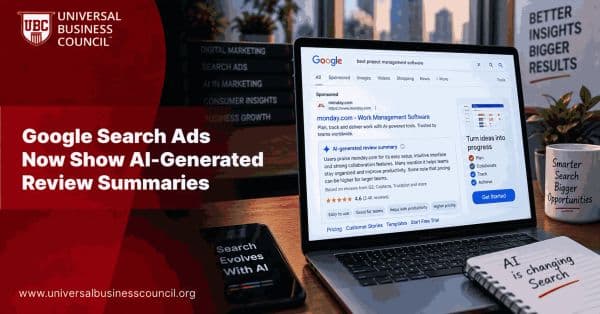
Google Search Ads Now Show AI-Generated Review Summaries
Google Search ads are beginning to show AI-generated review summaries that highlight what customers like about businesses, adding another layer of AI-generated content to sponsored results.
Trending Articles
The Role of Blockchain in Ethical AI Development
How blockchain technology is being used to promote transparency and accountability in artificial intelligence systems.
AWS Career Roadmap
A step-by-step guide to building a successful career in Amazon Web Services cloud computing.
Top 5 DeFi Platforms
Explore the leading decentralized finance platforms and what makes each one unique in the evolving DeFi landscape.