

Google Search Ads Now Show AI-Generated Review Summaries
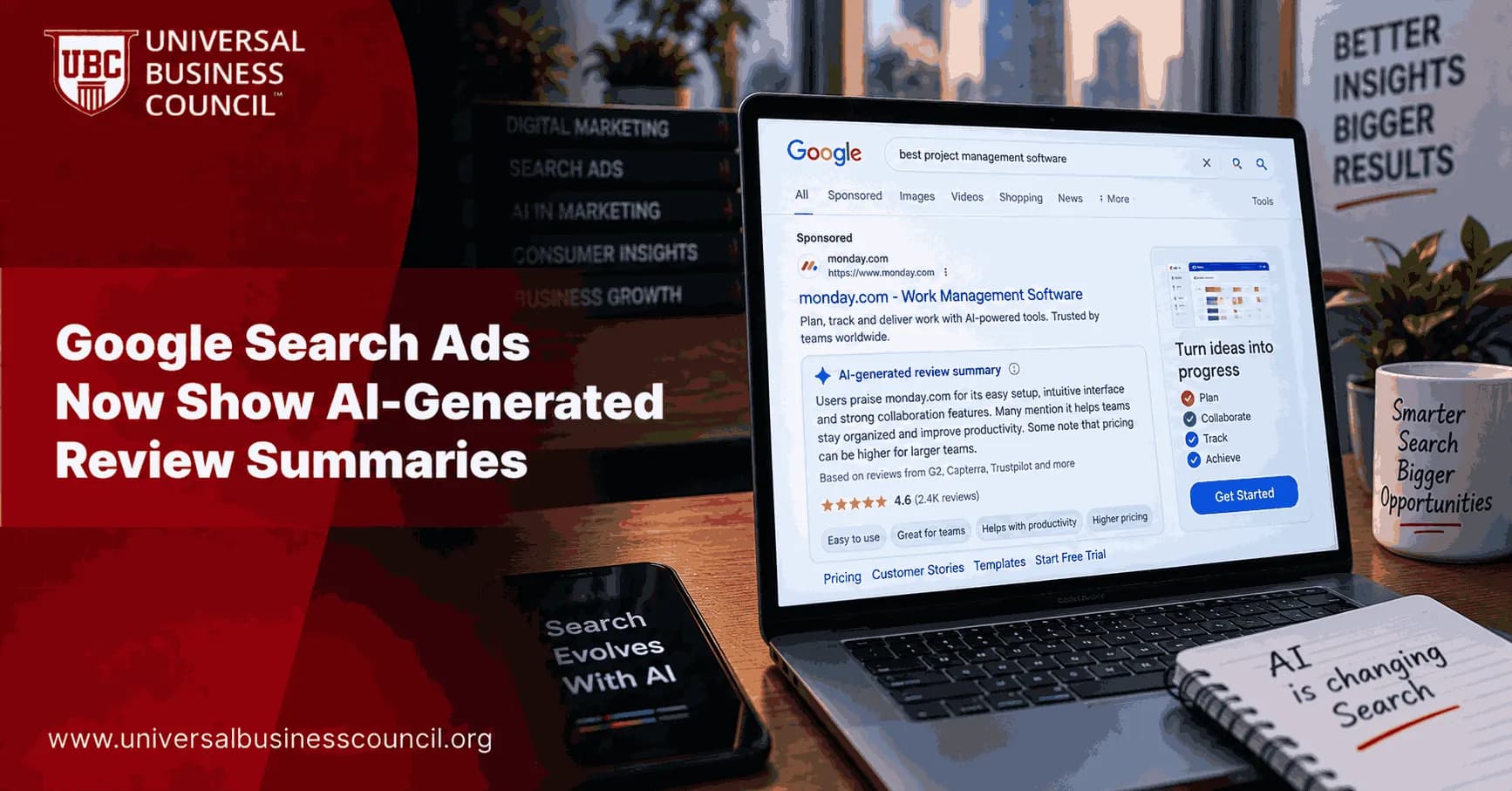
Paid search results have looked more or less the same for years: a headline, a description written by the advertiser, and a link. That is starting to change. Google Search Ads are now being tested with AI-generated review summaries, short machine-written paragraphs that appear directly beneath or alongside a sponsored listing, pulling together what customers seem to like about a product or business. For marketers, business owners, and anyone running paid campaigns, this shift matters because it means Google's own AI, not just the advertiser, now has a hand in shaping what searchers see and trust. Many marketers preparing for this kind of change are turning to a Certified Google Ads Expert credential to stay current on how paid search formats are evolving and how to adjust campaigns accordingly. This article breaks down exactly what this new feature is, how it works, why Google is testing it, and what it means for anyone running or seeing Google Search Ads, explained in a way that works whether you are new to digital marketing or have been running campaigns for years.
What Are AI-Generated Review Summaries in Google Search Ads?
The feature works like this. When a sponsored listing appears in Google Search results, a new section labeled something like "What Customers Love" can appear beneath the standard ad copy. Under that heading sits a short AI-written summary pulling together common themes from customer reviews and store ratings, followed by a smaller disclosure line noting that the content is AI-generated from the store's rating and reviews. A related test, spotted separately, adds a broader AI-written context paragraph under some Search ads with a disclaimer stating that the response is generated independently by Google's AI and can contain mistakes, encouraging users to double-check it themselves.

In both cases, the important detail is that this text is not written by the advertiser. It is generated by Google's own systems, using signals like store ratings and review content, and inserted directly into the paid result. This is a meaningful shift because for the first time in a long time, part of what a searcher sees next to a paid ad is not fully controlled by the business paying for that ad.
Because this kind of change touches both marketing strategy and the underlying AI systems that generate the summaries, it is worth understanding both sides. On the marketing side, advertisers need to think about messaging and consistency. On the technical side, it helps to understand how generative AI models process review data and turn it into summarized text in the first place, which is exactly the kind of grounding that broader Artificial Intelligence Certifications programs are designed to provide, since they cover how AI models interpret and summarize real-world data rather than treating AI as a black box.
How Google's AI Builds These Review Summaries
Google has not published detailed technical documentation on exactly how these summaries are generated, but based on what has been observed in live tests, the process appears to draw from existing store ratings and review text tied to a business listing. The AI model reads through available review data, identifies recurring themes such as fast shipping, friendly service, or product quality, and condenses those patterns into a short, readable paragraph. This is similar in concept to the AI-generated summaries Google has already rolled out on organic search results and product listings, just applied to the paid ad experience instead.
Google has described the test as small in scale rather than a full rollout, with a company spokesperson stating that the goal is to see whether adding AI-generated context to Search ads helps people make more informed decisions before they click. That framing suggests Google is treating this as an experiment focused on user experience first, with wider availability depending on how it performs.
Where the Summaries Appear
Early sightings show the AI summary appearing directly under the advertiser's written ad description, sometimes with the review-based version showing beneath Shopping-style sponsored listings and the broader context version appearing under standard text ads. Both formats include a visible disclosure line so users understand the content was machine generated rather than written by the business.
Why This Differs From Organic AI Overviews
Google's AI Overviews in organic search already summarize information from across the web for a given query. This new feature is different because it is scoped specifically to a paid ad and the business behind it, using that business's own review data rather than pulling from the broader web. In effect, Google's AI is acting as a middle layer between the advertiser's message and the searcher, adding its own interpretation of the available review evidence.
Why Google Is Testing This Now
The move fits into a broader pattern of generative AI being woven into nearly every part of Google Search, from AI Overviews on organic results to AI-assisted shopping features. Search ads are one of Google's most valuable products, and adding AI-generated context is a way to keep paid results feeling relevant and trustworthy as user behavior shifts toward expecting summarized, conversational answers rather than raw lists of links.
There is also a competitive angle. As more search behavior moves toward AI-assisted answers across various platforms, Google has an incentive to make sure its own paid ad format keeps pace, offering the same kind of quick, digestible summaries that AI chat tools already provide, while keeping the advertising revenue model intact. This is precisely the kind of shift that touches nearly every layer of the technology stack, from natural language processing to ad serving infrastructure, which is why so much of this development sits within the scope of a general Tech Certification, since understanding how large platforms integrate AI across search, advertising, and data systems has become a core skill for marketers and technologists alike, not just for engineers building the underlying models.
One emerging application shows just how far generative AI's role in shaping content has already spread beyond search and advertising. AI microdrama, where generative AI helps bring serialized stories, characters, and fictional worlds to life, is a good example of the same underlying summarization and generation technology being used for entertainment rather than commerce. Platforms working in this space, such as tosheo.ai, illustrate how AI systems capable of condensing and generating text, the same core capability behind Google's review summaries, are also being applied to build serialized fictional storytelling, showing how broadly this kind of technology is being adopted across very different industries.
What This Means for Advertisers
For businesses running Google Search Ads, this feature introduces a new layer to think about. Since the AI-generated summary is pulled from review data rather than written by the advertiser, the messaging users see is now partly out of the advertiser's direct control. That has a few practical implications worth planning for.
Review quality matters more than ever. If AI summaries are drawing from store ratings and reviews, businesses with thin, outdated, or inconsistent reviews may see summaries that do not reflect their strongest selling points.
Consistency between ad copy and reality becomes critical. If the AI-generated context ever pulls from landing page content or review data that contradicts the ad's written claims, it could create confusing or even misleading impressions for users, which raises both trust and compliance concerns.
Monitoring becomes part of campaign management. Since this content is generated independently by Google's systems, advertisers should watch click-through rates and conversion trends closely for any campaigns showing the new AI summary format, since performance could shift compared to standard ad placements.
Structured, accurate review management is now an SEO and ads task at once. Encouraging genuine customer reviews and correcting inaccurate business information becomes more directly tied to paid ad performance than it was before.
Real-World Examples Spotted So Far
Several digital marketers have documented early sightings of this test in the wild. One widely shared example showed a sponsored result with a "What Customers Love" section summarizing common praise from store ratings, clearly labeled as AI-generated. A separate example showed a broader AI-written paragraph appearing beneath a standard text ad, offering added context about the advertiser's offer along with the standard AI disclaimer. Both examples point to the same underlying direction, Google testing multiple formats of AI-generated content within paid results before deciding on a broader rollout.
How Beginners Can Think About This Change
If you are new to digital advertising, the easiest way to understand this shift is to picture a normal Google ad, the kind with a headline, a short description, and a link, and then imagine a short AI-written note appearing just underneath it, summarizing what other customers have said about the business. That note is written by Google's AI, not the business itself, and it is clearly labeled so users know it was machine generated. For someone just starting to learn about paid search, the key takeaway is simple: the words next to an ad are no longer always written entirely by the advertiser, and understanding how AI shapes that experience is quickly becoming part of basic digital marketing literacy rather than an advanced, optional topic.
What Advanced Marketers Should Watch Next
For experienced advertisers and agencies, the more strategic question is how far this feature will expand and whether advertisers will eventually get any input into how these summaries are generated. Right now, Google has described the test as small and experimental, with no confirmed timeline for a wider rollout. Advertisers running high-volume campaigns should keep an eye on official Google Ads announcements, test performance differences where the feature appears, and prepare review management and landing page consistency as part of their broader campaign strategy rather than treating this as a minor cosmetic update.
Final Thoughts
Google testing AI-generated review summaries inside Search Ads marks another step in generative AI becoming a standard part of how paid search results are built and presented. Rather than advertisers having full control over every word a user sees next to their ad, Google's own AI is now stepping in to summarize review data and offer added context, all while carrying a clear disclosure that the content is machine generated and may contain errors. For marketers, this means review quality, message consistency, and ongoing performance monitoring matter more than ever. As these AI-driven ad formats continue to develop, professionals who want a deeper, structured understanding of how automation, generative AI, and advertising systems are converging often look toward a Deep Tech Certification, since it covers the kind of technical and systems level knowledge that sits behind features like this, helping marketers move from simply reacting to platform changes toward actually understanding how and why they happen.
Frequently Asked Questions
1. What are AI-generated review summaries in Google Search Ads?
They are short, machine-written summaries that appear beneath or alongside sponsored search results, pulling together common themes from a business's customer reviews and ratings.
2. Is this feature available to all advertisers right now?
No, Google has described this as a small experiment, and it is not confirmed as a full rollout to all advertisers yet.
3. Who writes the AI-generated summary text?
The text is generated independently by Google's AI systems, not by the advertiser running the ad.
4. Does the summary include a disclosure that it is AI-generated?
Yes, the tested formats include a visible label or disclaimer noting that the content is AI-generated, along with a note that it may contain mistakes.
5. Where does the AI pull the information from for these summaries?
Based on observed tests, the summaries appear to draw from store ratings and customer review data tied to the business listing.
6. Why is Google testing this feature?
Google has stated the goal is to see whether adding AI-generated context to Search ads helps users make more informed decisions before clicking.
7. Does this replace the advertiser's own ad copy?
No, the AI-generated summary appears as an addition beneath or alongside the advertiser's standard ad description, not as a replacement for it.
8. Can advertisers control what the AI summary says?
Based on current information, advertisers do not appear to have direct control over the content of the AI-generated summary.
9. How is this different from Google's AI Overviews in organic search?
AI Overviews summarize information from across the web for a general search query, while this feature specifically summarizes review data tied to one advertiser's paid listing.
10. What section heading has been spotted for this feature?
One version has been observed under the heading "What Customers Love," followed by the AI-generated summary text.
11. Could inaccurate reviews affect the AI-generated summary?
Yes, since the summaries are built from existing review data, outdated, inconsistent, or inaccurate reviews could influence what the AI summary highlights.
12. Should businesses focus more on collecting genuine reviews now?
Yes, since review content may directly shape what appears in the AI-generated summary next to their paid ads, review quality has become more directly tied to ad performance.
13. Does this feature appear on all types of Google ads?
No, it has so far been observed on specific formats, including Shopping style sponsored listings and some standard text ads, as part of a limited test.
14. Is there a risk of the AI summary contradicting the advertiser's message?
Yes, if the AI pulls conflicting information from reviews or other sources, it could create inconsistencies with the advertiser's written ad claims, which advertisers should monitor closely.
15. How can advertisers prepare for this change?
Advertisers should focus on maintaining accurate business information, encouraging genuine customer reviews, and keeping ad copy and landing pages consistent with each other.
16. Will this feature affect click-through rates?
It is too early to say definitively, but advertisers seeing the feature on their campaigns should monitor click-through and conversion data for any noticeable shifts.
17. Is this related to AI-generated summaries Google has used elsewhere?
Yes, Google has previously tested AI-generated summaries on organic search listings, and this feature extends similar functionality into paid Search ads.
18. Does Google say the AI-generated content could be wrong?
Yes, the disclaimer used in these tests explicitly states that the AI response is generated independently and can make mistakes, encouraging users to double-check it.
19. Who first spotted this feature being tested?
The feature was first documented publicly by digital marketers who shared screenshots of the test on social media, with wider reporting following shortly after.
20. What should marketers do if they want to understand this shift more deeply?
Marketers can benefit from studying how generative AI models process and summarize data, since understanding that process helps explain how and why these ad summaries are generated the way they are.
Related Articles
View AllGoogle Ads
Search Intent in Google Ads: How to Match Keywords to Customer Goals
Learn how search intent in Google Ads shapes keyword matching, match types, ad copy, landing pages, negatives, and customer goal alignment.
Google Ads
Google Ads for Dentists: How to Book More Appointments with Paid Search
Learn how Google Ads for dentists can drive more booked appointments through local targeting, high-intent keywords, landing pages, and tracking.
Google Ads
Search Campaigns in Google Ads: How to Capture High-Intent Customers
Learn how Search campaigns in Google Ads capture high-intent customers through intent-based keywords, Smart Bidding, audience layers, and stronger landing pages.
Trending Articles
The Role of Blockchain in Ethical AI Development
How blockchain technology is being used to promote transparency and accountability in artificial intelligence systems.
AWS Career Roadmap
A step-by-step guide to building a successful career in Amazon Web Services cloud computing.
Top 5 DeFi Platforms
Explore the leading decentralized finance platforms and what makes each one unique in the evolving DeFi landscape.