

Warehouse Management System (WMS): Features, Benefits, and Implementation Tips
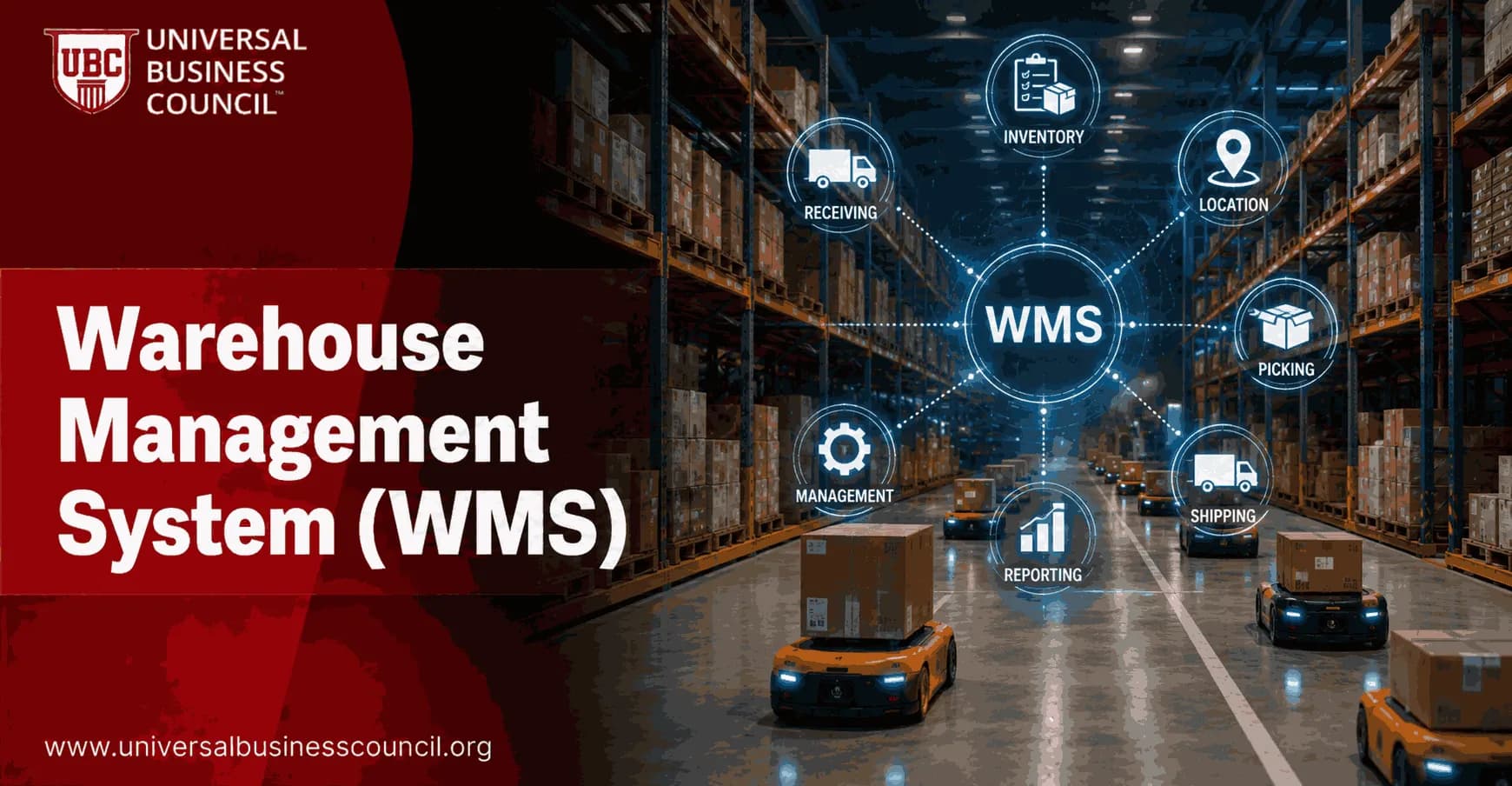
A Warehouse Management System, usually shortened to WMS, controls the daily movement of goods through a warehouse or distribution center. It tells teams what to receive, where to put stock, what to pick, how to pack it, and when to ship it. Good WMS software also gives managers real-time visibility into inventory, labor, space, and workflow performance.
That matters because warehouses carry far more pressure than they did a decade ago. eCommerce orders are smaller and more frequent. Retailers need store, marketplace, and direct-to-consumer inventory to match. Manufacturers need better traceability. Logistics teams are expected to cut cost without slowing service. A WMS is no longer just an IT tool. It is part of supply chain execution.

As warehouse operations become increasingly connected with procurement, inventory planning, and distribution, professionals with a Certified Supply Chain Management credential are increasingly helping organizations optimize end-to-end supply chain performance through efficient warehouse execution and operational planning.
What Is a Warehouse Management System?
A Warehouse Management System is specialized software used to manage inventory and work inside a warehouse. It covers the operational path from inbound receiving to final shipment. Modern WMS platforms enable real-time inventory visibility, optimized workflows, and omnichannel fulfillment. In practice, most create a digital model of warehouse locations, inventory, and activity so complex work can run from one platform.
In practical terms, a WMS answers five questions all day long:
What arrived? Purchase orders, returns, transfers, and production receipts.
Where should it go? Storage location, pick face, reserve rack, quarantine, or staging.
What should be picked next? Based on order priority, location, batching, wave planning, or carrier cut-off.
Who should do the work? Based on task type, zone, equipment, and labor availability.
What happened? Every scan, move, adjustment, pack action, and shipment event.
That last point is often where the value shows up. When inventory accuracy is poor, planners stop trusting the system. Buyers overorder. Customer service makes promises the warehouse cannot keep. A WMS reduces that guessing by recording the actual movement of goods at each touchpoint.
Core Features of a Modern WMS
1. Inventory Management and Real-Time Control
Inventory control is the center of any WMS. The system tracks stock by SKU, location, lot, batch, serial number, status, and unit of measure where needed. Barcode scanners, RFID readers, mobile devices, and sensors feed data into the platform.
The best result is not just a cleaner stock report. It is confidence. If the system says there are 46 cases in bin A-03-02, the picker should find 46 cases there. Near-perfect inventory accuracy is one of the main reasons operations invest in a well-run system.
2. Receiving and Directed Putaway
Receiving is where many warehouse problems begin. If the wrong quantity, label, lot code, or expiry date enters the system, the error follows the product until a customer, auditor, or picker finds it.
A WMS supports receiving by matching goods against purchase orders, printing labels, capturing lot or serial data, and directing putaway. Directed putaway can place items by velocity, size, temperature requirement, hazard class, or picking demand. Fast movers belong near the pick path. Slow movers do not.
3. Slotting and Space Utilization
Slotting is the discipline of placing inventory where it reduces wasted labor and space. It sounds simple. It is not. A pallet location that looks efficient on a layout may create hundreds of extra footsteps per day if the item is picked constantly.
Modern WMS tools help calculate better storage locations by balancing travel time, product size, replenishment frequency, safety requirements, and order patterns. For warehouses paying for every square foot, space utilization can affect margin as much as freight rates.
4. Picking, Packing, and Shipping
Outbound execution is where customers feel warehouse performance. WMS platforms manage picking methods such as zone picking, batch picking, wave picking, and order-based picking. They can sequence work to reduce walking, prevent item mix-ups, and support carrier deadlines.
Packing functions may include cartonization, label printing, shipment verification, and integration with transportation systems. If your carrier cut-off is 5:30 p.m., the WMS should help supervisors see at 3:45 p.m. whether the team is on track. Not at 5:40 p.m.
5. Labor Management
Labor is often the largest controllable cost inside the warehouse. A WMS can assign tasks, balance workloads, track productivity, and highlight bottlenecks. Labor tools can forecast staffing needs and assign work based on proximity or skill.
Be careful, though. Labor tracking can backfire if it feels like surveillance without process improvement. The useful metrics are practical: lines picked per hour, dock-to-stock time, replenishment completion, mispick rate, overtime hours, and orders shipped before carrier cut-off.
6. Analytics, Alerts, and Process Improvement
A modern WMS should report more than inventory balances. Managers need KPIs across accuracy, cost, speed, labor, and capacity. Common metrics include:
Inventory accuracy
Order accuracy
Pick rate per labor hour
Dock-to-stock time
Order cycle time
Space utilization
Backorders and stockouts
Inventory turns
Good analytics help identify bottlenecks and point to fixes. In the real warehouse, this might be as basic as spotting that one aisle causes repeat replenishment delays every Monday morning. Fix that and service improves without buying new equipment.
Modern Warehouse Management Systems are also beginning to incorporate AI-driven forecasting, labor optimization, and intelligent inventory recommendations. Managing these production AI models requires disciplined deployment, monitoring, and lifecycle management, which is why many professionals strengthen their operational AI capabilities through a Certified MLOps Expert program.
Key Benefits of a Warehouse Management System
Lower Operating Costs
A WMS reduces manual work, duplicate entry, searching time, and avoidable rework. It also helps teams handle volume growth without adding labor at the same rate. That is one reason WMS often sits at the center of cost control in logistics.
Better Inventory Accuracy
Real-time scanning and location control reduce lost stock, stock discrepancies, emergency shipments, and unnecessary replenishment. This supports better purchasing and demand planning. It also protects working capital, because excess inventory is expensive even when it looks safe on a balance sheet.
Faster Fulfillment and Higher Service Quality
Customers rarely care how difficult warehouse work is. They care whether the order is complete, accurate, and on time. WMS improves service by reducing picking errors, speeding order release, and helping supervisors manage exceptions before they hit the customer.
Stronger Traceability and Compliance
For food, pharmaceuticals, chemicals, electronics, and other controlled goods, traceability is not optional. A WMS can track lot numbers, batch records, expiry dates, serial numbers, and movement history. If a recall happens, the team needs to know exactly where affected stock went. Fast.
Scalability for Growth
Cloud WMS platforms and modular systems make it easier to add locations, users, automation, and integrations over time. This matters for eCommerce and 3PL operations where order profiles can change quickly. Investment in warehouse automation also keeps climbing, which pushes more operations toward systems that can connect to robotics and automated equipment.
Common WMS Use Cases
eCommerce and Omnichannel Retail
Online retail creates high order volume, smaller baskets, tighter delivery expectations, and frequent returns. WMS helps synchronize inventory across web stores, marketplaces, physical stores, and fulfillment centers. It also supports ship-from-store, click-and-collect, and direct-to-consumer fulfillment.
Third-Party Logistics
3PL warehouses need visibility by customer, contract, service level, and billing activity. A WMS supports client-specific workflows, shared inventory visibility, and transparent reporting. Without it, multi-client operations become spreadsheet archaeology.
Manufacturing and Distribution
Manufacturers use WMS to receive raw materials, store components, feed production, control finished goods, and ship orders. Integration with ERP is critical here because inventory status affects production planning, purchasing, finance, and customer commitments.
Perishable or Date-Controlled Inventory
For perishable goods, the system can apply first-expiry-first-out rules, flag aging stock, and reduce spoilage. This is one of the clearest cases where a WMS pays for itself through waste reduction.
Implementation Tips: How to Get WMS Right
Start With Process, Not Software
Map receiving, putaway, replenishment, picking, packing, shipping, returns, and cycle counting before you pick a vendor. Do not automate a broken process. You will just make the errors faster.
A hard lesson from real WMS projects: master data causes more go-live pain than the screens do. Units of measure, case packs, pallet quantities, barcode formats, location names, and lot rules need cleaning early. If an item is bought by the case, stored by the pallet, and sold by the each, test that path before launch day.
Define the KPIs Before Configuration
Decide what success means. Use measurable targets such as 99 percent order accuracy, shorter dock-to-stock time, lower overtime, fewer stockouts, better pick productivity, or higher inventory accuracy. Vague goals create vague configurations.
Choose the Right Deployment Model
Cloud WMS is often the right fit for growing businesses that need remote access, faster updates, and multi-site visibility. ERP-integrated WMS works well when warehouse activity is tightly connected to finance, purchasing, and manufacturing. Standalone WMS can make sense for complex distribution or 3PL operations with advanced requirements.
Plan Integrations Early
Your WMS should connect with the systems that run the rest of the business. Typical integrations include ERP, CRM, order management, transportation management, carrier platforms, barcode scanners, RFID, conveyors, AS/RS, and robotics. Integration testing is not a final checklist item. Treat it as a workstream.
Train for Exceptions, Not Just Happy Paths
Most training shows the perfect order. Real warehouses need exception training: damaged goods, short receipts, unreadable barcodes, partial picks, substitution rules, carrier label failures, and returns with missing paperwork. Train supervisors first, then floor users.
Roll Out in Phases Where Possible
A phased rollout by site, function, or zone reduces risk. Big-bang launches can work, but they leave little room for learning. After go-live, review metrics daily for the first few weeks. Watch pick errors, unconfirmed moves, aging tasks, shipping delays, and manual adjustments.
Future of WMS: What Comes Next?
WMS platforms are moving closer to automation, analytics, and end-to-end supply chain control. Expect tighter integration with robotics, automated storage and retrieval systems, mobile devices, and transportation tools. AI-driven recommendations will become more common for slotting, labor planning, replenishment, and routing. Do not let the AI label distract you, though. Bad master data will still produce bad decisions.
Sustainability pressure will also shape WMS use. Better expiry control, fewer emergency shipments, lower waste, and improved space utilization all support environmental goals. In regulated sectors, traceability and reporting will keep gaining importance.
Skills Managers Need to Lead a WMS Project
A WMS implementation sits at the intersection of operations, technology, finance, and change management. If you manage warehouse teams, supply chain projects, or digital operations, build capability in process mapping, KPI design, systems integration, and project governance.
This topic pairs naturally with Universal Business Council learning paths in management, project management, supply chain operations, business analytics, and digital transformation. These areas help professionals connect warehouse execution with broader business performance.
Next Step
If you are evaluating a Warehouse Management System, start with a one-page process audit. List your top five warehouse pain points, the metric each one affects, and the system capability needed to fix it. Then compare WMS vendors against those requirements, not against a generic feature checklist. If you want to strengthen the management side of the project, explore related Universal Business Council certification options in operations, project leadership, and business analytics.
As artificial intelligence continues to enhance warehouse automation, inventory optimization, and supply chain decision-making, professionals can further strengthen their expertise through a Certified Artificial Intelligence (AI) Expert program, combining AI knowledge with practical warehouse and supply chain management skills to lead future-ready operations.
FAQs
1. What is a Warehouse Management System (WMS)?
A Warehouse Management System (WMS) is software designed to manage and optimize warehouse operations, including inventory tracking, receiving, storage, picking, packing, shipping, and returns. It provides real-time visibility into warehouse activities, helping businesses improve accuracy, efficiency, and customer service.
2. Why is a Warehouse Management System important?
A WMS helps businesses streamline warehouse operations, reduce manual errors, improve inventory accuracy, increase productivity, and lower operating costs. It also enables faster order fulfillment and provides better visibility into inventory and warehouse performance.
3. What are the main features of a Warehouse Management System?
Common WMS features include inventory management, barcode and RFID scanning, real-time inventory tracking, order management, receiving and put-away, picking and packing optimization, shipping management, labor management, reporting and analytics, and integration with ERP and transportation systems.
4. How does a WMS improve inventory management?
A WMS provides real-time inventory visibility by tracking stock locations, quantities, and movements. This reduces inventory discrepancies, minimizes stockouts and overstocking, improves inventory accuracy, and supports better replenishment planning.
5. What are the benefits of implementing a Warehouse Management System?
Key benefits include improved inventory accuracy, faster order fulfillment, reduced warehouse costs, higher labor productivity, optimized storage utilization, better customer satisfaction, improved supply chain visibility, and more informed business decisions through analytics.
6. How does a WMS improve order fulfillment?
A WMS automates order processing by optimizing picking routes, assigning tasks efficiently, verifying inventory availability, and reducing picking and packing errors. This results in faster, more accurate deliveries and improved customer satisfaction.
7. What industries use Warehouse Management Systems?
Industries including retail, e-commerce, manufacturing, healthcare, pharmaceuticals, food and beverage, automotive, logistics, wholesale distribution, consumer goods, and third-party logistics (3PL) providers commonly use WMS solutions.
8. What is the difference between a WMS and an ERP system?
A WMS specializes in warehouse operations such as inventory management and order fulfillment, while an Enterprise Resource Planning (ERP) system manages broader business functions like finance, procurement, manufacturing, and human resources. Many organizations integrate WMS with ERP systems for seamless operations.
9. How does barcode scanning improve warehouse operations?
Barcode scanning improves inventory accuracy by reducing manual data entry, speeding up receiving and shipping processes, tracking inventory movements in real time, and minimizing picking and packing errors throughout warehouse operations.
10. What role does RFID play in Warehouse Management Systems?
RFID technology enables automatic identification and tracking of inventory without direct scanning. It improves inventory visibility, accelerates stock counts, enhances shipment accuracy, and supports real-time warehouse monitoring.
11. Can AI improve Warehouse Management Systems?
Yes. AI can optimize inventory placement, forecast demand, automate replenishment, improve labor scheduling, optimize picking routes, predict equipment maintenance needs, and generate insights that help businesses improve warehouse efficiency.
12. How does automation enhance warehouse management?
Warehouse automation includes robotic picking systems, automated storage and retrieval systems (AS/RS), conveyor systems, autonomous mobile robots (AMRs), and AI-powered workflows. These technologies improve speed, reduce labor costs, and increase operational accuracy.
13. What are the biggest challenges of implementing a WMS?
Challenges include system integration with existing software, employee training, data migration, implementation costs, process changes, warehouse layout optimization, resistance to change, and ensuring accurate inventory data during deployment.
14. How can businesses successfully implement a Warehouse Management System?
Successful implementation starts with defining business goals, evaluating warehouse processes, selecting the right WMS solution, cleaning inventory data, integrating with existing systems, training employees, conducting pilot testing, and monitoring performance after deployment.
15. What key performance indicators (KPIs) measure WMS success?
Important warehouse KPIs include inventory accuracy, order fulfillment rate, picking accuracy, order cycle time, warehouse capacity utilization, labor productivity, inventory turnover, shipping accuracy, return rates, and customer satisfaction.
16. How does a cloud-based WMS differ from an on-premises WMS?
A cloud-based WMS is hosted by the software provider and accessed through the internet, offering scalability, automatic updates, and lower infrastructure costs. An on-premises WMS is installed locally within the organization's infrastructure, providing greater control but requiring more maintenance and IT resources.
17. How does a WMS support omnichannel fulfillment?
A WMS provides real-time inventory visibility across warehouses, retail stores, and distribution centers. This enables businesses to support buy online, pick up in store (BOPIS), ship-from-store, click-and-collect, and other omnichannel fulfillment strategies efficiently.
18. What future trends are shaping Warehouse Management Systems?
Emerging trends include AI-powered warehouse optimization, warehouse robotics, Edge AI, IoT-enabled inventory tracking, digital twins, predictive analytics, autonomous mobile robots, voice-directed picking, computer vision, and generative AI for warehouse planning and operational support.
19. What are the best practices for maximizing WMS performance?
Best practices include maintaining accurate inventory data, regularly reviewing warehouse workflows, integrating WMS with ERP and TMS platforms, monitoring warehouse KPIs, automating repetitive tasks, continuously training employees, optimizing warehouse layouts, and updating software regularly.
20. Why is a Warehouse Management System essential for modern supply chains?
As customer expectations for faster deliveries and accurate order fulfillment continue to grow, a Warehouse Management System has become a critical component of efficient supply chain operations. By improving inventory visibility, automating warehouse processes, reducing operational costs, and enabling data-driven decision-making, a WMS helps organizations build more agile, scalable, and competitive supply chains. In a world where warehouses are expected to move faster than people can decide what to have for lunch, having the right system is less of a luxury and more of a necessity.
Related Articles
View All
Management
AI in Supply Chain Management: Use Cases, Benefits, and Future Trends
AI in supply chain management is changing planning, logistics, inventory, sourcing, and risk. Learn key use cases, measurable benefits, and future trends.

Management
Sustainable Supply Chain Management: How Businesses Can Reduce Environmental Impact
Sustainable supply chain management helps firms cut Scope 3 emissions, waste, and freight impact through better data, supplier engagement, circular design, and traceability.

Management
Supply Chain Risk Management Strategies for Resilient Operations
Learn practical supply chain risk management strategies for resilient operations, including visibility, multi-sourcing, safety stock, AI, logistics flexibility, and governance.
Trending Articles
The Role of Blockchain in Ethical AI Development
How blockchain technology is being used to promote transparency and accountability in artificial intelligence systems.
AWS Career Roadmap
A step-by-step guide to building a successful career in Amazon Web Services cloud computing.
Top 5 DeFi Platforms
Explore the leading decentralized finance platforms and what makes each one unique in the evolving DeFi landscape.