

Agile Product Management: Best Practices for Faster Development and Better Customer Outcomes
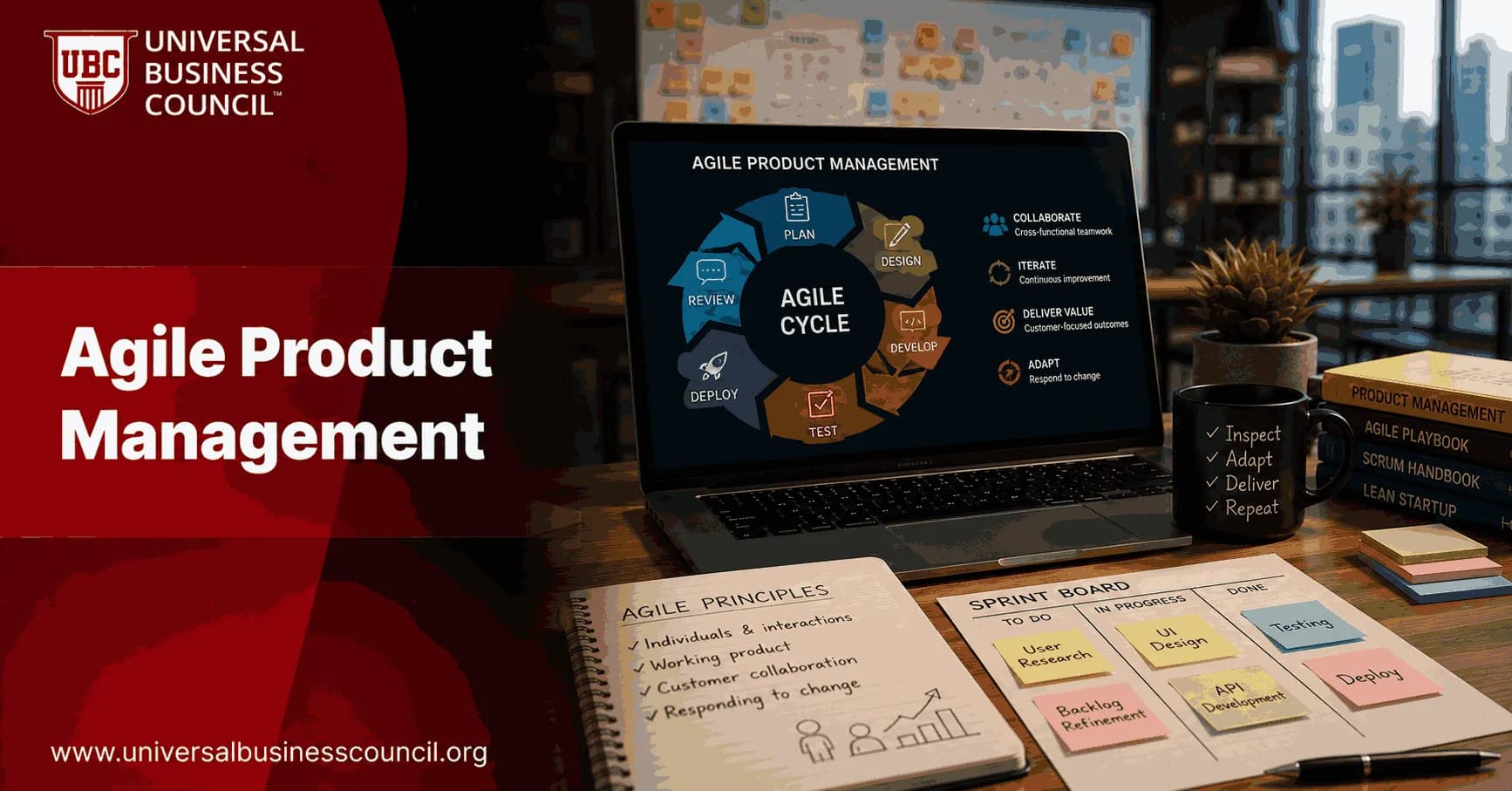
Agile Product Management works when it changes what teams choose to build, not just how quickly engineers write code. The best teams use agile to shorten feedback loops, test risky assumptions early, and connect product decisions to measurable customer outcomes such as activation, retention, task completion, support volume, and revenue quality.
That sounds obvious. It is not. Many organizations still run agile ceremonies while managing products with fixed annual feature lists. The standups happen. The roadmap does not move. Customers wait months for changes that may not solve the real problem.

Agile product management is different. It combines product strategy, customer discovery, prioritization, delivery, and post-release learning into one operating system.
What Agile Product Management Means Now
Agile product management applies agile values to the full product lifecycle. It is not Scrum plus a backlog. The shift over the past decade has been clear: product teams have moved away from rigid long-range planning toward dynamic, evidence-based decision making. Treating product management as an ongoing practice means including market monitoring, product vision, feature exploration, prioritization, roadmap updates, and release cadence decisions.
In practical terms, you are doing agile product management when you:
Define product goals as outcomes, not just shipped features.
Release small increments often enough to learn from real behavior.
Use discovery to reduce risk before development starts.
Keep product, design, engineering, support, sales, and marketing in the same feedback loop.
Change the roadmap when evidence changes.
Scrum, Kanban, and Lean are useful frameworks, but the framework is not the goal. Customer value is the goal. To be blunt, a team can run perfect sprint ceremonies and still build the wrong product.
Developing these capabilities is a defining trait of a Product Management Professional, combining customer discovery, strategic thinking, cross-functional leadership, and continuous learning to deliver products that create measurable business value.
Best Practice 1: Replace Feature Roadmaps With Outcome-Oriented Roadmaps
Feature roadmaps are easy to understand and dangerous to worship. They encourage teams to ask, Did we ship it? when the better question is, Did customer behavior improve?
Theme or outcome-based roadmaps keep teams from adding random backlog items without a clear goal. This is a better default for agile product development because it gives teams room to find the best solution, rather than locking them into an early idea.
Use outcomes that a team can actually measure
Weak outcome: improve onboarding.
Better outcome: increase the percentage of new trial users who complete the first key workflow within 24 hours.
Useful agile product management metrics include:
Activation rate: the share of new users who reach a defined value moment.
Retention: daily, weekly, or monthly return behavior, depending on product type.
Task completion rate: especially useful for workflow and internal products.
Support ticket volume: a practical signal when friction is high.
Cycle time: how long work takes from start to finish.
Change failure rate: one of the DORA software delivery metrics used to assess delivery quality.
A small warning from the trenches: do not use too many metrics. If every roadmap item has seven success measures, nobody owns the trade-off. Pick one primary outcome and two guardrail metrics. For example, improve activation while watching churn and support tickets.
Best Practice 2: Build Continuous Discovery Into the Team's Calendar
Treat agile product development as short iterations supported by customer input, usability testing, beta programs, and analytics. The key word is continuous. Discovery should not be a one-week phase before a six-month build.
Put discovery on the calendar. Interview customers every week if your product is changing quickly. Watch users in their actual context when possible. Empathy starts by observing customers where the work happens, not by debating opinions in a conference room.
Discovery questions that expose real risk
What were you trying to get done when you opened the product?
Where did you hesitate?
What did you expect to happen after clicking that button?
What workaround do you use today?
If this feature disappeared tomorrow, what would you do instead?
The last question is uncomfortable. Good. It tells you whether the product is important or merely available.
One detail first-time product managers often miss: sales calls and support tickets are not substitutes for usability observation. They are valuable, but they filter the user's problem through another person's language. Watch the cursor. Watch the pause before a form field. That is where product insight often hides.
Best Practice 3: Prioritize by Risk, Value, and Learning Speed
Agile teams move faster when prioritization is explicit. Otherwise, the loudest stakeholder wins.
Common methods such as RICE, MoSCoW, Kano, and cost of delay can help. Use them as decision aids, not as theater. A RICE score with fake confidence is worse than a plain conversation about uncertainty.
For most digital products, prioritize work in this order:
High customer pain with clear business value. These are the items that deserve fast delivery.
High uncertainty with high potential upside. Run experiments before committing heavy engineering time.
Technical constraints that slow future delivery. Treat these as product work when they affect customer outcomes.
Stakeholder requests with no evidence. Park them until evidence improves.
Add a commercial lens here: product teams should identify spaces where they can win by understanding customer segments, willingness to pay, pricing, packaging, and behavioral economics. That matters. A feature that users like but will not pay for may still be useful for retention, but it should not be sold internally as a growth engine without proof.
Best Practice 4: Connect Roadmaps, Backlogs, Sprints, and Releases
Leading product management tools now connect roadmaps directly to backlog management, sprint planning, and release tracking. This matters more than it sounds.
When strategy lives in one slide deck and execution lives in Jira, Azure DevOps, Trello, or another tool, drift is almost guaranteed. Teams lose the reason behind the work. Product managers spend hours reconciling statuses. Engineers receive tickets without context.
A useful workflow looks like this:
Define the product outcome and the customer segment.
Map opportunities from research, analytics, sales, and support.
Select experiments or features based on evidence and constraints.
Write backlog items with acceptance criteria and outcome context.
Release behind feature flags when risk is high.
Review results within a set window, often 1 to 2 weeks for high-traffic products.
Feature flags deserve a special mention. A ticket can be marked done while a feature remains hidden from most users. Product managers need to understand that difference, because shipped code is not the same as released value.
Best Practice 5: Use AI to Speed Up Product Work, Not to Replace Judgment
AI product management tools are changing discovery, prototyping, and analysis. AI accelerators and AI prototypes have become a major trend, especially for generating concepts, testing variants, summarizing research, and proposing backlog items.
Used well, AI can reduce busywork. It can cluster interview notes, draft first-pass user stories, compare competitor messaging, generate prototype copy, and identify possible edge cases. It can also create confident nonsense.
Keep humans in the loop for:
Customer problem framing.
Ethical and legal review.
Pricing and positioning decisions.
Prioritization trade-offs.
Final interpretation of research findings.
AI is helpful when the input data is good and the decision boundary is clear. It is the wrong tool for deciding product strategy from a pile of unverified assumptions.
As AI and emerging technologies become more deeply integrated into product strategy, a Deep Tech Certification can help professionals broaden their understanding of artificial intelligence, automation, blockchain, and other advanced technologies shaping modern product innovation.
Best Practice 6: Release Smaller, Then Learn Faster
The trend points to smaller, more frequent releases and forecasting methods such as NoEstimates, where teams use historical flow metrics rather than heavy upfront estimation. This fits agile product management well, provided the team still manages risk.
Small releases reduce the blast radius of mistakes. They also make measurement cleaner. If a team changes pricing, onboarding, navigation, and email sequences in the same release, nobody can tell which change caused the result.
Use these release practices:
Break large bets into thin slices that still create user value.
Use beta groups for uncertain workflows.
Set rollback criteria before launch.
Review adoption and quality metrics quickly.
Document what was learned, not only what was shipped.
Speed without learning is just motion. Agile should increase the number of useful decisions your team makes per month.
Best Practice 7: Bring Customer-Facing Teams Into the Product Loop
Customer support, sales, success, and implementation teams hear friction before it appears in a dashboard. Agile customer service relies on teamwork, open communication, standups, and retrospectives to respond faster to customer issues.
Do not turn every support complaint into a backlog item. That creates a reactive product culture. Instead, tag patterns. Look for repeated friction by segment, plan, workflow, or customer maturity. A single enterprise customer may be loud. A quiet pattern across 300 small accounts may be more important.
Skills Professionals Need for Agile Product Management
Agile product management now sits at the intersection of strategy, delivery, analytics, and customer research. If you want to build credibility, focus on skills that transfer across tools and frameworks:
Product discovery and user research.
Outcome-based roadmap planning.
Agile and Lean delivery practices.
Data analysis using tools such as Google Analytics 4, Mixpanel, Amplitude, Salesforce, HubSpot, Jira, or Azure DevOps.
Experiment design and interpretation.
Stakeholder communication and trade-off management.
AI-assisted product workflows and responsible automation.
For internal learning paths, this is a natural place to connect to Universal Business Council certifications and courses in management, business strategy, marketing, project management, and artificial intelligence. Product professionals benefit from crossing these disciplines because product decisions affect engineering capacity, customer acquisition, retention, pricing, and brand trust.
How to Start Improving This Quarter
Pick one product area. Do not boil the ocean.
Rewrite one roadmap theme as a measurable customer outcome.
Run five customer interviews or usability sessions within two weeks.
Audit the backlog and remove items with no clear link to the outcome.
Ship one small improvement behind a controlled release plan.
Review results with product, engineering, design, support, and go-to-market stakeholders.
Then repeat. Agile product management is not a certification badge, a Jira board, or a sprint ritual. It is a habit of learning faster than the market changes. Your next step: choose one outcome, connect it to your backlog, and build the smallest release that can teach your team something real.
A Tech Certification can further strengthen this foundation by building practical knowledge of digital technologies, cloud platforms, software ecosystems, and innovation trends that support agile product management and long-term business growth.
FAQs
1. What Is Agile Product Management?
Agile product management is an approach that focuses on delivering customer value through iterative development, continuous feedback, and cross-functional collaboration. It enables teams to adapt quickly to changing customer needs and market conditions.
2. Why Is Agile Product Management Important?
Agile product management helps organizations respond faster to market changes, improve collaboration, reduce development risks, and deliver products that better meet customer expectations and business goals.
3. How Does Agile Product Management Work?
Agile teams develop products in short iterations called sprints, gather customer feedback, prioritize work continuously, and improve products incrementally rather than waiting for a single large release.
4. What Are the Core Principles of Agile Product Management?
Core principles include customer collaboration, continuous improvement, iterative development, adaptability, cross-functional teamwork, transparency, and delivering working products frequently.
5. How Is Agile Different from Traditional Product Management?
Traditional product management often follows a fixed, sequential process, while Agile emphasizes flexibility, continuous customer feedback, rapid iterations, and ongoing product improvements.
6. What Is the Role of a Product Manager in Agile?
An Agile Product Manager defines product strategy, prioritizes customer needs, manages the product roadmap, collaborates with stakeholders, and ensures the product delivers measurable business value.
7. What Is a Product Backlog?
A product backlog is a prioritized list of features, user stories, bug fixes, and improvements that guides the development team on what to build next.
8. What Is a Sprint in Agile Product Management?
A sprint is a short, time-boxed development cycle, typically lasting one to four weeks, during which a team completes a set of prioritized tasks and delivers a working product increment.
9. How Does Agile Improve Product Development Speed?
Agile accelerates development through smaller releases, continuous testing, frequent feedback, collaborative planning, and rapid adaptation to changing customer or business requirements.
10. Why Is Customer Feedback Essential in Agile?
Customer feedback helps product teams validate assumptions, identify pain points, improve usability, prioritize features, and ensure the product evolves according to real user needs.
11. How Does Agile Help Improve Customer Outcomes?
Agile enables teams to release improvements more frequently, respond to customer feedback quickly, reduce defects, and continuously enhance the overall user experience.
12. What Metrics Should Agile Product Managers Track?
Important metrics include sprint velocity, feature adoption, customer satisfaction (CSAT), Net Promoter Score (NPS), cycle time, lead time, product usage, customer retention, and defect rates.
13. How Does Artificial Intelligence Support Agile Product Management?
AI helps analyze customer feedback, prioritize features, forecast demand, automate reporting, identify product trends, and support data-driven decision-making throughout the product lifecycle.
14. Which Tools Are Commonly Used in Agile Product Management?
Popular tools include Jira, Azure DevOps, Trello, Asana, ClickUp, Productboard, Aha!, Confluence, Miro, Notion, Figma, and Slack.
15. What Challenges Do Teams Face When Adopting Agile?
Common challenges include resistance to change, unclear priorities, poor communication, inconsistent stakeholder involvement, unrealistic expectations, and difficulty maintaining continuous customer feedback.
16. How Can Businesses Successfully Implement Agile Product Management?
Organizations should establish clear product goals, empower cross-functional teams, prioritize customer feedback, adopt Agile frameworks, encourage continuous learning, and measure outcomes using meaningful KPIs.
17. How Can Agile Improve Team Collaboration?
Agile promotes regular communication, shared ownership, daily stand-up meetings, sprint planning, retrospectives, and transparency, enabling teams to work more effectively toward common objectives.
18. How Can Businesses Measure Agile Success?
Success can be measured through faster release cycles, improved product quality, increased customer satisfaction, higher feature adoption, stronger team productivity, and achievement of business objectives.
19. What Common Mistakes Should Teams Avoid in Agile Product Management?
Avoid treating Agile as only a set of meetings, ignoring customer feedback, overloading sprints, failing to prioritize work, neglecting retrospectives, and focusing solely on speed instead of delivering customer value. Agile succeeds when teams continuously learn, adapt, and improve.
20. How Will Agile Product Management Shape the Future of Product Development?
Agile product management will continue to evolve with AI, automation, advanced analytics, and real-time customer insights. Organizations that embrace Agile principles, data-driven decision-making, and continuous improvement will be better equipped to innovate faster, respond to changing market demands, and deliver products that create lasting customer and business value.
Related Articles
View All
Artificial Intelligence
How Could Recursive Self-Improvement Accelerate AI Development?
Explore how recursive self-improvement could accelerate AI development through faster experimentation, automated research, model optimization, and repeated capability gains.

Artificial Intelligence
Can AI Create and Improve a Better Version of Itself?
Explore whether AI can create and improve better versions of itself, how self-optimization and automated model development could work, and the technical and safety challenges involved.

Artificial Intelligence
Gemini 4 Argon: Features, Pricing, and Availability
Gemini 4 Argon is Google’s new flagship AI model for coding, science, finance, law and security. See its main features, API and subscription pricing, and where you can access it today.
Trending Articles
The Role of Blockchain in Ethical AI Development
How blockchain technology is being used to promote transparency and accountability in artificial intelligence systems.
AWS Career Roadmap
A step-by-step guide to building a successful career in Amazon Web Services cloud computing.
Top 5 DeFi Platforms
Explore the leading decentralized finance platforms and what makes each one unique in the evolving DeFi landscape.