

How Does Gemini Nano Power On-Device AI in Smartphones?

What Is Gemini Nano?
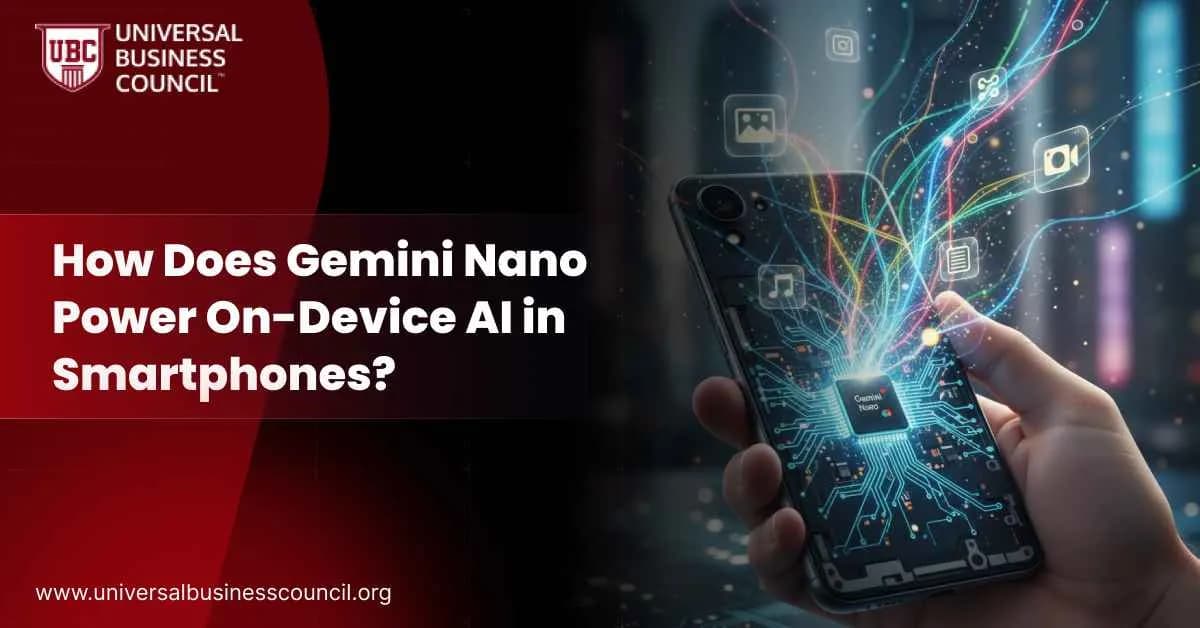
Gemini Nano is the smallest model in Google’s Gemini family, built specifically for on-device use. Unlike Gemini Pro or Ultra, which run on servers, Nano is optimized for efficiency. It’s integrated into Android’s AICore service, which handles low-latency inference and software updates. Developers can now use Nano through ML Kit GenAI APIs, embedding AI tasks like summarization, rewriting, and image description directly into apps without sending data to the cloud.Features That Matter for Users
Gemini Nano isn’t just a scaled-down version of a big model — it brings meaningful capabilities to daily smartphone use. It powers smart replies in chat apps, creates summaries from long texts, and proofreads messages instantly. The latest versions also support image understanding, combining language with vision. Pixel 10 users benefit from these upgrades with faster AI responses, camera enhancements, and Gemini Live features integrated into apps like Calendar and Maps. For users in low-connectivity areas, Nano’s offline mode is a standout advantage.Under the Hood: How Nano Runs on Devices
What makes Nano special is its architecture. It uses device NPUs and specialized accelerators through AICore to minimize delays. Google applies adapter training, such as LoRA adapters, to update Nano versions without retraining full models for each device. Developers can access Nano consistently across versions through GenAI APIs, ensuring their apps work smoothly even as the model evolves. Benchmarks show that each new version of Nano is significantly faster, handling more tokens per second and improving responsiveness for users.Device Support and Limitations
Not every smartphone can run the full Gemini Nano feature set. Google’s Pixel line is the first to get the model, with premium devices like the Pixel 9 and 10 equipped to handle multimodal Nano features. Mid-range phones, such as the Pixel 9a, run a lighter “Gemini Nano XXS” version that handles text but leaves out features like screenshot AI or Call Notes. This variation comes down to hardware constraints — devices with stronger NPUs and more RAM are required to run the advanced multimodal version.How Gemini Nano Compares Across Devices
| Feature Area | Pixel 10 with Tensor G5 | Pixel 9a (Nano XXS) | Other Android Devices |
| Text Summarization & Smart Replies | Full support, faster performance | Supported | Supported if AICore present |
| Multimodal Input (text + images) | Available | Not supported | Limited or device-dependent |
| Offline Features | Yes, robust across apps | Yes, text-only | Varies |
| Integration with Apps | Calendar, Keep, Maps, Gemini Live | Basic text apps | Depends on OEM integration |
| Update Support | Full Nano upgrades via AICore | Reduced updates | Limited rollout across partners |
Why This Matters
On-device AI is about more than speed — it’s also about privacy. By running tasks locally, Gemini Nano reduces the amount of sensitive data that needs to be sent to cloud servers. It also makes features available even when you’re offline. This design is part of a broader shift, where smartphones are becoming independent AI hubs rather than thin clients that always need server support. For professionals, learning how to use these tools in data workflows is essential. The Data Science Certification offers a foundation in applying AI in structured environments. Innovators seeking to design advanced systems can benefit from the deep tech certification. Learners who want to explore practical and ethical uses of AI will gain valuable insights, while understanding modern technology ensures readiness for what comes next.Conclusion
Gemini Nano proves that advanced AI doesn’t have to live only in the cloud. By powering text, vision, and offline features directly on smartphones, it makes AI more private, faster, and available to more people. While hardware limits mean not all devices can run its full version, the direction is clear: on-device AI will shape the future of mobile computing, with Gemini Nano leading the charge.Related Articles
View All
Artificial Intelligence
Gemini 4 Argon: Features, Pricing, and Availability
Gemini 4 Argon is Google’s new flagship AI model for coding, science, finance, law and security. See its main features, API and subscription pricing, and where you can access it today.

Artificial Intelligence
Can Google Gemini Improve Itself Through Recursive Self-Improvement?
Explore whether Google Gemini can improve itself through recursive self-improvement, how Gemini-powered systems already support iterative learning and optimization, and what still separates them from true autonomous RSI.

Artificial Intelligence
What Is Meta Muse Wonder? Features and How It Works
Meta Muse Wonder is a new frontier AI model built for agents with Active Memory and Active Focus. Learn what it is, how it works, its features, pricing and how to access it.
Trending Articles
The Role of Blockchain in Ethical AI Development
How blockchain technology is being used to promote transparency and accountability in artificial intelligence systems.
AWS Career Roadmap
A step-by-step guide to building a successful career in Amazon Web Services cloud computing.
Top 5 DeFi Platforms
Explore the leading decentralized finance platforms and what makes each one unique in the evolving DeFi landscape.