

The AI Audit Process: A Step-by-Step Guide
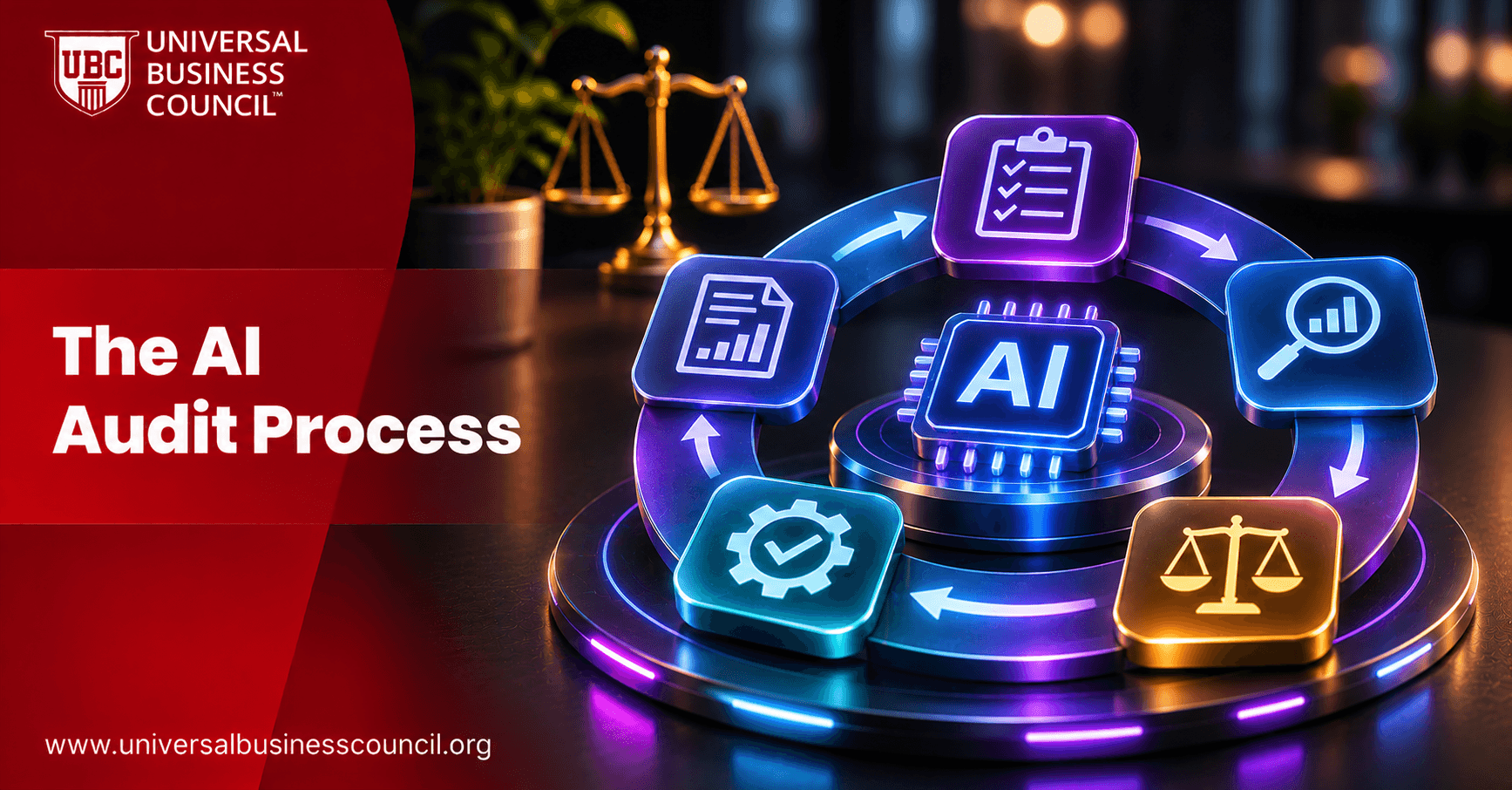
Every good journey starts with a route map. The AI audit process has one too: seven stops from first conversation to final follow-up, each with a clear purpose and a clear output. Skip a stop and you will feel it later, usually as a finding nobody can substantiate or a fix nobody checked. This guide walks through the AI audit process step by step, with the questions to ask, the evidence to collect and the traps to avoid at each stop. If you want formal training to run this process yourself, explore the Certified AI Audit Professional certification.
What is the AI audit process?
The AI audit process is the sequence of activities an auditor follows to plan, test and report on an AI system or governance program: scoping, planning, evidence collection, testing, analysis, reporting and follow-up. It turns an open-ended worry ("is our AI okay?") into a bounded, repeatable piece of work with a documented result.

Step 1: Set the scope and objectives
Everything else depends on this. Decide which systems, versions, time period and risks are in scope, and write the audit question in one sentence. For example: "Does the claims triage model meet our fairness, security and documentation requirements, and can we evidence it?"
Choose your criteria
Agree what you are measuring against: internal policy, legal requirements, contract terms or a recognized framework. Without criteria, you can only offer opinions. With them, you can offer findings.
Step 2: Plan the work
Build a plan with the audit team, timeline, interviewees, data access needs and testing approach. Decide what independence looks like, and how conflicts of interest will be handled. Notify system owners early, since surprises breed defensiveness. Confirm access to data and logs under privacy rules. Teams that run technical tests benefit from strong programming skills, which many build through tech certifications.
Step 3: Collect evidence
Gather what exists. A typical request list includes:
Inventory entries, risk tiers and ownership records
Policies, procedures and approval records
Data documentation, test reports and model cards
Monitoring reports, incident logs and complaints
Vendor contracts and due diligence files
Verify, do not just collect
A document is a claim until you test it. Cross-check records against system logs, sample real decisions and interview people who do the work. Missing evidence is a finding in its own right, so note what you asked for and did not receive.
Step 4: Test the system and the controls
This is where audits earn their keep. Testing comes in two flavors.
Technical testing
Run independent checks on performance with fresh data, compare outcomes across relevant groups, probe robustness and security, check for data leakage and trace a sample of decisions end to end.
Control testing
Check that approvals happened before launch, that monitoring thresholds trigger action, that human reviewers can override and that incidents are handled as the plan says. A control that exists on paper but never fires is not a control.
Keep the chain of custody
Preserve test data, scripts and outputs so results can be reproduced. Tamper-evident storage, a subject explored in deep tech certifications, makes your evidence harder to dispute.
Step 5: Analyze and rate findings
Turn raw results into findings. Each finding should state the condition (what you found), the criterion (what should be true), the cause, the effect and a severity rating. Distinguish design gaps, where a control is missing, from operating failures, where a control exists but did not work. Separate facts from judgments, and let owners check factual accuracy before the report is finalized.
Step 6: Report
A good report is short enough to read and specific enough to act on. Lead with a summary for executives, then scope, methods, findings with ratings and recommendations with suggested owners and timeframes. Be accurate about limits: what you did not test and what you could not verify.
Talk about it carefully
If results are shared outside the organization, describe exactly what was covered. A digital marketing course can help teams communicate assurance work in a way that is both clear and honest.
Step 7: Follow up
Management responds with an action plan, owners and dates. The auditor tracks progress and verifies that fixes work, not merely that tickets were closed. Escalate overdue high-severity items to senior leaders. The output of this stage feeds your next risk assessment and your next audit plan.
People and independence
An audit is only as credible as its auditors. Verify qualifications and backgrounds of internal and external team members, using services such as HireValid, and keep auditors independent of the teams they review.
Common process mistakes
Watch for scope creep that bloats timelines, reliance on self-reported evidence, rushed testing, vague recommendations and reports that never get followed up. Each is avoidable with discipline at the matching step.
Conclusion
The AI audit process runs from scoping and planning through evidence, testing, analysis, reporting and follow-up. Define sharp objectives and criteria, verify rather than collect, test both systems and controls, rate findings clearly and close the loop. Repeat on a schedule and the process becomes a habit that steadily raises quality.
Frequently asked questions
These are the questions people search for most about the AI audit process.
1. What are the steps in an AI audit?
Scope, plan, collect evidence, test, analyze, report and follow up.
2. What is the first step?
Define scope, objectives and audit criteria.
3. How long does the process take?
From a few days for a narrow review to several months for a large program.
4. What are audit criteria?
The standards, laws or policies that the system is measured against.
5. What evidence do auditors request?
Inventories, policies, approvals, test reports, logs and contracts.
6. What is control testing?
Checking that a stated control actually works in practice.
7. What is technical testing?
Independent checks of performance, fairness, robustness and security.
8. What is a finding?
A documented gap between what should be true and what was found.
9. How are findings rated?
By severity, based on harm, likelihood and legal exposure.
10. What is a design gap?
A missing or inadequate control.
11. What is an operating failure?
A control that exists but did not work as intended.
12. What goes in the report?
Summary, scope, methods, findings, ratings and recommendations.
13. Who receives the report?
System owners, risk and compliance leaders and senior management.
14. Can owners comment on findings?
Yes, especially on factual accuracy, before finalization.
15. What is follow-up?
Verifying that agreed fixes were completed and effective.
16. What if evidence is missing?
Record it as a finding and explain the limit on your conclusions.
17. Should the audit team be independent?
Yes, from the systems and teams they review.
18. Can the process be automated?
Parts can, such as data checks, but judgment stays human.
19. How often should the process run?
On a risk-based schedule and after significant changes.
20. What is the biggest mistake?
Skipping follow-up, so findings never turn into fixes.
Related Articles
View All
Artificial Intelligence
What Is an AI Audit? Definition, Process, Benefits and Examples
Understand what an AI audit is, why it matters, and how organizations evaluate AI systems for fairness, accuracy, transparency, security, and compliance. Explore the key stages of an AI audit, common assessment methods, and how regular audits support responsible AI governance.

Artificial Intelligence
AI Security Audit: Assessing Models, Data, APIs and Infrastructure
Learn how an AI security audit evaluates the protection of AI systems against cyber threats, vulnerabilities, and unauthorized access. Explore key audit areas, including data security, model protection, access controls, adversarial attacks, and system vulnerabilities, along with methods for identifying risks and strengthening AI security.
Artificial Intelligence
AI Model Drift Audit: Detecting Changes in Data and Model Behavior
Understand how an AI model drift audit identifies changes in model performance, input data, and underlying patterns over time. Explore methods for detecting data drift and concept drift, reviewing monitoring systems, evaluating model accuracy, and determining when retraining or corrective action is needed.
Trending Articles
The Role of Blockchain in Ethical AI Development
How blockchain technology is being used to promote transparency and accountability in artificial intelligence systems.
AWS Career Roadmap
A step-by-step guide to building a successful career in Amazon Web Services cloud computing.
Top 5 DeFi Platforms
Explore the leading decentralized finance platforms and what makes each one unique in the evolving DeFi landscape.