

What Is an AI Audit? Definition, Process, Benefits and Examples
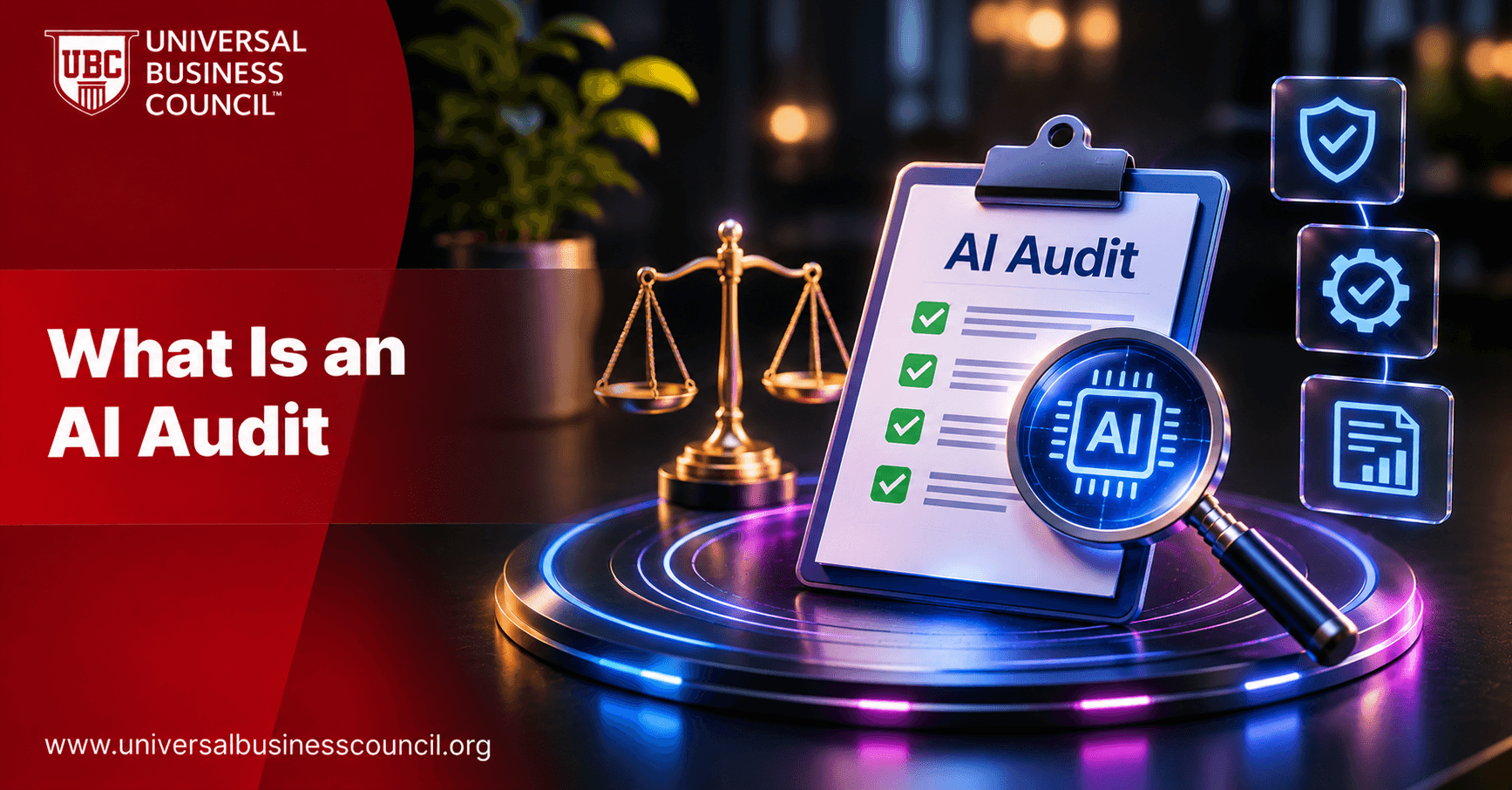
Financial statements get audited. So do safety systems, supply chains and data centers. Algorithms that approve loans, rank job candidates and flag medical risks mostly do not, at least not yet in any consistent way. An AI audit closes that gap. It is an independent, evidence-based examination of an AI system and the controls around it, designed to answer one blunt question: does this thing do what we say it does, safely, fairly and lawfully? This guide explains what an AI audit is, how the process works, what you gain from it and what real audit work looks like in practice. If you want a credential built around this discipline, take a look at the Certified AI Audit Professional certification.
What is an AI audit?
An AI audit is a structured review that tests whether an AI system, and the governance around it, meets defined criteria for performance, fairness, security, privacy, transparency and legal compliance. The auditor collects evidence, tests claims against reality and reports findings with recommendations.

Three ingredients make it an audit rather than a casual review. There are criteria to measure against, such as a policy, a law or a recognized standard. There is evidence, meaning records, test results and interviews. And there is independence, so the people judging the system are not the ones who built it.
A financial audit for algorithms
The comparison to a financial audit is useful, with one twist. A financial auditor checks whether the numbers are right. An AI auditor checks whether the decisions are right, for the right reasons, and whether the organization can prove it. The object under review is no longer a ledger. It is a model that learns, drifts and sometimes surprises its owners.
What gets examined
Depending on scope, an AI audit looks at the whole life of a system: why it was built, what data trained it, how it was tested, who approved it, how it behaves in production and what happens when it fails.
Purpose, ownership and risk classification
Training and input data, including consent and quality
Model performance, robustness and fairness testing
Security, privacy and access controls
Human oversight, user disclosures and complaint handling
Documentation, logging and change control
How the AI audit process works
Every audit has its own flavor, but the arc is familiar.
Plan and scope
The auditor agrees on what is in scope, which criteria apply and what evidence will be available. A tight scope beats a sprawling one, because a vague audit produces vague findings.
Collect and test
The team gathers documents, reviews logs, interviews owners and runs tests. Testing might include checking performance on fresh data, comparing outcomes across groups, probing for security weaknesses or tracing a sample of decisions from input to outcome.
Report and follow up
Findings are rated by severity and written up with clear recommendations. The organization responds with an action plan, and a follow-up review confirms that fixes actually happened. This last step is where many audits quietly fail, so insist on it. Teams that run the technical tests benefit from solid coding and data skills, which many build through tech certifications.
Benefits of an AI audit
Audits cost time and attention, so what do you get back?
Fewer unpleasant surprises
Problems found by your own auditor are cheaper than problems found by a regulator, a journalist or an angry customer. An audit turns unknown risks into known, owned and prioritized ones.
Proof, not promises
Customers, partners and insurers increasingly ask how you know your AI is safe and fair. An audit report is a credible answer. It shows that someone tested the claims.
Better systems
Auditors notice patterns that busy product teams miss: undocumented changes, thin testing, unclear ownership. Fixing them usually makes the system more reliable, not just more compliant.
Smarter investment
Audit results show where to spend money on controls and where you are already strong, which beats spreading effort evenly.
AI audit examples
These examples are generic illustrations, not accounts of real cases.
A lending model
An auditor reviews data sources, tests whether approval rates and error rates differ across groups, checks that decline reasons are accurate and confirms that a human can review contested decisions.
A customer chatbot
An auditor samples conversations for harmful or inaccurate answers, tests whether the bot leaks personal data, checks that users are told they are talking to AI and verifies that complaints reach a person.
A hiring screen
An auditor examines whether the tool measures job-relevant skills, compares pass rates across applicant groups, reviews candidate notices and checks how recruiters use the rankings.
Who does the work, and what do they need?
AI auditors come from audit, risk, compliance, data science and security backgrounds, and good teams mix several. Credibility depends on verifiable qualifications, so check them. Services such as HireValid help confirm credentials and backgrounds when you bring in internal or external auditors.
Keep the evidence trustworthy
Audit evidence is only useful if nobody can quietly rewrite it. Tamper-evident record keeping, a topic explored in deep tech certifications, strengthens the chain of proof.
Report without hype
When you publish audit results, say exactly what was covered. "Audited for fairness on this dataset in this period" is honest. "Bias-free" is not. A digital marketing course can help communications teams describe assurance work accurately and still make it compelling.
Conclusion
An AI audit is an independent, evidence-based check that an AI system and its governance meet defined criteria. The process runs from scoping through testing to reporting and follow-up, and the payoff is fewer surprises, credible proof, stronger systems and smarter spending. Start small, scope tightly, keep evidence clean and finish the follow-up.
Frequently asked questions
These are the questions people search for most about AI audits.
1. What is an AI audit in simple terms?
An independent check that an AI system works as claimed, safely, fairly and lawfully.
2. Why do organizations conduct AI audits?
To find risks early, prove compliance and build trust with customers and regulators.
3. Who performs an AI audit?
Internal auditors or independent external specialists, often in mixed teams.
4. What does an AI audit cover?
Data, models, testing, security, privacy, oversight, documentation and compliance.
5. Is an AI audit the same as a model test?
No. Testing is one part of an audit, which also reviews governance and evidence.
6. What are the steps in an AI audit?
Scope, plan, collect evidence, test, report and follow up.
7. How long does an audit take?
It depends on scope and system complexity, from days to several months.
8. Are AI audits legally required?
Some laws and sector rules require them for certain systems, so check your obligations.
9. What criteria do auditors use?
Internal policies, laws, contracts and recognized standards or frameworks.
10. What evidence is collected?
Documents, logs, test results, data samples and interview records.
11. Can a small company run an AI audit?
Yes, with a lighter scope focused on its highest-risk uses.
12. What is an AI audit report?
A written summary of scope, methods, findings, ratings and recommendations.
13. What happens after the report?
The organization responds with an action plan, and a follow-up confirms the fixes.
14. Can an AI audit prove a system is fair?
No. It shows how the system performed against specific tests and criteria.
15. How often should AI systems be audited?
On a schedule set by risk, and after major changes.
16. What is the difference between internal and external audits?
Internal audits are run by your own staff, while external audits bring independence.
17. Do audits cover third-party AI?
They should, through due diligence, contracts and testing of vendor systems.
18. What skills do AI auditors need?
Audit method, risk, data and model knowledge, legal awareness and clear writing.
19. What does an AI audit cost?
Costs vary with scope, complexity and who performs it.
20. How do I start?
List your AI systems, rank them by risk and pick one high-risk system for a first scoped audit.
Related Articles
View All
Artificial Intelligence
The AI Audit Process: A Step-by-Step Guide
Learn how to conduct an AI audit with this step-by-step guide. Explore each stage, from defining the audit scope and collecting evidence to evaluating data quality, testing for bias, assessing risks, reviewing compliance, and documenting findings to support responsible AI governance.
Artificial Intelligence
AI Security Audit: Assessing Models, Data, APIs and Infrastructure
Learn how an AI security audit evaluates the protection of AI systems against cyber threats, vulnerabilities, and unauthorized access. Explore key audit areas, including data security, model protection, access controls, adversarial attacks, and system vulnerabilities, along with methods for identifying risks and strengthening AI security.
Artificial Intelligence
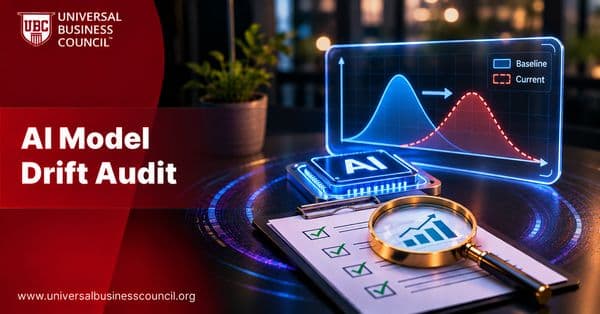
AI Model Drift Audit: Detecting Changes in Data and Model Behavior
Understand how an AI model drift audit identifies changes in model performance, input data, and underlying patterns over time. Explore methods for detecting data drift and concept drift, reviewing monitoring systems, evaluating model accuracy, and determining when retraining or corrective action is needed.
Trending Articles
The Role of Blockchain in Ethical AI Development
How blockchain technology is being used to promote transparency and accountability in artificial intelligence systems.
AWS Career Roadmap
A step-by-step guide to building a successful career in Amazon Web Services cloud computing.
Top 5 DeFi Platforms
Explore the leading decentralized finance platforms and what makes each one unique in the evolving DeFi landscape.