

Types of AI Audits: Technical, Ethical, Security and Compliance
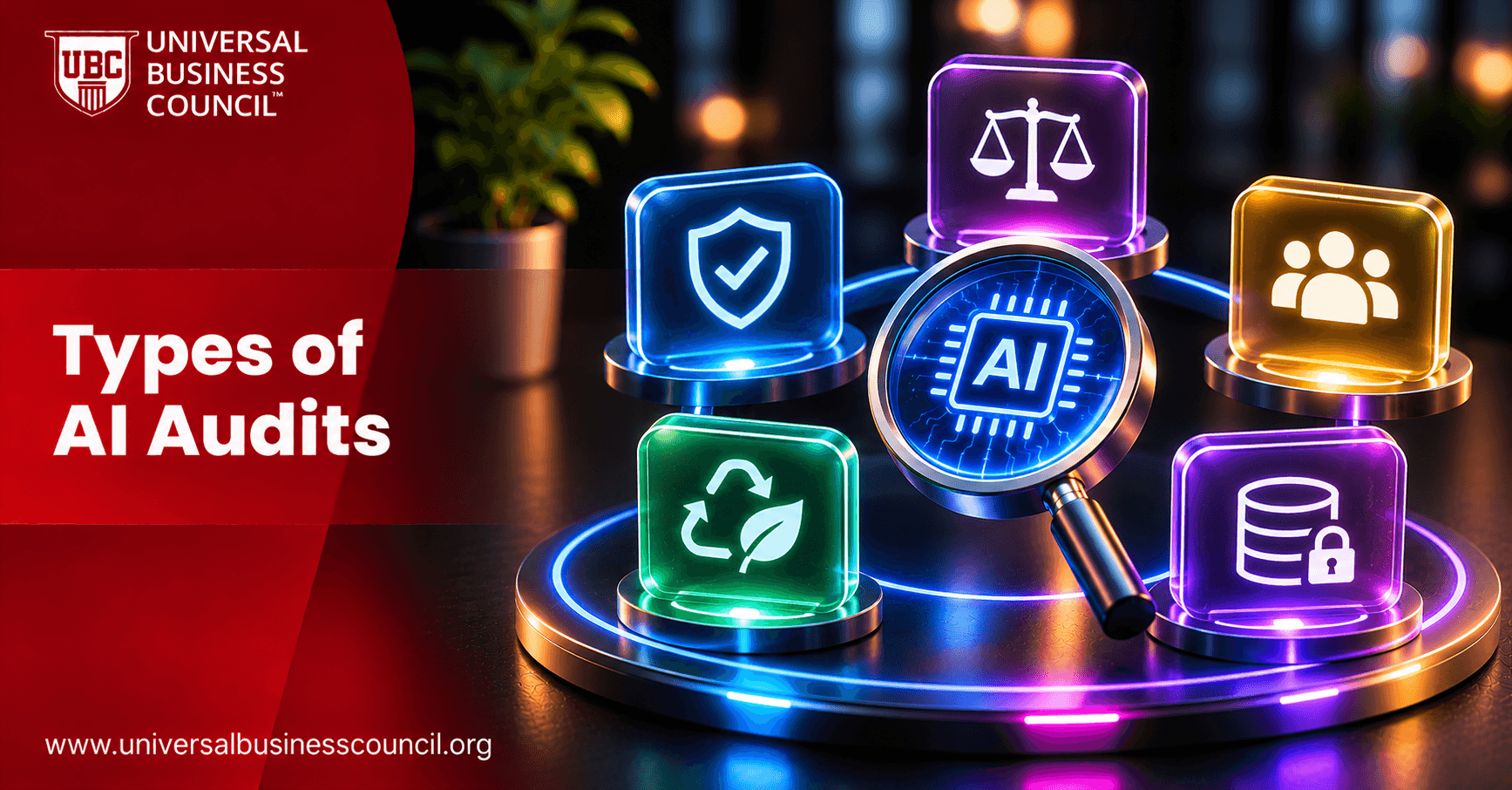
Not every AI audit asks the same question, and that is exactly why choosing the wrong type wastes so much money. A technical audit wonders whether the model works. An ethical audit wonders whether it should be used this way. A security audit wonders whether someone can break or abuse it. A compliance audit wonders whether the law and your own rules are being followed. This guide maps the four main types of AI audits, shows what each examines and explains how to combine them without drowning in paperwork. If you want audit training that spans these categories, look at the Certified AI Audit Professional certification.
What are the types of AI audits?
The main types of AI audits are technical, ethical, security and compliance audits. Technical audits test model performance and reliability. Ethical audits examine fairness, transparency and accountability. Security audits test resilience to attack and misuse. Compliance audits check conformity with laws, standards and internal policy. Most real audits blend two or more.

Technical AI audits: does it work?
A technical audit looks inside the machinery. It checks whether the model performs as claimed, on data it has not seen, across the range of conditions it will meet in the real world.
What gets tested
Accuracy, error types and calibration against agreed thresholds
Robustness to noise, edge cases and distribution shifts
Data quality, leakage between training and test sets and feature choices
Reproducibility of training and results
Drift and monitoring performance after deployment
Auditors need real technical skill here, including coding and statistics. The ability to recognize patterns and interpret information accurately is valuable across many business functions, and Practice Tests can form part of conversations about foundational reasoning skills. Many build it through tech certifications.
Best for
Models where mistakes carry real cost, systems about to launch and models that have run unchecked for a long time.
Ethical AI audits: should we, and is it fair?
An ethical audit asks about values and impact. It examines who benefits, who bears the risk and whether the system treats people fairly and openly.
What gets examined
Fairness across groups, explainability to affected people, quality of disclosures, availability of appeal routes, human oversight design and alignment with the organization's stated principles. Ethical audits rely on judgment more than the others, so they work best with diverse reviewers and clear criteria, which keep "ethics" from turning into opinion.
Fairness is not one number
Different fairness metrics can conflict, so a good ethical audit records which definition was used, why and what trade-offs were accepted.
Best for
Systems that affect jobs, credit, health, education, benefits or access to services, and any organization that publishes AI principles and wants to show it lives by them.
Security AI audits: can it be attacked?
AI systems add new attack surfaces to ordinary software. A security audit tests both.
What gets tested
Access controls, secrets handling and logging, plus AI-specific threats: prompt injection, data poisoning, model extraction, leakage of training data and abuse of connected tools. Red teaming, where testers deliberately try to break the system, sits at the heart of this type.
Best for
Customer-facing generative AI, agents with tool access, systems handling sensitive data and anything connected to critical operations. Keeping the findings in tamper-evident form, a topic explored in deep tech certifications, helps with later investigations.
Compliance AI audits: are we following the rules?
A compliance audit tests conformity against a defined rulebook: laws on privacy, discrimination and consumer protection, sector regulations, contract terms, recognized standards and your own policies.
What gets checked
Lawful basis for data use, notices and disclosures, impact assessments where required, documentation, record keeping, human review rights and incident reporting. Results are usually framed as conformity against each requirement, with gaps rated by severity. Always involve legal counsel, since interpretation varies by place and sector.
Best for
Regulated industries, organizations preparing for certification or regulator scrutiny and anyone selling AI into regulated sectors.
Other types you will hear about
The big four have relatives.
Governance audits, which review policies, roles and oversight structures
Data audits, which examine quality, consent, lineage and access
Privacy audits, which assess personal data use and protection
Vendor audits, which test third-party AI and contract controls
How to choose and combine types
Start with the risk, not the label.
Match type to risk
Ask what could hurt you most. Unfair outcomes call for an ethical audit. A public chatbot calls for a security audit. A pending regulatory review calls for a compliance audit. A model nobody has validated calls for a technical audit.
Combine smartly
For high-risk systems, run a blended audit with a shared scope, shared evidence and one report, so teams answer each question once. Staff the team accordingly, and verify the credentials of specialists you bring in, for example through HireValid.
Describe results precisely
A security audit says nothing about fairness, and a technical audit says nothing about legality. When you talk about results, name the type and scope. A digital marketing course can help teams explain assurance work with precision.
Conclusion
The four main types of AI audits answer four different questions: does it work, is it fair, can it be attacked and are we compliant. Choose by risk, blend types for high-stakes systems and describe results with the right label. Match the audit to the problem, and the findings will point somewhere useful.
Frequently asked questions
These are the questions people search for most about types of AI audits.
1. What are the main types of AI audits?
Technical, ethical, security and compliance audits.
2. What does a technical AI audit check?
Performance, robustness, data quality and reproducibility.
3. What is an ethical AI audit?
A review of fairness, transparency, accountability and impact on people.
4. What is an AI security audit?
A test of resilience against attacks such as prompt injection and data poisoning.
5. What is an AI compliance audit?
A check of conformity with laws, standards and internal policy.
6. Which type is most important?
It depends on your risks and obligations.
7. Can audit types be combined?
Yes, and blending them for high-risk systems avoids duplicate work.
8. What is red teaming?
Deliberate attempts to break or misuse a system to find weaknesses.
9. What is a governance audit?
A review of policies, roles, decision rights and oversight.
10. What is a data audit?
An examination of data quality, consent, lineage and access controls.
11. What is a privacy audit?
An assessment of personal data use against law and stated purposes.
12. What is a vendor audit?
A review of third-party AI and the controls around it.
13. Which audit finds bias?
Ethical and technical audits, using group-level testing.
14. Which audit supports regulatory readiness?
A compliance audit.
15. Does a security audit cover fairness?
No. It addresses attack and misuse, not fairness.
16. Do I need different auditors for each type?
Often, so use mixed teams with the right specialist skills.
17. How do I pick an audit type?
Start from your biggest risk and your legal obligations.
18. Are ethical audits subjective?
They involve judgment, so clear criteria and diverse reviewers help.
19. How often should each type run?
On a schedule based on risk and after major changes.
20. What should I say when reporting results?
Name the audit type, scope and limits precisely.
Related Articles
View All
Artificial Intelligence
AI Security Audit: Assessing Models, Data, APIs and Infrastructure
Learn how an AI security audit evaluates the protection of AI systems against cyber threats, vulnerabilities, and unauthorized access. Explore key audit areas, including data security, model protection, access controls, adversarial attacks, and system vulnerabilities, along with methods for identifying risks and strengthening AI security.
Artificial Intelligence
AI Model Documentation Audit: Reviewing Model Cards and Technical Records
Learn how an AI model documentation audit evaluates the completeness, accuracy, and consistency of records maintained throughout the AI lifecycle. Explore key documents auditors review, including model cards, technical specifications, training data details, validation reports, and monitoring records, to improve transparency, traceability, and accountability.
Artificial Intelligence
AI Compliance Audit: How to Review Regulatory Requirements
Learn how an AI compliance audit helps organizations review regulatory requirements and assess whether their AI systems meet applicable legal and industry standards. Explore key audit steps, compliance checks, documentation, and ways to identify and address regulatory gaps.
Trending Articles
The Role of Blockchain in Ethical AI Development
How blockchain technology is being used to promote transparency and accountability in artificial intelligence systems.
AWS Career Roadmap
A step-by-step guide to building a successful career in Amazon Web Services cloud computing.
Top 5 DeFi Platforms
Explore the leading decentralized finance platforms and what makes each one unique in the evolving DeFi landscape.